Chapter 80: Toward Generalist Robots |
Summary |
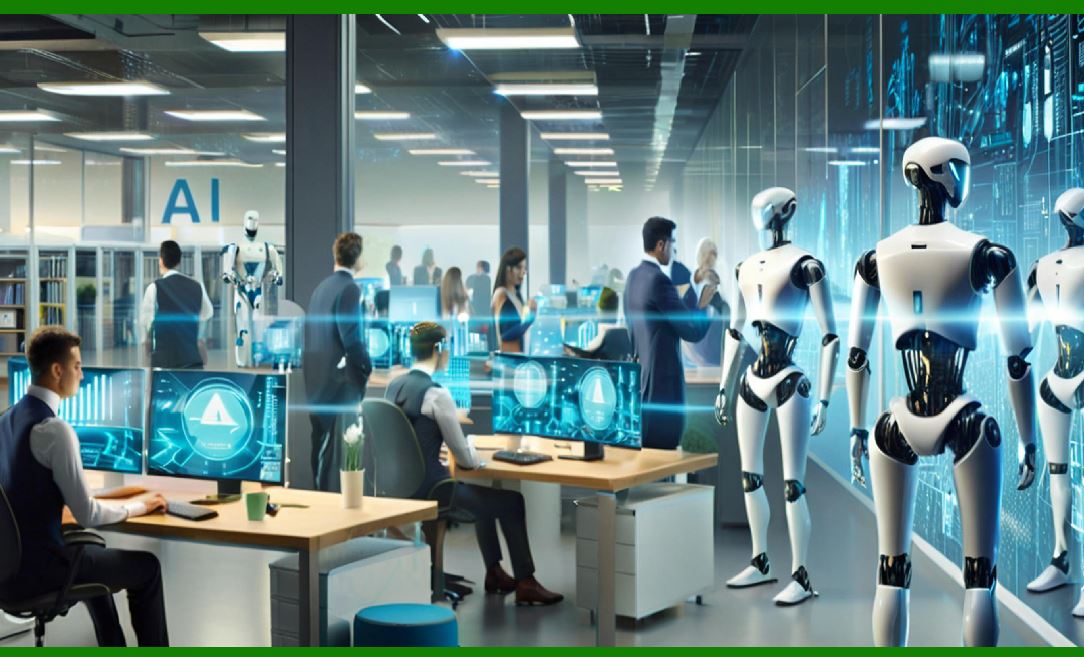
The industrial robot has historically been a creature of certainty. It operated behind safety fences, repeated a single motion thousands of times per shift, and derived its value from unwavering precision within a narrowly defined envelope. That model built the modern factory, but it has reached a frontier. The next phase of industrial robotics is not simply about making arms faster or grippers stronger. It is about creating machines that can reason, adapt, and carry a wide repertoire of skills from one context to another. This chapter examines the emergence of generalist-specialist robots: systems that combine the broad semantic understanding of large-scale foundation models with the execution reliability demanded by industrial environments. It explores how simulation has become the primary training ground for these systems, how the boundary between general-purpose reasoning and task-specific specialization is being negotiated in practice, and what real deployments across logistics, manufacturing, agriculture, healthcare, and field service reveal about the trajectory ahead. The chapter concludes with a detailed summary of the forces shaping this transition and the practical considerations for engineers and operators planning for a generation of robots that are defined less by what they are programmed to do and more by what they can learn to do. |
|
1. The Limits of the Specialist and the Promise of the Generalist |
The industrial robot has been, by design, a specialist. A welding robot in an automotive body shop performs the same sequence of spot welds on the same model of chassis for years. A palletizing robot lifts cases of identical dimensions from a conveyor and places them onto a pallet in a fixed pattern. These systems excel because their world is constrained. The lighting is controlled, the parts arrive in known orientations, and the task definition never changes unless engineers intervene. The economics of this model are compelling: a specialist robot amortizes its engineering cost over millions of identical cycles, and its reliability is a function of how thoroughly its narrow domain has been mastered . |
The limitation of the specialist becomes apparent when the world refuses to stay constrained. Product lifecycles shorten. Warehouses must handle an ever-changing mix of packaging. A manufacturing line that once produced a single vehicle model now runs three variants in a single shift. In these environments, the cost of re-engineering a specialist for every new task accumulates rapidly. The promise of the generalist robot is that it can absorb variation without requiring a new engineering project for every change. It can be told what to do in natural language, shown a handful of demonstrations, or simply dropped into a new environment and asked to figure out the task. |
The technical path toward this capability has converged on a particular architecture: a large vision-language model or a similar foundation model serves as the reasoning backbone, while a smaller, more specialized policy network handles the fast, reactive control of the robot's motors. The reasoning model interprets the scene, understands the instruction, and produces a plan. The control policy executes that plan with the reflexes necessary for stable manipulation . This division of labor mirrors a distinction familiar in biology, where deliberate planning and reflexive action occupy different neural pathways. For industrial robots, the challenge is making the two work together reliably enough that a factory manager can trust the system with a production quota. |
|
2. Simulation as the Training Ground |
The central practical obstacle to generalist robots is data. A specialist policy for a pick-and-place task can be trained on a few hundred teleoperated demonstrations collected over a few hours. A generalist policy that must handle thousands of objects, dozens of task types, and unpredictable environments requires orders of magnitude more experience than any human operator can reasonably provide. Collecting that data in the physical world is slow, expensive, and dangerous for tasks that involve contact with sharp edges, heavy payloads, or unpredictable humans. |
Simulation offers a way out. Modern physics engines can render photorealistic scenes and simulate contact dynamics with sufficient fidelity that a policy trained entirely in simulation can transfer to a real robot without additional fine-tuning. Navigation policies trained in simulated warehouses and outdoor environments now achieve zero-shot transfer to physical robots, using the simulation to generate over a million meters of navigation experience across thousands of scenes . The key insight is not that simulation perfectly replicates reality, but that it exposes the learning system to enough variation that the real world becomes just another variation it has already learned to handle. |
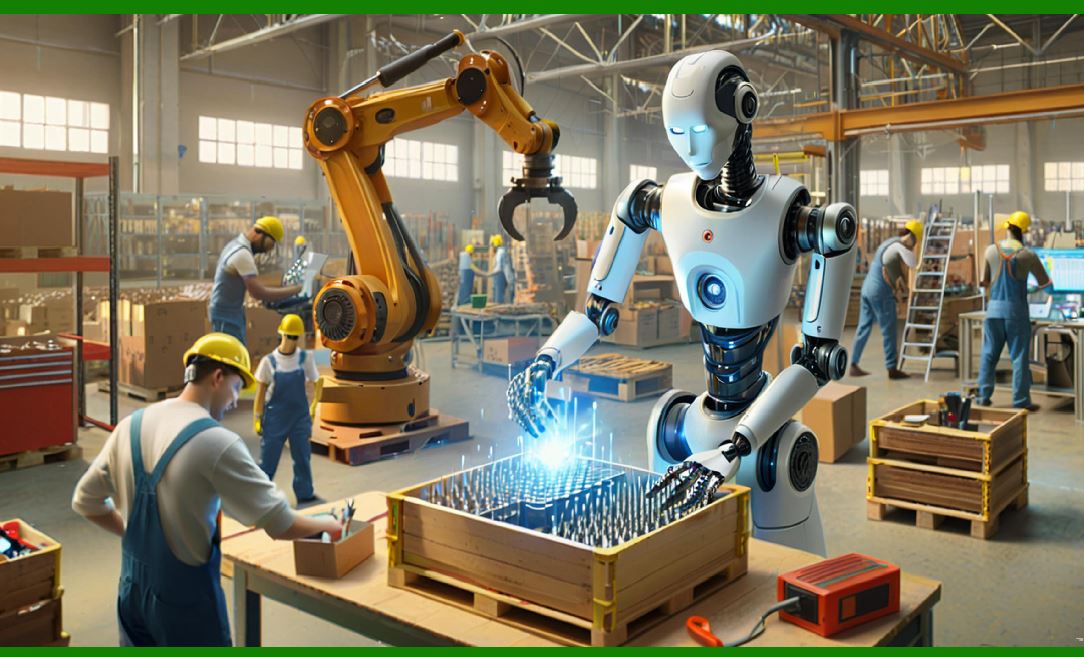
For manipulation, the simulation-to-reality gap remains more stubborn. Contact-rich tasks like inserting a peg into a hole or folding a piece of fabric are notoriously difficult to simulate accurately because the physics of friction and deformation are computationally expensive to model at the fidelity required. This is where the generalist-specialist distinction becomes practical rather than philosophical. A generalist model trained in simulation can learn the broad strokes of a task category, but a specialist policy fine-tuned on a small number of real-world demonstrations can close the final gap in precision. The most effective deployments use both: the generalist provides the initial competence and the ability to handle variation, while the specialist provides the cycle time and reliability that production demands . |
The simulation-first approach has another benefit that is often overlooked: it allows the robot to fail safely. In simulation, a policy can be trained to recover from dropped objects, collisions, and unexpected sensor readings without risking damage to equipment or injury to nearby workers. The robustness that emerges from this kind of training is difficult to achieve through real-world trial and error alone, because the cost of failure in a real factory is measured in downtime and damaged product. A generalist robot that has seen a million simulated failures is better prepared for the one real failure that matters. |
|
3. Logistics and Warehousing: The First Proving Ground |
Logistics has become the most active testing ground for generalist robot architectures, for reasons that are both economic and technical. Warehouses are semi-structured environments: the layout is known, but the objects that flow through it vary enormously. A robot that can unload a truck filled with boxes of unpredictable size and weight, or pick items from a shelf for an e-commerce order, must combine visual reasoning about unfamiliar objects with reliable grasp execution. This is precisely the kind of problem that generalist models are designed to address. |
The most instructive deployments have been in tote handling and de-stacking. A mobile manipulator equipped with a wheeled base and a robotic arm can autonomously pick totes from a storage stack, transport them to a conveyor, and place them at a designated pickup point. In a proof-of-concept deployment at a Siemens electronics factory, a humanoid-style wheeled robot performed this task at a throughput of sixty tote moves per hour, with an autonomous pick-and-place success rate above ninety percent and continuous operation exceeding eight hours . The significance of these numbers is not that they surpass human workers, because they do not. The significance is that they demonstrate a mobile manipulator handling two different tote sizes without reprogramming, using perception and planning to adapt to the variation in its environment. |
The warehouse sector has also provided a cautionary counterpoint. A major contract logistics provider that had conducted forty-five pilots of humanoid robots reported that it planned to deploy zero humanoids in production in the following year. The reasons were specific: hand dexterity and task speed had not yet reached the threshold where the economics of deployment made sense relative to human labor or established automation . This is not a rejection of the technology but a calibration of expectations. The pilots demonstrated capability; they did not yet demonstrate return on investment. The generalist robot in logistics is advancing, but the advance is measured in incremental improvements in cycle time and reliability, not in dramatic demonstrations. |
The more successful logistics deployments have taken a hybrid approach. A general-purpose reasoning model handles the perception of new objects and the planning of grasp strategies, while a library of specialized motion primitives handles the actual execution of common grasps and placements. When the generalist encounters a situation it cannot confidently resolve, it can either request human assistance or fall back to a conservative behavior that avoids damage. This architecture acknowledges that full generality is not yet achievable and designs for graceful degradation rather than assuming perfect performance . |
|
4. Manufacturing: From Fixed Cells to Flexible Lines |
The factory floor presents a different set of challenges for generalist robots. Unlike a warehouse, where the objective is often simply to move objects from one place to another, manufacturing tasks frequently require precise force control, adherence to tolerances measured in fractions of a millimeter, and compliance with safety standards that were written for machines that never move unpredictably. |
The entry point for generalist architectures in manufacturing has been in tasks that are variable but not precision-critical. Machine tending is one example. A robot that loads and unloads parts from a CNC machine must handle parts that arrive in different orientations, inspect them for obvious defects, and place them into fixtures with enough accuracy that the machine can clamp them securely. A generalist policy can learn this task from a combination of simulated training and a small number of demonstrations on the actual parts, adapting to the specific geometry of each workpiece without a dedicated fixture for every variant. |
Assembly remains the harder problem. The sequence of motions required to insert a connector, route a cable, or fasten a screw involves contact dynamics that are difficult to simulate and unforgiving in reality. Here, the generalist-specialist split is most pronounced. A vision-language model can interpret the assembly drawing, identify the correct part, and plan the sequence of operations. But the actual insertion of a pin into a hole is executed by a specialized controller that regulates force and monitors for jamming, a controller that may have been tuned for that specific class of insertion task rather than learned from scratch. The generalist provides the flexibility to handle new assemblies; the specialist provides the reliability to meet production tolerances . |
This hybrid model is beginning to appear in commercial deployments. A robot cell that might previously have been dedicated to a single product family can now be reconfigured for a new product by updating the generalist model's task description rather than by rewriting the robot program from scratch. The changeover time, which is the enemy of flexible manufacturing, shrinks from days to hours. The economic case for generalist robots in manufacturing is not that they replace specialist robots at the same task, but that they make it viable to automate tasks that were previously too variable or too low-volume to justify a dedicated cell. |
|
5. Agriculture and Field Work: The Unstructured Frontier |
Agriculture is perhaps the most demanding environment for generalist robot capabilities, and it is also where the potential benefits are most acute. A field is the opposite of a factory. The lighting changes with the weather and the time of day. The objects to be manipulated, whether fruits, vegetables, or weeds, vary in size, shape, color, and position. The ground is uneven. The weather is unpredictable. A robot that can operate in this environment must be able to reason about a scene it has never seen before and make decisions with incomplete information. |
The current generation of agricultural robots has made progress by narrowing the problem in ways that allow generalist models to contribute without demanding full autonomy. A robotic harvester for strawberries, for example, uses a vision system to detect ripe fruit and a specialized end effector to pick it without bruising. The generalist component is the perception system, which has been trained on a large dataset of strawberry images across different varieties, ripeness stages, and lighting conditions, and which can identify fruit that a simple color threshold would miss. The picking motion itself is handled by a specialist controller that has been tuned for the specific mechanics of the gripper and the fragility of the fruit. |
The more ambitious applications are in weed management. A robot that can distinguish a crop plant from a weed, and then remove the weed without damaging the crop, requires a level of visual reasoning that was until recently beyond the capability of field-deployable systems. Generalist vision models trained on diverse agricultural imagery have made this feasible, at least in row crops where the plants are distinct and the weeds are not closely related to the crop. The robot moves slowly and deliberately, using its reasoning model to classify each plant it encounters before deciding whether to activate a mechanical or thermal weeding tool. The economics of this approach depend on the robot covering enough ground per day to justify its cost, which is why the most successful deployments have been in high-value crops where manual weeding is expensive and chemical options are limited. |
The agricultural domain also illustrates a broader point about the generalist-specialist trajectory. The generalist model does not need to be perfect to be useful. A weed detection system that is correct ninety-five percent of the time, combined with a mechanical removal mechanism that is gentle enough to avoid catastrophic damage when it makes a mistake, can still deliver value. The specialist components, the perception hardware and the end effector, compensate for the generalist's imperfections. Over time, as the generalist models improve and the specialist components become more refined, the balance shifts, but the hybrid architecture remains the practical path to deployment. |
|
6. Healthcare and Service Robotics: Reasoning in Human Spaces |
Hospitals, laboratories, and service environments present a different kind of challenge. The tasks are often physically simple, such as transporting a specimen from one department to another or delivering a meal tray to a patient room. What makes them difficult is the environment. Corridors are crowded with people who do not behave predictably. Elevators must be summoned and navigated. Doors must be opened. A robot that operates in these spaces must understand social conventions, interpret human intent from subtle cues, and recover gracefully when it makes a mistake. |
Generalist models have made significant inroads in the perception and planning layers of these systems. A robot navigating a hospital corridor can use a vision-language model to interpret a scene: recognizing that a cluster of people near a doorway indicates a queue, that a gurney in the hallway requires a wider berth, or that a person walking toward it with a determined expression is likely to cross its path without yielding. This kind of semantic scene understanding is difficult to encode in rules and relatively straightforward for a model trained on diverse visual data. The navigation policy that actually controls the wheels and avoids collisions remains a specialist component, tuned for the specific dynamics of the robot platform and validated for safety in the target environment. |
The laboratory automation space has seen a particularly interesting convergence of generalist and specialist approaches. A robot that handles sample tubes and prepares slides for analysis must perform a sequence of precise manipulations: uncapping a tube, pipetting a volume of liquid, placing a slide on a stage. The generalist model interprets the protocol, which may be provided in natural language, and sequences the operations. The specialist controllers handle the pipetting and the tube handling with the precision that laboratory work demands. The value of the generalist layer is that it allows the robot to handle variations in the protocol without a new programming effort, such as when a different tube type is introduced or a step is added to the procedure. In a research laboratory where protocols evolve constantly, this flexibility is worth more than raw speed . |
The service robotics sector, including cleaning, delivery, and inspection, has adopted generalist perception and planning more readily than generalist manipulation. A cleaning robot in a shopping mall must navigate a complex environment and identify areas that need attention, but its actual cleaning action is a relatively simple mechanical operation. The generalist model contributes the ability to understand the layout of the space, recognize obstacles and hazards, and adapt the cleaning route based on observed conditions. This is a lower-stakes application than manufacturing or healthcare, which makes it an attractive proving ground for the generalist technologies that will eventually migrate to more demanding domains. |
|
7. The Human in the Loop: Training, Teleoperation, and Oversight |
The generalist robot is not yet autonomous in the sense that it can be left alone to figure out what to do. It is autonomous in the sense that it can execute a task it has learned without step-by-step human guidance, but the learning process itself still depends heavily on human input. The most direct form of this input is teleoperation, where a human operator controls the robot to demonstrate a task. This is the primary method for collecting the demonstration data that fine-tunes generalist policies for specific industrial tasks. |
The demand for teleoperation data has created a new occupation in some parts of the world. In Shenzhen, workers wear virtual reality headsets and arm exoskeletons to pilot humanoid robots through everyday movements, generating the training data that the robot manufacturers need to improve their models. The tasks are mundane: folding clothes, opening microwave doors, stacking blocks. The operators repeat these movements hundreds of times per day, and their motions are recorded and used to train the robot's control policies . This is a labor-intensive process, and it is not clear how long it will remain economically viable as simulation improves and the need for real-world demonstration data declines. But for the current generation of generalist robots, human demonstration is an essential input. |
The human role extends beyond data collection to oversight. A generalist robot operating in a real environment will encounter situations it has not been trained for. The design of the system must include a mechanism for the robot to recognize its own uncertainty and request assistance. In a warehouse, this might mean a robot that stops and signals for a human when it cannot identify an object or when a grasp fails repeatedly. In a hospital, it might mean a robot that pauses and asks a passing staff member for directions when it is confused about its location. The quality of this human-robot interaction is as important to the success of a deployment as the capability of the robot itself. A robot that is highly capable but frequently requires intervention is less valuable than a less capable robot that knows its limits and operates reliably within them. |
The training of human operators is also evolving. The engineers who program specialist robots write code and configure parameters. The operators who work with generalist robots must learn to communicate with the robot in natural language, to provide demonstrations that are clear and consistent, and to interpret the robot's behavior when it goes wrong. This is a different skill set, closer to teaching than to programming, and it is not yet well understood how to select and train people for it. The organizations that succeed with generalist robots in the coming years will likely be those that invest as much in the human side of the deployment as in the technology. |
|
8. The Specialization Trade-off: When Generality Costs More Than It Saves |
The enthusiasm for generalist robots should not obscure a basic economic reality: for a fixed, high-volume task, a specialist robot will almost always be faster, cheaper, and more reliable than a generalist. The generalist's advantage emerges only when the cost of specialization, the engineering effort and downtime required to reconfigure a specialist for each new task, exceeds the cost of the generalist's inherent inefficiency. This trade-off is not a matter of opinion; it is a calculable function of the task mix and the changeover frequency . |
Consider a manufacturing cell that produces a single part number at high volume. The part geometry is fixed, the fixtures are dedicated, and the process parameters have been optimized over years of production. A specialist robot that performs one operation in this cell will have a cycle time measured in seconds and a reliability measured in thousands of cycles between failures. A generalist robot attempting the same operation will spend additional time perceiving and reasoning about the scene, and its reliability will be lower because it is using a more complex model to solve a simpler problem. The specialist wins decisively. |
Now consider a cell that produces fifty different part numbers in small batches, with changeovers occurring several times per week. Each changeover for a specialist robot requires new fixtures, new programming, and a validation run that consumes production time. The accumulated cost of these changeovers can easily exceed the cost of a generalist robot's slower cycle time. The generalist wins because it can adapt to the new part with a brief demonstration or a new instruction, without the engineering overhead of a dedicated solution. |
Most industrial environments fall somewhere between these extremes. The practical question for an engineer considering a generalist robot is not whether generality is inherently better, but where on this spectrum the specific application lies. The answer depends on the variety of tasks, the frequency of change, the cost of engineering time, and the tolerance for slower cycle times during the learning and adaptation phases. The generalist robot is not a universal replacement for the specialist. It is a tool for a particular regime of variability, and understanding that regime is essential to deploying it successfully. |
|
9. The Simulation-to-Reality Pipeline in Practice |
The simulation-first training paradigm has become the default for generalist robot development, but the practical details of making it work are less widely discussed. A simulation environment that is useful for training a generalist policy must satisfy several requirements simultaneously. It must be visually realistic enough that a vision model trained on simulated images can recognize real objects. It must be physically accurate enough that a control policy trained on simulated contacts can transfer to real contacts. And it must be diverse enough that the policy does not overfit to the specific conditions of the simulation. |
The visual realism problem has been largely solved by advances in rendering technology. Modern game engines and dedicated robotics simulators can produce images that are nearly indistinguishable from photographs, complete with realistic lighting, shadows, and material properties. A vision model trained on a large dataset of simulated warehouse scenes can recognize boxes, shelves, and forklifts in a real warehouse without fine-tuning. The remaining gap is in the long tail of visual variation: the scuff mark on a box, the reflection from a wet floor, the unusual color of a piece of clothing worn by a worker. These are the cases where the simulation-trained model may fail, and they are the reason why some real-world data collection remains necessary even for systems that are trained primarily in simulation. |
The physics accuracy problem is harder. Rigid body dynamics are well understood and simulated accurately. Soft body dynamics, the behavior of fabrics, cables, and food items, are computationally intensive and less reliable. Contact dynamics, especially the friction and adhesion that determine whether a grasp succeeds or fails, are sensitive to parameters that are difficult to measure and that vary from one instance of an object to another. A policy trained on simulated grasps may fail on real objects because the simulation underestimated the slipperiness of the surface or overestimated the strength of the gripper. These failures are not catastrophic in a research setting, but in a production environment they translate directly into downtime and cost. |
The practical response to these limitations is a layered approach. Simulation is used to train the broad competence of the generalist model, the ability to recognize objects, understand instructions, and plan sequences of actions. Real-world data is used to fine-tune the specialist components, the grasp controllers and motion primitives that must operate with precision. The interface between the two is designed to be robust to the inevitable discrepancies: the generalist plans a grasp that is approximately correct, and the specialist controller adjusts the final approach based on real sensor feedback. This architecture does not require the simulation to be perfect; it requires the simulation to be good enough to get the robot into the right neighborhood, with the specialist handling the last few centimeters . |

|
10. A Detailed Summary of the Trajectory |
The movement toward generalist robots in industrial settings is not a single trend but a convergence of several distinct developments, each of which is reshaping the relationship between machines and the work they perform. |
The first development is the maturation of foundation models for perception and reasoning. Vision-language models that can interpret a scene, understand a natural language instruction, and produce a plan have moved from research prototypes to deployable components. They are not perfect, and they fail in ways that are sometimes difficult to predict, but they provide a level of semantic understanding that was previously unavailable to industrial robots. A robot equipped with such a model can be told what to do rather than programmed to do it, and it can adapt to variations in the task that would have required a new program in the past. |
The second development is the refinement of simulation as a training environment. The combination of high-fidelity rendering, accurate physics for rigid bodies, and large-scale scene generation has made it possible to train robot policies on millions of simulated experiences before they ever touch a real object. This has dramatically reduced the amount of real-world data required to achieve competent performance, and it has enabled the training of policies that are robust to a wider range of conditions than any human could reasonably demonstrate. |
The third development is the emergence of a practical hybrid architecture. The generalist-specialist split is not a compromise or a temporary workaround. It is the architecture that makes economic sense for the current state of the technology. The generalist provides flexibility and adaptability; the specialist provides speed and reliability. The most successful deployments across logistics, manufacturing, agriculture, and healthcare have all adopted some version of this split, assigning the reasoning and perception tasks to the generalist model and the precise execution to specialized controllers that have been validated for the specific application. |
The fourth development is the recognition that generality has a cost, and that the decision to deploy a generalist rather than a specialist is an economic calculation rather than a technological imperative. For high-volume, low-variety tasks, the specialist remains superior. The generalist becomes attractive when variability is high and changeover costs are significant. The boundary between these regimes is not fixed; it shifts as generalist models improve and as the engineering cost of specialization increases. But the boundary exists, and ignoring it leads to disappointing deployments. |
The fifth development is the growing importance of the human element. Generalist robots are not self-sufficient. They require human demonstrations to learn new tasks, human oversight to handle situations they cannot resolve, and human maintenance to keep them operating. The organizations that succeed with these systems will be those that invest in the training and support of the people who work alongside them, and that design their operations to accommodate the strengths and limitations of the technology rather than pretending those limitations do not exist. |
|
The trajectory ahead is toward systems that are increasingly capable of reasoning across tasks and domains, trained primarily in simulation but validated and refined in the real world, and deployed in hybrid architectures that combine the adaptability of generalist models with the reliability of specialist controllers. The fully general industrial robot, one that can be dropped into any environment and asked to perform any task, remains a distant prospect. But the generalist-specialist robot, a machine that brings a broad repertoire of skills to a specific application and learns to perform it well, is already here. It is appearing in warehouses, factories, farms, and hospitals, not as a replacement for the specialist robots that came before it, but as a complement that extends automation into the variable, unpredictable, and previously uneconomical corners of the industrial world. |
 cs@easiersoft.com