Chapter 79: Market Trajectory |
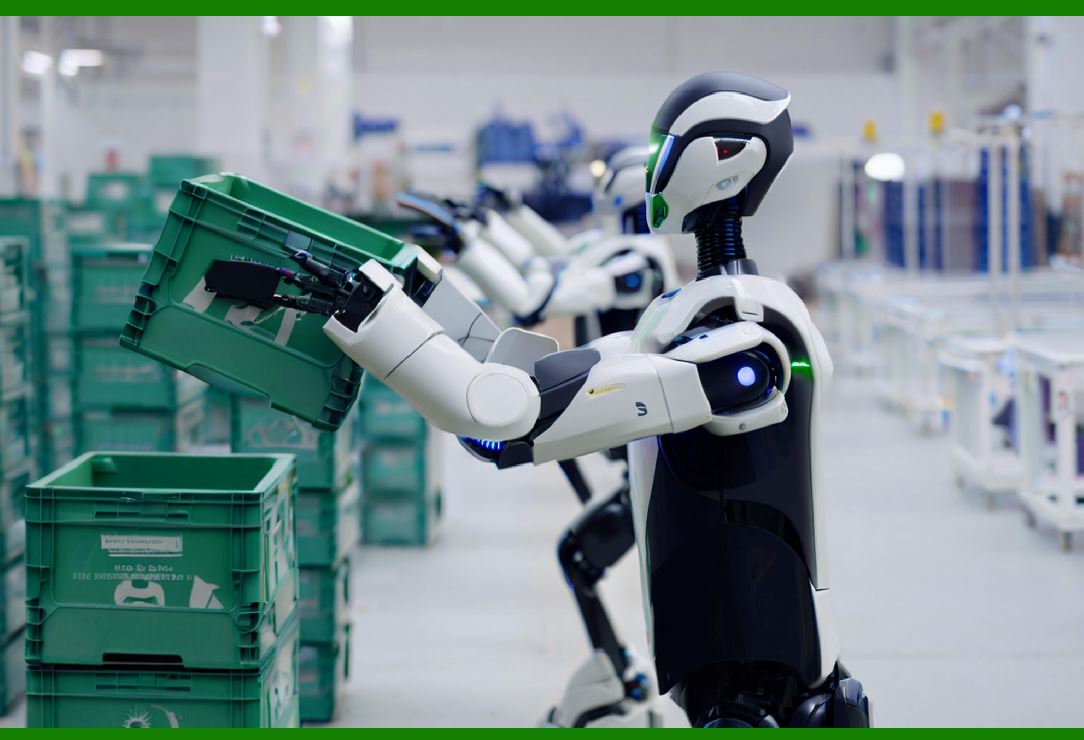
Summary: The global industrial robot fleet has crossed a historic threshold. More than five million units now operate in factories worldwide, a figure that has doubled in just seven years. Annual installations have rebounded from a period of stagnation to reach record levels, driven by labor shortages, supply chain restructuring, and the maturing of artificial intelligence as a practical tool for automation. At the center of this expansion stands China, which alone accounts for nearly three-fifths of new robot deployments and whose domestic manufacturers now supply more than half of the machines installed within its borders. Perhaps more significant than any single number is the breadth of application: Chinese-brand industrial robots have been deployed across 253 distinct industry categories, covering more than half of all national economic sectors. This chapter examines the forces shaping this trajectory, the regional dynamics behind it, and the specific ways robots are finding work in industries far beyond the traditional automotive heartland. |
|
1. The Five Million Threshold and What It Means |
The operational stock of industrial robots worldwide reached 5.079 million units in 2025, an increase of nine percent over the previous year . To appreciate the scale of this milestone, consider that the global fleet was less than half this size only seven years ago. The International Federation of Robotics, which publishes the World Robotics report annually, noted that the strongest growth occurred in Asia, followed by the Americas, while Europe advanced more slowly . |
Annual installations tell an equally compelling story. After roughly four years of hovering around 550,000 units per year, global shipments climbed eleven percent in 2025 to surpass 600,000 units for the first time . The IFR projects further growth to 655,000 units in 2026 and 806,000 by 2029 . These are not abstract figures. Each installation represents a specific decision by a manufacturer, logistics operator, or processor to substitute or augment human labor with a programmable machine, usually because the alternative---finding enough willing and skilled workers to perform the task---has become impractical. |
The drivers behind this acceleration are worth enumerating because they explain why the trajectory is likely to continue. Persistent labor shortages in advanced economies rank first. Demographic decline in countries such as Japan, Germany, and South Korea has shrunk the pool of available manufacturing workers, and the COVID-era disruptions demonstrated how fragile supply chains become when they depend on distant labor forces. Reshoring and nearshoring initiatives, particularly in North America and Europe, have brought production closer to end markets but have not brought workers back in sufficient numbers. The IFR cites these factors directly, alongside the emergence of AI-focused technologies that lower deployment costs for small and medium-sized enterprises that previously found robotics too expensive or too complex to adopt . |

|
2. China's Dominance in Numbers and Categories |
No discussion of the market trajectory can proceed far without addressing China's role. In 2025, Chinese factories installed 354,000 industrial robots, a twenty percent increase over the previous year and fifty-nine percent of global deployments . This single national market absorbed more than three times the combined installations of the United States and Germany. |
But the more revealing statistic concerns who supplies these robots. Chinese manufacturers accounted for 195,000 installations within their home market, a fifty-five percent share, up from fifty-seven percent the year before---a slight dip in share but a fifteen percent increase in absolute volume . Since 2024, domestic brands have supplied more than half of all industrial robots installed in China. Foreign suppliers still play a significant role, particularly in high-end applications, with their installations rising twenty-seven percent in 2025 . This is not a story of import substitution at the expense of quality; it is a story of a market expanding so rapidly that both domestic and foreign suppliers are growing, even as the domestic share inches upward. |
The sectoral breakdown of Chinese installations offers a window into the country's industrial priorities. Electronics manufacturers remained the largest buyers, installing 96,400 units, up sixteen percent and accounting for twenty-seven percent of total demand . The automotive sector recorded the fastest growth among major industries, with installations rising thirty-eight percent to 78,900 units, reflecting heavy investment in electric vehicle production and smart manufacturing capacity. The metal and machinery industry surged forty-four percent to 78,700 units . |
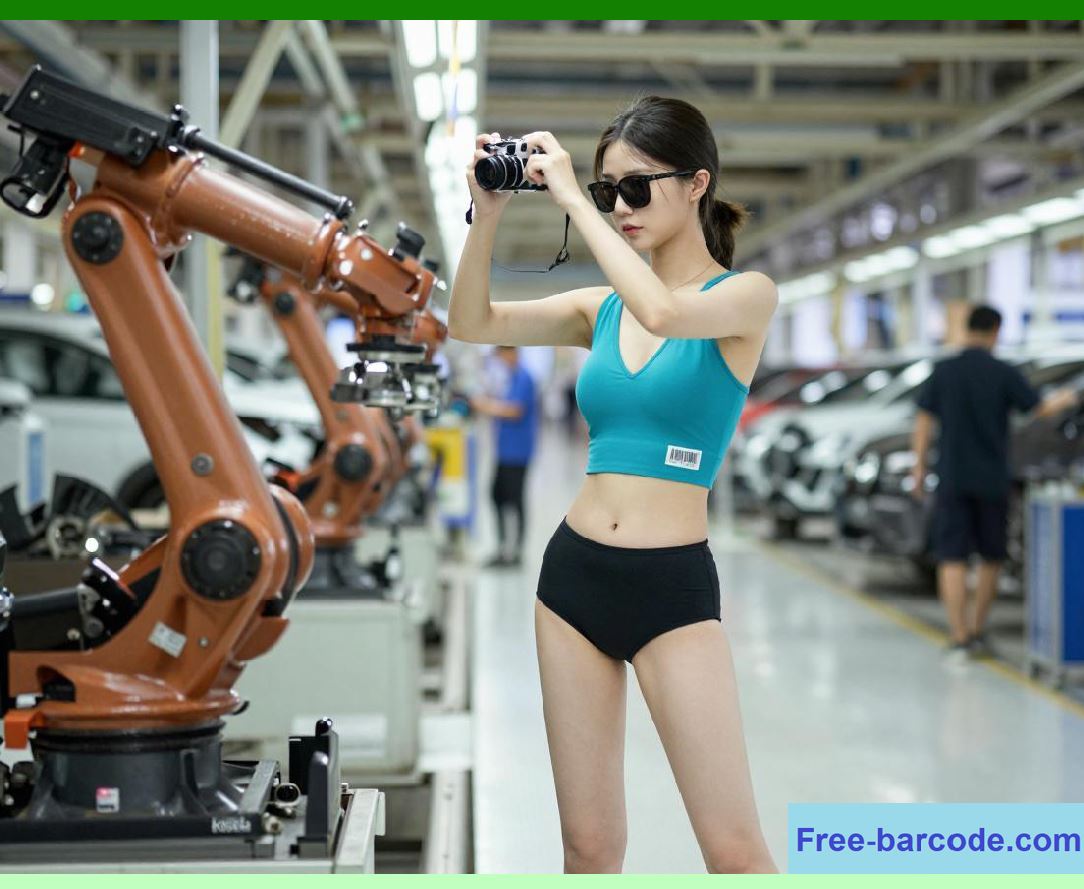
Yet the number that best captures the maturation of the Chinese robotics market is 253. According to data released by the China Machinery Industry Federation, Chinese-brand industrial robots have been deployed across 253 distinct categories in the national economic classification system, covering more than half of all industry categories . Five years ago, that figure was twelve percentage points lower. The implication is clear: robots are no longer confined to the automotive assembly line or the electronics cleanroom. They have moved into furniture manufacturing, food processing, shipbuilding, photovoltaic panel assembly, lithium battery coating, warehousing, and dozens of other sectors where the work is dirty, dangerous, repetitive, or simply difficult to staff. |

|
3. Applications Across Industries: Where Robots Actually Work |
The abstract statistic of 253 industry categories becomes meaningful only when one examines what robots are doing in those categories. The applications fall into several broad patterns, each with its own logic and its own set of practical examples. |
3.1 Automotive and Electric Vehicle Manufacturing |
The automotive industry remains the single largest customer segment globally, though its share varies by region. In China, automotive installations reached a record 78,900 units, driven by the construction of new electric vehicle plants and the retrofitting of existing lines for battery pack assembly and electric drivetrain production . In the United States, automotive installations held steady at approximately 13,500 units, remaining the largest customer sector even as growth came from elsewhere . |
The nature of automotive robot work has shifted. Traditional spot welding and painting applications remain important, but the growth areas are in battery module assembly, where robots handle cells that must be positioned with sub-millimeter precision, and in the final inspection of electric vehicles, where vision-equipped robots check panel gaps and surface finishes. In Brazil, automotive robot installations surged 212 percent to nearly 2,100 units, a jump attributed largely to investments by Chinese automakers building production capacity in the country . This illustrates a secondary market trajectory: as Chinese vehicle manufacturers expand globally, they bring their automation practices and equipment preferences with them. |
3.2 Electronics and Precision Assembly |
Electronics manufacturing, particularly in China, remains the largest single sector by installation volume. The 96,400 units installed in 2025 cover a range of tasks: printed circuit board assembly, smartphone component placement, display module testing, and the assembly of consumer devices that require consistent force control and visual alignment . The precision required in these applications has driven the adoption of collaborative robots that can work alongside human operators without safety cages, as well as high-speed delta robots for pick-and-place operations on small components. |
Outside China, electronics installations have fluctuated with inventory cycles and supply chain adjustments. The global electronics sector contracted in 2023 after a period of pandemic-era overstocking, but the long-term trend remains toward greater automation as component miniaturization makes manual assembly increasingly difficult . |
3.3 Metal Fabrication and Machinery |
The metal and machinery sector has become the third pillar of robot demand globally, and in China it grew forty-four percent in a single year to 78,700 units . The applications here are diverse. In foundries, robots perform die casting extraction and trimming, removing hot parts from molds in environments where human workers would require extensive protective equipment. In fabrication shops, robotic welding cells handle repetitive seam welding on structural components. In machine tending, robots load and unload CNC lathes and milling machines, a task that is monotonous but demands consistent positioning accuracy. |
The growth in this sector reflects a broader pattern: as the cost of robot systems declines and programming interfaces become more intuitive, smaller job shops that previously could not justify automation are finding viable applications. A welding robot that once required a dedicated programmer and a fixed production schedule can now be deployed with touch-screen interfaces and vision systems that locate parts without precise fixturing. |
3.4 Food and Beverage Processing |
Food and beverage manufacturing presents unique challenges for robotics: sanitation requirements, variable product shapes, and the need for washdown-rated equipment. Despite these constraints, the sector has become a significant growth area, particularly in the United States, where food and beverage installations rose thirty percent to 2,900 units in 2025 . The applications range from primary processing---cutting, portioning, and deboning---to secondary packaging, where robots load products into cartons and palletize finished goods for shipment. |
The sanitation factor is not trivial. A robot designed for a food processing facility must withstand daily washdowns with caustic cleaning agents, must use food-grade lubricants, and must be constructed with surfaces that do not harbor bacteria. Robot manufacturers have responded with models specifically engineered for these environments, including stainless steel versions with sealed joints and IP69K-rated protection. The payoff for food processors is consistency: a robot that places chicken breasts into trays at a rate of 120 per minute does so with identical weight and orientation every time, reducing giveaway and improving package appearance. |
3.5 Shipbuilding and Heavy Industry |
Shipbuilding and heavy fabrication represent some of the most difficult environments for automation. The work involves large, one-of-a-kind structures, welding in confined spaces, and surface preparation that generates dust and fumes. Yet this is precisely where robots offer the greatest benefit, because the alternative is subjecting human workers to hazardous conditions. |
Chinese robotics companies have developed specialized systems for these applications. Crawling robots that magnetically attach to steel hull surfaces perform rust removal, inspection, and painting on ship exteriors, replacing the 'spidermen' who once dangled from ropes at heights of tens of meters with only safety harnesses between them and the ground . In shipyards, gantry-mounted welding robots trace seams on large hull sections, while human operators supervise from control stations. These are not the general-purpose articulated arms of an automotive line; they are purpose-built machines designed around the specific geometry and environmental conditions of ship construction. |
3.6 Warehousing and Logistics |
The boundary between industrial robots and logistics automation has blurred considerably. Professional service robots for transport and logistics---a category that includes autonomous mobile robots in warehouses and distribution centers---grew twenty-one percent globally in 2025 to 117,500 units . In the United States, robots-as-a-service subscription models have become the dominant business model for these systems, lowering the barrier to entry for smaller logistics operators. |
Within manufacturing facilities, autonomous mobile robots now move materials between production stages, replacing the conveyor systems and manual carts of earlier decades. A robot that can navigate a factory floor, pick up a pallet of components, and deliver it to the correct workstation without a fixed guidepath represents a fundamental shift in how material flow is organized. The trajectory suggests that in the coming years, the distinction between a 'manufacturing robot' and a 'logistics robot' will become increasingly arbitrary. |
3.7 Photovoltaics and Lithium Battery Manufacturing |
Two industries that barely existed as robot customers a decade ago have become significant adopters. Photovoltaic panel manufacturing involves the precise placement of solar cells onto glass substrates, a task that demands both speed and accuracy; robots perform stringing, layup, and lamination loading operations. Lithium battery production requires handling of electrode sheets and separator films in controlled environments, with stacking and winding operations performed by high-precision robots. |
These industries are concentrated in China, which explains part of the country's robotics growth. But as solar and battery production expands to other regions---driven by energy transition policies and supply chain diversification---the equipment and expertise developed in Chinese factories will likely follow. |
|
4. Regional Dynamics: A Divergent Landscape |
The global market trajectory looks quite different depending on where one stands. |
4.1 Asia: China's Gravity and Japan's Decline |
Asia absorbed 457,315 robot shipments in 2025, thirteen percent more than the previous year, with China alone accounting for seventy-seven percent of the regional total . Beyond China, the picture is mixed. Japan, long the world's largest robot exporter, saw domestic installations fall nineteen percent to 36,219 units, dropping from second to third place globally behind the United States . The decline reflects weak investment in Japan's domestic manufacturing base, particularly in automotive, and a hesitancy to commit capital amid uncertain global trade conditions. |
South Korea held its position as the fourth-largest market with approximately 30,000 installations, roughly flat with recent years. The IFR expects new automotive investments to materialize in 2027 and 2028, which may break the country out of its current plateau . India, while still small in absolute terms at 10,500 units, grew fifteen percent and has averaged twenty-seven percent annual growth since 2020, making it the most dynamic emerging market in the region . |
4.2 The Americas: The United States Overtakes Japan |
The United States installed approximately 38,500 industrial robots in 2025, a twelve percent increase that pushed it past Japan to become the world's second-largest market . Growth came not from automotive, which remained stable as the largest customer segment, but from food and beverage, warehousing, logistics, and medical applications. This diversification is significant: it suggests that the American manufacturing base is automating for reasons beyond vehicle production, and that the benefits of robotics are spreading into sectors that have historically been labor-intensive and resistant to capital investment. |
Brazil posted the most dramatic regional growth, with installations rising thirty-eight percent to nearly 4,300 units, driven by a 212 percent surge in automotive robot purchases . Mexico, by contrast, declined seven percent, its third consecutive year of contraction . |
4.3 Europe: Investment Hesitation |
Europe presents a more cautious picture. Total installations fell fourteen percent to 73,054 units, with the automotive sector declining twenty-six percent . Germany, the largest European market, saw installations fall eight percent to fewer than 25,000 units, though it still accounts for forty-one percent of all EU installations . Italy declined eleven percent and France eight percent. |
The European slowdown reflects a combination of factors: automotive manufacturers are navigating the transition to electric vehicles with uncertain consumer demand, energy costs remain elevated, and the continent's broader economic growth has been sluggish. The IFR notes 'significant reluctance to invest' across industries and specifically within the automotive supply chain . Whether this is a cyclical pause or a longer-term recalibration remains to be seen, but for now, Europe is moving ahead more slowly than Asia and the Americas. |
|
5. The Policy and Strategy Dimension |
The market trajectory is not purely a matter of private investment decisions. National strategies have shaped the landscape, none more consequentially than China's. |
The IFR credits China's success to a national robotics strategy initiated a decade ago, under the 'Made in China 2025' framework, and now updated under the Fifteenth Five-Year Plan covering 2026 to 2030 . The current plan identifies physical AI and robotics as key engines of future economic growth, emphasizing technological self-reliance and the modernization of traditional industries. The goal is not merely to install more robots but to build a domestic robotics industry capable of competing globally---and on this measure, the strategy has achieved measurable results. China's industrial robot exports grew forty-eight percent in 2025, surpassing imports for the first time, with products shipped to 156 countries . |
In the United States, policy has focused on reshoring manufacturing and reducing dependence on foreign supply chains. The labor scarcity that makes reshoring difficult also makes automation attractive: a 2024 Deloitte study estimated that U.S. manufacturers could need 3.8 million new workers by 2033, with as many as 1.9 million of those jobs potentially going unfilled . Robots are not a complete solution to this gap, but they are the most practical response available for many tasks. |

|
6. What the Numbers Do Not Capture |
Statistics on installations and operational stock are useful for tracking the market's growth, but they obscure the qualitative changes occurring within it. |
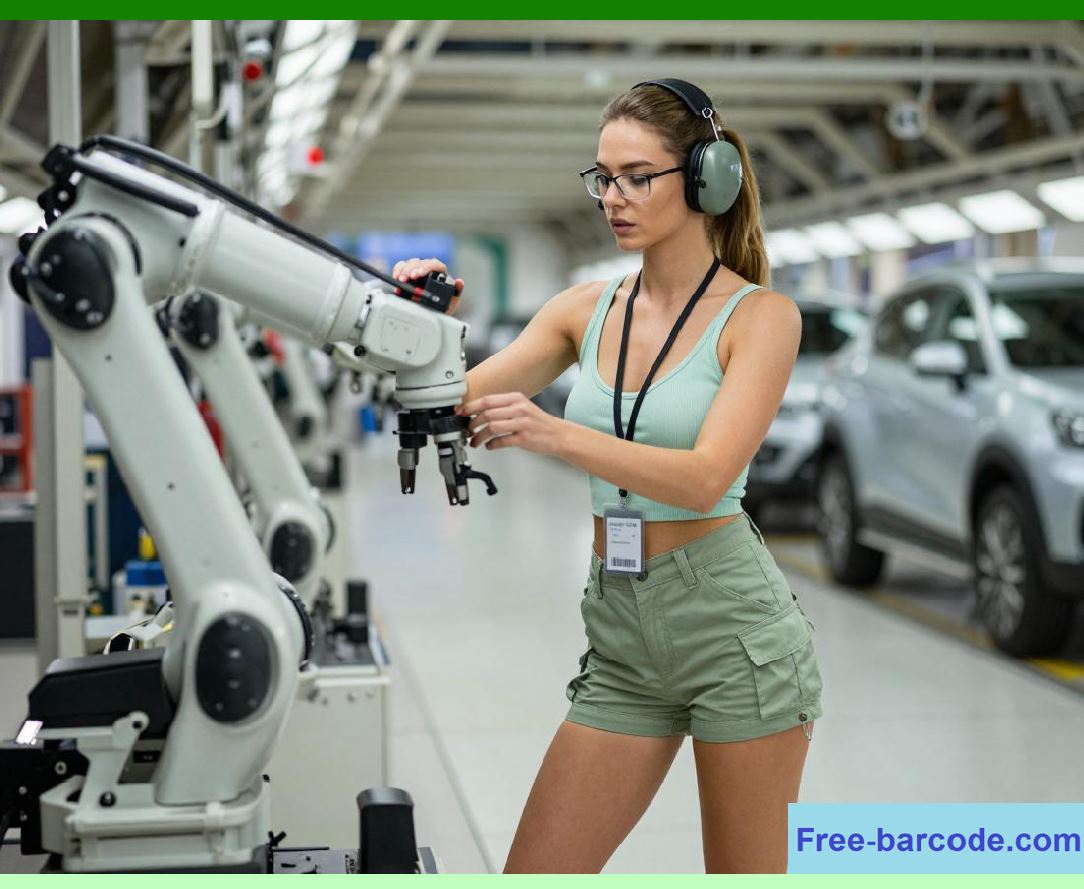
The first change is in ease of use. Earlier generations of industrial robots required specialized programmers who understood robot-specific languages and could teach positions through pendant interfaces. Modern systems increasingly incorporate simulation environments, digital twins, and intuitive programming interfaces that allow a manufacturing engineer to configure a robot without formal robotics training. FANUC, for example, has introduced AI-supported tools that help train robots to recognize objects, lowering the expertise barrier for new adopters . This matters because the next wave of robot adoption will come from small and medium-sized enterprises that lack dedicated automation engineers. |
The second change is in capability. Vision systems, force sensing, and machine learning have expanded what robots can do. A robot that once could only repeat a pre-programmed motion is now capable of adapting to part variation, detecting defects, and adjusting its grip force based on the object it is handling. These capabilities open applications that were previously impossible to automate: handling flexible materials, sorting randomly oriented parts from a bin, or performing quality inspection tasks that require judgment rather than simple measurement. |
The third change is in business models. Robots-as-a-service, particularly in logistics, allows customers to pay per use rather than purchasing equipment outright. This shifts the financial calculus for smaller operators and reduces the risk of adopting technology that may become obsolete. While RaaS remains a small fraction of the overall market, its growth signals a broader shift toward flexibility and away from the capital-intensive, fixed-asset model that characterized industrial automation in the twentieth century. |
|
7. Detailed Summary |
The market trajectory of industrial robotics, as of the mid-2020s, describes an industry that has moved decisively past the stagnation of the early part of the decade and entered a new phase of growth. More than five million industrial robots now operate in factories worldwide, a fleet that has doubled in seven years. Annual installations exceeded 600,000 units in 2025 and are projected to approach 806,000 by 2029. The drivers are structural: aging workforces in advanced economies, reshoring initiatives that bring production home without bringing workers back, and technological advances that make automation accessible to smaller enterprises. |
China stands at the center of this trajectory. With 354,000 installations in 2025, it accounted for fifty-nine percent of global deployments and hosted a domestic manufacturing base that now supplies fifty-five percent of the robots installed within its borders. The coverage of Chinese-brand robots across 253 industry categories, spanning more than half of the national economy's sector classification, demonstrates that robotics has moved well beyond the automotive and electronics applications that defined the industry's early decades. Robots now weld ship hulls, process food, assemble solar panels, coat lithium battery electrodes, and perform dozens of other tasks in environments that are hazardous, repetitive, or simply difficult to staff. |
The regional picture is uneven. The United States has overtaken Japan to become the second-largest market, with growth driven by food, logistics, and medical applications rather than automotive alone. Europe has slowed, with automotive investment hesitating amid the electric vehicle transition and broader economic uncertainty. India and Brazil represent dynamic emerging markets, albeit from small bases. South Korea and Japan, both mature markets with strong domestic robot industries, face demographic headwinds that may limit near-term growth. |
What the aggregate statistics do not fully convey is the qualitative shift in how robots are used. Vision, force sensing, and machine learning have expanded the range of tasks that can be automated. Intuitive programming interfaces have lowered the expertise barrier. New business models have reduced the financial risk of adoption. Together, these changes suggest that the market's growth is not merely a cyclical recovery but a broadening of robotics from a specialized tool for large manufacturers into a general-purpose technology for a wide range of industries. |
The trajectory ahead points toward continued expansion, with the IFR forecasting annual growth of five to ten percent in China through 2029 and continued strength in the Americas. The five-million-unit milestone is not an endpoint but a marker on a curve that shows little sign of flattening. For industries that have not yet adopted robotics, the question is no longer whether the technology will become relevant to their operations, but when the economics will tip in favor of adoption. For those already using robots, the challenge is integration: making machines work together, with human workers, and with the data systems that increasingly govern production. The market trajectory, in other words, is not just about how many robots are sold. It is about how thoroughly the logic of automation has penetrated the industrial economy---and by that measure, the process is far from complete. |
 cs@easiersoft.com