Chapter 78: The Trust Imperative |
Summary |
As industrial robots transition from pre-programmed automatons to autonomous agents capable of sensing, deciding, and acting without direct human intervention, the nature of failure changes fundamentally. In a traditional robot cell, an error is a software problem: a logic fault, a misconfigured waypoint, a sensor that fails to trigger. The consequence is typically a stopped line and a maintenance ticket. In an autonomous system, an error becomes a physical problem. A misclassified object, a stale map, a corrupted sensor stream, or a poorly calibrated confidence threshold can translate directly into a collision, a dropped payload, a patient harmed, or a field mis-sprayed. This chapter examines the trust imperative that arises from this shift. Trust in autonomous industrial robots is not a matter of user confidence or marketing claims. It is an engineering property that must be built into the data pipeline, the perception stack, and the decision architecture. The chapter explores how data quality and integrity assurance become safety-critical functions across multiple industries, drawing on examples from logistics, agriculture, healthcare, manufacturing, and field services. It concludes with a detailed synthesis of the trust assurance practices that distinguish autonomous deployments from their conventional predecessors. |

|
1. The Nature of the Shift: From Logic Errors to Physical Consequences |
For most of the history of industrial robotics, the relationship between cause and effect was tightly bounded. A robot followed a trajectory. If the trajectory was wrong, the robot might crash into a fixture or drop a part. The failure was deterministic, repeatable, and diagnosable by reading the program. Safety was achieved through physical separation: fences, light curtains, and interlocked gates kept humans away from the machine's reach envelope. The software could be flawed, but the physical world was kept at a distance. |
Autonomy dissolves that boundary. When a robot perceives its environment, makes judgments about what it sees, and chooses its own actions, the software no longer merely controls motion. It interprets reality. An error in interpretation is an error in action. A perception system that mistakes a reflective surface for free space does not produce a logical inconsistency in a log file. It produces a robot that drives into a wall. A classification model that labels a damaged pallet as intact does not generate a warning in a dashboard. It generates a collapsed stack that may injure a nearby worker. |
This shift has a profound implication for trust. In conventional automation, trust was largely institutional: the robot was trusted because it was caged, and the cage was trusted because it was designed according to well-understood standards. In autonomous systems, trust must be earned continuously, through the integrity of the data that drives every decision. The question is no longer 'Is the robot in a safe place' but 'Is the robot's picture of the world accurate enough to act upon' |
Regulatory frameworks are beginning to reflect this reality. The European Union's Machinery Regulation, which applies fully from January 2027, explicitly addresses machinery with 'fully or partially self-evolving behaviour using machine learning approaches ensuring safety functions' as a category requiring enhanced conformity assessment . This is a recognition that when a machine's behavior is not fully specified in advance, the assurance of safety must rest on the quality of the data and the robustness of the learning system, not merely on the deterministic logic of a controller. |

|
2. Data Quality as a Safety Function in Warehouse Logistics |
The warehouse sector offers the most mature examples of autonomous systems operating at scale, and consequently the clearest evidence of how data quality becomes a physical safety concern. |
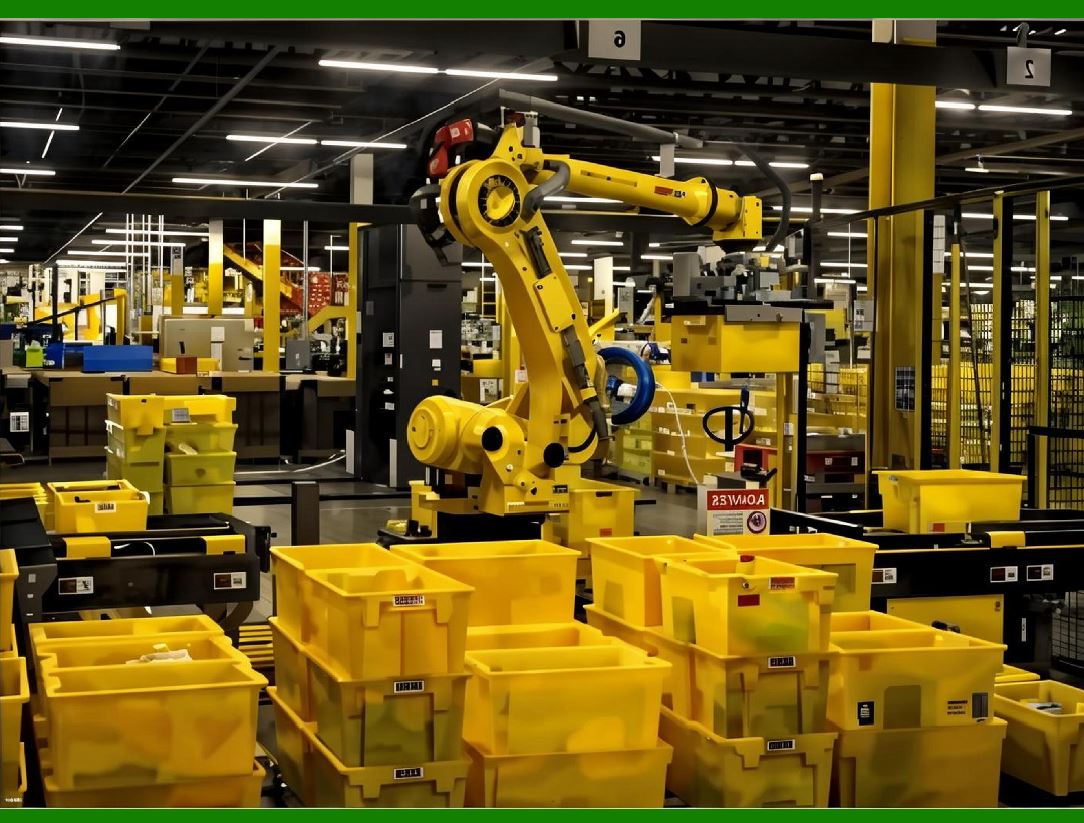
Consider the autonomous mobile robots that now move millions of items through fulfillment centers. These robots rely on a combination of pre-mapped facility data, real-time sensor observations, and localization algorithms to navigate. The integrity of the map is not a convenience; it is a safety requirement. A map that is stale by even a few hours---perhaps because a pallet was moved, a temporary barrier erected, or a spill left unmarked---can cause a robot to plan a path through an occupied space. In a facility where human pickers and robots share aisles, the consequence is not a delayed order but a potential collision. |
The data quality challenge extends beyond static maps. Autonomous robots in warehouses frequently interact with inventory data that is maintained by separate systems. A robot dispatched to retrieve a specific item relies on the warehouse management system's record of that item's location. If the record is wrong---because a previous pick was not logged, or a cycle count was inaccurate---the robot arrives at an empty slot and must either abort its mission or attempt a recovery behavior. Aborting is safe but inefficient. Recovery behaviors, which may involve searching adjacent locations or extending a manipulator into uncertain space, introduce risk that was not present when the system's assumptions held true. |
Leading implementations address this through continuous data reconciliation. Drone-based inventory audits, equipped with cameras and barcode scanners, perform nightly cycle counts that reconcile physical stock against system records . These audits are not merely an efficiency measure; they are a data integrity function that directly supports the safe operation of downstream autonomous systems. When a discrepancy is detected, the system can flag the affected location and prevent robots from planning paths or picks that depend on the erroneous record. The trustworthiness of the entire autonomous fleet is contingent on the trustworthiness of the data it consumes. |
The same principle applies to the perception systems that guide robotic arms in piece-picking applications. A vision system that estimates the pose of an object in a bin must do so with sufficient accuracy that the gripper can approach without collision. If the pose estimate is biased---perhaps because the lighting changed, or because the object's surface properties confused the depth sensor---the arm may collide with the bin wall or the object itself. In a high-throughput operation, even a small rate of such errors accumulates into significant physical risk. The industry response has been to treat perception confidence as a gating function: when confidence falls below a threshold calibrated to the physical risk of the operation, the robot pauses and requests human intervention. The threshold itself becomes a safety parameter, subject to validation and change control. |
|
3. Temporal Integrity in Agricultural Autonomy |
Agriculture presents a distinct set of data integrity challenges because the operating environment is unstructured, dynamic, and spatially expansive. An autonomous agricultural robot---whether a field sprayer, a harvester, or a seeder---must align sensor observations across time and space with a precision that directly determines the physical outcome of its work. |
The concept of temporal integrity is central here. In a moving platform, a camera frame, a LiDAR scan, and a position estimate from a satellite navigation system each carry their own timestamp. If those timestamps are not precisely aligned, the fused representation of the world is distorted. A weed that is correctly identified in a camera image may be assigned the wrong location in the field if the position estimate corresponds to a different moment in time. The sprayer then applies herbicide to the wrong spot---or fails to apply it where needed. The error is not an abstract data quality metric. It is a physical action with environmental and economic consequences . |
The challenge intensifies as agricultural robots move from single-sensor operations to multi-sensor fusion. A modern implement may combine cameras, LiDAR, radar, and inertial measurement units, all sampling at different rates and with different latencies. The platform itself is subject to vibration, uneven terrain, and varying speed. Under these conditions, the alignment of observations to a common spatial and temporal frame becomes a non-trivial engineering problem. Errors in alignment manifest as spatial drift: the robot's internal model of where a plant is located diverges from the plant's actual position. Over the course of a field pass, this drift can accumulate to the point where the robot's actions are systematically misaligned with reality . |
The trust imperative in agriculture therefore requires that temporal integrity be treated as a first-class safety property. Systems must monitor for synchronization failures and degrade gracefully when they occur. If the time alignment between a sensor and the position estimate exceeds a threshold---perhaps because of a dropped satellite signal or a processing delay---the robot should not continue to act on the fused data as if it were valid. It should slow, stop, or revert to a less capable but more predictable mode of operation. The farmer who deploys an autonomous weeder is trusting not merely that the machine can identify weeds, but that it knows where they are with sufficient accuracy that its physical actions correspond to its intentions. |

|
4. Healthcare Robotics and the Integrity of Patient-Centric Data |
In healthcare settings, the consequences of data integrity failures are measured in patient safety. Autonomous robots in hospitals perform tasks that range from medication delivery to specimen transport to logistics support. Each of these tasks involves a chain of data dependencies, and a failure anywhere in that chain can have clinical implications. |
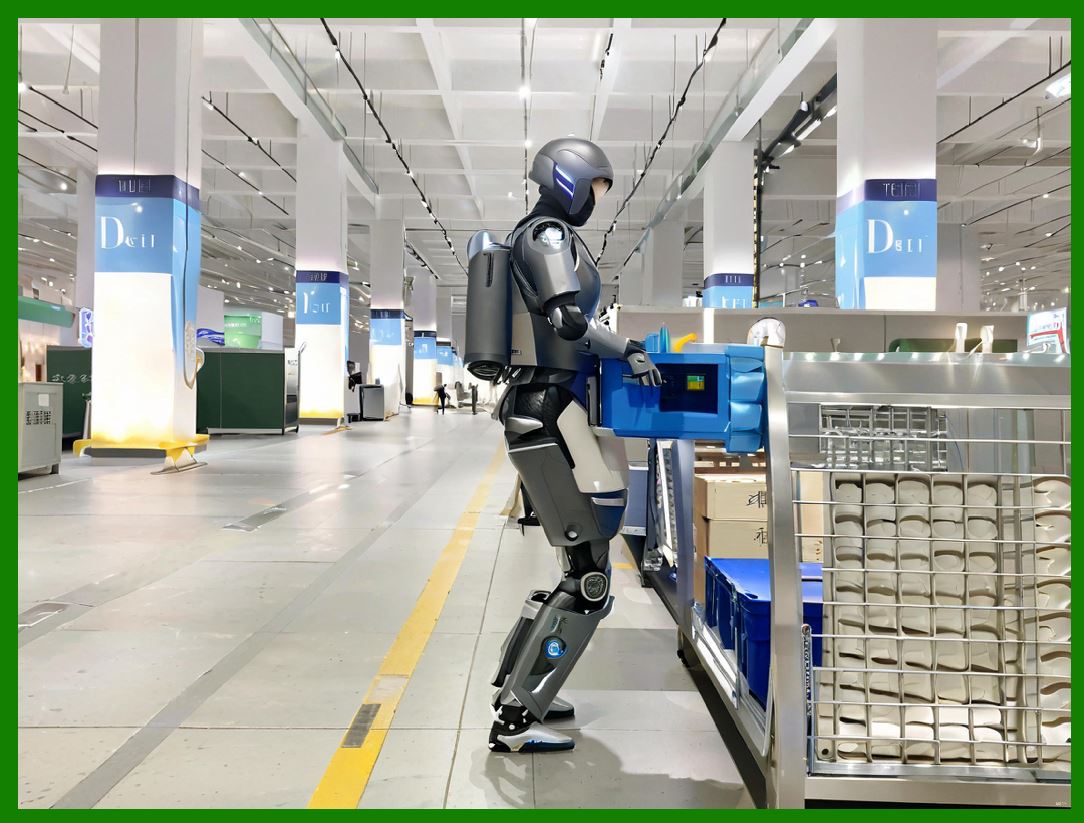
Consider an autonomous medication delivery robot navigating a hospital corridor. Its navigation system depends on a map of the facility that must reflect the current state of the environment---not merely the locations of walls and elevators, but also the presence of temporary obstacles, restricted areas, and construction zones. A map that is accurate at deployment but not updated as the facility changes is a latent safety hazard. The robot may plan a route through a corridor that has been converted to an isolation ward, or attempt to enter an elevator that is reserved for emergency use. The integrity of the facility map is not an IT concern; it is a clinical safety concern. |
Beyond navigation, the data associated with the robot's payload carries its own integrity requirements. A medication delivery robot must ensure that the item it carries is the item that was requested, that it is delivered to the correct location, and that the chain of custody is maintained throughout. This is a data integrity problem as much as a physical one. If the robot's task assignment is corrupted---perhaps due to a software fault, a network error, or a mis-scan at the loading station---the robot may deliver the wrong medication to the wrong patient. The physical act of delivery is only as trustworthy as the data that authorized it. |
Research on hospital transport scheduling highlights the complexity of these data dependencies. Multi-robot systems must coordinate across floors, elevators, and service points, balancing urgency against capacity . The scheduling algorithms that govern this coordination depend on accurate estimates of travel time, elevator availability, and task priority. If these estimates are derived from stale or incomplete data, the system's decisions may be suboptimal in ways that affect patient care. A medication that arrives late because a robot was routed inefficiently is a data quality problem with a clinical outcome. |
The healthcare sector's response has been to emphasize traceability and verification. Autonomous delivery systems in hospitals increasingly incorporate multiple checkpoints where data is validated against physical reality: barcode scans at loading, location confirmation at arrival, and identity verification at handoff. These are not merely administrative conveniences. They are the mechanisms by which trust in the system's autonomy is maintained. The robot is trusted to act independently precisely because the data that guides its actions is continuously verified against the world it operates in. |
|
5. Manufacturing and the Limits of Learned Behavior |
In manufacturing, autonomy is often introduced incrementally. A robot that has performed a welding task under strict positional control for years may be upgraded with a vision system that allows it to adapt to part variation. A collaborative robot that once repeated a fixed sequence may be given the ability to detect and respond to human presence. These are steps toward autonomy, and each step introduces new data integrity requirements. |
The most subtle challenge arises when machine learning is used to ensure safety functions. The European Machinery Regulation's inclusion of safety components with 'self-evolving behaviour' in its high-risk category reflects a regulatory recognition that learned behavior is fundamentally different from programmed behavior . A traditional safety function---an interlock, a light curtain, a speed monitor---is deterministic. It either functions or it fails, and its failure modes are well understood. A learned safety function---a vision-based human detector, for example---has failure modes that are statistical and context-dependent. It may perform well on the data it was trained on and poorly on data it has never seen. |
The trust imperative in this context requires that the data used to train, validate, and monitor learned safety functions be held to a standard commensurate with the risk. A vision system that is intended to detect humans in a collaborative workspace must be trained on a dataset that represents the full range of human appearances, postures, and clothing that may occur in that workspace. It must be validated on data that is independent of the training set, and it must be monitored in operation for signs of distributional shift---the gradual divergence between the data the system encounters and the data it was designed for. A change in lighting conditions, a new uniform color, or a rearrangement of the workspace can all degrade performance in ways that are invisible to the system itself. |
Manufacturers who deploy such systems are increasingly required to document not only the performance of the learned function but also the provenance and quality of the data behind it. This is a significant cultural shift. In conventional automation, the safety case was built on the logic of the controller. In autonomous systems, the safety case must also account for the data that shaped the controller's behavior. The question 'Is this robot safe' becomes inseparable from the question 'Is the data that defines this robot's behavior trustworthy' |

|
6. Field Services and the Problem of Unstructured Environments |
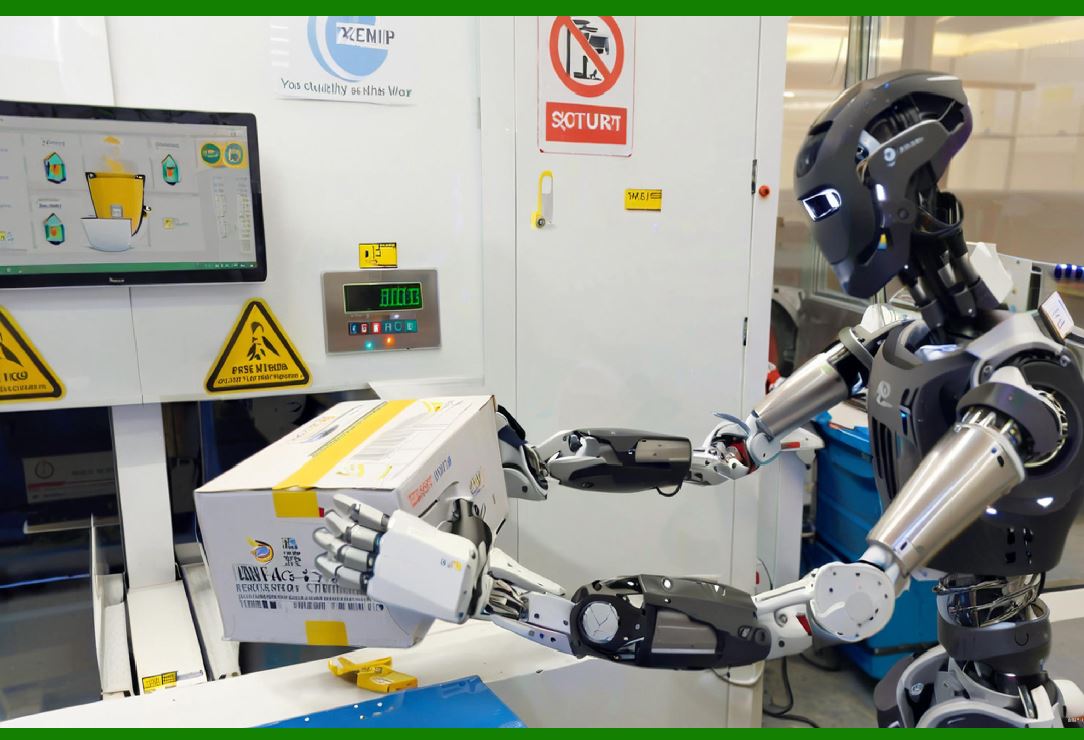
The most demanding test of data integrity for autonomous robots occurs in field services: inspection, maintenance, and intervention in environments that were never designed for robots. An autonomous robot inspecting a bridge, a pipeline, or a power line must operate in a world of unpredictable geometry, variable lighting, and incomplete prior information. The data it collects is not merely a guide to its own actions; it is the product it delivers to its human operators. |
Consider an autonomous drone or crawler performing structural inspection. Its value depends on the accuracy of the data it captures: the location of a crack, the dimension of a corrosion pit, the thermal signature of a failing joint. If the robot's localization is imprecise, the inspection data cannot be reliably mapped to the structure. A defect that is reported at one location may actually be at another, or the same defect may be reported twice as two separate findings. The integrity of the inspection data is inseparable from the integrity of the robot's spatial referencing. |
The same principle applies to autonomous systems in mining, construction, and energy. A robot that surveys a stockpile or inspects a turbine blade must maintain a coherent model of its own position and orientation relative to the structure it is examining. Errors in this model propagate directly into the data product. The human who reviews the inspection results must be able to trust not only that the robot saw what it claims to have seen, but that it saw it where it claims to have seen it. |
Field service robotics thus places a dual burden on data integrity. The robot's own safety depends on accurate perception and localization. The value of its work depends on the accuracy of the data it produces for human decision-makers. Both depend on the same underlying foundation: the trustworthiness of the data pipeline from sensor to decision to action to report. |
|
7. Architectural Responses: Building Trust into the System |
Across these diverse industries, a common set of architectural patterns is emerging for managing the trust imperative in autonomous robots. These patterns are not industry-specific; they are responses to the fundamental challenge of acting safely in an uncertain world. |
The first pattern is continuous data validation. Rather than treating data quality as a property established at commissioning and assumed thereafter, autonomous systems increasingly validate data in real time. Map data is checked against sensor observations. Sensor observations are checked against each other. Task assignments are verified against physical state. When validation fails, the system escalates: it may slow down, request assistance, or enter a safe state. The specific response depends on the risk associated with the failure, but the principle is consistent: trust must be continuously earned, not merely assumed. |
The second pattern is graceful degradation. An autonomous robot must be designed to fail safely, which means that when data integrity is compromised, the system should transition to a mode of operation that is more conservative but more predictable. A robot that loses localization accuracy should reduce speed and rely on simpler, more robust behaviors. A perception system that encounters novel conditions should reduce its confidence and defer to human judgment. The ability to recognize the limits of one's own knowledge---and to act accordingly---is a defining characteristic of a trustworthy autonomous system . |
The third pattern is provenance and traceability. When an autonomous system makes a decision with physical consequences, the data that informed that decision should be recoverable and reviewable. This is not merely a regulatory requirement; it is an operational necessity. When a failure occurs, the ability to reconstruct the data state at the time of the failure is essential for diagnosis and improvement. Systems that log their inputs, their internal states, and their outputs create the evidentiary basis for trust. Without such traceability, trust can only be asserted, never verified. |
The fourth pattern is human oversight designed for intervention. Autonomy does not mean the absence of humans; it means a redefinition of their role. In trustworthy autonomous systems, humans are positioned to intervene when the system encounters situations beyond its competence. This requires that the system communicate its state and its uncertainties in terms that humans can understand and act upon. A robot that silently fails, or that continues to operate despite degraded data, undermines the very possibility of effective oversight. The design of the human-machine interface is therefore a data integrity concern: the human can only exercise judgment if the system provides an accurate picture of what it knows and what it does not. |
|
8. Detailed Summary |
The transition from programmed automation to autonomous operation changes the nature of trust in industrial robots. In conventional systems, trust was institutional and structural: the robot was trusted because it was constrained, and the constraints were trusted because they were designed according to established standards. In autonomous systems, trust must be earned through the integrity of the data that drives every perception, decision, and action. |
This chapter has examined that imperative across five domains. In warehouse logistics, the integrity of maps, inventory records, and perception confidence scores determines whether robots can safely share space with humans and handle goods without damage. In agriculture, temporal integrity---the precise alignment of sensor observations across time and space---determines whether the robot's physical actions correspond to the actual state of the field. In healthcare, the integrity of task assignments, facility maps, and chain-of-custody data determines whether autonomous delivery systems can be trusted with patient-critical materials. In manufacturing, the challenge of learned safety functions requires that the data used to train, validate, and monitor these functions be held to a standard commensurate with the physical risk they mitigate. In field services, the integrity of spatial referencing determines both the robot's own safety and the value of the inspection data it produces. |
The architectural responses that are emerging across these domains share a common logic. Continuous data validation replaces the assumption of static correctness. Graceful degradation replaces the binary distinction between operational and failed. Provenance and traceability replace the opaque confidence in system behavior. Human oversight designed for intervention replaces the fiction of full autonomy. These patterns represent a maturation of the field: a recognition that autonomy is not a binary property but a spectrum of capabilities, each with its own data requirements and its own trust conditions. |
The trust imperative is ultimately a design imperative. It requires that engineers treat data quality not as a downstream concern but as a primary safety function. It requires that organizations building and deploying autonomous systems invest in the infrastructure of validation, monitoring, and traceability with the same seriousness they invest in the physical safety of the robot itself. And it requires a cultural shift in how safety is understood: from the absence of software errors to the presence of data integrity. As robots move from the cage to the open world, the integrity of the data they carry becomes the foundation of every safe action they take. |
 cs@easiersoft.com