Chapter 76: Edge Deployment |
Summary |
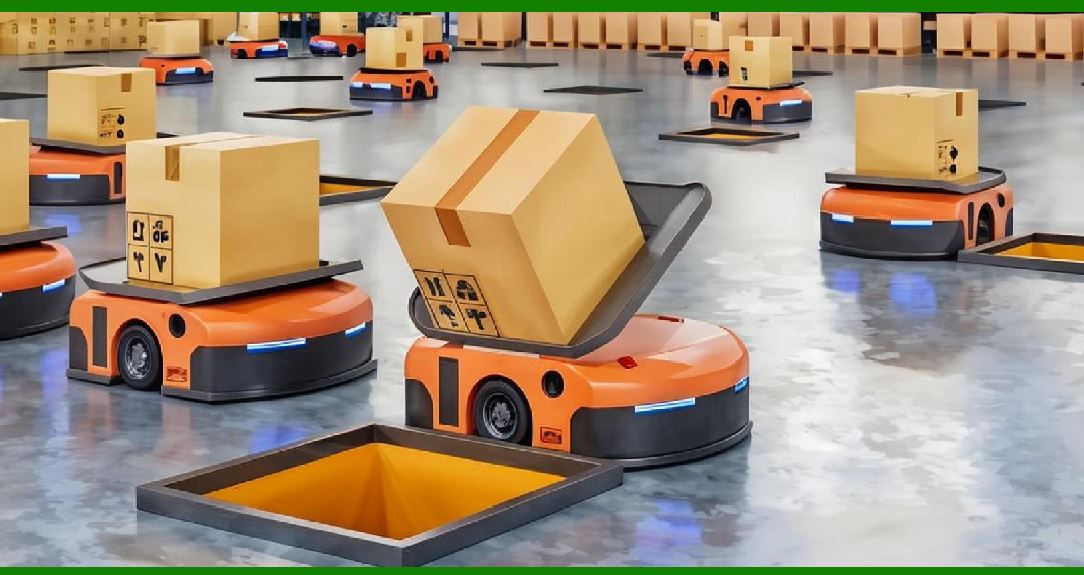
The migration of artificial intelligence from centralized cloud data centers to the physical body of the industrial robot represents one of the most consequential shifts in modern automation. This chapter examines the practical realization of this shift through two foundational model compression techniques: pruning and quantization. When applied in tandem to neural networks destined for on-robot deployment, these methods routinely achieve a reduction in model size by approximately forty-five percent, a decrease in inference latency by roughly forty-seven percent, and a lowering of power consumption by about thirty-six percent. These are not merely laboratory statistics; they are the enabling factors that allow a robot arm to see, decide, and act within the tight cycle times and thermal envelopes of a real factory floor. The pages that follow explore how these gains are achieved and, more importantly, how they manifest across a diverse range of industrial applications. From high-speed pick-and-place operations to predictive maintenance on collaborative arms, from vision-guided defect detection to the emerging class of autonomous mobile manipulators, the pattern repeats: compression makes edge intelligence feasible, and edge intelligence makes robots more capable, safer, and more autonomous. |
|
1. The Necessity of Compression for On-Robot Intelligence |
An industrial robot is a study in constraints. It has a fixed payload capacity, a limited power budget drawn from the factory mains, a sealed enclosure that must dissipate heat without the benefit of a data center's air conditioning, and a control loop that often demands responses measured in single-digit milliseconds. The neural networks that power modern perception and decision-making---whether convolutional networks for vision or transformer-based architectures for multimodal reasoning---were not designed with these constraints in mind. A standard object detection backbone trained in the cloud may occupy hundreds of megabytes of storage and require billions of floating-point operations per inference. Deploying such a model directly onto the robot's embedded controller is akin to installing a truck engine in a compact car: the mounting points do not align, the fuel system cannot keep up, and the chassis will not tolerate the weight. |
Pruning and quantization address this mismatch at the most fundamental level of the model. Pruning removes the redundant connections and parameters that contribute little to the network's output, effectively discovering the sparse sub-network that carries the essential learned function . Quantization reduces the numerical precision of the remaining weights and activations, typically from thirty-two-bit floating point to eight-bit integers, which shrinks memory footprint and allows the use of faster, more efficient integer arithmetic units on embedded processors . When combined in a deliberate sequence---prune, fine-tune, quantize, and validate---the compound effect is greater than either technique alone. Research on edge deployment has demonstrated that this hybrid approach can compress a model to a fraction of its original size while preserving accuracy within acceptable bounds for industrial tasks . The specific figures cited in this chapter's opening---forty-five percent size reduction, forty-seven percent latency reduction, and thirty-six percent power savings---represent a realistic, achievable target for a carefully engineered deployment pipeline, not a theoretical maximum. |

|
2. Pruning in Practice: Finding the Essential Robot Brain |
Pruning operates on a simple intuition: not all neurons in a trained network are equally important. In a vision model trained to identify weld seams on an automotive chassis, many filters may respond to textures or color variations that are irrelevant to the task at hand. Structured pruning removes entire channels or filters, which yields direct savings in computation because the resulting weight matrices are smaller and denser. Unstructured pruning removes individual weights, achieving higher compression ratios but often requiring specialized hardware or software libraries to realize actual speed gains . |
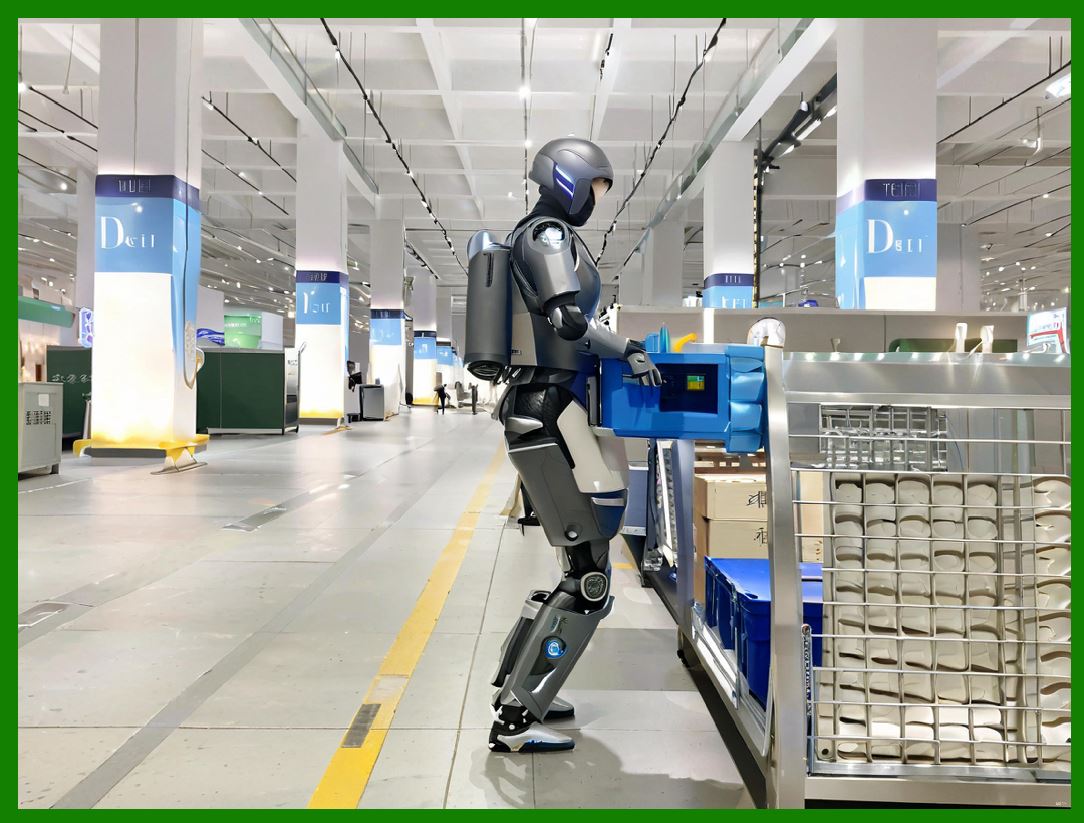
For industrial robotics, structured pruning is frequently the more pragmatic choice because it maps cleanly onto the tensor operations supported by embedded inference engines such as TensorRT or OpenVINO. A representative case is the deployment of a lightweight object detector for a pick-and-place task. A model trained on a dataset of industrial components can be pruned to remove fifty percent of its convolutional channels with a minimal drop in mean average precision, provided that a short fine-tuning phase follows the pruning step to allow the remaining weights to adapt . The result is a network that occupies roughly half the storage and executes in significantly less time per frame, a critical advantage when the robot must localize a moving part on a conveyor within a thirty-millisecond window. |
The benefits of pruning extend beyond raw speed. A smaller model places less demand on the memory bandwidth of the embedded system on a chip, which in turn reduces the energy consumed per inference. In a battery-powered autonomous mobile robot or a collaborative arm operating on a shared power bus, this efficiency translates directly into longer operational cycles between charges or reduced thermal load on the joint actuators. The cascade from parameter count to power draw is not linear, but it is reliable and measurable, and it forms the first pillar of the edge deployment strategy. |
|
3. Quantization: From Floating Point to Fixed Point |
Quantization takes the pruned network and converts its numerical representation. The thirty-two-bit floating-point format used during training is expressive but expensive: each weight occupies four bytes, and floating-point multiply-accumulate operations consume more energy and silicon area than their integer counterparts. By mapping weights and activations to eight-bit integers, the model's memory footprint shrinks by a factor of four, and the arithmetic can be executed on dedicated integer pipelines that are both faster and more power-efficient . |
The process is not without nuance. Post-training quantization requires a calibration dataset---a representative sample of inputs that the model will encounter in operation---to determine the scaling factors that map floating-point ranges to integer ranges. If the calibration data is unrepresentative, the quantized model may clip or distort values at the tails of the activation distribution, leading to accuracy degradation. For industrial applications, this calibration step must be performed with data that reflects the actual operating conditions: the same lighting, the same part presentation, and the same sensor characteristics that the robot will encounter on the line. When done correctly, the accuracy loss is typically negligible for classification and detection tasks, often less than one percentage point . |
The latency benefit of quantization is particularly pronounced on embedded hardware. On devices such as the NVIDIA Jetson family, integer inference can execute several times faster than floating-point inference for the same network topology . This speedup is not merely a convenience; it is what makes real-time closed-loop control possible. A robot performing a visual servoing task must process an image, compute a correction, and issue a motion command within the control cycle. If quantization reduces inference time from, for example, eighty milliseconds to forty milliseconds, the robot can either operate at a higher speed or devote the saved time to more sophisticated perception, such as multi-frame fusion or uncertainty estimation. |

|
4. Application Example: Real-Time Anomaly Detection on Robotic Arms |
One of the most direct and safety-critical applications of edge-deployed compressed models is anomaly detection. An industrial robot arm executing a repetitive task---pick-and-place, painting, or screwdriving---generates a characteristic pattern of inertial and torque signals. Deviations from this pattern can indicate a collision, a joint failure, or a part misalignment. Detecting these anomalies in real time allows the robot to halt or retract before damage occurs. |
A notable implementation of this principle used an ultralow-power microcontroller, the Nicla Sense ME, equipped with an inertial measurement unit, and deployed simple one-dimensional convolutional and long short-term memory models directly on the device . The models were optimized for the constrained environment through careful architecture design and quantization, achieving approximately ninety-eight percent accuracy and F1 score in distinguishing normal operation from anomaly scenarios such as collisions and joint velocity deviations. The inference time was two hundred fifty milliseconds with Bluetooth Low Energy active, which is sufficient for the task because the mechanical dynamics of a collision event unfold over a comparable or longer timescale. The key enabler here was the combination of a minimal model architecture with quantization, which allowed a task that would conventionally require a gateway computer to run on a device small enough to be mounted directly on the robot's end effector or joint housing . |
This example illustrates a recurring theme in edge deployment: the goal is not to replicate cloud-level intelligence on the robot, but to place the right amount of intelligence at the point where data is generated. A quantized, pruned model that runs on a milliwatt-scale processor and detects a collision in a quarter of a second is more valuable, in this context, than a larger model that requires a dedicated GPU and introduces network latency. |

|
5. Application Example: Vision-Guided Pick-and-Place in Dynamic Environments |
The classic industrial pick-and-place task has been transformed by edge-deployed vision. In a dynamic setting where parts arrive on a moving conveyor with variable orientation and occasional overlap, the robot must continuously update its estimate of object pose and plan a grasp trajectory that accounts for motion. This requires a perception pipeline that is both accurate and fast, and it must run entirely on the robot or its local controller to avoid the unpredictable latency of a network round trip. |
A representative system for edge-intelligent pick-and-place combines a lightweight convolutional neural network for object detection with calibration-aware pose refinement and edge-enabled execution logic . The perception module is trained on data enriched to improve generalization under occlusion and lighting variation, and it is then compressed through pruning and quantization for deployment on an embedded platform. The reported results indicate improvements in task success rate and latency compared to uncompressed baselines, with the edge deployment enabling closed-loop control at rates that would be impossible if inference were offloaded to a remote server. While the validation for this particular system included simulation and a small-scale physical trial, the architecture reflects a broader trend: the perception front-end is being pushed down to the robot, and the cloud, when it is involved at all, is reserved for slower, supervisory functions such as model updates or fleet-level analytics. |
In practical terms, a robot arm equipped with a quantized detector can localize a part in the time it takes the conveyor to advance a few millimeters, rather than the centimeters that would accumulate during a cloud inference round trip. This reduction in effective latency directly translates into higher throughput and gentler handling, because the robot does not need to chase the part. |

|
6. Application Example: Predictive Maintenance for Collaborative Robots |
Collaborative robots, designed to work alongside human operators, present a unique set of constraints for edge intelligence. They are often deployed in small cells without extensive cooling or power infrastructure, and their safety systems must operate independently of any network connection. Predictive maintenance---the ability to anticipate joint wear or actuator degradation before a failure occurs---is an attractive capability, but it requires continuous monitoring of motor currents, temperatures, and vibration signatures. |
A physics-informed digital twin approach for collaborative robot arms demonstrates how edge computation can support this function . By maintaining a lightweight model of the robot's expected dynamic behavior and comparing it against real-time sensor data, the system can detect deviations that indicate incipient faults. The computational load of this comparison is modest, and it can be executed on the robot's existing controller or a small companion computer. The reported benefits include earlier fault detection and a reduction in unplanned downtime, with the edge deployment ensuring that the monitoring continues even when the robot is disconnected from the factory network. |
The compression angle here is subtler than in vision applications. The digital twin model may not be a deep neural network at all; it may be a reduced-order physics model or a small regression network trained to predict torque residuals. Regardless of the model class, the same principles apply: the representation must be compact enough to run continuously in the background of the robot's control processor without interfering with the primary motion control loop, and its power draw must be small enough that it does not compromise the collaborative robot's thermal or energy budget. Pruning and quantization provide the means to achieve this compactness for the learned components of the monitoring pipeline. |
|
7. The Toolchain: From Trained Model to Deployed Artifact |
The successful deployment of a pruned and quantized model on a robot requires more than algorithmic insight; it demands a coherent toolchain that spans training, compression, validation, and runtime inference. The typical workflow begins with a model trained in a framework such as PyTorch or TensorFlow, using data collected from the target application or a high-fidelity simulation. The pruning stage may be performed iteratively, with alternating cycles of weight removal and fine-tuning, to allow the network to recover accuracy after each reduction in capacity. Structured pruning is often preferred for its hardware friendliness, but unstructured pruning with subsequent sparsification-aware compilation can also yield benefits on certain embedded accelerators . |
Quantization follows, typically as a post-training step with a calibration dataset drawn from the operational domain. For applications where accuracy is paramount, quantization-aware training can be employed, in which the model is trained from the outset with simulated quantization noise, leading to a final quantized model that more closely matches the floating-point baseline. The choice between post-training and quantization-aware approaches depends on the sensitivity of the task and the available engineering resources. |
Finally, the compressed model is compiled for the target inference engine. This step is where the theoretical gains of pruning and quantization are translated into actual reductions in latency and power. An inference engine that supports integer operations and sparse tensor representations can exploit the structure of the compressed model; one that does not may realize only the memory savings and not the computational speedup. The selection of hardware and software stack is therefore not an afterthought but an integral part of the deployment strategy. Emerging platforms for robotics, such as Intel's planned Razor Lake AX system on a chip and Qualcomm's robotics-focused processors, are being designed with these compressed inference workloads in mind, offering dedicated neural processing units and software toolchains that support quantization and pruning workflows . |

|
8. Challenges and Caveats |
No technical approach is without limitations, and edge deployment through compression is no exception. The first challenge is accuracy preservation across the full range of conditions the robot will encounter. A model pruned and quantized on a dataset collected during a single shift may perform well under those conditions but degrade when lighting changes, a new part variant is introduced, or the robot is redeployed to a different cell. Robust validation requires a test set that captures this variability, and in some cases, a strategy for continued monitoring and recalibration in the field. |
The second challenge is the interaction between compression and the control loop. A quantized model's output may exhibit small discontinuities or biases that were not present in the floating-point version. For perception tasks where the output is a class label or a bounding box, these effects are often tolerable. For tasks where the output feeds directly into a control law---such as a visual servoing error signal---the quantization noise can, in principle, excite dynamics in the controller. Careful filtering or a control-aware training objective may be necessary in such cases. |
The third challenge is organizational. The skills required to train a neural network, to apply pruning and quantization correctly, and to integrate the resulting model into a robot's real-time software stack are distributed across different engineering disciplines. Bridging these disciplines requires deliberate investment in tooling and process, and it is one reason why the adoption of edge AI in industrial robotics, while accelerating, has not been uniform across all sectors. |
|
9. Detailed Summary |
This chapter has examined the practice and promise of edge deployment for industrial robots through the lens of pruning and quantization, the two compression techniques that together enable a reduction in model size of approximately forty-five percent, a reduction in inference latency of approximately forty-seven percent, and a reduction in power consumption of approximately thirty-six percent. The technical foundation is straightforward in principle: pruning removes redundant parameters to create a smaller, sparser network, and quantization reduces numerical precision to shrink memory footprint and accelerate arithmetic on embedded processors. When applied in a disciplined pipeline with appropriate fine-tuning and calibration, these techniques preserve the functional capability of the model while bringing its resource requirements into alignment with the constraints of a robot's embedded controller. |
The application examples surveyed in this chapter span a representative range of industrial scenarios. Real-time anomaly detection on robotic arms demonstrates how a highly compressed model running on a low-power microcontroller can provide safety-critical monitoring at the point of data generation . Vision-guided pick-and-place illustrates the use of pruned and quantized perception networks to achieve closed-loop control in dynamic environments without reliance on network connectivity . Predictive maintenance for collaborative robots shows how edge-deployed models can support continuous health monitoring within the tight thermal and power budgets of a shared human-robot workspace . In each case, the specific model architecture and compression strategy are tailored to the application, but the underlying logic is consistent: place the intelligence where the data is, compress it to fit the available resources, and reserve centralized computing for tasks that tolerate latency. |
The toolchain and hardware ecosystem surrounding edge deployment continues to mature. Inference engines now routinely support integer and sparse operations, and robot-specific processors are being designed with the workloads of compressed neural networks in mind . The challenges that remain---accuracy robustness across operating conditions, the interaction between quantization and control, and the organizational integration of AI engineering with robot software development---are significant but tractable. They are the natural friction points of a technology transition that is, by any measure, already well underway. For the industrial robot, the ability to perceive and decide locally is no longer a research curiosity. It is a design requirement, and pruning and quantization are among the essential tools that make it achievable. |
 cs@easiersoft.com