Chapter 74: Cyber-Physical Integration |
Summary |
Industrial robots are no longer standalone machines that execute fixed sequences in isolation. They are becoming cyber-physical systems: devices that sense their environment, exchange data in real time with other machines and with cloud platforms, and adjust their behavior based on that information. This chapter explores what that transformation means in practical terms. It begins by explaining the basic idea of a cyber-physical system in the context of robotics, then moves through a series of industry-specific applications. You will see how automotive manufacturers use digital twins to validate production lines before a single physical robot is installed, how electronics factories coordinate fleets of machines through edge and cloud computing, and how logistics operations rely on real-time data exchange to keep hundreds of autonomous mobile robots from colliding. The chapter also examines the less visible but equally important dimensions of this shift: the new safety standards that treat cybersecurity as a safety requirement, the workforce implications of robots that can be monitored and reprogrammed remotely, and the unresolved questions about who is responsible when a networked robot makes an unexpected decision. The goal is not to turn you into a network engineer, but to help you understand why the phrase 'cyber-physical' matters, and what it looks like when it works well in a real factory or warehouse. |
|
1. What 'Cyber-Physical' Actually Means for an Industrial Robot |
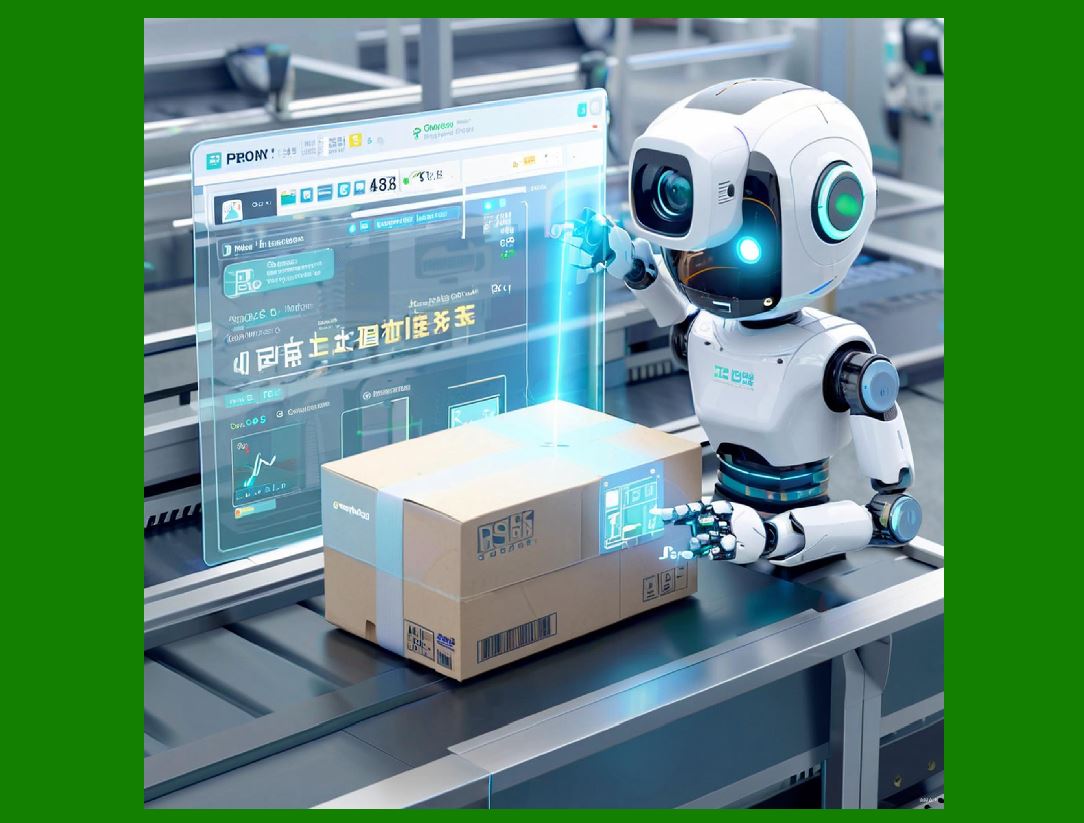
A conventional industrial robot is a remarkably capable machine with a remarkably narrow awareness of the world. It knows its joint positions, it follows a pre-programmed path, and it stops when a safety interlock is triggered. It does not know whether the part it just picked up is the correct one, whether the robot downstream is ready to receive it, or whether the energy price for the next hour makes it cheaper to pause. A cyber-physical system closes those gaps. |
The term 'cyber-physical' refers to the tight coupling between computational processes and physical processes. In robotics, this means the robot's control system is continuously informed by data from sensors, from other machines, and from digital models running either locally or in the cloud. The robot does not merely execute; it perceives, communicates, and adapts. |
This integration happens at several levels. At the lowest level, sensors on the robot itself---encoders, force-torque sensors, cameras---feed data into the controller in real time. At the next level, the robot communicates with neighboring machines on the factory floor, exchanging signals about part availability, cycle status, and safety zones. At the highest level, the robot and its local controller connect to cloud platforms where data from many robots, many production lines, and even many factories can be aggregated, analyzed, and used to send updated instructions back down to the physical devices. |
The practical consequence is that a cyber-physical robot is never truly 'finished' in the way a traditional machine is. Its behavior can be adjusted remotely, its maintenance can be predicted from data rather than from a calendar, and its performance can be optimized using information that no single robot could gather on its own. The sections that follow show how this plays out across different industries. |

|
2. Automotive Manufacturing: Digital Twins and Virtual Commissioning |
The automotive industry has been the largest single market for industrial robots for decades, and it is also where cyber-physical integration is most mature. A modern vehicle assembly line may contain hundreds of robots performing welding, painting, sealing, and material handling. Coordinating these machines is a logistical challenge that begins long before the first physical robot arrives at the plant. |
The tool that has transformed this process is the digital twin. A digital twin is a high-fidelity virtual replica of a physical system---in this case, a production cell or an entire line---that is fed with real data from the physical system and used to simulate, predict, and optimize its behavior . In the automotive context, digital twins are used most extensively during what is called virtual commissioning. |
Virtual commissioning means that the robot programs, the PLC logic, the safety interlocks, and the material flow are all tested in a simulated environment before any steel is cut or any robot is bolted to the floor. Engineers can watch a virtual robot attempt to weld a virtual car body and discover, for example, that the robot arm collides with a fixture when approaching from one angle. They can adjust the path in the simulation and re-run the test in minutes, rather than discovering the collision weeks later during physical commissioning and losing valuable production ramp-up time. |
Recent research illustrates how specific this modeling can become. One study of digital twin systems for industrial robots focused on the pre-implementation phase, developing a methodology that integrates path planning, simulation verification, and control program generation. The researchers introduced a dynamic weighting mechanism to improve the path planning algorithm, reducing the number of nodes the planner had to traverse by roughly one-third, and applied curve-fitting techniques to smooth the resulting paths, cutting the cumulative turning angle by more than half . The practical effect is that the robot's motion is easier on its joints and more predictable for the safety system. |
The automotive industry also uses digital twins during production, not just before it. Once the physical line is running, sensors on the robots and on the workpieces feed data back into the twin. If a welding robot begins to show slight deviations in its path, the twin can flag the drift before it produces defective welds. If a robot's motor current signature changes, the twin can estimate how much useful life remains before failure, enabling maintenance to be scheduled during a planned downtime window rather than during a production shift . This predictive capability is one of the clearest economic arguments for cyber-physical integration: unplanned downtime on an automotive assembly line can cost tens of thousands of dollars per minute, and a maintenance intervention that arrives at the right time rather than too late pays for itself almost immediately. |
|
3. Electronics Assembly: Edge and Cloud Coordination for High-Mix Production |
Electronics manufacturing presents a different set of challenges. Product lifecycles are short, mix is high, and tolerances are tight. A production line that is set up to assemble one type of circuit board in the morning may need to switch to a different board in the afternoon. Robots must be reprogrammed frequently, and the cost of changeover time is significant. |
Cyber-physical integration addresses this by moving the intelligence about what to build and how to build it out of the individual robot controller and into a networked layer that can be updated quickly. In a cloud-edge architecture, the robot and its immediate controller form the edge: they handle the hard real-time tasks of motion control and safety, which cannot tolerate the latency of a network round trip. The cloud handles the computationally heavier tasks: analyzing data from many machines, updating process parameters based on yield trends, and distributing new programs to the edge devices. |
One concrete example comes from the assembly of cylindrical parts with tight tolerances, a common operation in electronics and small-mechanical assembly. Researchers developed a digital-twin-based framework for this task using a parallel robot mounted on a wheeled vehicle. The system uses a binocular camera to measure the position of the parts, and the digital twin predicts the assembly outcome before the robot commits to the motion. Because the twin can evaluate the probability of a successful insertion given the measured positions and known uncertainties, the system can choose whether to proceed with the planned path or to adjust first. This reduces the risk of jamming a precision part into a socket at a slight angle---a failure mode that is both time-consuming and potentially damaging to the workpiece . |
Another study addressed the problem of coordinating multiple robots in a shared workspace. In many electronics assembly cells, two or more robots must work in close proximity, handing parts to each other or operating on the same fixture from different angles. If each robot plans its motion independently, collisions are possible. The researchers proposed a digital-twin framework that considers not only static obstacles but also the other robots as moving obstacles. The twin is updated with real-time information from the shop floor, allowing the system to reconfigure the robots' behavior when the production plan changes . This is cyber-physical integration in its most literal form: the digital model and the physical robots are in continuous conversation, and the model's awareness of the physical world is what makes safe coordination possible. |
The electronics industry also illustrates a practical constraint that is often underappreciated. Cloud connectivity is not free. Every piece of data sent to the cloud consumes bandwidth, and every instruction sent back introduces latency. For tasks where the robot must react within milliseconds---force-controlled insertion, for example---the cloud is too far away. This is why the edge layer remains essential. The cyber-physical system is not a system in which everything is in the cloud; it is a system in which computation is distributed to wherever it can be performed effectively. The robot's local controller handles what must be fast; the cloud handles what must be broad. |
|
4. Logistics and Warehousing: Swarm Coordination and Cloud-Assisted Perception |
Warehouses and distribution centers have become one of the most active testing grounds for cyber-physical robotics, largely because the physical environment is structured and the tasks are repetitive but variable. A warehouse may contain hundreds of autonomous mobile robots (AMRs) moving shelves, totes, or individual items. Coordinating this many robots requires a level of real-time data exchange that would have been impractical with older networking technology. |
The core challenge is perception. Each robot needs to know where it is, where the other robots are, and what obstacles are in its path. Onboard computing power is limited by battery capacity, weight, and cost. One approach to this problem is to use cloud computing to augment the perception capabilities of the swarm. In a system developed for industrial warehouse settings, lightweight onboard processors on each robot handle data collection and preliminary preprocessing, while computationally demanding tasks such as deep-learning-based object recognition and three-dimensional scene reconstruction are offloaded to a central cloud server. To reduce latency, the system uses a caching algorithm that stores the results of perception queries so that other robots in the swarm can reuse them rather than each performing the same computation independently. In tests, this reduced average task completion time by about one-third and cut redundant computation by roughly forty percent compared to a fully decentralized approach . |
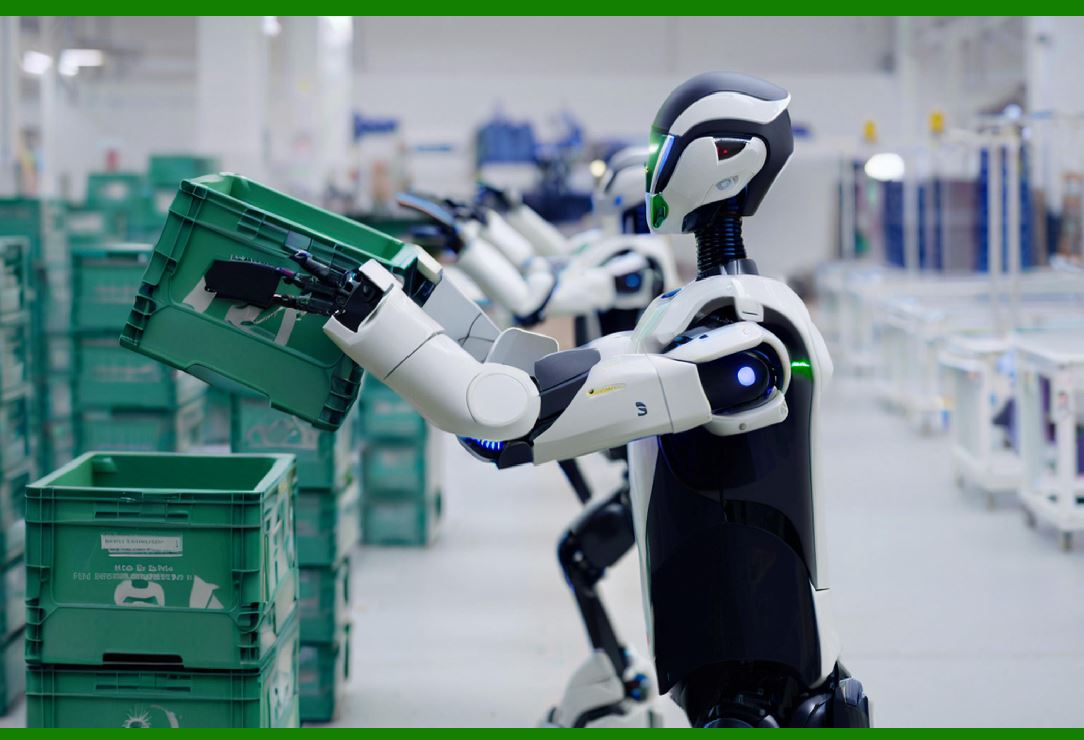
This architecture reflects a broader pattern in cyber-physical logistics. The individual robot is deliberately kept simple and inexpensive; the intelligence that makes the swarm effective lives in the network. When a robot encounters a situation it cannot handle---a misplaced pallet, an unexpected obstacle, a damaged tote---it can query the cloud for guidance. The cloud, having seen similar situations from other robots, can respond with a recommended action. The robot does not need to have been programmed for that specific contingency; it only needs to be able to ask for help. |
Cloud platforms also enable fleet-level optimization that no individual robot could achieve. A warehouse management system can use data from the robot fleet to identify congestion patterns, reroute traffic, and balance workload across zones. If a particular aisle is becoming a bottleneck at certain times of day, the system can adjust the assignment of tasks to robots to smooth the flow. These adjustments happen in software, without any physical reconfiguration of the warehouse. The physical layout remains the same, but the behavior of the system changes because the data flow has changed. |
|
5. Process Industries: Remote Monitoring and Optimization of Robot Cells |
The process industries---chemicals, pharmaceuticals, food and beverage---have traditionally been slower to adopt robotics than discrete manufacturing, partly because the tasks are often less structured and partly because the environments are subject to strict regulatory oversight. But cyber-physical integration is beginning to change this, particularly in applications where robots perform tasks that are dangerous, repetitive, or require a level of consistency that human operators struggle to maintain. |
A representative example comes from a flexible robotic cell designed for assembly and disassembly tasks. The cell uses an ABB six-axis robot and is controlled through a PLC that communicates with a digital twin of the cell. The digital twin runs on a separate computer and mirrors the state of the physical cell in real time. The system includes IoT functionality that allows remote access via a secure network connection, meaning that an engineer can monitor the cell's operation, diagnose problems, and even adjust parameters without being physically present on the factory floor . In a pharmaceutical or chemical plant where access to the production area is restricted for safety and contamination-control reasons, this remote capability is not a convenience---it is a fundamental enabler of responsive maintenance. |
Remote monitoring also supports a different kind of optimization. When a robot performs the same task thousands of times per shift, small inefficiencies accumulate. A path that is slightly longer than necessary, a gripper that pauses a fraction of a second too long before closing, a motion that could be smoothed---each of these is invisible in the moment but adds up over a production campaign. A cyber-physical system that continuously collects motion data and compares it to an optimized reference can identify these inefficiencies and suggest or automatically apply corrections. This is sometimes called process optimization, and it is one of the areas where cloud-edge collaboration platforms are being developed specifically for heterogeneous robot fleets. One such platform abstracts away the differences between robot vendors' controllers, providing a unified interface through which processes can be dispatched and optimized across machines from different manufacturers . For a plant that has accumulated robots from several vendors over the years---a common situation in process industries where equipment is purchased incrementally---this kind of abstraction layer is what makes fleet-level cyber-physical integration feasible at all. |

|
6. Safety and Security: The Non-Negotiable Dimensions |
Any discussion of cyber-physical integration in industrial robotics must address safety, and the safety conversation has changed fundamentally in recent years. When a robot was an isolated machine behind a fence, safety was primarily a mechanical and electrical engineering problem: interlock the gate, install light curtains, ensure that the robot's reach does not extend beyond the guarded area. When a robot is connected to a network and can receive instructions from a remote source, safety becomes a cybersecurity problem as well. |
The standards that govern industrial robot safety have been updated to reflect this. The 2025 revision of ISO 10218, the foundational safety standard for industrial robots, incorporates requirements for cybersecurity and unauthorized access that were absent from earlier editions. The new edition treats mechanical, functional, and digital safety as an integrated framework rather than separate concerns . This is a recognition of a simple but uncomfortable fact: if an attacker can send a command that causes a robot to move in an unsafe way, then the mechanical safeguards are no longer sufficient. The safety system must include the communication system. |
The practical implications are significant. Robot controllers must authenticate the sources of commands. Network traffic between the robot and the cloud must be encrypted and monitored. Firmware updates must be verified. Access control must be managed not just at the physical cell level but at the network level. For integrators and end users, this means that the skills required to deploy a robot system now include network security, not just mechanical and electrical installation. |
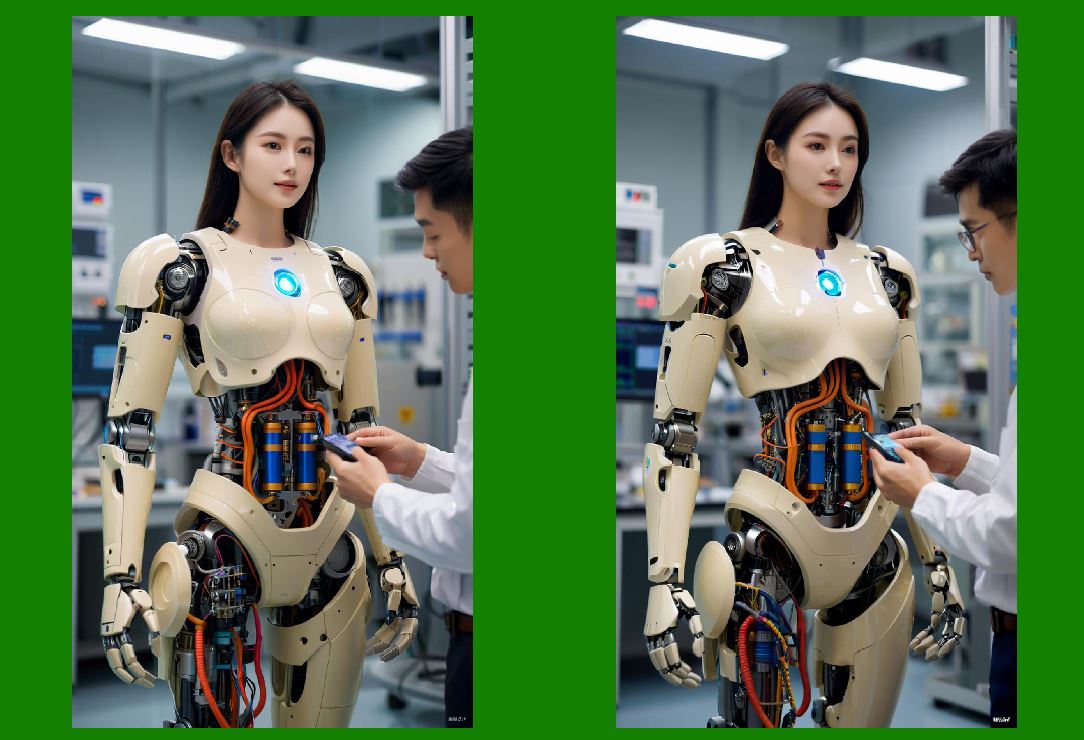
There is also a human-factors dimension to cyber-physical safety that is only beginning to receive attention. When a robot is part of a collaborative team, its behavior must be predictable not only in the sense of physical motion but in the sense of decision-making. If the robot unexpectedly pauses, changes speed, or takes a different path because it received new information from the network, the human coworker may be startled or confused. Recent standards work has begun to acknowledge psychological stress as a residual risk in collaborative applications . A cyber-physical system that is technically safe but psychologically unsettling will not achieve its productivity potential, because workers will avoid interacting with it or will insist on slowing it down. |
|
7. The Data Layer: What Makes It All Work, and What Can Go Wrong |
Behind every cyber-physical function described in this chapter is a data pipeline. Sensors produce data; the data is transmitted over a network; the data is stored, processed, and turned into information; the information is used to make a decision; the decision is sent back to the physical system as a command. Each step in this pipeline is a potential point of failure, and the reliability of the whole system is determined by the weakest link. |
Consider the latency budget. A robot performing a force-controlled insertion may need to react to a force spike within a few milliseconds. A sensor reading that arrives ten milliseconds late is worse than useless; it may trigger a correction that is no longer appropriate to the robot's current state. This is why edge computing is essential for certain functions. The cloud can be involved in planning, in optimization, in long-term learning, but it cannot be in the inner control loop. |
Now consider the data quality problem. A digital twin is only as good as the data feeding it. If a sensor drifts, if a calibration is stale, if a network packet is dropped, the twin's model of the physical system diverges from reality. In a system where the twin is used to make decisions that affect the physical robot, divergence can be dangerous. This is why robust cyber-physical architectures include mechanisms for detecting and correcting divergence: redundant sensors, periodic calibration checks, and plausibility checks that flag data that does not make sense given the robot's known state. |
There is also the question of data volume. A single industrial robot may generate thousands of data points per second. A factory with a hundred robots generates millions. Transmitting all of this data to the cloud is neither necessary nor economical. The architecture must be selective: what data needs to be stored for long-term analysis, what can be aggregated and discarded, what must be acted upon immediately and then forgotten. Getting this balance right is an engineering discipline in its own right, and it is one that many organizations underestimate when they begin their first cyber-physical integration project. |
|
8. Workforce and Organizational Implications |
The cyber-physical transformation of industrial robotics changes not only machines but also the people who work with them. A robot technician in a traditional factory needs mechanical skills, electrical skills, and the ability to read a ladder diagram. A technician in a cyber-physical factory needs those skills plus the ability to interpret data dashboards, to understand network architecture, and to recognize when a pattern in the data suggests a problem that is not visible on the factory floor. |
This is not a trivial shift. It affects hiring, training, and the way maintenance teams are organized. Some companies are responding by creating new roles---robot data analyst, digital twin engineer, automation cybersecurity specialist---while others are cross-training existing staff. The International Federation of Robotics has identified the shortage of skilled workers as one of the major trends shaping robotics in the coming years, and cyber-physical integration both contributes to the shortage (by raising skill requirements) and offers a partial solution (by making robots easier to monitor and diagnose remotely) . |
There is also an organizational dimension that is easy to overlook. Cyber-physical systems cross traditional departmental boundaries. The robot is maintained by the maintenance department, the network is managed by IT, the production schedule is owned by operations, and the digital twin may be developed by an engineering group that reports to none of these. When a problem occurs---a robot behaving unexpectedly, a data stream that stops updating, a twin that has drifted from reality---the question of who is responsible can be genuinely ambiguous. Organizations that succeed with cyber-physical integration are those that establish clear ownership of the data layer and clear protocols for cross-functional response when something goes wrong. |

|
9. Looking Ahead: From Integration to Autonomy |
The cyber-physical integration described in this chapter is already happening in factories and warehouses around the world. The next step, which is beginning but not yet mature, is autonomy: systems that not only exchange data and adjust behavior but make decisions without human intervention. This involves several developments that are still in the research and early-deployment stage. |
One is the use of reinforcement learning to train robot behavior in simulation and then transfer that behavior to the physical robot. A digital twin provides a safe environment where the robot can learn through trial and error without risking damage to itself, the product, or nearby people. Once the behavior is learned, it can be deployed to the physical system, where it continues to adapt based on real-world feedback . The challenge is ensuring that the learned behavior remains safe and predictable when the real world presents situations that the simulation did not anticipate. |
Another is the development of standards for cyber-physically controlled robotic manufacturing. The International Organization for Standardization is working on a framework that specifies the architecture, information models, and implementation guidelines for AI-driven robotic manufacturing systems that integrate digital twins, manufacturing intelligence, and interoperable information systems . The existence of this standardization effort is a sign that cyber-physical integration is moving from bespoke engineering projects to something that can be specified, procured, and certified in a consistent way. |
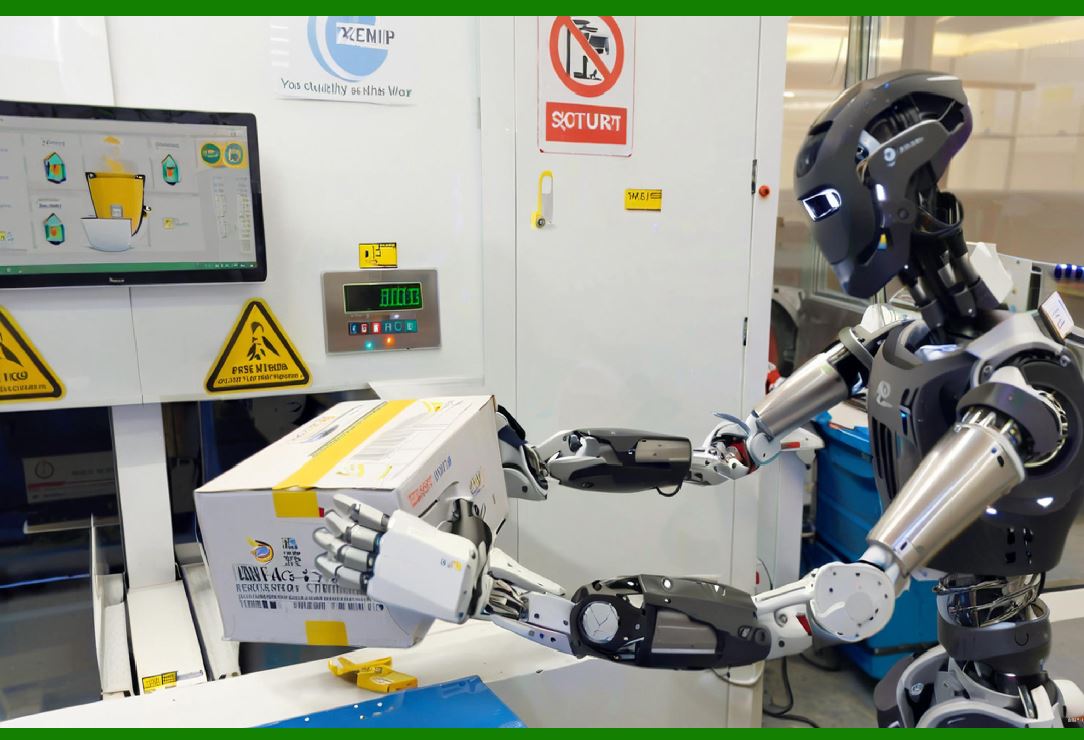
A third development is the extension of cyber-physical principles to humanoid and mobile manipulator robots. These platforms introduce new safety challenges because they move through spaces shared with people and because their whole-body control and balance recovery are not well described by the fixed-base assumptions of traditional robot safety standards . The cyber-physical infrastructure that supports them---the sensing, the communication, the cloud-based decision-making---will need to be extended as well. |
|
Detailed Summary |
This chapter has examined cyber-physical integration in industrial robotics across several dimensions and industries. The core idea is straightforward: robots are becoming connected systems that sense, communicate, and adapt, rather than isolated machines that execute fixed programs. The applications demonstrate that this is not a future vision but a present reality in many sectors. |
In automotive manufacturing, digital twins enable virtual commissioning, allowing production lines to be validated in simulation before physical installation. The same twins support predictive maintenance and continuous optimization during production, reducing downtime and improving quality . In electronics assembly, cloud-edge architectures balance the need for real-time local control with the benefits of fleet-level analysis and coordination, particularly in high-mix production where changeover speed matters . In logistics, cloud-assisted perception allows large swarms of relatively simple robots to navigate and collaborate effectively, with the cloud providing the intelligence that individual robots cannot carry onboard . In process industries, remote monitoring and optimization platforms allow robot cells to be managed and improved without physical access to restricted production areas . |
The safety and security dimensions of cyber-physical integration are not optional additions to the technical story. The revised ISO 10218 standard treats cybersecurity as integral to robot safety, recognizing that a networked robot has an attack surface that a fenced robot does not . The data layer---the sensors, networks, storage, and processing that connect the physical and digital worlds---must be designed with attention to latency, data quality, and volume management. Organizations that treat the data layer as an afterthought will find that their cyber-physical systems are fragile in ways that are difficult to diagnose. |
The workforce implications are significant. Technicians need new skills, organizations need new roles, and cross-functional coordination becomes essential. The shortage of skilled workers in manufacturing is a constraint on cyber-physical adoption, even as cyber-physical tools make some aspects of robot operation more accessible . |

|
Looking forward, the trajectory is toward greater autonomy: systems that learn in simulation and deploy to the physical world, standards that make cyber-physical architectures interoperable and certifiable, and robot platforms that extend cyber-physical principles into human-shared spaces . The industrial robots of the next decade will not be defined solely by their payload, reach, and repeatability. They will be defined by their ability to participate in a connected ecosystem---to be aware of their context, to communicate what they know, and to adjust what they do based on information that comes from beyond their own sensors. That is what cyber-physical integration means, and it is already reshaping how factories and warehouses operate. |
 cs@easiersoft.com