Chapter 73: Digital Twins | Summary: A digital twin is a living virtual replica of a physical robot system that stays synchronized with its real-world counterpart throughout the entire lifecycle. Unlike traditional simulation, which is static and offline, a digital twin receives continuous data from sensors on the physical robot and uses that data to update its virtual model in real time. This enables engineers and operators to monitor performance, test changes safely, predict failures before they happen, and adapt control strategies without touching the actual machine. This chapter explores how digital twins are being applied across manufacturing, healthcare, energy, agriculture, logistics, and construction, drawing on concrete examples from each sector to show what the technology actually delivers in practice. | 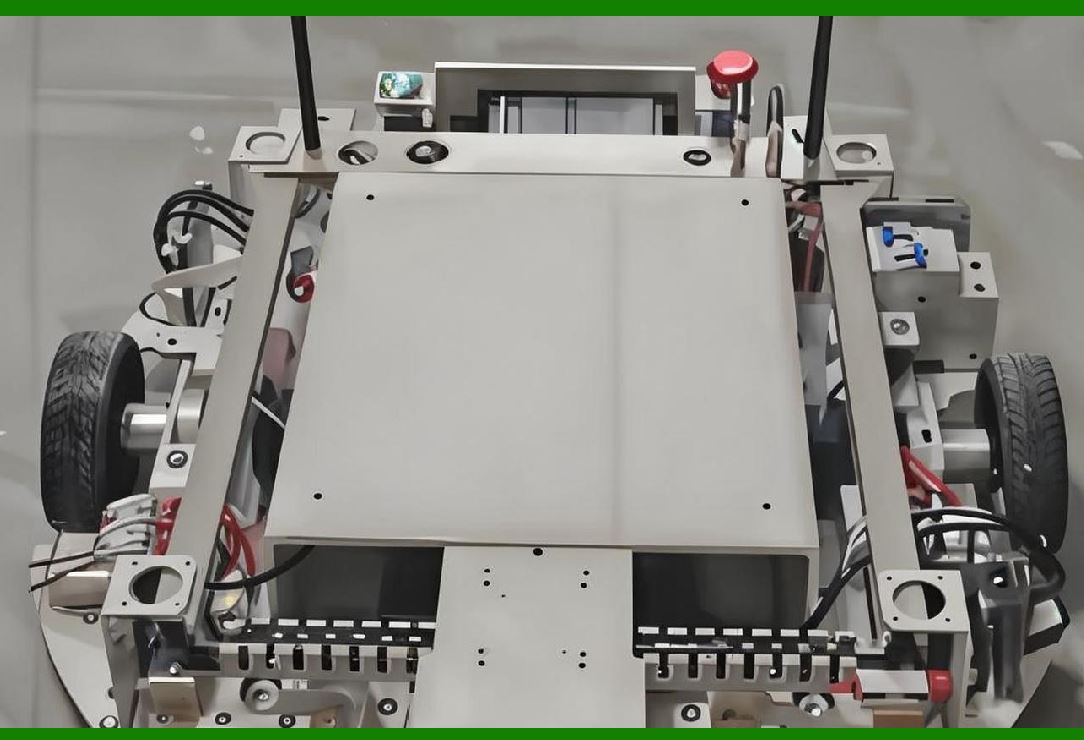
| 1. What Makes a Digital Twin Different from a Simulation | Most engineers are familiar with simulation. You build a model, run it to test an idea, and then discard or shelve it. A digital twin works differently. It remains connected to the physical system it represents. Data flows from the robot to the twin and, in more advanced implementations, from the twin back to the robot. The virtual model evolves as the physical machine ages, wears, and encounters new conditions. | This distinction matters for industrial robots in particular. A robot on a factory floor is not a static object. Its joints wear, its sensors drift, its payloads change, and its operating environment shifts with temperature, humidity, and production schedules. A simulation built at commissioning time becomes obsolete within months. A digital twin, by contrast, incorporates these changes as they occur. Research on robotic digital twins describes this as a shift from isolated, simulation-centric tools toward lifecycle-aware, closed-loop systems that integrate multi-domain modeling, real-time data pipelines, and artificial intelligence-driven decision-making. | The architecture that supports this capability typically involves several layers: the physical robot with its sensors and actuators, a virtual replica that mirrors its geometry and behavior, a data exchange layer that keeps the two synchronized, application services that use the twin for monitoring or optimization, and a knowledge base that accumulates operational history. For a typical industrial robot arm, the virtual model may represent components at multiple levels of detail, from individual linkages and gears up to the assembled actuator units and the coordinated motion of the entire platform. Communication protocols such as OPC UA or TCP handle the bidirectional data flow, ensuring that sensor readings reach the twin with minimal latency and that control adjustments can be sent back when appropriate. | The practical value of this closed loop becomes clear when you consider what it enables. Engineers can test a new control logic in the virtual environment before deploying it on the real robot, catching errors without risking damage or downtime. Maintenance teams can compare the twin's predicted wear against actual sensor data and schedule interventions precisely when needed. Production managers can run what-if scenarios, asking how the line would behave if a particular robot were assigned a different task or if a component were replaced with a newer model. None of these activities require stopping the physical system. | 
| 2. Digital Twins in Automotive Manufacturing | The automotive industry has been among the earliest and most aggressive adopters of digital twin technology for robot systems. The reasons are straightforward: automotive production lines are expensive, downtime is costly, and the margin for error is thin. A single unplanned stoppage on a body-in-white line can cost tens of thousands of dollars per minute. | One detailed case comes from automotive lighting manufacturing. Researchers built a digital twin system for an injection molding and assembly workshop that produces automotive lamps. The system achieved visual management of workshop production, cross-system data interaction, and virtual-real synchronization. It met the requirements for Intelligent Manufacturing Capability Maturity Level 4, a Chinese standard for assessing factory intelligence. The practical outcomes included improved production efficiency and reduced costs, with the digital twin platform providing the data infrastructure that made these gains possible. | A broader study examining digital twins across manufacturing contexts reported even more specific figures from an automotive application. After deploying a digital twin-based optimization system across the entire production process, equipment failure rates dropped to 0.7 percent, unit energy consumption fell by 26.6 percent, production efficiency rose by 28.3 percent, and product defect rates were reduced to 1.8 percent. These numbers reflect the cumulative effect of continuous monitoring, predictive maintenance, and dynamic process adjustment, all coordinated through the virtual replica. | What makes the automotive use case instructive is the integration challenge. A modern automotive factory contains robots from multiple vendors, each with its own controller architecture and data format. The digital twin must aggregate information from welding robots, painting robots, assembly robots, and material handling systems, then present a coherent picture to operators and engineers. The automotive lighting case specifically highlighted cross-system data interaction as a key technical achievement, suggesting that interoperability remains a significant hurdle even for well-resourced manufacturers. | Virtual commissioning represents another major application in this sector. Before a new production line is built or an existing one is modified, the entire robot cell can be modeled and tested in the digital twin. Engineers verify that robots reach all required positions, that cycle times meet targets, and that adjacent robots do not collide during coordinated motions. This process, sometimes called virtual commissioning, reduces the time required for physical commissioning and catches design errors before they become expensive physical problems. Platforms such as Siemens NX MCD, Process Simulate, and ABB RobotStudio support these workflows, and interoperability standards including ISO 23247 help ensure that models built in one tool can exchange data with another. | 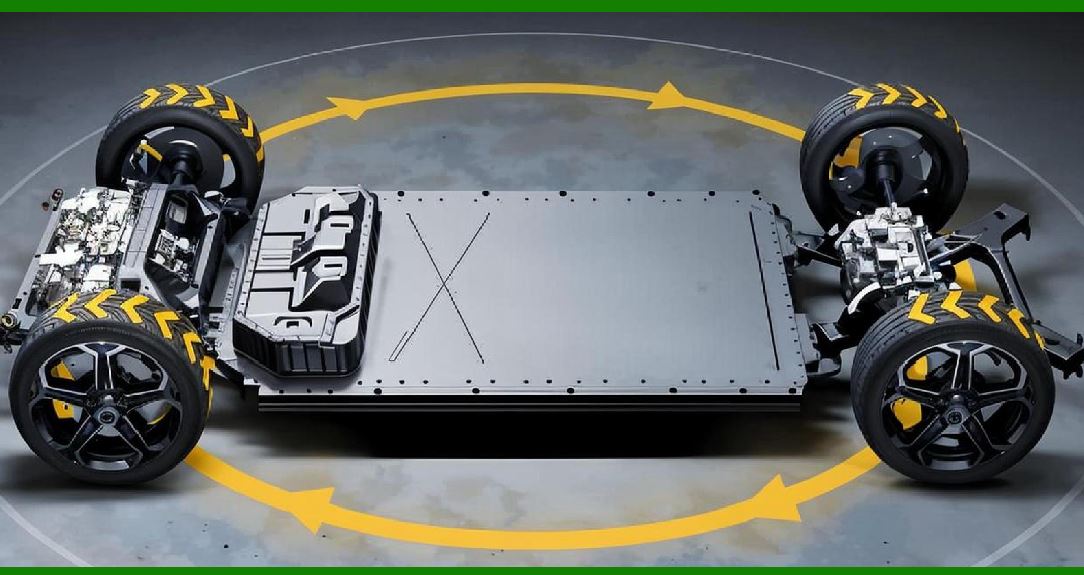
| 3. Digital Twins in Medical Robotics | Medical robotics presents a different set of requirements for digital twins. The stakes are higher because patient safety is involved, the systems are often more complex because they interact with human anatomy, and the regulatory environment demands thorough validation before any change is deployed. Yet the same core capabilities, real-time synchronization, predictive analytics, and simulation-based testing, prove valuable in this domain as well. | A study on digital twins for robotic-assisted surgery tested five advanced systems: Da Vinci, MAKOplasty, Versius, Senhance, and a neurosurgery robotic system. The researchers built virtual counterparts for each physical robot and used real-time simulation to assess surgical precision and tool wear. The results were notable. Surgical precision improved by 32.93 percent when the digital twin was used for guidance and monitoring. Predictive maintenance capabilities extended the mean time between tool failures by 40 percent. Perhaps most striking, surgeon response time to unexpected scenarios dropped by 37.72 percent, suggesting that the twin's real-time visualization and predictive alerts helped clinicians react faster when conditions changed. | The application of digital twins in cardiac catheterization illustrates how the technology supports autonomy. Researchers at University College London developed a compact robot for magnetic resonance imaging-guided right heart catheterization, a procedure that requires navigating a catheter through blood vessels to the heart. The digital twin platform reproduced realistic catheter navigation procedures, and image-action datasets collected in the virtual environment trained a convolutional neural network. The learned navigation policies were then transferred to the physical robot. In testing on patient-specific cardiac phantoms, the autonomous system achieved success rates of at least 96 percent in static conditions and at least 94 percent under dynamic heartbeat simulation. Compared with expert manual operation, the digital twin-trained system improved navigation consistency by more than 34 percent. | Remote ultrasound represents another frontier. A digital twin-enabled control framework for remote robotic sonography used the virtual replica to optimize virtual-reality fusion teaching and collision prediction. The system achieved tracking errors below 7.23 millimeters, image similarity of 95.52 percent compared with manual scans, and stable three-dimensional reconstruction capabilities. The significance here is not just technical performance but access: remote ultrasound robots guided by expert operators through digital twin interfaces could bring diagnostic imaging to regions where trained sonographers are scarce. | 
| 4. Digital Twins in Battery and Energy Production | Battery cell manufacturing is a domain where small variations in process conditions can produce large differences in product quality. The mixing of electrode slurry, in particular, involves complex interactions between materials and equipment. About 40 percent of the final cost of a battery cell comes from electrode materials, and the mixing process itself has one of the highest scrap rates in cell production. A digital twin for continuous slurry mixing, developed by researchers working with a real twin-screw extruder, addressed several of these challenges simultaneously. | The system combined real-time data acquisition, control code validation, automated process control, traceability, and secure data storage. A safety filter based on simulation ran alongside a real-time safety program, catching control code errors through a software-in-the-loop approach before they could affect the physical extruder. The twin also implemented residence time distribution-based traceability, allowing virtual batch definitions and both forward tracking and backward analysis of material flows. A quality score calculated from multiple process and product indicators gave operators a single metric for assessing ongoing production. To ensure data integrity, the entire system was coupled with a blockchain, providing a tamper-proof chronological record of process history. This combination of simulation, real-time control, traceability, and secure data storage represents a mature vision of what a production-grade digital twin can be. | Solar power plants present a different challenge: the physical system is large, exposed to environmental forces, and expensive to instrument comprehensively. A doctoral research project on digital twins for industrial solar plants, using agrivoltaic systems as a case study, developed a framework that combined high-fidelity computational fluid dynamics simulations with adaptive meshing, deep reinforcement learning-based optimization, and graph neural network surrogates to replace expensive numerical simulations. The goal was to model, simulate, optimize, and predict the performance of a solar plant under various wind conditions. The work addressed a practical problem: innovative solar installations face increasing pressure from environmental hazards such as wind storms, and operators need fast, accurate models to support decisions about design, monitoring, and control. | In the broader energy sector, digital twins are being recognized as enablers of the transition toward intelligent energy ecosystems. A review of digital twins in manufacturing noted that technologies such as real-time data synchronization, simulation-based planning, and AI-enhanced analytics, developed largely in factory contexts, are highly transferable to renewable energy forecasting, smart grid optimization, and infrastructure resilience. | 
| 5. Digital Twins in Agriculture and Heavy Machinery | Agricultural machinery operates under conditions that are difficult to model and harder to predict. Soil properties vary across a field, wheel slip depends on moisture and texture, and power demand fluctuates with load and terrain. A physics-data fusion digital twin for electrified agricultural machinery tackled this complexity by combining a mechanism-based power model with machine learning. The theoretical baseline model accounted for dynamic axle-load transfer, wheel-soil interaction based on established terramechanics principles, slip-dependent traction, and motor efficiency. A long short-term memory network then learned to predict the deviation between the theoretical baseline and actual battery-side power demand, using historical operating states. The predicted residual was added back to the physical baseline, and cumulative energy consumption was obtained by integrating the predicted power. | The approach illustrates a pattern that is becoming common in digital twin development: physics provides the structure, data provides the correction. Pure machine learning models struggle with extrapolation and require enormous datasets. Pure physics models miss the unmodeled losses and transient variations that occur in real operations. The hybrid approach uses each to compensate for the weaknesses of the other. In field tests on an electric tractor across six load-speed combinations, the system demonstrated online prediction and synchronization capabilities. | The construction equipment and logistics sectors have also begun exploring digital twins, though at an earlier stage. A conceptual framework for aligning construction logistics capacity proposed using simulation models to plan material flows, waste removal, and on-site handling. The researchers tested their framework on two real-world construction projects, using discrete-event simulation to identify bottlenecks and test layout scenarios. While this work focused on logistics rather than robots specifically, the underlying logic applies directly to construction robots: before deploying a robot on a site with constrained space and dynamic conditions, a digital twin can help determine where it should be positioned, how it should move, and what capacity it can realistically achieve. | For automated electric vehicles, a case study spanning North America, South America, and Europe investigated digital twin applications for predictive maintenance and performance optimization. The multiphase research addressed data integration, regulatory compliance, and technological constraints across different regions, finding that digital twins significantly enhanced operational efficiency and reduced downtime. The regional variation in regulations and infrastructure highlights a challenge that factory-based robotics does not face: a digital twin for a vehicle operating across borders must account for different charging standards, road conditions, and legal requirements. | 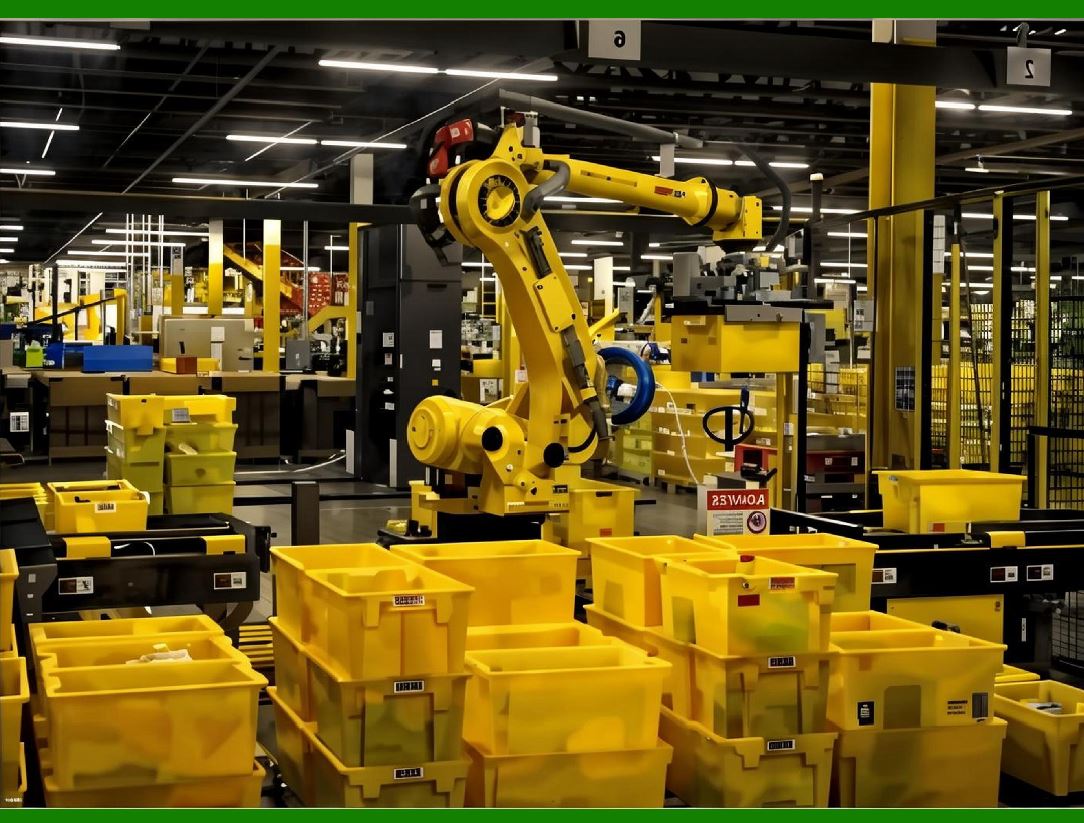
| 6. Digital Twins for Logistics and Supply Chains | Fourth-party logistics providers coordinate complex networks of suppliers, manufacturers, transporters, and installation teams. When the products being moved are large steel structures for off-site construction, the coordination problem becomes particularly acute. A state-synchronized digital twin framework for adaptive optimization of fourth-party logistics networks in off-site construction integrated simulation and optimization within a rolling horizon mechanism. The framework coordinated sourcing, buffering, production, transportation, and on-site installation across multiple projects. A case study in Iran's steel structure industry tested the framework under both normal and disruption scenarios. | The digital twin in this context serves a different function than in manufacturing. It is not monitoring a single machine but rather orchestrating a network of resources and commitments. The 'state-synchronized' aspect means that the virtual model reflects the current status of every project, shipment, and resource in near-real time. When a disruption occurs, whether a delayed truck, a production bottleneck, or a change in installation sequence, the twin can quickly evaluate alternatives and recommend adjustments. The rolling horizon approach divides the planning problem into smaller intervals, solving each at the appropriate moment rather than attempting to optimize the entire project timeline at once. | This application demonstrates that digital twins are not limited to physical assets. A supply chain, a construction site, or a production schedule can all have digital counterparts that mirror their state and support decision-making. The underlying principle remains the same: maintain a virtual representation that is accurate enough and current enough to be useful for prediction and control. | 
| 7. The Role of Artificial Intelligence in Digital Twins | The examples above repeatedly show artificial intelligence embedded within digital twin systems. Machine learning predicts tool wear, reinforcement learning optimizes control policies, neural networks compensate for unmodeled physics, and computer vision tracks object poses in real time. This integration represents a significant evolution from early digital twins, which were essentially sophisticated visualization and simulation tools. | A review of AI-driven digital twin evolution describes the trajectory: first virtualized as physical objects to monitor and simulate, digital twins have now transformed into dynamic systems that learn and decide about actions and autonomously control systems. The review identifies multiagent digital twins, the industrial metaverse, and digital-twin-as-a-service platforms as prospective directions. It also notes persistent challenges: data quality, interoperability, cybersecurity, and ethical governance all remain unresolved and require cross-disciplinary research. | For industrial robots specifically, the combination of digital twins with deep reinforcement learning offers a path toward what researchers call 'program-free' adaptive control. In one demonstration, a digital twin environment trained reinforcement learning policies for a robot to press an emergency stop button and flip a light switch. The digital twin achieved an 88 percent success rate during training, while the physical environment reached 73 percent, improving to 76 percent after fine-tuning with real-world data. The gap between virtual and physical performance is itself informative: it measures the 'reality gap' that still exists between simulation and the messy real world, and it shows that a small amount of physical fine-tuning can close much of that gap. | The significance of this work extends beyond the specific tasks tested. It suggests a workflow for deploying new robot skills: train extensively in the digital twin, where failures are cheap and iteration is fast, then transfer to the physical robot with targeted fine-tuning. For industrial applications where changeovers are frequent and new product introductions disrupt production, this workflow could dramatically reduce the time and risk associated with reprogramming. | 
| 8. Challenges and Limitations | No honest discussion of digital twins can omit the obstacles. The research literature is consistent in identifying several recurring challenges, and practitioners should understand them before committing to a digital twin initiative. | Data interoperability tops nearly every list. Industrial robots come from different vendors, communicate through different protocols, and store data in different formats. Integrating these heterogeneous sources into a single coherent twin requires significant engineering effort and often custom middleware. Standards such as OPC UA and ISO 23247 help, but adoption is uneven and legacy equipment frequently lacks native support. | Computational demands can be substantial, particularly for twins that must maintain real-time synchronization with high-frequency sensor data. Edge computing helps by processing data near the robot rather than sending everything to a central server, but this adds complexity to the system architecture. For smaller manufacturers, the infrastructure investment may be difficult to justify. | Cost remains a barrier, especially for small and medium-sized enterprises. The research notes that large companies are leading adoption while smaller firms face barriers due to limited resources. A full digital twin implementation involves sensors, connectivity, computing hardware, software licenses, and skilled personnel, and the return on investment may take years to materialize. | Cybersecurity becomes more urgent as twins connect to production networks and potentially to external systems. A compromised digital twin could provide attackers with detailed knowledge of production processes or, worse, a pathway to manipulate physical robots. The blockchain integration in the battery mixing twin addresses data integrity concerns, but most implementations do not yet incorporate such protections. | Model fidelity and maintenance present ongoing challenges. A digital twin is only useful if it accurately reflects the physical system. As the robot ages and its components wear, the twin must be updated to match. This requires either automated learning from sensor data or regular manual calibration. Neither approach is trivial, and both add to the lifecycle cost of the twin. | 
| 9. Looking Forward | The trajectory of digital twin development for industrial robots points toward several converging trends. First, twins are becoming more autonomous, shifting from tools that humans consult to systems that make recommendations or take action directly. The cardiac catheterization work, where policies learned in the twin were transferred to the physical robot, exemplifies this shift. Second, twins are becoming more interconnected, with individual robot twins linked into cell-level or factory-level twins that capture interactions between machines. Third, the boundary between design-time simulation and run-time monitoring is dissolving; the same model that was used for virtual commissioning can remain active throughout the robot's operational life, updated continuously with real data. | The concept of lifecycle adaptability is central to this vision. A robotic digital twin should evolve in parallel with its physical counterpart, from virtual commissioning during the design phase to wear compensation in long-term maintenance. Frictional parameter changes due to mechanical degradation can be reflected in real time to sustain simulation fidelity. When a component is replaced, the twin should update. When the robot is assigned a new task, the twin should learn the new motion patterns. When the robot is eventually decommissioned, the twin's accumulated history becomes a record of everything the machine did and everything that happened to it. | For readers of this book who are considering digital twin adoption, the practical advice from the research is consistent: start with a specific, well-defined use case rather than attempting an enterprise-wide twin from the beginning. Predictive maintenance for a critical robot, virtual commissioning for a new production line, or real-time monitoring for a process with high scrap rates are all tractable starting points. Build the data infrastructure carefully, because it will determine what the twin can do later. Choose interoperability standards early, even if they seem burdensome, because you will eventually need to connect systems that were not designed to work together. And maintain a clear-eyed view of what the twin is for: it is not a showcase technology but a tool for making better decisions about physical systems. | 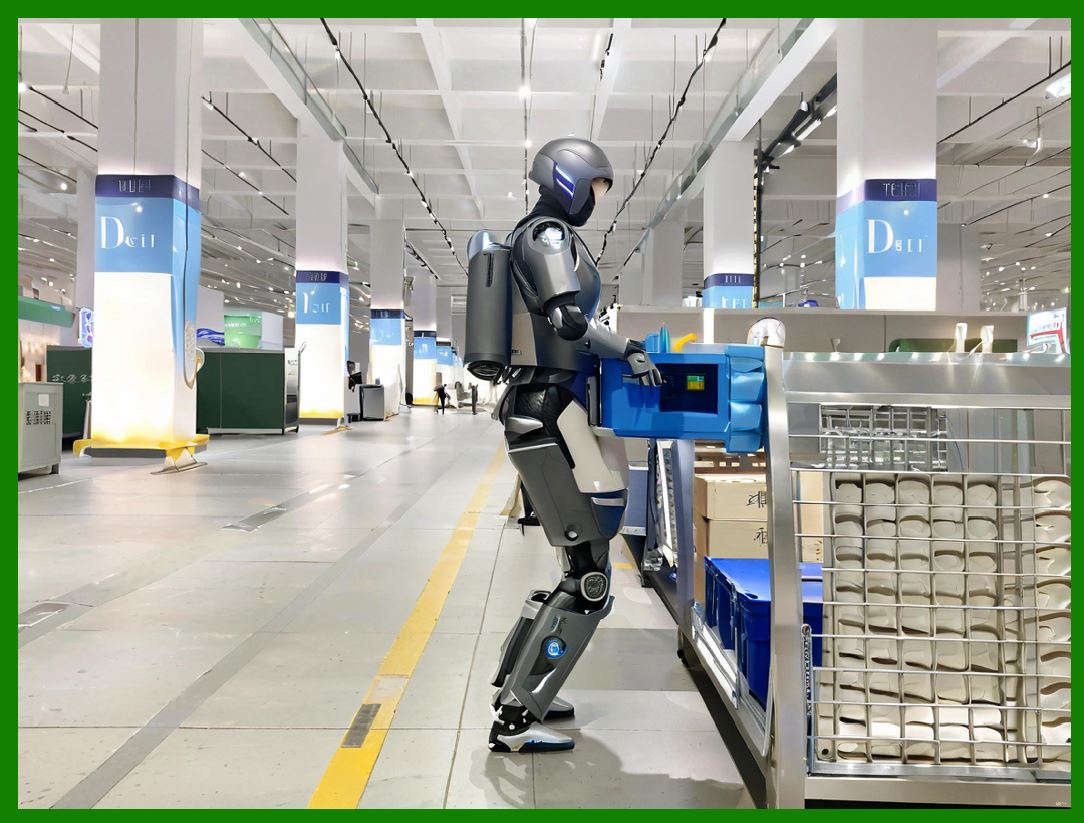
| Detailed Summary | This chapter has examined digital twins as living virtual replicas of industrial robots and robotic systems, emphasizing their role across the lifecycle from design through operation to maintenance. The core distinction between a digital twin and a conventional simulation lies in the continuous, bidirectional data connection that keeps the virtual model synchronized with the physical system, enabling real-time monitoring, predictive analytics, and adaptive control. | The applications surveyed span multiple industries. In automotive manufacturing, digital twins support virtual commissioning, cross-system data integration, and full-process optimization, with documented improvements including reduced equipment failure rates, lower energy consumption, higher production efficiency, and fewer defects. In medical robotics, twins enhance surgical precision, extend tool life through predictive maintenance, reduce surgeon response times, and enable the transfer of learned navigation policies from virtual to physical systems for procedures such as cardiac catheterization and remote ultrasound. Battery production benefits from twins that combine real-time control, traceability, quality scoring, and blockchain-backed data integrity for processes such as continuous slurry mixing. Solar plant operations use twins for wind load modeling and performance prediction under environmental uncertainty. Agricultural machinery employs physics-data fusion twins for power prediction and energy management in field operations. Logistics networks use state-synchronized twins for adaptive optimization across multi-project supply chains. Automated electric vehicles leverage twins for predictive maintenance across diverse regulatory environments. | The enabling technology stack includes real-time data acquisition from sensors, high-fidelity multi-domain modeling of mechanical, electrical, and control systems, communication protocols such as OPC UA for bidirectional data exchange, and increasingly, artificial intelligence for predictive analytics, reinforcement learning, and computer vision. The integration of AI has transformed digital twins from visualization and simulation tools into systems capable of learning, deciding, and autonomously controlling physical assets. | Challenges remain substantial. Data interoperability across heterogeneous equipment and vendor platforms, computational demands for real-time synchronization, implementation costs that disproportionately burden small and medium-sized enterprises, cybersecurity risks inherent in connected production systems, and the ongoing effort required to maintain model fidelity as physical systems age all pose barriers to adoption. These challenges are active areas of research and standardization, and progress is being made, but practitioners should plan for them rather than assume they will be resolved by vendor offerings. | 
| For industrial robot users, the digital twin represents a shift in how machines are managed. Instead of reacting to failures and scheduling maintenance on fixed intervals, operators can monitor condition continuously and intervene precisely when needed. Instead of commissioning new lines through trial and error on physical equipment, engineers can validate designs and control logic virtually. Instead of treating each robot as an isolated asset, managers can view the entire production system through a unified virtual representation that reveals interactions and bottlenecks. These capabilities do not come cheaply or easily, but the evidence from early adopters suggests that the returns, in reduced downtime, improved quality, and faster changeovers, are real and measurable. |
|
 cs@easiersoft.com