Chapter 70: Safety-Constrained Optimization |
Summary |
This chapter addresses the critical challenge of ensuring safety in AI-driven industrial robots. As robots gain greater autonomy through machine learning and reinforcement learning, the risk of unpredictable or unsafe actions increases. Safety-Constrained Optimization provides a rigorous framework to reconcile the pursuit of task performance with the absolute necessity of physical safety. We examine two foundational technologies: Control Barrier Functions (CBFs), which act as a real-time safety filter that minimally modifies robot actions to prevent collisions and limit torques, and Constrained Policy Optimization (CPO), a reinforcement learning approach that learns policies while respecting predefined safety boundaries. The chapter emphasizes practical deployment across multiple industries, illustrating how these methods enable robots to operate safely alongside humans, handle uncertain environments, and maintain compliance with stringent industrial standards. |
|
1. Introduction: The Safety Imperative in the Age of AI |
The integration of artificial intelligence into industrial robotics has unlocked remarkable capabilities. Robots can now learn complex manipulation skills, adapt to unstructured environments, and collaborate with human workers in ways that were impossible with purely pre-programmed systems. However, this intelligence introduces a fundamental tension. The very algorithms that enable flexibility and adaptation---particularly those based on trial-and-error learning or stochastic optimization---are inherently unpredictable. An AI-driven robot exploring a new task may, in the absence of proper safeguards, take an action that is optimal for the task but catastrophic for its surroundings or the humans within them. |
This chapter is dedicated to the mathematical and algorithmic frameworks that resolve this tension. We focus on a class of methods known as Safety-Constrained Optimization. The core philosophy is not to merely penalize unsafe behavior and hope the robot learns to avoid it. Instead, we seek to provide hard guarantees---or at least provable high-probability assurances---that the robot will never violate a defined safety constraint. We will explore how these methods function in principle, and more importantly, how they are being deployed across industries to ensure that the pursuit of productivity never compromises the fundamental requirement of safety. |

|
2. Foundational Concepts: Defining Safety Mathematically |
Before examining specific algorithms, it is necessary to understand how safety is formalized in the context of control and learning. In classical industrial robotics, safety was largely a matter of physical separation (fences) or rigid, rule-based interlocks. In AI-driven systems, safety becomes a dynamic, state-dependent property. |
Engineers define a 'safe set'---a mathematical region within the robot's state space where operation is considered safe. This set might represent all joint configurations and velocities that are free of collisions, all motor torques that are within thermal limits, or all end-effector forces that are below a threshold that could injure a human. The goal of Safety-Constrained Optimization is to ensure that the robot's state remains within this safe set for all time, a property known as forward invariance . If the robot starts within the safe set, the control system must ensure it never leaves. If a disturbance pushes it toward the boundary, the system must take corrective action to push it back. |

|
3. Control Barrier Functions: The Real-Time Safety Filter |
Control Barrier Functions (CBFs) have emerged as one of the most powerful tools for enforcing safety in real-time control. The intuition behind a CBF is elegant: it acts as a scalar function that measures the 'distance' to the boundary of the safe set. When the robot is far from the boundary, the CBF allows the nominal controller (the AI policy pursuing a task) to operate freely. As the robot approaches the boundary, the CBF imposes a constraint that restricts the allowable control inputs, effectively preventing the robot from crossing the line . |
3.1. How CBFs Work in Practice |
In a typical implementation, the CBF is used to construct a safety filter. The AI policy proposes an action---for example, a set of joint torques or a velocity command. This action is fed into a fast optimization program (often a quadratic program) that checks whether the action would cause the robot to leave the safe set. If the action is safe, it is executed. If it is unsafe, the optimizer finds the closest safe action that minimally deviates from the AI's intent . This minimal modification is crucial: it means the robot can still complete its task efficiently while remaining safe. The CBF filter is model-based, meaning it relies on a mathematical description of the robot's dynamics, but recent research has extended the approach to model-free settings where the exact dynamics are unknown, using data-driven approximations to enforce safety . |
3.2. Handling Multiple Constraints and Uncertainties |
Industrial robots rarely face a single, simple constraint. A robot arm might need to avoid collisions with multiple obstacles, stay within joint torque limits, and limit the force it exerts on a workpiece. Modern CBF frameworks can handle multiple constraints simultaneously by combining them into a single optimization problem . Furthermore, real-world environments are uncertain. Humans move unpredictably, and sensor data is noisy. Researchers have developed 'risk-tunable' CBFs that allow engineers to specify an acceptable probability of constraint violation. Using chance-constrained optimization, the robot can operate safely even when it is uncertain about the exact position of a human coworker, balancing safety margins against task efficiency . |
|
4. Constrained Policy Optimization: Learning with Safety Rules |
While CBFs provide a safety layer on top of a controller, Constrained Policy Optimization (CPO) addresses safety at the level of learning itself. In reinforcement learning, an agent learns by trial and error, receiving rewards for good performance and penalties for bad behavior. However, relying solely on penalties is dangerous---the robot might learn to avoid penalties only after experiencing damaging failures. CPO reformulates the learning problem by treating safety as a constraint rather than a penalty. |
4.1. The CPO Framework |
In CPO, the learning algorithm maximizes the expected reward (task performance) subject to the constraint that the expected cost (a measure of safety violations) remains below a specified threshold . The algorithm learns a policy that is guaranteed to be nearly optimal for the task while satisfying the safety constraint with high confidence. This is particularly valuable during the training phase. In a simulation or a controlled lab environment, CPO allows the robot to explore and learn complex skills without repeatedly violating safety limits, which is essential when training hardware is expensive or when early mistakes could cause damage. |
4.2. Combining CBFs and CPO |
The most robust systems often combine both approaches. CBFs provide a hard, real-time guarantee that the robot will not leave the safe set during operation, while CPO ensures that the underlying learned policy is naturally biased toward safe behavior, reducing the frequency with which the CBF filter must intervene . This layered architecture---a learned policy that is generally safe, protected by a filter that guarantees safety---represents the current state of the art in safety-critical AI for robotics. |

|
5. Application Examples Across Industries |
The theoretical guarantees of Safety-Constrained Optimization are compelling, but their true value is demonstrated in real-world deployment. The following sections explore how these methods are applied across diverse industrial sectors. |
5.1. Collaborative Manufacturing and Human-Robot Interaction |
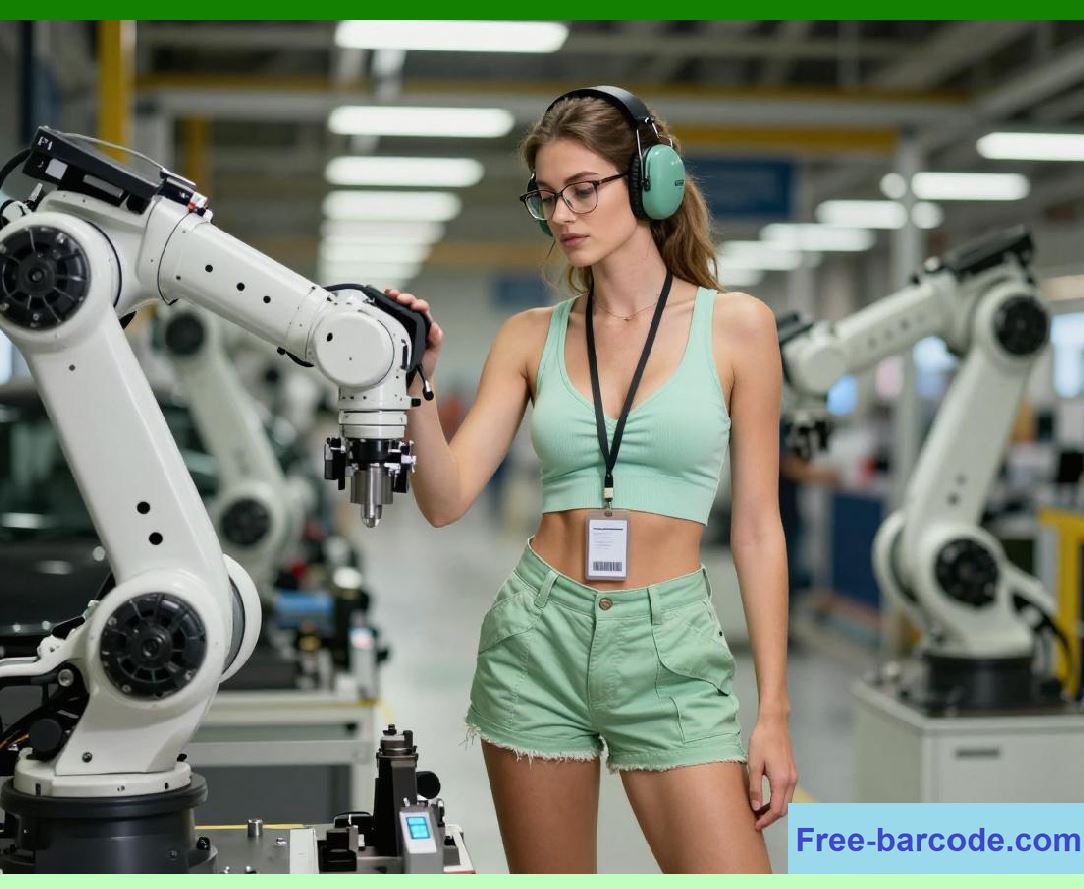
In modern factories, robots and humans increasingly share workspaces without physical fences. This collaboration enables flexibility and efficiency but creates an inherent risk of collision. In a typical collaborative assembly cell, a robot arm equipped with a CBF-based safety filter can work side-by-side with a human operator. The CBF uses data from cameras or LiDAR to continuously estimate the distance to the human. When the human is far away, the robot moves at full speed. As the human approaches, the CBF constraint tightens, automatically slowing or stopping the robot's motion to maintain a safe distance . Research on Franka Emika Panda robots has demonstrated this exact capability, where linearized safety constraints are embedded within a model predictive control framework to vary the robot's impedance online, ensuring safe physical interaction while allowing the human to guide the robot's motion . |
In more advanced scenarios, the robot must handle the uncertainty of human motion. A risk-tunable CBF approach has been validated on a seven-degree-of-freedom manipulator, where the system probabilistically guarantees safety even when the human's future position is not perfectly known. This allows the robot to continue working efficiently rather than stopping excessively whenever a human is nearby . |
5.2. Autonomous Mobile Robots and Logistics |
The logistics industry relies heavily on autonomous mobile robots (AMRs) and automated guided vehicles (AGVs) to transport materials through warehouses and factories. These robots must navigate dynamic environments filled with human workers, forklifts, and other robots. Traditional navigation algorithms often struggle in crowded spaces, leading to either overly cautious behavior (stopping frequently) or unsafe proximity to obstacles. |
CBF-based collision avoidance has been successfully deployed on ground vehicles and quadrotors. A particularly effective approach uses 'collision cones' to define constraints based on the relative velocity between the robot and moving obstacles . Instead of just maintaining a static distance, the CBF ensures that the robot's velocity vector always points away from a potential collision course. This has been demonstrated on hardware including the TurtleBot and Stoch-Jeep, enabling smooth, efficient navigation through cluttered environments without collisions. In a warehouse setting, this translates to faster material flow and reduced downtime due to safety stops. |
5.3. Legged Robots and Humanoids in Unstructured Environments |
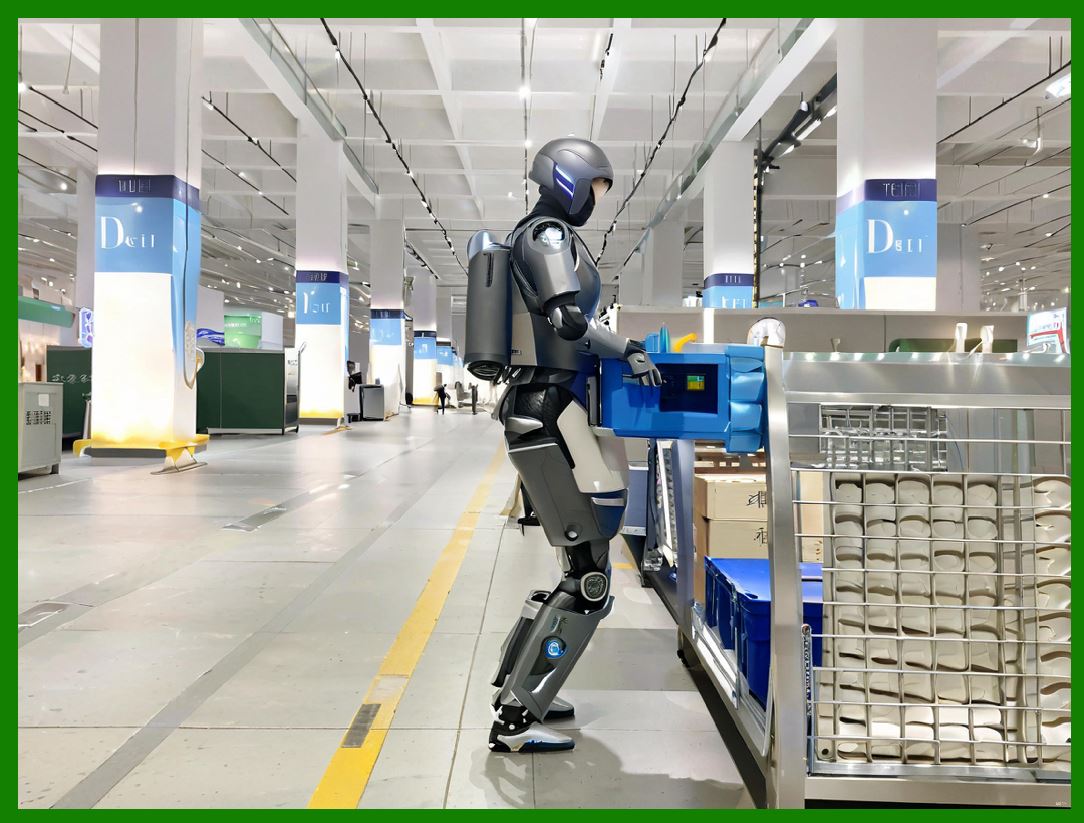
Legged robots and humanoids are increasingly being considered for tasks in construction, inspection, and disaster response---environments that are unstructured and hazardous for humans. Ensuring the safety of these complex, high-dimensional systems is exceptionally challenging because a single misstep can cause a fall, potentially damaging the robot or injuring bystanders. |
Safety-Constrained Optimization is enabling legged robots to navigate stairs, rough terrain, and obstacles with formal guarantees. Researchers have integrated CBFs within a model predictive control framework to act as a 'predictive safety filter' for the locomotion controller of quadruped and humanoid robots . This filter takes the desired walking commands from a higher-level AI and modifies them in real-time to ensure that the robot's center of mass remains within a stable region and that its feet do not collide with obstacles. In experiments on humanoid robots, this approach allowed the robot to safely climb stairs and avoid obstacles even when the nominal policy was imperfect . The CBF ensures that the robot does not take a step that would lead to a fall, regardless of what the learned controller suggests. |
|
5.4. Robotic Manipulation and Grasping |
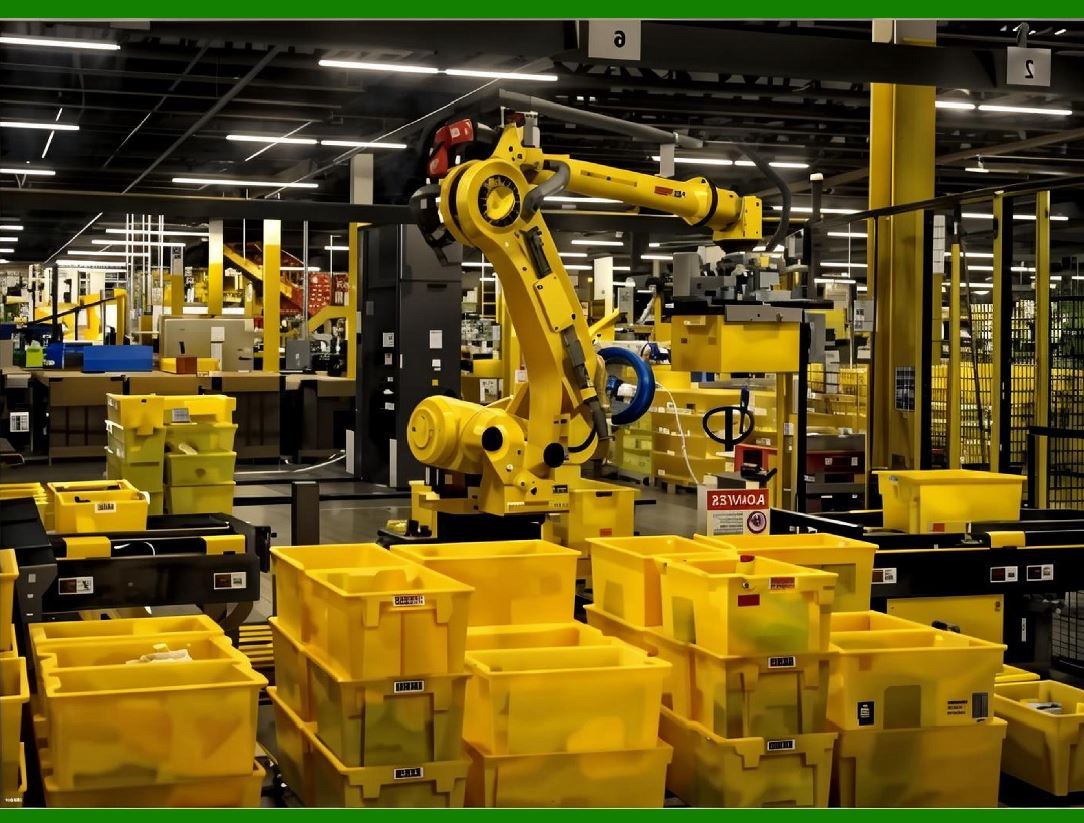
In manufacturing and warehouse automation, robotic arms are frequently tasked with grasping and manipulating objects of various shapes and sizes. A common failure mode is collision with the environment or the object itself during the grasp approach. Safe reinforcement learning methods are being used to train manipulators to grasp objects while explicitly avoiding obstacles. |
One approach models the grasping task as a Constrained Markov Decision Process. The learning algorithm---based on a dynamically weighted version of Proximal Policy Optimization---incorporates safety constraints related to collision events. The system learns to approach the object with a safe trajectory, minimizing the risk of knocking over other items or colliding with the bin walls . This is particularly valuable in bin-picking applications, where the robot must reach into a cluttered container without disturbing the surrounding parts. By constraining the policy during learning, the robot develops a 'muscle memory' for safe grasping that persists during deployment. |
5.5. Autonomous Vehicles and Material Handling in Outdoor Settings |
While not strictly industrial robots, autonomous vehicles used for material handling in ports, mines, and large construction sites face similar safety challenges. These vehicles operate in dynamic environments with uncertain terrain and moving obstacles. CBF-based controllers have been developed for autonomous ground vehicles that provide formal collision avoidance guarantees even when obstacles are moving . The collision cone approach is particularly suited for this domain, as it allows the vehicle to calculate a safe velocity vector that avoids predicted collision points with other vehicles or personnel. In a mining operation, for example, an autonomous haul truck equipped with a CBF safety filter can maintain safe following distances and avoid collisions with light vehicles and workers, even in dusty conditions where sensor range is limited. |
5.6. Space Robotics and Remote Operation |
The principles of Safety-Constrained Optimization are also finding applications in space robotics, where a collision can be catastrophic and repairs are impossible. For a space manipulator operating on a satellite or a planetary surface, the safe set might include constraints on joint torques (to avoid overheating in vacuum) and collision avoidance with the spacecraft structure. Constrained reinforcement learning has been applied to the motion planning of space manipulators, where the cost function explicitly accounts for base movement and potential collisions . The constraint-based approach allows ground controllers to specify a maximum allowable risk, and the robot's autonomous system ensures that this risk is never exceeded, even when communication delays prevent direct human oversight. |
|
6. Challenges and Practical Considerations |
Despite their theoretical guarantees, deploying Safety-Constrained Optimization requires careful engineering. The primary challenge is model accuracy. CBFs rely on a model of the robot's dynamics. If the model is inaccurate---for example, if the payload weight is unknown or the friction in a joint changes over time---the safety guarantee can be compromised. Researchers are addressing this through adaptive CBFs that learn the uncertain parameters online, adjusting the safety constraints in real-time to account for the true system behavior . |
A second challenge is computational load. The optimization program that enforces CBF constraints must solve at the robot's control frequency, often in the kilohertz range. While modern solvers are fast, complex robots with many degrees of freedom and multiple constraints can push computational limits. Integrating CBFs within a model predictive control framework, where the constraints are evaluated over a future horizon, adds further computational burden, though it also improves performance by allowing the robot to anticipate and avoid unsafe situations before they become critical . |
Finally, there is the challenge of defining the safety constraints themselves. What constitutes a safe distance from a humanWhat torque limit is appropriate for a given jointThese are not purely mathematical questions; they involve engineering judgment, risk assessment, and compliance with standards such as ISO 10218 and ISO/TS 15066. Safety-Constrained Optimization provides the tools to enforce these definitions, but the definitions themselves must be carefully established by human engineers. |
|
7. Detailed Summary |
This chapter has provided a comprehensive overview of Safety-Constrained Optimization as applied to AI-driven industrial robots. The central premise is that the intelligence and adaptability of modern robots must be paired with rigorous, mathematically grounded safety guarantees. |
We began by formalizing safety as the forward invariance of a safe set, establishing the theoretical foundation for the methods that follow. Control Barrier Functions were introduced as a real-time safety filter that minimally modifies a robot's actions to prevent it from leaving the safe set. This approach has been validated across diverse robotic platforms---from collaborative arms and mobile robots to legged humanoids---and can handle multiple constraints, uncertain human motion, and unknown system dynamics. Constrained Policy Optimization was presented as a complementary approach that embeds safety into the learning process itself, ensuring that the policies learned through reinforcement learning are naturally disposed toward safe behavior. |
The application examples demonstrated the practical impact of these methods across manufacturing, logistics, outdoor material handling, and space robotics. In collaborative manufacturing, CBFs enable robots and humans to share workspaces safely, automatically adjusting speed and force based on proximity. In logistics, collision cone CBFs allow mobile robots to navigate crowded warehouses efficiently. For legged robots, predictive safety filters prevent falls on challenging terrain. In manipulation, safe reinforcement learning produces grasping policies that avoid collisions from the very beginning. Each of these applications shares a common pattern: the robot retains the ability to perform its task at high performance, but a safety layer ensures that the pursuit of performance never crosses the boundary into unacceptable risk. |
The challenges that remain---model uncertainty, computational demands, and the human judgment required to define safety---are active areas of research and engineering. Nevertheless, the frameworks described in this chapter represent a mature and proven approach to one of the most critical problems in modern robotics. As industrial robots become more autonomous and more deeply integrated into human environments, the principles of Safety-Constrained Optimization will not be optional features but fundamental requirements. The ability to guarantee that an AI-driven robot will do no harm is the foundation upon which the next generation of industrial automation will be built. |
 cs@easiersoft.com