Chapter 68: Sim-to-Real Transfer |
NVIDIA Omniverse, Isaac Sim, and Isaac Lab accelerate the robot development lifecycle through synthetic data generation and simulation-based training. |
68.1 A Short Summary of This Chapter |
This chapter explains how modern robotics teams use simulation to teach robots before they ever touch the real world. The central idea is called sim-to-real transfer. In simple terms, it means training a robot inside a computer-generated environment and then moving that learned skill into a physical machine without losing performance. For many years, this was extremely difficult. Simulated worlds were too simple, sensors were too clean, and physics was too forgiving. Robots that looked brilliant in simulation often failed immediately in a real factory, warehouse, hospital, or farm. NVIDIA Omniverse, Isaac Sim, and Isaac Lab have changed that situation by providing a powerful, physically accurate, and highly scalable platform for building digital worlds, generating synthetic data, and training robot policies at enormous speed. This chapter describes what these tools are, how they work together, and why they matter. It then explores practical applications across manufacturing, logistics, agriculture, healthcare, construction, energy, retail, space, and other industries. The goal is not to turn the reader into a simulation engineer, but to explain clearly how sim-to-real transfer is becoming a standard part of the industrial robot development lifecycle. By the end of the chapter, the reader should understand why simulation is no longer just a design aid, but a core engine for robot intelligence. |
|
68.2 Why Sim-to-Real Transfer Matters |
Imagine teaching a person to drive a car. You could put them directly on a busy highway on their first day. That would be dangerous, expensive, and slow. Instead, you use a driving simulator, a closed course, or a video game to let them practice. They learn steering, braking, and judging distance without risking lives or wrecking vehicles. Once they are competent, they move to the real road. Sim-to-real transfer follows the same logic for robots. |
A physical robot is expensive. Industrial arms can cost tens of thousands of dollars. Mobile robots can cost even more. Every hour spent testing on real hardware is an hour of wear and tear. Every mistake can damage the robot, the product, or a human worker. Simulation offers a safe, cheap, and fast alternative. In simulation, a robot can fall a million times without breaking. It can practice a task for thousands of virtual hours in a few real hours. It can encounter rare or dangerous situations that would be impractical to stage in reality, such as a sudden obstacle, a dropped tool, or a sensor failure. |
The challenge is that simulation is not reality. A simulated camera does not produce exactly the same images as a real camera. A simulated gripper does not feel exactly the same friction as a real gripper. A simulated motor does not have exactly the same delays and imperfections. This gap is called the reality gap. Sim-to-real transfer is the art and science of closing that gap. If the gap is too large, the robot fails in the real world. If the gap is small enough, the robot succeeds. |
NVIDIA Omniverse, Isaac Sim, and Isaac Lab are designed to make that gap as small as possible while making simulation as fast and scalable as possible. They allow teams to build realistic digital twins of robots, sensors, and environments. They allow teams to generate massive amounts of synthetic data for training artificial intelligence models. They allow teams to train control policies using reinforcement learning and other techniques. And they allow teams to test those policies under thousands of different conditions before deploying them to real hardware. |
|
68.3 The Three Pillars: Omniverse, Isaac Sim, and Isaac Lab |
To understand sim-to-real transfer in the NVIDIA ecosystem, it helps to understand three separate but connected tools. They are often mentioned together, but they play different roles. |
68.3.1 NVIDIA Omniverse |
NVIDIA Omniverse is a platform for building and operating digital twins. A digital twin is a virtual replica of a real object, system, or environment. In robotics, a digital twin might be a virtual factory floor, a virtual warehouse, a virtual hospital room, or a virtual farm field. Omniverse allows many different software tools to connect and work together in one shared virtual space. It supports real-time collaboration, physically based rendering, and accurate physics. It is built on open standards, so different robots, sensors, and software packages can be combined. |
For robot development, Omniverse provides the underlying infrastructure. It handles the 3D scene, the lighting, the materials, the physics, and the connections to other software. It allows engineers to import CAD models of robots and factories. It allows them to place sensors, define physics properties, and run simulations. It also allows them to connect to real-time data from the physical world, so the digital twin can stay synchronized with reality. |
68.3.2 NVIDIA Isaac Sim |
Isaac Sim is a robotics simulation application built on top of Omniverse. It is specifically designed for developing, testing, and training robots. It includes a library of robot models, sensor models, and environments. It supports many types of robots, including industrial arms, mobile robots, humanoids, and drones. It includes realistic physics for rigid bodies, joints, contacts, and friction. It includes realistic sensors, such as cameras, depth sensors, lidar, and inertial measurement units. It also includes tools for generating synthetic data, which is artificial data used to train artificial intelligence models. |
Isaac Sim is where most of the sim-to-real work happens. Engineers build their robot scenes here. They define the task, the environment, and the sensors. They run simulations to collect data or to train control policies. They test how the robot behaves under different conditions. They also use Isaac Sim to verify that a policy trained in simulation will work in the real world. |
68.3.3 NVIDIA Isaac Lab |
Isaac Lab is a framework for robot learning built on top of Isaac Sim. It is designed to make it easier to train robots using reinforcement learning, imitation learning, and other machine learning techniques. Reinforcement learning is a method where a robot learns by trial and error, receiving rewards for good behavior and penalties for bad behavior. Imitation learning is a method where a robot learns by observing human demonstrations. Isaac Lab provides ready-made environments, training algorithms, and tools for managing large-scale training runs. |
Isaac Lab is important because it lowers the barrier to entry. It allows researchers and engineers to focus on the robot task rather than on the low-level details of simulation and training. It also allows them to scale up training across many GPUs, which is essential for complex tasks. With Isaac Lab, a team can train a robot policy in hours instead of weeks. |
|
68.4 How Sim-to-Real Transfer Works in Practice |
The general workflow of sim-to-real transfer can be broken down into several stages. Different teams may adapt this workflow, but the core ideas remain the same. |
68.4.1 Stage One: Building the Digital Twin |
The first step is to create a virtual version of the robot and its environment. This includes the robot's geometry, its joints, its motors, its sensors, and its control interfaces. It also includes the environment, such as a factory cell, a warehouse aisle, a kitchen, or a field. The goal is to make the digital twin as realistic as possible. This means using accurate dimensions, masses, friction coefficients, and sensor characteristics. It also means modeling the lighting, the textures, and the noise that real sensors experience. |
In Omniverse and Isaac Sim, engineers can import CAD models directly. They can define physics properties using built-in tools. They can add sensors and configure them to match real hardware. They can also use domain randomization, which means deliberately varying the simulation parameters, such as lighting, texture, friction, and sensor noise, so that the robot learns to be robust to changes. This is a key technique for closing the reality gap. |
68.4.2 Stage Two: Generating Synthetic Data |
Many modern robots use computer vision and other artificial intelligence models to perceive the world. These models need large amounts of labeled data to learn. Collecting and labeling real-world data is expensive and slow. Synthetic data solves this problem. In simulation, the robot can generate thousands or millions of images, depth maps, and sensor readings, along with perfect labels. For example, the simulation knows exactly where every object is, so it can automatically label every pixel. This is impossible in the real world without human annotation. |
Isaac Sim includes powerful tools for synthetic data generation. It can produce images with different lighting, different backgrounds, different object positions, and different camera angles. It can also produce data for depth sensors, lidar, and segmentation masks. This data is then used to train perception models, such as object detectors, pose estimators, and segmentation networks. When these models are deployed on real robots, they perform well because they have seen a wide variety of simulated conditions. |
68.4.3 Stage Three: Training Control Policies |
Once the digital twin is ready and the perception system is trained, the next step is to train the robot's control policy. A control policy is a set of rules or a neural network that tells the robot what to do based on what it senses. In Isaac Lab, engineers can use reinforcement learning to train these policies. The robot tries different actions, receives rewards, and gradually learns to perform the task. For example, a robot arm might learn to pick up a part, insert it into a hole, or assemble a product. A mobile robot might learn to navigate a warehouse, avoid obstacles, and deliver goods. |
Training in simulation is fast because many robots can be trained in parallel. A single GPU can run thousands of simulated robots at the same time. This means a task that would take years to learn in the real world can be learned in hours or days. Once the policy is trained, it is tested in simulation under many different conditions. If it performs well, it is then transferred to the real robot. |
68.4.4 Stage Four: Transfer and Fine-Tuning |
The final stage is transferring the trained policy to the real robot. This is where the reality gap becomes critical. Even with the best simulation, there will be differences. The real robot may have slightly different friction, slightly different sensor noise, or slightly different motor response. To handle this, engineers use several techniques. One is domain randomization, which makes the policy robust to variations. Another is system identification, which measures the real robot's properties and adjusts the simulation to match. Another is fine-tuning, where the policy is further trained on the real robot for a short period. With these techniques, the robot can often adapt quickly and perform reliably. |
|
68.5 Key Technologies Behind the Platform |
To appreciate how Omniverse, Isaac Sim, and Isaac Lab enable sim-to-real transfer, it helps to understand some of the key technologies involved. This section explains them in plain language. |
68.5.1 Physically Based Rendering |
Physically based rendering, or PBR, is a method for generating images that look real. It simulates how light interacts with surfaces, including reflection, refraction, shadows, and scattering. In Isaac Sim, PBR is used to create realistic camera images. This is important because perception models trained on unrealistic images often fail on real images. With PBR, the simulated camera sees the world in a way that is very close to how a real camera sees it. This makes the synthetic data much more useful. |
68.5.2 Accurate Physics Simulation |
Physics simulation is the engine that makes objects move, collide, and interact. Isaac Sim uses advanced physics engines to simulate rigid bodies, soft bodies, joints, contacts, and friction. It can simulate complex mechanisms, such as robot arms with many joints, grippers with flexible fingers, and mobile bases with wheels or legs. Accurate physics is essential for training control policies. If the physics is wrong, the robot learns the wrong behavior. If the physics is right, the robot learns behavior that transfers well to reality. |
68.5.3 Domain Randomization |
Domain randomization is a technique where the simulation parameters are randomly varied during training. For example, the lighting might change, the textures might change, the friction might change, and the sensor noise might change. The robot learns to perform the task despite these variations. This makes the resulting policy robust to the differences between simulation and reality. Domain randomization is one of the most important tools for sim-to-real transfer. It is widely used in Isaac Sim and Isaac Lab. |
68.5.4 Synthetic Data Generation |
Synthetic data generation is the process of creating artificial data for training artificial intelligence models. In Isaac Sim, this includes generating images, depth maps, lidar point clouds, and segmentation masks. The data can be automatically labeled because the simulation knows the ground truth. This is a huge advantage over real-world data collection, which requires manual labeling. Synthetic data can also be generated for rare or dangerous scenarios that would be difficult to capture in reality. This improves the robustness and safety of the final system. |
68.5.5 Reinforcement Learning and Imitation Learning |
Reinforcement learning is a machine learning technique where an agent learns by interacting with an environment and receiving rewards. Imitation learning is a technique where an agent learns by observing demonstrations. Both are supported by Isaac Lab. Reinforcement learning is powerful because it can discover novel solutions that humans might not think of. Imitation learning is useful when human expertise is available and the task is difficult to specify with a reward function. In practice, many teams combine both approaches. |
68.5.6 GPU Acceleration and Parallel Simulation |
One of the biggest advantages of the NVIDIA platform is GPU acceleration. Isaac Sim and Isaac Lab can run many simulations in parallel on a single GPU. This means thousands of robots can be trained at the same time. This is a massive speedup compared to running simulations on a CPU one at a time. It makes it possible to train complex policies in a reasonable amount of time. It also makes it possible to explore a wide range of scenarios and parameters, which improves robustness. |
|
68.6 Applications in Manufacturing |
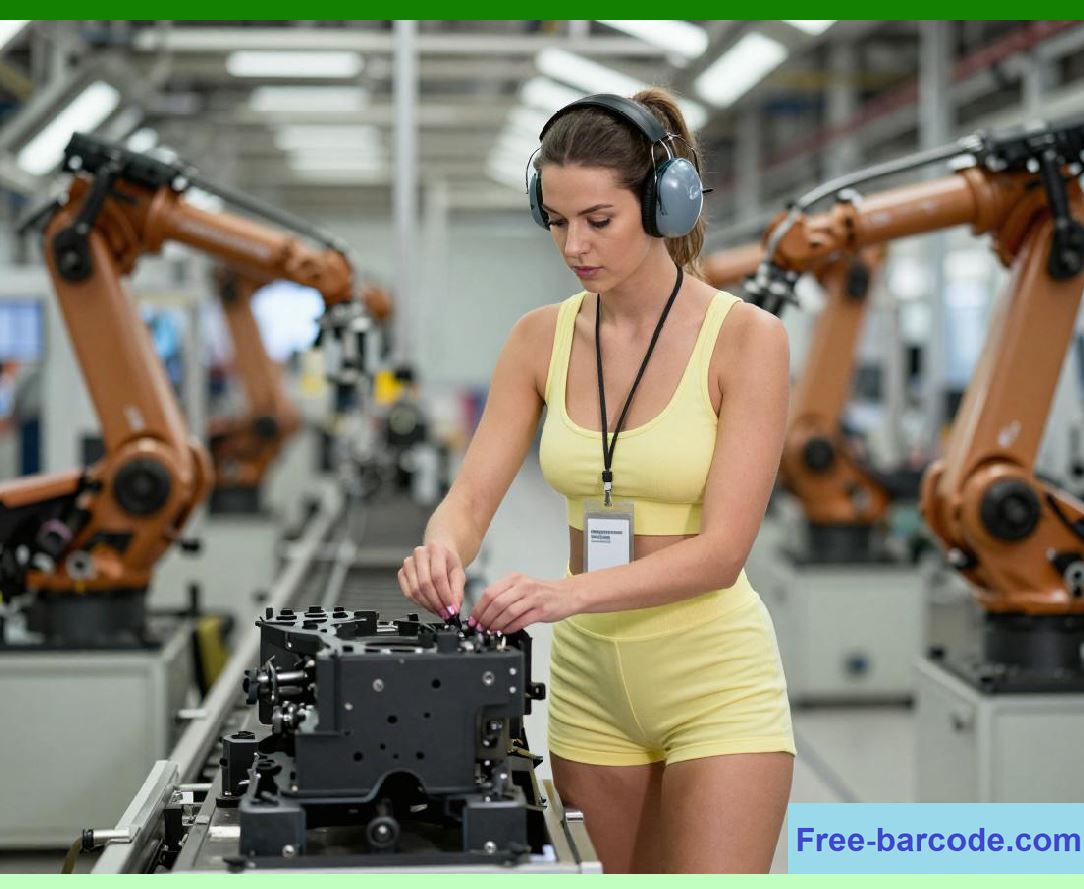
Manufacturing is one of the most important areas for industrial robots, and sim-to-real transfer is transforming how robots are deployed in factories. |
68.6.1 Bin Picking |
Bin picking is the task of reaching into a bin of randomly arranged parts and picking one out. This is notoriously difficult for robots because the parts are tangled, overlapping, and often shiny or reflective. Traditional vision systems struggle with these conditions. With Isaac Sim, engineers can create a digital twin of the bin, the parts, and the robot. They can generate synthetic images of the parts in many different positions, orientations, and lighting conditions. They can train a perception model to detect and estimate the pose of each part. They can then train a control policy to plan a grasp and move the part without collisions. Because the simulation includes realistic physics and rendering, the trained system transfers well to the real bin. This reduces the need for expensive real-world trials and makes bin picking more reliable. |
68.6.2 Assembly |
Assembly is another core manufacturing task. Robots must insert pins into holes, screw bolts, connect connectors, and fit parts together with tight tolerances. These tasks require precise force control and fine manipulation. In simulation, engineers can model the contact forces, the friction, and the compliance of the parts. They can train policies that learn to adjust the robot's motion based on force feedback. They can also use domain randomization to account for variations in part dimensions and surface properties. This allows the robot to handle real-world variations without failing. Companies in electronics, automotive, and aerospace are using these techniques to automate assembly tasks that were previously done by hand. |
68.6.3 Machine Tending |
Machine tending involves loading and unloading parts from machines such as CNC mills, lathes, and injection molding machines. The robot must pick up a raw part, place it in the machine, wait for the machine to finish, remove the finished part, and repeat. This task is repetitive and can be dangerous for humans. Simulation can be used to train the robot to handle different part shapes, different machine positions, and different cycle times. It can also be used to optimize the robot's path for speed and safety. By training in simulation, the robot can be deployed faster and with less risk. |
68.6.4 Quality Inspection |
Quality inspection involves examining products for defects, such as cracks, scratches, dents, and missing features. Robots equipped with cameras and artificial intelligence can perform this task. However, training the inspection models requires many examples of both good and defective products. Defective products are rare, so collecting enough real examples is difficult. Synthetic data generation solves this problem. In Isaac Sim, engineers can create realistic models of products and introduce simulated defects. They can generate thousands of images of defective and non-defective products under different lighting and viewing angles. This data is used to train inspection models that are robust and accurate. This approach is used in automotive, electronics, and metal manufacturing. |
68.6.5 Welding and Painting |
Welding and painting are processes that require precise motion and consistent quality. Robots are often used for these tasks, but programming them can be time-consuming. Simulation can be used to plan and optimize the robot's path. It can also be used to train the robot to adapt to variations in the workpiece, such as gaps in a weld joint or uneven surfaces. In painting, simulation can be used to model the spray pattern and ensure even coverage. By training in simulation, the robot can learn to adjust its motion in real time, improving quality and reducing waste. |
|
68.7 Applications in Logistics and Warehousing |
Logistics and warehousing are rapidly adopting robots, and sim-to-real transfer is a key enabler. |
68.7.1 Mobile Robot Navigation |
Mobile robots in warehouses must navigate crowded aisles, avoid obstacles, and reach their destinations safely. Training these robots in the real world is slow and risky. In simulation, engineers can create a digital twin of the warehouse, including shelves, pallets, workers, and other robots. They can train the robot to navigate using reinforcement learning. The robot learns to avoid collisions, plan efficient paths, and handle dynamic obstacles. Domain randomization can be used to vary the layout, the lighting, and the sensor noise, making the policy robust. Once trained, the robot can be deployed in the real warehouse with minimal fine-tuning. |
68.7.2 Palletizing and Depalletizing |
Palletizing is the task of stacking boxes or bags onto a pallet. Depalletizing is the reverse. These tasks require the robot to pick up objects of different sizes, weights, and shapes and place them accurately. Simulation can be used to train the robot to handle different pallet patterns and different object properties. It can also be used to optimize the stacking strategy for stability and speed. Synthetic data can be used to train vision models that detect the boxes and estimate their positions. This makes the system more flexible and reduces the need for manual programming. |
68.7.3 Order Picking |
Order picking is the task of retrieving items from shelves or bins to fulfill customer orders. This is one of the most labor-intensive tasks in a warehouse. Robots can assist by bringing shelves to human pickers or by picking items directly. Simulation can be used to train the robot to recognize different items, pick them up gently, and place them in a container. It can also be used to train the robot to work safely alongside humans. By training in simulation, the robot can be deployed faster and can adapt to new items more easily. |
68.7.4 Sorting and Singulation |
Sorting involves separating items into different categories, such as by destination or size. Singulation involves separating a pile of items into individual items so they can be processed one by one. Both tasks are challenging because the items may be overlapping, tangled, or irregular. Simulation can be used to generate synthetic data of piles of items and train perception models to detect and segment each item. It can also be used to train control policies to pick up individual items without disturbing the rest. This is particularly useful in parcel handling and e-commerce fulfillment. |
68.7.5 Autonomous Forklifts |
Autonomous forklifts must move pallets in dynamic environments. They need to detect obstacles, plan paths, and align with pallets for picking and placing. Simulation can be used to train these behaviors. Engineers can create a digital twin of the warehouse and the forklift. They can train the forklift to navigate, avoid collisions, and align with pallets using reinforcement learning. They can also use synthetic data to train the perception system to detect pallets and obstacles. This reduces the time and cost of deployment. |
|
68.8 Applications in Agriculture |
Agriculture is increasingly using robots for planting, harvesting, and monitoring crops. Sim-to-real transfer is helping to make these robots more capable and reliable. |
68.8.1 Harvesting |
Harvesting fruits and vegetables is a delicate task. The robot must identify ripe produce, reach it without damaging the plant, and detach it gently. Simulation can be used to create digital twins of the plants, the fruit, and the robot. Synthetic data can be used to train vision models to detect and classify ripe fruit. Reinforcement learning can be used to train the robot to grasp and detach the fruit without damaging it. Domain randomization can be used to vary the lighting, the plant structure, and the fruit position, making the policy robust. This approach is being used for strawberries, apples, tomatoes, and other crops. |
68.8.2 Weed Control |
Weed control is a major challenge in agriculture. Robots can use cameras and artificial intelligence to distinguish weeds from crops and remove them mechanically or with targeted sprays. Simulation can be used to generate synthetic images of weeds and crops at different growth stages and under different lighting conditions. This data is used to train classification models. Simulation can also be used to train the robot's control policy for precise removal. This reduces the use of herbicides and improves sustainability. |
68.8.3 Planting and Seeding |
Planting and seeding require precise placement of seeds or seedlings. Robots can be used to automate this task. Simulation can be used to train the robot to handle different seed sizes and soil conditions. It can also be used to optimize the planting pattern for maximum yield. By training in simulation, the robot can adapt to different fields and crops. |
68.8.4 Crop Monitoring |
Crop monitoring involves collecting data about plant health, growth, and yield. Robots and drones equipped with cameras and sensors can perform this task. Simulation can be used to train the perception models to detect diseases, pests, and nutrient deficiencies. Synthetic data can be generated for different plant species and different environmental conditions. This improves the accuracy and robustness of the monitoring system. |
68.8.5 Livestock Management |
Livestock management involves tasks such as feeding, cleaning, and monitoring animals. Robots can assist with these tasks. Simulation can be used to train the robot to navigate in a barn, avoid animals, and perform tasks safely. It can also be used to train the perception system to detect sick or distressed animals. This improves animal welfare and farm efficiency. |
|
68.9 Applications in Healthcare |
Healthcare is a sensitive area where safety and reliability are critical. Sim-to-real transfer is being used to develop robots for surgery, rehabilitation, and patient care. |
68.9.1 Surgical Robotics |
Surgical robots must perform precise movements with high accuracy. Simulation can be used to train surgeons and to develop control algorithms. In simulation, engineers can create digital twins of the surgical instruments, the anatomy, and the operating room. They can train the robot to perform tasks such as suturing, cutting, and tissue manipulation. They can also use simulation to test safety features and to plan complex procedures. Synthetic data can be used to train vision models to track instruments and tissues. This improves the safety and effectiveness of surgical robots. |
68.9.2 Rehabilitation Robotics |
Rehabilitation robots help patients recover from injuries or strokes. They must interact safely with patients and adapt to their needs. Simulation can be used to train the robot to provide assistance and resistance as needed. It can also be used to model the patient's movement and predict their intentions. This allows the robot to provide personalized therapy. Domain randomization can be used to account for different patient sizes and abilities. |
68.9.3 Hospital Logistics |
Hospitals use robots to transport supplies, medications, and specimens. These robots must navigate crowded corridors, avoid obstacles, and interact with elevators and doors. Simulation can be used to train the robot to navigate in a hospital environment. Engineers can create a digital twin of the hospital, including corridors, rooms, elevators, and people. They can train the robot to avoid collisions and to reach its destination safely. Synthetic data can be used to train the perception system to detect people, wheelchairs, and other obstacles. This improves the reliability of hospital logistics robots. |
68.9.4 Disinfection Robots |
Disinfection robots use ultraviolet light or chemicals to sanitize rooms. They must move around the room and ensure that all surfaces are treated. Simulation can be used to plan the robot's path and to optimize the disinfection process. It can also be used to train the robot to avoid obstacles and to operate safely in the presence of humans. This is particularly important in hospitals and clinics. |
68.9.5 Elderly Care |
Elderly care robots assist with tasks such as lifting, mobility, and companionship. Simulation can be used to train the robot to interact safely with elderly people. It can also be used to model human motion and predict falls. This allows the robot to provide timely assistance. Synthetic data can be used to train the perception system to detect emotions and gestures. This improves the quality of care. |
|
68.10 Applications in Construction and Mining |
Construction and mining are harsh environments where robots can improve safety and productivity. Sim-to-real transfer is helping to develop robots for these industries. |
68.10.1 Autonomous Excavators |
Autonomous excavators can dig trenches, load trucks, and move earth. Simulation can be used to train the excavator to perform these tasks. Engineers can create a digital twin of the excavator, the terrain, and the trucks. They can train the excavator to plan its path, control its bucket, and load trucks efficiently. They can also use simulation to test different soil conditions and slopes. This improves productivity and reduces the risk of accidents. |
68.10.2 Construction Site Navigation |
Construction sites are dynamic and cluttered. Robots must navigate around workers, vehicles, and materials. Simulation can be used to train the robot to navigate in this environment. Engineers can create a digital twin of the construction site and train the robot to avoid obstacles and reach its destination. Domain randomization can be used to vary the layout and the lighting. This improves the safety and efficiency of construction robots. |
68.10.3 Bricklaying and Masonry |
Bricklaying robots must place bricks accurately and apply mortar. Simulation can be used to train the robot to handle different brick sizes and mortar consistencies. It can also be used to optimize the bricklaying pattern for strength and speed. Synthetic data can be used to train vision models to detect bricks and estimate their positions. This improves the quality and speed of construction. |
68.10.4 Mining Automation |
Mining robots must operate in dark, dusty, and dangerous environments. Simulation can be used to train the robot to navigate, drill, and haul material. Engineers can create a digital twin of the mine and train the robot to perform tasks safely. Synthetic data can be used to train perception models to detect rocks, vehicles, and people. This improves safety and productivity in mining. |
68.10.5 Inspection and Maintenance |
Robots can be used to inspect bridges, tunnels, and other infrastructure. Simulation can be used to train the robot to navigate these structures and to detect defects. Synthetic data can be used to train vision models to detect cracks, corrosion, and other damage. This improves the safety and longevity of infrastructure. |
|
68.11 Applications in Energy and Utilities |
Energy and utilities companies use robots for inspection, maintenance, and repair. Sim-to-real transfer is helping to make these robots more capable. |
68.11.1 Power Plant Inspection |
Power plants are complex and hazardous environments. Robots can be used to inspect pipes, valves, and turbines. Simulation can be used to train the robot to navigate the plant and to detect anomalies. Synthetic data can be used to train vision models to detect leaks, corrosion, and cracks. This improves safety and reduces downtime. |
68.11.2 Wind Turbine Maintenance |
Wind turbines are tall and difficult to access. Robots can be used to inspect and repair blades. Simulation can be used to train the robot to climb the turbine and to perform tasks. It can also be used to model the wind and the blade movement. This improves the safety and efficiency of maintenance. |
68.11.3 Solar Panel Cleaning |
Solar panels accumulate dust and dirt, which reduces their efficiency. Robots can be used to clean them. Simulation can be used to train the robot to navigate the panel array and to clean effectively. It can also be used to optimize the cleaning schedule. This improves energy production. |
68.11.4 Pipeline Inspection |
Pipelines transport oil, gas, and water over long distances. Robots can be used to inspect them for leaks and damage. Simulation can be used to train the robot to navigate the pipeline and to detect anomalies. Synthetic data can be used to train vision models to detect cracks and corrosion. This improves safety and reduces environmental risk. |
68.11.5 Nuclear Decommissioning |
Nuclear decommissioning involves dismantling radioactive structures. Robots can be used to perform these tasks safely. Simulation can be used to train the robot to navigate the environment and to handle radioactive materials. It can also be used to plan the decommissioning process. This improves safety and efficiency. |
|
68.12 Applications in Retail and Service |
Retail and service industries are increasingly using robots for tasks such as shelf scanning, inventory management, and customer service. Sim-to-real transfer is helping to make these robots more reliable. |
68.12.1 Shelf Scanning |
Shelf scanning robots move through store aisles and scan shelves to check inventory and prices. Simulation can be used to train the robot to navigate the store and to recognize products. Synthetic data can be used to train vision models to detect products and read labels. This improves inventory accuracy and reduces labor costs. |
68.12.2 Inventory Management |
Inventory management robots count and track products in warehouses and stores. Simulation can be used to train the robot to navigate and to count items. It can also be used to optimize the inventory layout. This improves efficiency and reduces errors. |
68.12.3 Customer Service |
Customer service robots interact with customers and provide information. Simulation can be used to train the robot to understand speech and gestures and to respond appropriately. It can also be used to model human behavior and to test different interaction scenarios. This improves the quality of service. |
68.12.4 Cleaning Robots |
Cleaning robots vacuum, sweep, and mop floors in offices, malls, and airports. Simulation can be used to train the robot to navigate and to clean effectively. It can also be used to optimize the cleaning route. This improves efficiency and reduces labor costs. |
68.12.5 Food Preparation |
Food preparation robots cook, assemble, and serve food. Simulation can be used to train the robot to handle different ingredients and to follow recipes. It can also be used to model the cooking process. This improves consistency and speed. |
|
68.13 Applications in Space and Extreme Environments |
Space and extreme environments are dangerous and difficult to access. Robots are essential for exploration and maintenance. Sim-to-real transfer is critical because real-world testing is often impossible. |
68.13.1 Planetary Rovers |
Planetary rovers must navigate unknown terrain and collect samples. Simulation can be used to train the rover to navigate and to avoid hazards. Engineers can create digital twins of the terrain and train the rover to plan its path. Synthetic data can be used to train vision models to detect rocks and slopes. This improves the success of missions. |
68.13.2 Satellite Servicing |
Satellite servicing robots repair and refuel satellites in orbit. Simulation can be used to train the robot to approach and manipulate the satellite. It can also be used to test different scenarios and contingencies. This improves the reliability of servicing missions. |
68.13.3 Underwater Robots |
Underwater robots inspect pipelines, cables, and structures. Simulation can be used to train the robot to navigate and to perform tasks in water. It can also be used to model currents and visibility. This improves the efficiency of underwater operations. |
68.13.4 Disaster Response |
Disaster response robots search for survivors and assess damage in dangerous environments. Simulation can be used to train the robot to navigate rubble and to detect signs of life. Synthetic data can be used to train vision models to detect people and hazards. This improves the effectiveness of disaster response. |
68.13.5 Nuclear and Hazardous Environments |
Robots are used in nuclear and hazardous environments to perform tasks that would be dangerous for humans. Simulation can be used to train the robot to navigate and to handle hazardous materials. It can also be used to plan the task and to test safety procedures. This improves safety and efficiency. |
|
68.14 Benefits of Sim-to-Real Transfer |
The benefits of sim-to-real transfer are numerous and apply across all industries. |
68.14.1 Faster Development |
Simulation allows robots to be developed and tested much faster than real-world trials. Engineers can run thousands of simulations in parallel and iterate quickly. This reduces the time from concept to deployment. |
68.14.2 Lower Cost |
Simulation reduces the need for expensive physical prototypes and real-world testing. It also reduces the risk of damage to robots and products. This lowers the overall cost of development. |
68.14.3 Improved Safety |
Simulation allows robots to be tested in dangerous scenarios without risking human safety. It also allows robots to be trained to handle rare and hazardous situations. This improves the safety of both robots and humans. |
68.14.4 Better Performance |
Simulation allows robots to be trained on a wide range of conditions, making them more robust and adaptable. It also allows them to learn complex tasks that would be difficult to program by hand. This improves performance and reliability. |
68.14.5 Scalability |
Simulation can be scaled up to train many robots at once. It can also be scaled to generate large amounts of synthetic data. This makes it possible to develop complex systems that would be impractical to train in the real world. |
|
68.15 Challenges and Limitations |
Despite its many benefits, sim-to-real transfer is not without challenges. |
68.15.1 The Reality Gap |
The reality gap is the difference between simulation and reality. It can cause policies trained in simulation to fail in the real world. Closing the gap requires accurate modeling, domain randomization, and fine-tuning. |
68.15.2 Modeling Complexity |
Creating accurate digital twins of robots, sensors, and environments is complex and time-consuming. It requires expertise in physics, rendering, and robotics. It also requires accurate data about the real system. |
68.15.3 Computational Cost |
Simulation and training can be computationally expensive. They require powerful GPUs and large amounts of memory. This can be a barrier for small teams and companies. |
68.15.4 Validation |
Validating that a policy trained in simulation will work in the real world is challenging. It requires careful testing and verification. It also requires a good understanding of the reality gap. |
68.15.5 Ethical and Regulatory Issues |
As robots become more autonomous, ethical and regulatory issues arise. These include safety, liability, and privacy. Simulation can help address these issues by allowing thorough testing, but it also raises questions about the validity of simulated testing. |
|
68.16 Best Practices for Sim-to-Real Transfer |
Based on experience across many industries, several best practices have emerged. |
68.16.1 Start with a Clear Task Definition |
Define the task precisely and identify the key challenges. This helps focus the simulation and training efforts. |
68.16.2 Build an Accurate Digital Twin |
Invest time in creating an accurate digital twin of the robot, sensors, and environment. Use real data to calibrate the simulation. |
68.16.3 Use Domain Randomization |
Vary the simulation parameters to make the policy robust. This is one of the most effective techniques for closing the reality gap. |
68.16.4 Generate Diverse Synthetic Data |
Generate synthetic data with different lighting, textures, and object positions. This improves the robustness of perception models. |
68.16.5 Train with Multiple Scenarios |
Train the policy under many different conditions, including rare and dangerous ones. This improves safety and reliability. |
68.16.6 Validate in Simulation and Reality |
Test the policy thoroughly in simulation and then validate it in the real world. Use a staged approach, starting with simple tasks and gradually increasing complexity. |
68.16.7 Fine-Tune on Real Hardware |
Fine-tune the policy on the real robot to adapt to the remaining reality gap. This can be done with a small amount of real-world data. |
68.16.8 Monitor and Update |
Monitor the robot's performance in the real world and update the simulation and policy as needed. This ensures continued reliability. |
|
68.17 The Future of Sim-to-Real Transfer |
The field of sim-to-real transfer is rapidly evolving. Several trends are likely to shape its future. |
68.17.1 More Realistic Simulation |
Simulation will become more realistic, with better physics, rendering, and sensor models. This will reduce the reality gap and make transfer easier. |
68.17.2 Faster Training |
Training will become faster with more powerful GPUs and better algorithms. This will make it possible to train more complex policies in less time. |
68.17.3 Foundation Models |
Foundation models, which are large artificial intelligence models trained on vast amounts of data, will be used for robotics. These models can be pre-trained in simulation and fine-tuned for specific tasks. This will reduce the amount of data and time needed for new tasks. |
68.17.4 Digital Twins for Operations |
Digital twins will be used not only for development but also for operations. They will monitor real robots, predict failures, and optimize performance. This will improve uptime and efficiency. |
68.17.5 Cloud and Edge Computing |
Cloud and edge computing will enable simulation and training to be done at scale. This will make sim-to-real transfer accessible to more teams and companies. |
68.17.6 Standardization |
Standards for sim-to-real transfer will emerge, making it easier to share models, data, and best practices. This will accelerate adoption across industries. |
|
68.18 Detailed Summary |
This chapter has explored the topic of sim-to-real transfer and the role of NVIDIA Omniverse, Isaac Sim, and Isaac Lab in accelerating the robot development lifecycle. It began with a short summary and then explained why sim-to-real transfer matters. It described the three pillars of the NVIDIA platform: Omniverse, which provides the digital twin infrastructure; Isaac Sim, which provides the robotics simulation and synthetic data generation; and Isaac Lab, which provides the robot learning framework. It then walked through the practical workflow of sim-to-real transfer, including building the digital twin, generating synthetic data, training control policies, and transferring and fine-tuning. It explained key technologies such as physically based rendering, accurate physics simulation, domain randomization, synthetic data generation, reinforcement learning, imitation learning, and GPU acceleration. The chapter then explored applications across many industries. In manufacturing, sim-to-real transfer is used for bin picking, assembly, machine tending, quality inspection, and welding and painting. In logistics and warehousing, it is used for mobile robot navigation, palletizing and depalletizing, order picking, sorting and singulation, and autonomous forklifts. In agriculture, it is used for harvesting, weed control, planting and seeding, crop monitoring, and livestock management. In healthcare, it is used for surgical robotics, rehabilitation robotics, hospital logistics, disinfection robots, and elderly care. In construction and mining, it is used for autonomous excavators, construction site navigation, bricklaying and masonry, mining automation, and inspection and maintenance. In energy and utilities, it is used for power plant inspection, wind turbine maintenance, solar panel cleaning, pipeline inspection, and nuclear decommissioning. In retail and service, it is used for shelf scanning, inventory management, customer service, cleaning robots, and food preparation. In space and extreme environments, it is used for planetary rovers, satellite servicing, underwater robots, disaster response, and nuclear and hazardous environments. The chapter also discussed the benefits of sim-to-real transfer, including faster development, lower cost, improved safety, better performance, and scalability. It examined the challenges and limitations, such as the reality gap, modeling complexity, computational cost, validation, and ethical and regulatory issues. It presented best practices, including starting with a clear task definition, building an accurate digital twin, using domain randomization, generating diverse synthetic data, training with multiple scenarios, validating in simulation and reality, fine-tuning on real hardware, and monitoring and updating. Finally, it looked at the future of sim-to-real transfer, including more realistic simulation, faster training, foundation models, digital twins for operations, cloud and edge computing, and standardization. In conclusion, sim-to-real transfer is a powerful approach that is transforming how industrial robots are developed and deployed. NVIDIA Omniverse, Isaac Sim, and Isaac Lab provide a comprehensive platform that makes sim-to-real transfer practical and scalable. By using these tools, teams can develop robots faster, at lower cost, and with better performance and safety. As the technology continues to evolve, sim-to-real transfer will become an even more integral part of the robot development lifecycle, enabling new applications and industries to benefit from robotics. |
 cs@easiersoft.com