Chapter 67: Agentic AI |
67.1 Chapter Summary |
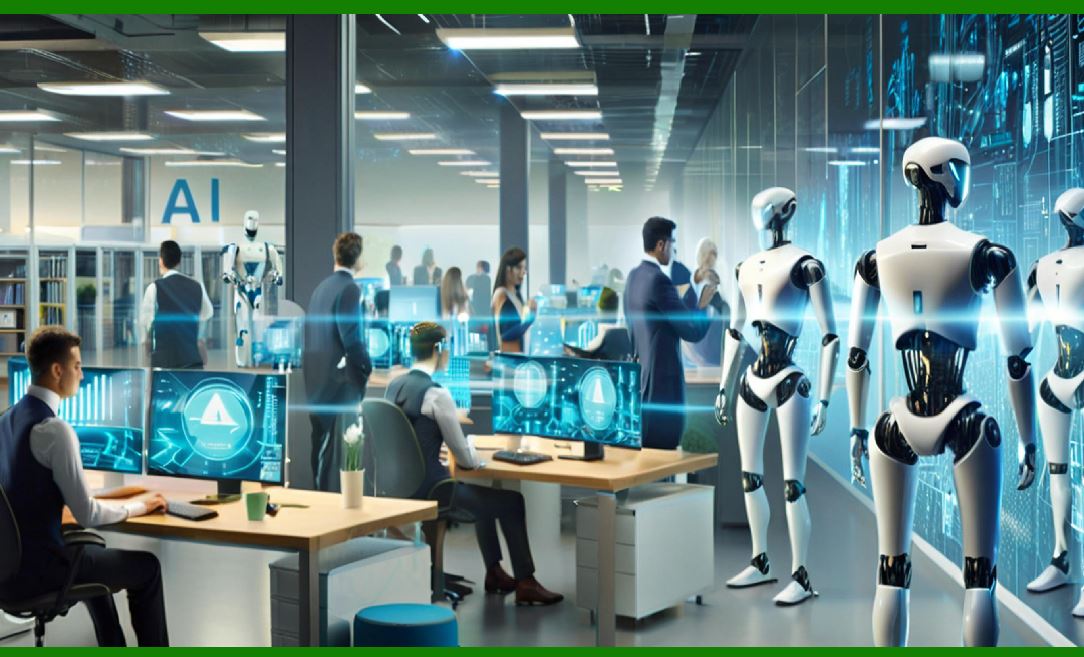
Agentic AI represents one of the most significant conceptual leaps in the integration of artificial intelligence with industrial robotics. Unlike earlier AI systems that performed a single narrow function, such as classifying an image or optimizing a single motion path, agentic AI combines analytical AI for decision-making with generative AI for adaptability. The result is a robot or robotic system that can operate independently, set its own subgoals, adapt to unexpected situations, and pursue complex objectives over extended periods with minimal human supervision. This chapter explains what agentic AI is, how it differs from conventional industrial AI, what technical building blocks make it possible, and, most importantly, how it is already being applied across many industries. The emphasis throughout is on practical examples from manufacturing, logistics, healthcare, agriculture, energy, construction, mining, space, defense, retail, and service robotics. The chapter concludes with a detailed summary that ties together the key ideas, benefits, limitations, and future outlook. |
|
67.2 Introduction: From Automated to Agentic |
Industrial robots have traditionally been automated rather than intelligent. A classic articulated arm on an assembly line repeats a pre-programmed trajectory thousands of times per day with extraordinary precision. It does not decide what to do next. It does not notice that a part is slightly misaligned unless a dedicated sensor triggers a fault. It does not reorganize its own task list when a conveyor jams. It simply executes. |
For decades this was sufficient. Mass production rewarded consistency, and consistency was achieved by removing variability from the environment. Fixtures, jigs, precise part feeding, and structured lighting made the world predictable enough for blind repetition. The robot was fast, strong, and tireless, but it was also brittle in the face of change. |
The first wave of industrial AI softened this brittleness. Machine learning models were added for visual inspection, predictive maintenance, and grasp point detection. These systems were analytical: they took data in and produced a decision, a classification, or a numerical estimate. They were powerful but narrow. A defect detection model could not plan a repair. A grasp detector could not recover from a dropped part. |
The second wave brought generative AI. Large language models, vision-language models, and diffusion-based planners demonstrated an astonishing ability to produce novel outputs: text, code, images, and even robot motion plans. Generative models could interpret a natural language instruction such as 'pick up the red bin and place it on the top shelf' and translate it into a sequence of actions. They could also adapt when the first plan failed, proposing alternatives. However, generative models alone are not reliable decision-makers. They can hallucinate, drift, and lose track of long-term goals. |
Agentic AI is the synthesis. It uses analytical AI for grounded, verifiable decision-making, and generative AI for flexibility, language understanding, and creative problem-solving. An agentic system perceives its environment, maintains an internal model of goals and state, reasons about what to do next, acts, observes the result, and repeats. Crucially, it can operate independently for extended periods, handling interruptions and novel situations without a human in the loop for every step. |
In the context of industrial robots, agentic AI transforms a machine from a tool that must be commanded into a coworker that can be delegated to. This chapter explores that transformation. |

|
67.3 What Makes AI Agentic |
The word agent comes from the Latin agere, to do. An agent is something that acts. In AI, an agent is a system that perceives its environment through sensors, decides on actions using a policy or reasoning process, and acts on the environment through actuators. This definition is broad enough to include a simple thermostat. What distinguishes agentic AI in the modern sense is a combination of properties. |
First, goal-directed autonomy. The system is given a high-level objective, such as 'assemble the subframe' or 'restock aisle seven,' rather than a fixed trajectory. It decomposes that objective into subgoals and sequences them. |
Second, long-horizon reasoning. The system can maintain context over many steps, remembering what it has done, what worked, what failed, and what remains. This is sometimes called a world model or a memory. |
Third, adaptability. When the environment changes, the agent revises its plan. If a bin is missing, it looks for an alternative. If a gripper slips, it retries with a different approach. |
Fourth, tool use. The agent can invoke external tools, such as a vision system, a database, a motion planner, or even another AI model, to accomplish subtasks. |
Fifth, reflection and self-correction. The agent evaluates its own performance and adjusts. It might notice that its grasp success rate has dropped and switch strategies. |
Sixth, interaction. The agent can communicate with humans, other robots, and software systems in natural language or structured protocols. |
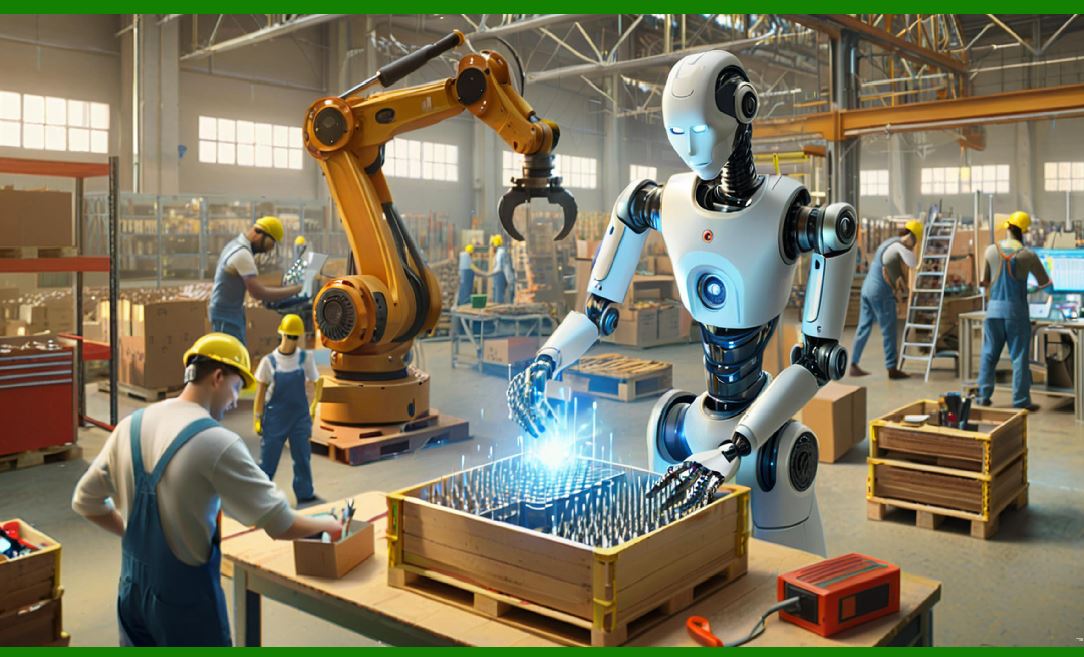
Not every agentic system has all six properties to the same degree. A useful way to think about it is a spectrum. At one end is fixed automation. At the other end is a fully autonomous general-purpose robot. Agentic AI occupies the middle and upper regions of that spectrum, and different industrial applications sit at different points. |
|
67.4 Analytical AI and Generative AI: The Two Pillars |
To understand agentic AI, it helps to separate its two intellectual pillars. |
Analytical AI is the older and more mature tradition. It includes classical control theory, optimization, statistical inference, and machine learning for prediction and classification. Analytical AI excels at well-defined problems with clear objectives and measurable outcomes. In robotics, it handles inverse kinematics, trajectory optimization, force control, collision avoidance, and visual servoing. It is reliable, interpretable, and verifiable. When an analytical module says the robot will not collide, engineers can often prove it. |
Generative AI is the newer tradition. It includes large language models, vision-language-action models, diffusion models, and other systems that learn the underlying distribution of data and can sample from it. Generative AI excels at open-ended problems, language understanding, common-sense reasoning, and producing novel plans. In robotics, it handles instruction interpretation, scene understanding, task decomposition, and recovery from unfamiliar failures. It is flexible and creative but probabilistic and sometimes unreliable. |
Agentic AI combines them. The generative component proposes. The analytical component disposes. For example, a generative planner might propose three ways to remove a tangled cable from a bin. An analytical module then checks each proposal for kinematic feasibility, collision risk, and cycle time, and selects the best one. If all three fail, the generative component is asked for more options. This division of labor plays to the strengths of each. |
|
67.5 The Agentic Loop |
Most agentic systems share a common control loop. The details vary, but the pattern is consistent. |
The loop begins with perception. Sensors, including cameras, depth sensors, force-torque sensors, lidar, and microphones, provide raw data. Perception modules convert that data into a structured representation of the world: object poses, semantic labels, human positions, and system states. |
Next comes state estimation and memory. The agent maintains an internal state that includes the current goal, the history of actions and outcomes, the believed state of the environment, and any relevant knowledge retrieved from a database. Memory can be short-term, covering the current task, or long-term, covering days or years of operation. |
Then comes reasoning and planning. This is where analytical and generative AI interact. The agent might use a language model to interpret a spoken instruction, a vision-language model to identify relevant objects, and a task planner to sequence actions. It might use a search algorithm or a learned policy to choose the next action. |
Then comes action. The chosen action is translated into motor commands, gripper commands, or calls to other systems. Analytical controllers ensure the motion is safe and precise. |
Finally comes observation and reflection. The agent observes the result of its action, compares it to expectations, and updates its state. If the result is unexpected, it may trigger a recovery behavior or replan. |
This loop repeats continuously. The key difference from classical control is that the loop operates at multiple levels of abstraction simultaneously. Low-level servo loops run in milliseconds. Mid-level motion planning runs in tenths of a second. High-level task reasoning runs in seconds or minutes. Agentic AI coordinates across these timescales. |

|
67.6 Why Agentic AI Matters for Industrial Robots |
The industrial case for agentic AI rests on several practical benefits. |
First, it reduces integration cost. Traditional robot cells require extensive engineering to handle every possible variation. Agentic systems can be taught a task at a higher level and can figure out many of the details themselves. This shortens deployment time and lowers the skill barrier. |
Second, it increases uptime. When something goes wrong, an agentic robot can often recover on its own. It can retry a grasp, choose a different tool, or ask a human for help in a clear way. This reduces the need for immediate human intervention. |
Third, it enables small-batch and high-mix production. Factories increasingly need to produce many variants of a product on the same line. Agentic robots can switch tasks based on instructions rather than reprogramming. |
Fourth, it extends robots to unstructured environments. Agriculture, construction, mining, healthcare, and service industries have far more variability than a automotive assembly line. Agentic AI makes robots viable in these settings. |
Fifth, it improves human-robot collaboration. An agentic robot can understand natural language, explain its actions, and negotiate shared space with humans. This makes teams more flexible. |
Sixth, it creates a path to continuous improvement. An agentic system can log its experiences and learn from them, gradually improving its policies. |
These benefits are not automatic. They require careful design, testing, and safety assurance. But they explain why agentic AI has become one of the most active areas of industrial robotics research and development. |
|
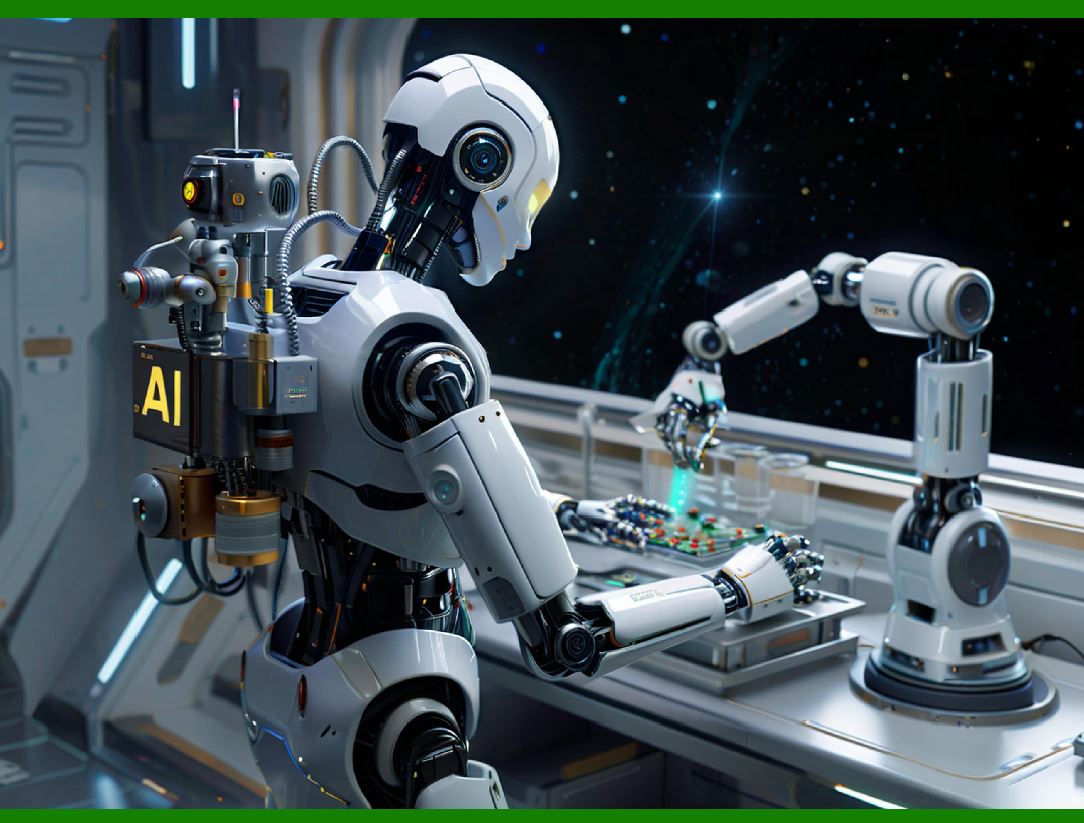
67.7 Enabling Technologies |
Several technological developments converged to make agentic AI practical. |
Large language models provide natural language understanding and generation. They allow humans to instruct robots in ordinary language and allow robots to explain their reasoning. They also serve as general-purpose reasoners that can decompose tasks and write code. |
Vision-language models connect images to language. They allow a robot to identify objects, read labels, understand scenes, and answer questions about what it sees. This is essential for open-world operation. |
Vision-language-action models go further, directly mapping images and instructions to robot actions. These models are trained on large datasets of robot demonstrations and can generalize to new objects and tasks. |
Reinforcement learning provides a framework for learning policies through trial and error. In simulation, agents can practice millions of times. Sim-to-real transfer techniques then bring those policies into the physical world. |
World models are learned representations of how the environment evolves. They allow an agent to predict the consequences of its actions without actually performing them, which improves planning efficiency and safety. |
Tool use and function calling allow language models to invoke external software. A robot agent can call a motion planner, a database, a calculator, or a vision service as needed. |
Memory systems, including vector databases and retrieval-augmented generation, allow agents to store and recall relevant information over long periods. |
Edge computing provides the computational power to run these models onboard or near the robot, reducing latency and dependence on cloud connectivity. |
Safety frameworks, including ISO 10218 and ISO/TS 15066 for collaborative robots, provide the standards context in which agentic systems must operate. |
|
67.8 Levels of Autonomy |
It is useful to describe agentic AI in terms of levels of autonomy, similar to the levels used for self-driving cars. |
Level zero is no autonomy. The robot executes fixed commands. |
Level one is assistance. The robot can perform a single task with human supervision and simple error recovery. |
Level two is partial autonomy. The robot can perform a sequence of tasks in a structured environment and can handle predictable variations. |
Level three is conditional autonomy. The robot can operate independently in a known environment but requires human fallback for unexpected situations. |
Level four is high autonomy. The robot can operate independently in a semi-structured environment, handling most unexpected situations and requesting help only when necessary. |
Level five is full autonomy. The robot can operate indefinitely in an unstructured environment without human intervention. |
Most industrial agentic systems today operate at level two or three. Research systems are pushing into level four. Level five remains a long-term goal. The level appropriate for a given application depends on the cost of failure, the variability of the environment, and the availability of human oversight. |

|
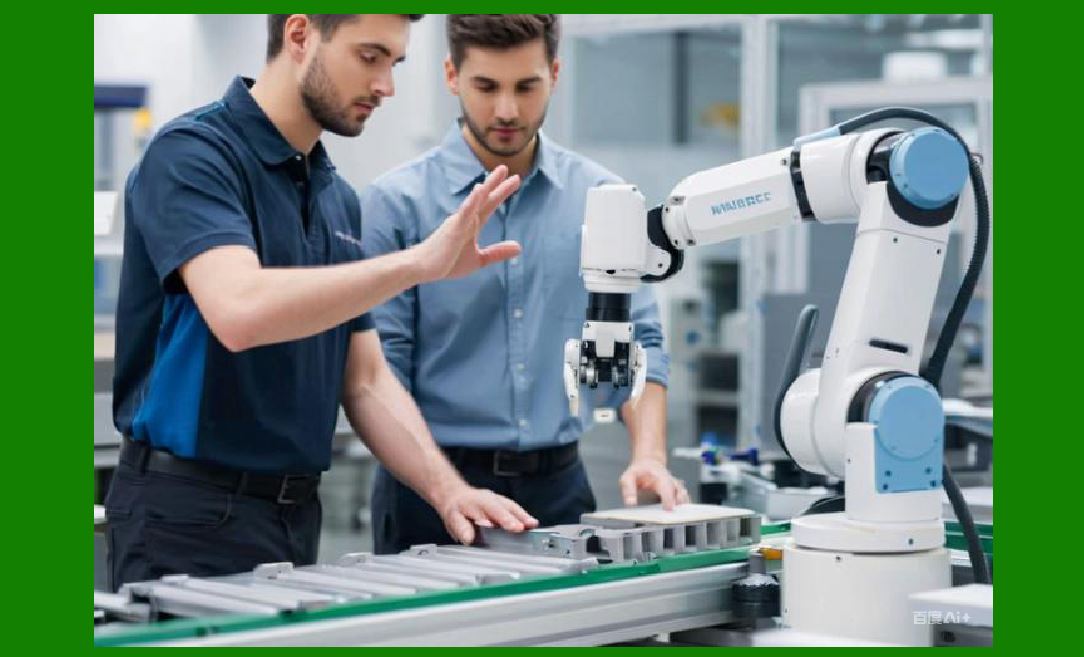
67.9 Application Examples: Manufacturing |
Manufacturing is the birthplace of industrial robotics, and it is now a leading adopter of agentic AI. |
Consider a electronics assembly plant that produces many variants of a circuit board. A traditional line would need separate fixtures and programs for each variant. An agentic robotic cell can be given a work order in plain language: 'Build fifty units of board type A, then twenty units of type B.' The agent retrieves the bill of materials, identifies the required components, plans the sequence of pick-and-place operations, and adapts when a reel of components runs out. If a component is missing, it can flag the issue and continue with other work. |
In automotive final assembly, agentic robots handle tasks such as routing wiring harnesses, installing trim clips, and tightening fasteners in awkward positions. These tasks are difficult to automate because the parts are floppy, the tolerances are loose, and the positions vary. An agentic system uses vision to locate the harness, force feedback to feel when a clip seats, and generative planning to figure out a route that avoids obstacles. When it fails, it tries a different route rather than stopping the line. |
In metal fabrication, agentic robots tend to welding, grinding, and inspection. A welding agent can look at a joint, decide on a weld pattern, execute it, inspect the result, and rework defects. It can adapt to variations in fit-up and material. A grinding agent can remove weld spatter and blend surfaces, adjusting pressure based on visual and force feedback. |
In semiconductor manufacturing, agentic systems manage wafer handling, tool loading, and defect review. The environment is highly structured but the tasks are complex and the cost of error is enormous. Agentic AI helps coordinate multiple robots and tools, optimizing throughput while maintaining strict cleanliness and safety. |
In additive manufacturing, agentic robots perform post-processing tasks such as support removal, surface finishing, and part sorting. These tasks are labor-intensive and variable. An agentic system can inspect a printed part, decide which supports to remove, and execute the removal without damaging the part. |
In food and beverage manufacturing, agentic robots handle picking, packing, and palletizing of items that vary in shape, weight, and orientation. A generative planner can figure out how to grasp a bag of chips or a carton of eggs, while analytical modules ensure the grasp is gentle enough not to crush the product. |
|
67.10 Application Examples: Logistics and Warehousing |
Logistics is perhaps the most active commercial arena for agentic AI in robotics. |
In e-commerce fulfillment centers, agentic robots pick items from shelves and place them into orders. The challenge is that every order is different and every item is different. A single order might contain a toothbrush, a paperback book, and a bottle of shampoo. An agentic picking system uses vision-language models to identify items, generative planning to choose grasps, and analytical control to execute them. When an item is missing or damaged, the agent reports it and moves on. |
Mobile robots in warehouses use agentic AI for navigation and task allocation. Instead of following fixed paths, they negotiate traffic with other robots, reroute around obstacles, and prioritize tasks based on deadlines. A fleet-level agent coordinates hundreds of robots, assigning tasks and resolving conflicts. |
In parcel sorting, agentic robots read labels, sort packages by destination, and handle exceptions such as damaged or unreadable labels. They can learn new sorting rules from instructions rather than reprogramming. |
In cold storage, agentic robots work in temperatures that are uncomfortable for humans. They pick and palletize frozen goods, adapting to frost and condensation on packaging. |
In returns processing, agentic robots inspect returned items, decide whether to restock, refurbish, or discard, and route them accordingly. This requires visual inspection, judgment, and physical manipulation. |
In inventory management, agentic robots fly or drive through warehouses, scanning shelves and identifying misplaced or missing items. They can autonomously decide which aisles to prioritize based on sales data. |
|
67.11 Application Examples: Healthcare and Laboratory Automation |
Healthcare and laboratory automation are natural fits for agentic AI because the tasks are complex, variable, and high-stakes. |
In clinical laboratories, agentic robots handle sample preparation, liquid handling, and analysis. A lab agent can receive a test order, select the appropriate protocol, prepare reagents, run the assay, and interpret the result. It can detect anomalies, such as a clogged pipette tip or a contaminated sample, and take corrective action. It can also prioritize urgent samples over routine ones. |
In hospital pharmacies, agentic robots prepare intravenous medications, count pills, and package doses. They must be extremely accurate and must handle many different drug forms. An agentic system can verify drug identity using vision, weigh doses analytically, and document everything for regulatory compliance. |
In surgery, agentic AI assists with tasks such as suturing, tissue retraction, and instrument handling. The surgeon remains in control, but the agent can perform subtasks autonomously. For example, a robotic suturing agent can place stitches at a specified spacing and tension, adapting to tissue properties. |
In rehabilitation, agentic robots interact with patients, guiding exercises and adjusting difficulty based on performance. They can recognize when a patient is struggling and provide encouragement or assistance. |
In elder care, agentic robots provide companionship, remind patients to take medication, and assist with mobility. These applications are socially complex and require careful design, but they illustrate the breadth of agentic AI. |
In medical imaging, agentic systems operate imaging equipment, position patients, and optimize scan parameters. They can detect when an image is inadequate and repeat the scan automatically. |
In prosthetics and exoskeletons, agentic control systems learn the user's gait and intentions, adapting assistance in real time. This is a form of human-in-the-loop agentic AI. |
|
67.12 Application Examples: Agriculture |
Agriculture is one of the most promising frontiers for agentic robots because labor is scarce, tasks are variable, and the environment is unstructured. |
In harvesting, agentic robots pick fruits and vegetables. A strawberry harvesting robot must identify ripe berries, avoid bruising them, and navigate through dense foliage. An agentic system uses vision to find berries, generative planning to choose a grasp, and force control to detach the fruit gently. It can learn from each attempt and improve. |
In weeding, agentic robots distinguish crops from weeds and remove weeds mechanically or with targeted micro-doses of herbicide. This requires fine visual discrimination and precise actuation. |
In planting, agentic robots place seeds at optimal depth and spacing, adapting to soil conditions. They can detect and skip rocks or debris. |
In spraying, agentic robots apply pesticides or fertilizers only where needed, reducing chemical use. An agentic system can identify pest infestations and treat them precisely. |
In livestock management, agentic robots feed animals, clean pens, and monitor health. They can detect lameness or illness from visual and behavioral cues. |
In greenhouse management, agentic robots pollinate flowers, prune plants, and monitor growth. They work in controlled environments but still face variability. |
In orchard management, agentic robots thin fruit, prune branches, and harvest. These tasks require reaching into trees and manipulating delicate structures. |
In aquaculture, agentic robots inspect nets, feed fish, and monitor water quality. They operate in underwater environments that are difficult for humans. |
|
67.13 Application Examples: Energy and Utilities |
Energy and utilities involve hazardous, remote, and critical infrastructure, making them ideal for agentic robots. |
In nuclear power plants, agentic robots inspect reactors, handle waste, and perform maintenance in radiation zones. They must operate reliably with no human access. An agentic system can plan inspection routes, detect anomalies, and report findings. |
In oil and gas, agentic robots inspect pipelines, wells, and offshore platforms. They can detect corrosion, leaks, and structural damage. Underwater agentic robots perform subsea inspection and repair. |
In wind energy, agentic robots climb turbine towers and blades, inspecting for cracks and erosion. They can perform repairs such as blade cleaning and leading-edge protection. |
In solar energy, agentic robots clean solar panels, inspect for damage, and optimize panel orientation. They can operate across large solar farms autonomously. |
In power line maintenance, agentic robots traverse high-voltage lines, inspecting and repairing components. This removes humans from dangerous work. |
In hydroelectric facilities, agentic robots inspect turbines, penstocks, and gates. They can operate in wet, confined spaces. |
In battery manufacturing and recycling, agentic robots handle hazardous materials, sort batteries, and disassemble packs. They must handle thermal and chemical risks. |

|
67.14 Application Examples: Construction and Mining |
Construction and mining are unstructured, dynamic, and dangerous, which makes them prime candidates for agentic AI. |
In construction, agentic robots perform bricklaying, welding, painting, and inspection. A bricklaying agent can read a building plan, locate bricks, apply mortar, and place them accurately. It can adapt to variations in brick size and site conditions. |
In demolition, agentic robots break concrete, sort debris, and remove hazardous materials. They can work in environments that are unsafe for humans. |
In tunneling, agentic robots install supports, drill, and muck. They coordinate with human crews and other machines. |
In mining, agentic robots drill, blast, load, and haul. Autonomous haul trucks are already common in some mines. Agentic AI extends autonomy to loading, drilling, and exploration. |
In mineral processing, agentic robots inspect conveyors, crushers, and mills. They can detect wear and perform maintenance. |
In site surveying, agentic drones and ground robots map terrain, monitor progress, and detect hazards. |
In prefabrication, agentic robots assemble modules in factories, which are then transported to sites. This blends manufacturing and construction. |

|
67.15 Application Examples: Space and Defense |
Space and defense operate in extreme environments where communication is limited and failure is catastrophic. Agentic AI is essential. |
In space, agentic robots perform satellite servicing, planetary exploration, and space station maintenance. A Mars rover is a classic agentic system: it perceives its environment, plans routes, avoids hazards, and conducts science autonomously. Future agents will assemble structures, mine resources, and repair spacecraft. |
In defense, agentic robots perform reconnaissance, explosive ordnance disposal, and logistics. They must operate in contested environments with degraded communication. Agentic AI allows them to continue missions when links are lost. |
In maritime security, agentic vessels patrol waters, detect threats, and respond. They must follow rules of engagement and avoid collisions. |
In aviation, agentic systems assist with maintenance, inspection, and cargo handling. Drones inspect aircraft and infrastructure. |
In emergency response, agentic robots search for survivors, map disasters, and deliver supplies. They operate in chaotic, dangerous conditions. |

|
67.16 Application Examples: Retail and Service |
Retail and service robotics bring agentic AI into direct contact with the public. |
In retail stores, agentic robots stock shelves, take inventory, and assist customers. They can answer questions, locate products, and guide shoppers. |
In restaurants, agentic robots cook, serve, and clean. They can adapt to different recipes and customer preferences. |
In hotels, agentic robots deliver items, guide guests, and perform cleaning. They navigate crowded spaces and interact politely. |
In airports, agentic robots assist passengers, transport luggage, and perform security checks. |
In hospitals, agentic robots transport supplies, disinfect rooms, and assist staff. |
In offices, agentic robots deliver mail, manage conference rooms, and perform security patrols. |
In homes, agentic robots vacuum, mow lawns, and assist with chores. These consumer systems are simpler but share the same principles. |

|
67.17 Application Examples: Cross-Industry Patterns |
Across all these industries, several patterns recur. |
The first pattern is pick-and-place in unstructured environments. Whether the object is a circuit board, a strawberry, or a piece of luggage, the agent must identify it, choose a grasp, and place it accurately. Agentic AI makes this possible without exhaustive programming. |
The second pattern is inspection and quality control. Agentic systems look at products, infrastructure, or environments and decide whether they meet standards. They can detect defects, classify severity, and recommend action. |
The third pattern is maintenance and repair. Agentic systems diagnose problems, plan repairs, and execute them. They can work in hazardous or hard-to-reach locations. |
The fourth pattern is material handling and logistics. Agentic systems move items through factories, warehouses, hospitals, and ports. They optimize routes and schedules. |
The fifth pattern is human-robot collaboration. Agentic systems work alongside humans, understanding instructions, sharing space, and adapting to human behavior. |
The sixth pattern is exploration and data collection. Agentic systems go into environments where humans cannot or should not go, gather data, and return. |
These patterns cut across industries. A grasping algorithm developed for one application often transfers to another. A planning framework developed for logistics can be adapted to agriculture. This transferability is one of the strengths of the agentic approach. |

|
67.18 Architecture of an Agentic Industrial Robot |
A typical agentic industrial robot system includes several layers. |
The hardware layer includes the robot arm or mobile base, end-effectors, sensors, and computing hardware. This is the physical body. |
The perception layer converts sensor data into structured information. It includes object detection, pose estimation, segmentation, and state estimation. |
The world model layer maintains a representation of the environment, including objects, their properties, and their relationships. It also maintains the agent's own state and history. |
The reasoning layer includes the analytical and generative components. It interprets goals, decomposes tasks, plans actions, and evaluates options. |
The action layer translates plans into commands. It includes motion planning, trajectory generation, and control. |
The safety layer monitors the system and ensures safe operation. It can override actions, trigger emergency stops, and enforce speed and force limits. |
The communication layer handles interaction with humans, other robots, and enterprise systems. It includes speech, text, and structured protocols. |
The learning layer collects experience and updates models. It includes data logging, offline training, and online adaptation. |
These layers are not strictly sequential. They interact continuously. The design of the interfaces between them is a critical engineering challenge. |
|
67.19 Safety and Trust |
Agentic AI raises important safety and trust questions. |
The first question is predictability. An agentic system may choose actions that its designers did not anticipate. This is a feature when it enables adaptability, but a risk when it leads to unsafe behavior. Safety layers must constrain the action space so that the agent can be creative within safe bounds. |
The second question is transparency. Humans need to understand why the agent did what it did. Explainable AI techniques can help, but they are not yet fully mature for large models. Logging and visualization tools are essential. |
The third question is accountability. If an agentic robot causes harm, who is responsibleThe manufacturer, the integrator, the operator, or the agent itselfLegal and ethical frameworks are still evolving. |
The fourth question is cybersecurity. An agentic system that can act independently is also a potential attack target. It must be protected against tampering, spoofing, and malicious instructions. |
The fifth question is human oversight. Even highly autonomous systems need human supervision. The design of oversight, including when and how humans intervene, is a key challenge. |
Standards bodies are working on these issues. ISO 10218 and ISO/TS 15066 provide a foundation for collaborative robot safety. New standards are emerging for AI-enabled systems, including requirements for risk assessment, validation, and monitoring. |

|
67.20 Human-Robot Interaction |
Agentic AI changes how humans interact with robots. |
Natural language interfaces allow humans to give instructions in ordinary speech. A worker can say, 'I need these three parts welded and then moved to station four,' and the agent can execute. |
Gesture and demonstration interfaces allow humans to show the robot what to do. The agent learns from demonstration and generalizes. |
Mixed-initiative interaction allows humans and agents to share control. The human might handle a tricky step while the agent handles the rest. |
Explanation interfaces allow the agent to describe its plans and reasoning. This builds trust and helps humans intervene when needed. |
Adaptive interfaces allow the agent to adjust its behavior to the human's preferences and skill level. A novice might need more guidance; an expert might want more autonomy. |
Team interfaces allow multiple humans and robots to coordinate. The agent must understand roles, negotiate tasks, and communicate status. |
These interaction modes are still developing, but they point toward a future where robots are teammates rather than tools. |

|
67.21 Learning and Adaptation |
Agentic systems improve over time through learning. |
Supervised learning uses labeled data to train perception and decision models. In industrial settings, this data often comes from human demonstrations or from simulation. |
Reinforcement learning uses trial and error to learn policies. In simulation, agents can explore millions of scenarios safely. Sim-to-real transfer then brings the policy to the physical robot. |
Imitation learning uses human demonstrations to teach skills. This is particularly useful for manipulation tasks that are hard to specify analytically. |
Online learning allows the agent to adapt during operation. This is powerful but risky, because a bad update could degrade performance. Safety constraints and human oversight are essential. |
Federated learning allows multiple robots to share knowledge without sharing raw data. This is useful for privacy and for fleet-wide improvement. |
Meta-learning allows the agent to learn how to learn, adapting quickly to new tasks with few examples. |
Continual learning allows the agent to accumulate knowledge over time without forgetting previous tasks. This is a major research challenge. |

|
67.22 Multi-Agent Systems |
Many industrial applications involve multiple robots working together. Agentic AI extends naturally to multi-agent systems. |
In a warehouse, a fleet of mobile robots coordinates to move goods. A fleet-level agent assigns tasks, manages traffic, and resolves conflicts. |
In a factory, multiple robot arms cooperate on a single assembly. They must share space, hand off parts, and synchronize motions. |
In construction, a team of robots might excavate, pour concrete, and install structures. They must coordinate sequences and avoid collisions. |
In agriculture, a swarm of small robots might plant, weed, and harvest a field. They must divide the area and share information. |
In defense, a group of autonomous vehicles might conduct a patrol or a search. They must communicate and adapt to threats. |
Multi-agent systems raise challenges of communication, coordination, and emergent behavior. An agentic framework provides the abstractions needed to manage these challenges. |

|
67.23 Economic and Workforce Implications |
Agentic AI has significant economic and workforce implications. |
On the positive side, it can increase productivity, reduce costs, and improve quality. It can take over dangerous, dirty, and dull tasks. It can augment human workers, allowing them to focus on higher-value activities. |
On the challenging side, it can displace workers in some roles. It can create new roles in robot supervision, maintenance, and programming. It can change the skill mix required in factories and warehouses. |
The net effect depends on how the technology is deployed and how society manages the transition. Education, retraining, and social safety nets are important. So is the design of systems that augment rather than replace humans. |
Agentic AI also raises questions about the concentration of power. The companies that develop and deploy these systems may gain significant advantages. Policy makers are beginning to grapple with these issues. |

|
67.24 Limitations and Open Problems |
Despite rapid progress, agentic AI has significant limitations. |
Reliability is a major concern. Large generative models can produce plausible but wrong outputs. In industrial settings, errors can be costly or dangerous. Verification and guardrails are essential. |
Generalization is another concern. A model trained in one environment may fail in another. Robustness to distribution shift is an open research problem. |
Sample efficiency is a challenge. Learning complex tasks often requires large amounts of data or simulation. Reducing this requirement is important for practical deployment. |
Long-horizon reasoning is difficult. Agents can lose track of goals, repeat actions, or fail to recover from errors. Better memory and planning architectures are needed. |
Common sense is limited. Agents may not understand basic physical or social facts that humans take for granted. This limits their ability to operate in open worlds. |
Interpretability is incomplete. It is often hard to know why a large model made a particular decision. This complicates debugging and certification. |
Safety assurance is immature. There is no widely accepted method for certifying an agentic system as safe. Standards and testing methods are still being developed. |
Energy and compute costs can be high. Running large models onboard a robot requires significant power and cooling. Efficiency improvements are needed. |
These limitations mean that agentic AI is not a solved problem. It is a rapidly advancing field with much work remaining. |

|
67.25 Future Directions |
Several trends are likely to shape the future of agentic AI in industrial robotics. |
Foundation models for robotics are becoming more capable. These models are trained on large datasets of robot experience and can generalize across tasks and embodiments. They promise to reduce the need for task-specific programming. |
Simulation and synthetic data will continue to grow in importance. High-fidelity simulators allow agents to learn safely and quickly. Domain randomization and sim-to-real transfer make the learned policies robust. |
Edge AI will enable more onboard computation. As chips become more powerful and efficient, robots will be able to run larger models locally, reducing latency and dependence on the cloud. |
Human-robot teaming will become more sophisticated. Agents will understand human intent, adapt to human preferences, and communicate naturally. |
Multi-robot fleets will become more common. Agents will coordinate at scale, sharing knowledge and optimizing collectively. |
Safety standards will evolve. New standards will address AI-specific risks, including learning-enabled components and autonomous decision-making. |
Regulation will develop. Governments will create rules for autonomous systems, balancing innovation with safety and accountability. |
Sustainability will matter. Agentic robots will be used to improve energy efficiency, reduce waste, and support recycling. |

|
67.26 Case Study: An Agentic Assembly Cell |
To make these ideas concrete, consider a hypothetical but realistic case study. |
A mid-sized manufacturer produces industrial pumps in many variants. The assembly cell includes two robot arms, a mobile base, a vision system, a force-torque sensor, and a set of tools. The cell must assemble pumps from a kit of parts, test them, and package them. |
A work order arrives: 'Assemble ten pumps of model X, then five of model Y.' The agent retrieves the bills of materials and the assembly instructions. It plans the sequence, choosing which arm does what and when. |
The agent begins by picking parts from bins. It uses vision to identify each part and generative planning to choose grasps. When a part is tangled with others, it tries a different grasp or uses a tool to separate them. |
As it assembles, it uses force feedback to seat seals and tighten fittings. When a fitting cross-threads, it detects the abnormal force profile, backs off, and retries. If it fails twice, it asks a human for help via a clear message. |
After assembly, the agent tests the pump by connecting it to a test rig, running it, and measuring flow and pressure. If the pump fails, the agent diagnoses the likely cause and either reworks it or flags it for human inspection. |
Finally, the agent packages the pump, labels it, and places it on a pallet. It logs everything for traceability. |
Throughout, the agent operates independently but under human supervision. A human worker monitors the cell, handles exceptions, and provides feedback. Over time, the agent learns from this feedback and improves. |
This case study illustrates the combination of analytical and generative AI, the agentic loop, and the practical benefits of autonomy with oversight. |
|
67.27 Case Study: An Agentic Warehouse Fleet |
Now consider a warehouse case study. |
A large e-commerce fulfillment center operates a fleet of mobile robots and picking arms. Orders arrive continuously. The goal is to pick, pack, and ship them accurately and quickly. |
A fleet-level agent receives orders and assigns them to robots based on location, priority, and capacity. It manages traffic, ensuring robots do not block each other. It reroutes around obstacles and handles robot failures by reassigning tasks. |
Each picking robot uses vision to identify items, generative planning to choose grasps, and analytical control to execute them. When an item is missing, the robot reports it and moves on. When an item is damaged, it flags it for quality control. |
The packing robot uses vision to verify items, select boxes, and pack them efficiently. It can adapt to different item shapes and sizes. It prints labels and routes packages to the correct shipping lane. |
The fleet agent learns from experience. It notices that certain items are often mis-picked and adjusts its strategies. It notices that certain routes are congested and adjusts traffic flow. It notices that certain robots are underperforming and schedules maintenance. |
Humans supervise the fleet, handling exceptions and maintenance. The result is a system that can handle high variability with minimal human intervention. |
|
67.28 Case Study: An Agentic Agricultural Robot |
A third case study comes from agriculture. |
A farm grows strawberries in rows. Harvesting is labor-intensive and time-sensitive. The farm deploys an agentic harvesting robot. |
The robot navigates between rows using vision and lidar. It identifies ripe strawberries using a vision-language model. It plans a grasp that avoids bruising the fruit and damaging the plant. It uses force feedback to detach the fruit gently. It places the fruit in a punnet. |
When the robot encounters an obstacle, such as a bird net or a broken trellis, it replans its route. When it encounters a diseased plant, it flags it for the farmer. When its battery runs low, it returns to the charging station and resumes work after charging. |
The robot operates during the day and night, adapting to lighting conditions. It learns from each harvest, improving its ripeness detection and grasp success rate. The farmer monitors the robot via a tablet, receiving alerts and reports. |
This case study shows how agentic AI can extend robotics to unstructured outdoor environments. |
|
67.29 Summary |
This chapter has explored agentic AI as the integration of analytical AI for decision-making and generative AI for adaptability, enabling independent robot operation. It began by distinguishing agentic AI from earlier forms of automation and narrow AI, and by explaining the two pillars on which it rests. It described the agentic loop of perception, state estimation, reasoning, action, and reflection, and explained why this loop matters for industrial robots. It surveyed the enabling technologies, including large language models, vision-language-action models, reinforcement learning, world models, tool use, memory, edge computing, and safety frameworks. It outlined levels of autonomy and noted that most industrial systems today operate at level two or three. |
The heart of the chapter was a broad survey of application examples across many industries. In manufacturing, agentic robots handle electronics assembly, automotive final assembly, welding, grinding, semiconductor handling, additive manufacturing, and food processing. In logistics and warehousing, they pick, sort, transport, and manage inventory. In healthcare and laboratory automation, they prepare samples, dispense medications, assist in surgery, and support rehabilitation and elder care. In agriculture, they harvest, weed, plant, spray, manage livestock, and operate in greenhouses, orchards, and aquaculture. In energy and utilities, they inspect and maintain nuclear plants, oil and gas facilities, wind turbines, solar farms, power lines, hydroelectric facilities, and battery recycling. In construction and mining, they build, demolish, tunnel, drill, haul, process minerals, survey sites, and prefabricate modules. In space and defense, they explore, service satellites, dispose of ordnance, patrol, inspect, and respond to emergencies. In retail and service, they stock shelves, cook, serve, clean, guide, transport, and assist in homes and offices. |
Across these industries, several cross-cutting patterns emerged. Pick-and-place in unstructured environments, inspection and quality control, maintenance and repair, material handling, human-robot collaboration, and exploration and data collection are common themes. The chapter described the architecture of an agentic industrial robot, including hardware, perception, world model, reasoning, action, safety, communication, and learning layers. It discussed safety and trust, human-robot interaction, learning and adaptation, multi-agent systems, and economic and workforce implications. It acknowledged limitations and open problems, including reliability, generalization, sample efficiency, long-horizon reasoning, common sense, interpretability, safety assurance, and energy costs. It outlined future directions, including foundation models, simulation, edge AI, human-robot teaming, multi-robot fleets, standards, regulation, and sustainability. Finally, it presented three case studies from assembly, warehousing, and agriculture. |
The detailed summary that follows consolidates the key points of the chapter in a form that readers can use as a reference. |
|
67.30 Detailed Summary |
Agentic AI is the combination of analytical AI and generative AI in a system that can pursue goals independently over extended periods. Analytical AI provides grounded, verifiable decision-making through optimization, control, and machine learning. Generative AI provides flexibility, language understanding, and creative problem-solving through large models. Together, they enable robots to operate independently in dynamic and unstructured environments. |
The defining properties of agentic AI include goal-directed autonomy, long-horizon reasoning, adaptability, tool use, reflection and self-correction, and interaction. These properties exist on a spectrum, and different industrial applications occupy different points on that spectrum. Levels of autonomy range from zero, where the robot executes fixed commands, to five, where the robot operates indefinitely in an unstructured environment. Most industrial systems today operate at level two or three, with research pushing into level four. |
The agentic loop consists of perception, state estimation and memory, reasoning and planning, action, and observation and reflection. This loop operates at multiple timescales simultaneously, from millisecond servo control to minute-level task reasoning. The loop allows the agent to adapt to changes, recover from failures, and pursue long-term goals. |
Enabling technologies include large language models for language understanding and reasoning, vision-language models for connecting images to language, vision-language-action models for mapping instructions and images to actions, reinforcement learning for learning policies through trial and error, world models for predicting consequences, tool use for invoking external software, memory systems for long-term recall, edge computing for onboard processing, and safety frameworks for ensuring safe operation. |
In manufacturing, agentic AI enables electronics assembly, automotive final assembly, welding, grinding, semiconductor handling, additive manufacturing post-processing, and food processing. It reduces integration cost, increases uptime, supports high-mix production, and improves quality. |
In logistics and warehousing, agentic AI enables picking, packing, sorting, mobile navigation, inventory management, and returns processing. It handles high variability and coordinates fleets of robots. |
In healthcare and laboratory automation, agentic AI enables sample preparation, medication dispensing, surgical assistance, rehabilitation, elder care, medical imaging, and prosthetic control. It improves accuracy, safety, and patient outcomes. |
In agriculture, agentic AI enables harvesting, weeding, planting, spraying, livestock management, greenhouse management, orchard management, and aquaculture. It addresses labor shortages and improves sustainability. |
In energy and utilities, agentic AI enables inspection and maintenance of nuclear plants, oil and gas facilities, wind turbines, solar farms, power lines, hydroelectric facilities, and battery recycling. It removes humans from hazardous environments. |
|
In construction and mining, agentic AI enables bricklaying, welding, painting, inspection, demolition, tunneling, drilling, hauling, mineral processing, surveying, and prefabrication. It improves safety and productivity. |
In space and defense, agentic AI enables planetary exploration, satellite servicing, reconnaissance, explosive ordnance disposal, logistics, maritime security, aviation maintenance, and emergency response. It operates in extreme environments with limited communication. |
In retail and service, agentic AI enables shelf stocking, inventory, customer assistance, cooking, serving, cleaning, delivery, guidance, and home chores. It brings robots into direct contact with the public. |
Cross-industry patterns include pick-and-place in unstructured environments, inspection and quality control, maintenance and repair, material handling and logistics, human-robot collaboration, and exploration and data collection. These patterns allow algorithms and frameworks to transfer across industries. |
The architecture of an agentic industrial robot includes hardware, perception, world model, reasoning, action, safety, communication, and learning layers. These layers interact continuously, and their interfaces are critical engineering challenges. |
Safety and trust require predictability, transparency, accountability, cybersecurity, and human oversight. Standards such as ISO 10218 and ISO/TS 15066 provide a foundation, and new standards are emerging for AI-enabled systems. |
Human-robot interaction modes include natural language, gesture and demonstration, mixed-initiative, explanation, adaptive, and team interfaces. These modes build trust and enable effective collaboration. |
Learning and adaptation methods include supervised learning, reinforcement learning, imitation learning, online learning, federated learning, meta-learning, and continual learning. These methods allow agents to improve over time. |
Multi-agent systems extend agentic AI to fleets and teams of robots. They raise challenges of communication, coordination, and emergent behavior, but they also enable new capabilities. |
Economic and workforce implications include productivity gains, cost reductions, quality improvements, job displacement, new roles, and changes in skill requirements. Managing the transition requires education, retraining, and social safety nets. |
Limitations and open problems include reliability, generalization, sample efficiency, long-horizon reasoning, common sense, interpretability, safety assurance, and energy costs. These limitations mean that agentic AI is not a solved problem. |
|
Future directions include foundation models for robotics, simulation and synthetic data, edge AI, human-robot teaming, multi-robot fleets, safety standards, regulation, and sustainability. |
Case studies from assembly, warehousing, and agriculture illustrate how agentic AI works in practice. They show the combination of analytical and generative AI, the agentic loop, and the benefits of autonomy with oversight. |
In conclusion, agentic AI represents a fundamental shift in industrial robotics. It moves robots from executing fixed commands to pursuing goals independently. It combines the reliability of analytical AI with the flexibility of generative AI. It enables robots to operate in unstructured environments, adapt to change, recover from failure, and collaborate with humans. It is being applied across manufacturing, logistics, healthcare, agriculture, energy, construction, mining, space, defense, retail, and service. It raises important questions about safety, trust, accountability, and workforce transition. It has significant limitations that require further research. But its trajectory is clear. Agentic AI is becoming the defining technology of the next generation of industrial robots, and its full impact is only beginning to be understood. |
 cs@easiersoft.com