Chapter 64: Natural Language Processing |
64.1 Chapter Overview |
Natural Language Processing, commonly shortened to NLP, is the branch of artificial intelligence that deals with the interaction between computers and human language. In the context of industrial robotics, NLP is the technology that allows a machine to understand spoken or written instructions, to ask clarifying questions, to report its status in plain language, and to collaborate with human workers in a way that feels natural rather than mechanical. This chapter explains how NLP works in practical terms, where it is already being used across industries, what benefits it delivers, and what limitations still exist. The goal is to give readers a clear, non-mathematical understanding of how voice and language are becoming a standard interface for collaborative robots. |
For most of industrial history, robots have been programmed through specialized code, teach pendants, or rigid control panels. Those methods require trained engineers and precise sequences of commands. NLP changes that relationship. Instead of learning the robot's language, the human can use their own. A warehouse worker can say 'pick up the blue bin on the left and bring it to station four,' and the robot can interpret that request, confirm it, and execute it. A maintenance technician can ask 'what is your current error status' and receive a spoken answer. A supervisor can dictate a new task sequence in ordinary sentences and have the robot convert that into an actionable plan. This shift is what makes collaborative robots, often called cobots, genuinely collaborative. The robot becomes a teammate that listens, responds, and adapts, rather than a tool that must be commanded in strict formal terms. |
This chapter is organized into numbered sections so that readers can move directly to the topics that interest them. It begins with the fundamental building blocks of NLP in robotics. It then moves through voice command understanding, human-robot dialogue, multilingual operation, safety considerations, and integration with other AI systems. The largest portion of the chapter is devoted to real-world applications across many industries, because the value of NLP is best understood through concrete examples. The chapter closes with a detailed summary that ties together the technical, operational, and business dimensions of the technology. |
|
64.2 Why Language Matters for Industrial Robots |
Language is the most natural interface humans possess. Long before written manuals or graphical interfaces existed, people coordinated work by talking. In modern factories, warehouses, hospitals, farms, and construction sites, workers constantly give and receive verbal instructions. A forklift driver shouts a warning. A nurse asks a colleague to bring a specific instrument. A field technician calls out a reading. These interactions are fast, flexible, and require no training in a special syntax. When a robot can participate in this same verbal world, several important benefits follow. |
First, NLP reduces the training burden. Traditional robot programming can take days or weeks to learn. Voice interaction can be learned in minutes. A new employee can walk up to a robot and say 'start the packing routine' without studying a manual. |
Second, NLP increases flexibility. In high-mix, low-volume production, tasks change frequently. Rewriting code for every change is slow. Describing a new task in words is fast. The robot's language model can map the description onto existing skills. |
Third, NLP improves safety and situational awareness. A worker who sees a problem can immediately say 'stop' or 'move back.' The robot does not need to be physically reached or controlled through a panel. |
Fourth, NLP enables collaboration with people who have disabilities or who are working in awkward positions. Voice control frees the hands and eyes. A worker on a ladder, a surgeon in sterile gloves, or a technician inside a confined space can all issue commands without touching a device. |
Fifth, NLP creates a record. Spoken commands can be logged, transcribed, and audited. This supports traceability, quality control, and continuous improvement. |
These benefits explain why NLP has moved from research laboratories into real industrial deployments. The rest of this chapter explains how the technology works and where it is being used. |

|
64.3 Fundamental Building Blocks of NLP in Robotics |
To understand NLP in robotics, it helps to break it into layers. Each layer performs a specific job, and together they turn a stream of sound or text into robot action. |
64.3.1 Speech Recognition |
The first layer converts sound into text. This is called automatic speech recognition, or ASR. In a factory, ASR must handle background noise, multiple speakers, accents, and specialized vocabulary. Modern ASR systems use deep neural networks trained on many hours of speech. They can be adapted to a specific site by adding a custom vocabulary list. For example, a semiconductor fab might add terms like 'photoresist' and 'stepper,' while a hospital might add 'saline' and 'catheter.' Good ASR in industrial settings typically achieves word accuracy above ninety-five percent for clear speech in moderate noise, and lower in very noisy environments. Directional microphones, noise cancellation, and close-talk headsets improve performance. |
64.3.2 Natural Language Understanding |
Once sound becomes text, the system must understand what the text means. This is natural language understanding, or NLU. NLU identifies the intent of the speaker and the important entities in the sentence. For a command like 'move the red pallet to dock seven,' the intent is a move action, the object is the red pallet, and the destination is dock seven. NLU also handles synonyms, so 'shift,' 'transfer,' and 'move' can all map to the same action. It handles pronouns, so 'take it there' can be resolved using context. It handles negation, so 'do not pick up the broken box' is understood correctly. |
64.3.3 Dialogue Management |
Real conversations are not single commands. They involve back-and-forth. Dialogue management keeps track of the conversation state. If the robot is unsure, it asks a question. If the human changes their mind, the robot updates its plan. If the human gives a vague instruction, the robot requests clarification. Dialogue management also handles confirmations, so a critical action like 'release the brake' can require a yes answer before proceeding. |
64.3.4 Language Generation |
The robot must also speak. Language generation turns the robot's internal state into human-readable sentences. This includes status reports, warnings, questions, and confirmations. Good generation is concise and unambiguous. In noisy environments, it may be paired with visual displays or indicator lights. |
64.3.5 Action Mapping and Execution |
Finally, the understood command must be connected to the robot's skills. A skill is a reusable behavior such as 'pick,' 'place,' 'scan,' 'weld,' or 'inspect.' Action mapping selects the right skill, fills in the parameters, checks safety constraints, and sends the command to the motion planner. If the skill cannot be executed, the system reports why in plain language. |

|
64.4 Voice Command Understanding in Practice |
Voice command understanding is the most visible use of NLP in robotics. It allows a human to control a robot by speaking. In practice, voice command systems in industry are designed around a defined command set, even though they may also support open-ended language. A defined command set improves reliability and safety. |
A typical voice command workflow has five steps. First, the worker speaks a wake phrase, such as 'robot, attention.' This prevents accidental activation. Second, the system captures the audio and converts it to text. Third, the text is parsed for intent and entities. Fourth, the system checks whether the command is safe and permissible. Fifth, the robot confirms and executes, or asks for clarification. |
Voice commands are used for several categories of action. Direct motion commands include 'move forward,' 'turn left,' 'raise the arm,' and 'stop.' Task commands include 'start welding cycle,' 'pick the next part,' and 'run quality check.' Query commands include 'what is your battery level,' 'where are you,' and 'show last error.' Configuration commands include 'set speed to slow,' 'switch to gripper two,' and 'enter maintenance mode.' |
The design of the command vocabulary matters. Words should be short, distinct, and easy to pronounce. Similar-sounding words should be avoided. For example, 'bin' and 'pin' can be confused, so a site might use 'container' instead of 'bin.' Commands should also be reversible where possible, so 'open' and 'close' form a natural pair. |
Confirmation is essential for safety. Non-critical commands may execute immediately. Critical commands, such as releasing a heavy load or disabling a safety interlock, require explicit confirmation. The robot might say 'You asked me to release the payload. Say confirm to proceed.' This prevents costly or dangerous mistakes. |
|
64.5 Human-Robot Dialogue and Collaboration |
Dialogue turns command-and-control into true collaboration. In a collaborative setting, the human and robot share a task. The robot may need to ask questions, report progress, or propose alternatives. Dialogue management makes this possible. |
Consider a collaborative assembly task. The human says 'install the cover.' The robot responds 'I need four screws. The screw bin is empty. Should I request a refill' The human says 'yes, and use the torque setting from yesterday.' The robot confirms and proceeds. This exchange involves memory, context, and negotiation. It is far beyond simple voice command. |
Dialogue also supports teaching. A worker can teach a new task by describing it. The robot asks clarifying questions and builds a plan. For example, 'pick up the bottle, move it to the conveyor, and place it upright.' The robot might ask 'which conveyor' and 'what orientation is upright' The answers become part of the task definition. |
Dialogue supports error recovery. If the robot fails to grasp an object, it can say 'I could not grip the part. It may be misaligned. Should I try again with more force' The human can guide the recovery without stopping the line. |
Dialogue supports mixed-initiative interaction. Either party can start a turn. The human can interrupt. The robot can proactively warn. This flexibility is what makes collaboration feel natural. |

|
64.6 Multilingual and Accent-Robust Operation |
Industrial sites are increasingly multilingual. A single factory may have workers speaking English, Spanish, Mandarin, German, and other languages. NLP systems can support multiple languages by using multilingual models or by switching between language-specific models. The robot can detect the language of the speaker and respond in the same language. This improves safety and reduces miscommunication. |
Accent robustness is equally important. Workers may speak with regional accents or non-native pronunciation. Modern ASR systems are trained on diverse speech data and can handle many accents. Site-specific adaptation can further improve accuracy by fine-tuning on recordings from the actual workforce. |
Multilingual support also extends to written language. Work instructions, labels, and maintenance logs may be in different languages. NLP can translate and summarize these documents so that the robot and the human share a common understanding. |

|
64.7 Safety, Reliability, and Trust |
NLP in industrial robotics must meet high standards of safety and reliability. A misunderstood command can cause injury or damage. Several design principles address this. |
First, safety-critical functions should not rely on voice alone. Emergency stops must remain physical. Voice can supplement but not replace hardwired safety systems. |
Second, commands should be validated against the robot's current state. If the robot is moving, a command to open the gripper may be rejected. If the robot is in a restricted zone, a command to move may be blocked. |
Third, the system should fail safe. If speech recognition confidence is low, the robot should ask for repetition rather than guess. If the network is down, the robot should hold position or return to a safe state. |
Fourth, the system should be transparent. The robot should explain what it understood and what it will do. This builds trust and allows the human to correct mistakes early. |
Fifth, the system should be auditable. Logs of commands, interpretations, and actions support incident investigation and continuous improvement. |
Trust also depends on consistency. If the robot responds differently to the same command on different days, users lose confidence. Regular testing, version control, and change management are essential. |
|
64.8 Integration with Other AI Technologies |
NLP does not work alone. It is most powerful when combined with other AI capabilities. |
Computer vision allows the robot to see. When a worker says 'pick up the red box,' vision identifies which box is red and where it is. Vision and language together resolve ambiguity. |
Motion planning allows the robot to move safely. NLP provides the goal, and motion planning finds the path. |
Machine learning allows the robot to improve. Each interaction can be logged and used to fine-tune the language model and the action mapping. |
Knowledge graphs and databases allow the robot to answer questions. If a worker asks 'when was this machine last serviced,' the robot queries the maintenance database and responds. |
Edge computing allows NLP to run locally. This reduces latency and improves privacy. A robot can understand commands without sending audio to the cloud. Cloud computing allows heavier processing when needed, such as large language model inference. |
Robotic process automation allows NLP to trigger business workflows. A voice command to reorder a part can create a purchase request in the enterprise system. |
Together, these technologies create robots that are not just voice-controlled but genuinely intelligent collaborators. |
|
64.9 Industry Applications: An Overview |
The following sections describe real-world applications of NLP in industrial robotics across many industries. Each example illustrates how voice and language interaction solves a practical problem. The examples are drawn from manufacturing, logistics, healthcare, agriculture, construction, energy, mining, food processing, pharmaceuticals, automotive, aerospace, electronics, retail, hospitality, and public safety. The common thread is that language makes robots more accessible, more flexible, and more collaborative. |

|
64.10 Manufacturing and Assembly |
Manufacturing is the largest adopter of industrial robots, and NLP is spreading quickly on the factory floor. |
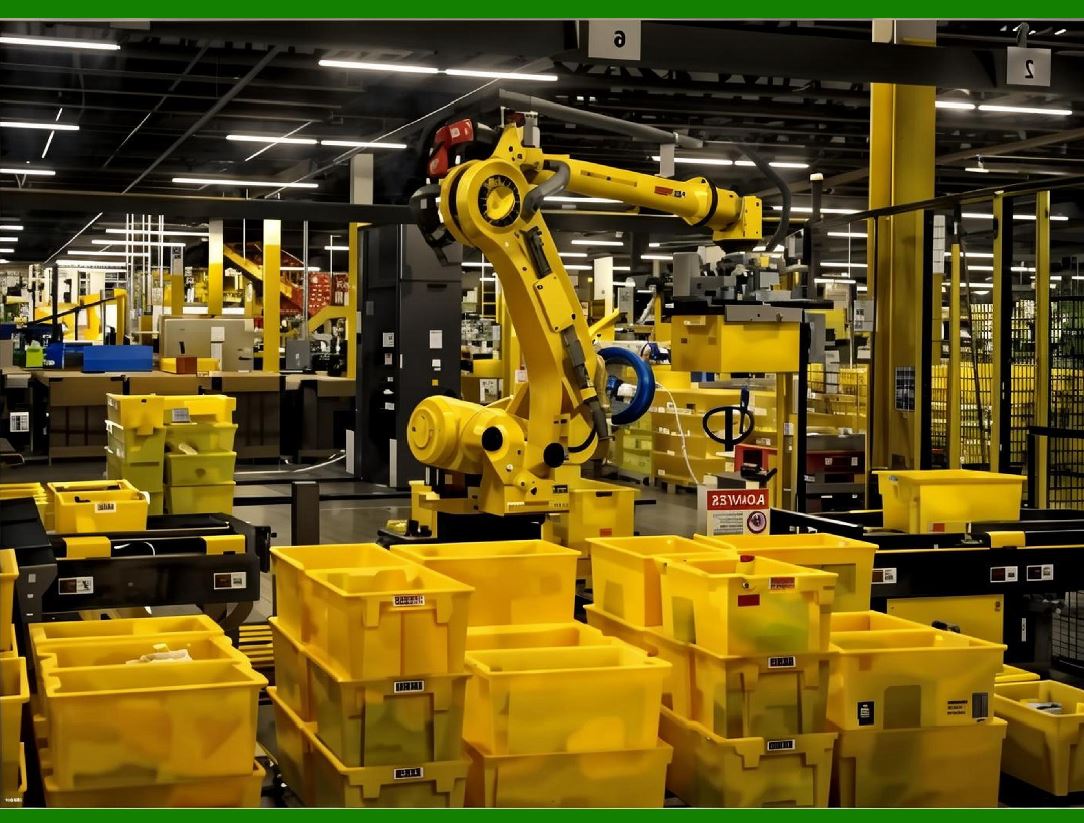
In automotive assembly, workers use voice commands to control collaborative robots that install seats, dashboards, and batteries. A worker might say 'hold this position' while aligning a heavy component, and the robot locks its arm in place. The worker's hands remain free. Voice also allows the worker to request a different tool without walking to a panel. |
In electronics assembly, operators use voice to control microscopes and pick-and-place machines. Because their eyes are focused on tiny components, voice is faster than looking at a screen. A command like 'next component' or 'rotate ninety degrees' keeps the workflow smooth. |
In metal fabrication, welders use voice to adjust robot welding parameters. They can say 'increase current by ten percent' or 'switch to pulse mode' without stopping the arc. This improves quality and reduces downtime. |
In food and beverage manufacturing, workers wear gloves and hairnets that make touchscreens awkward. Voice commands let them control packaging robots, palletizers, and filling machines. A command like 'start the second shift recipe' loads a new set of parameters. |
In pharmaceutical manufacturing, cleanroom protocols limit physical contact. Voice control reduces the need to touch panels, lowering contamination risk. A technician can say 'begin fill cycle' and the robot proceeds. |
In textile manufacturing, voice helps operators manage automated sewing and cutting robots. They can say 'slow down' or 'change pattern' while inspecting fabric quality. |
In furniture manufacturing, collaborative robots sand, polish, and assemble. Workers use voice to guide the robot to tricky areas. 'Focus on this corner' directs the robot's attention. |
In appliance manufacturing, voice commands help with changeovers. A supervisor can say 'switch to model B' and the robot loads the correct program. |
In heavy machinery manufacturing, voice control allows workers to operate cranes and lifts while keeping their hands on the load. This improves safety. |
In semiconductor manufacturing, technicians in bunny suits use voice to control wafer handling robots. Voice reduces the need to break sterility. |
These examples show that NLP is valuable wherever hands are busy, eyes are focused, or protective equipment limits touch. |
|
64.11 Warehousing and Logistics |
Warehousing and logistics are natural fits for voice-controlled robots because the work is fast-paced and involves constant verbal coordination. |
In e-commerce fulfillment centers, workers pick items while robots carry shelves to them. A worker can say 'bring me shelf A12' and the robot navigates to the location. Voice reduces the time spent looking at screens. |
In cold storage warehouses, workers wear thick gloves and heavy clothing. Touchscreens are impractical. Voice commands let them direct robots to move pallets and retrieve items. |
In cross-docking facilities, speed is critical. A supervisor can say 'send this pallet to outbound lane three' and the robot moves immediately. Voice keeps the workflow fluid. |
In parcel sorting hubs, voice commands help workers direct packages to the right chute. A command like 'redirect to oversize' sends a package to a different path. |
In inventory auditing, robots move through aisles scanning shelves. A worker can ask 'what is the count in aisle seven' and the robot reports. Voice makes auditing interactive. |
In returns processing, workers inspect items and use voice to categorize them. 'Restock' or 'discard' directs the robot to the correct bin. |
In dangerous goods storage, voice allows workers to stay at a safe distance while directing robots to handle hazardous materials. |
In airport cargo terminals, voice commands help move containers quickly between trucks and planes. Multilingual support is valuable because crews often speak different languages. |
In postal sorting, voice helps workers manage high volumes during peak seasons. Temporary workers can learn voice commands quickly. |
In refrigerated food distribution, voice control keeps workers productive despite bulky protective gear. |
These examples highlight how NLP improves speed, safety, and accessibility in logistics. |

|
64.12 Healthcare and Medical Robotics |
Healthcare uses robots for surgery, rehabilitation, disinfection, and logistics. NLP improves usability and safety in all these areas. |
In operating rooms, surgeons use voice to control robotic surgical systems. They can say 'zoom in,' 'rotate camera,' or 'switch instrument.' This keeps their hands on the instruments and their eyes on the patient. Voice also allows them to request images or patient data without leaving the sterile field. |
In rehabilitation, patients with limited mobility use voice to control assistive robots. A patient can say 'raise my arm' or 'move me to the chair.' This increases independence. |
In hospital logistics, robots deliver medications, supplies, and meals. Nurses can say 'deliver this to room 412' and the robot navigates the halls. Voice reduces the time spent on paperwork and computer entry. |
In disinfection, robots use ultraviolet light or sprays to clean rooms. A staff member can say 'start room cleaning' and the robot proceeds. Voice reduces contact with contaminated surfaces. |
In pharmacy automation, robots count and package medications. Pharmacists use voice to verify orders. 'Confirm count' or 'flag for review' keeps the workflow efficient. |
In elderly care, companion robots use NLP to converse with residents. They can remind them to take medication, call for help, or simply chat. This reduces loneliness and improves monitoring. |
In dental clinics, voice control helps dentists operate imaging and treatment robots while keeping their hands in the patient's mouth. |
In physiotherapy, voice guides rehabilitation robots that help patients practice movements. The robot can say 'good progress' or 'try again.' |
In emergency rooms, voice allows fast command of robots that move equipment or assist with triage. |
In medical laboratories, voice helps technicians control sample handling robots, reducing errors and contamination. |
These examples show that NLP makes medical robots easier to use and safer for both patients and staff. |

|
64.13 Agriculture and Forestry |
Agriculture is increasingly automated, and NLP helps farmers and workers interact with robots in the field. |
In precision farming, tractors and drones use voice commands. A farmer can say 'spray section four' or 'map this field.' This reduces the need to operate complex software. |
In greenhouse automation, robots pollinate, water, and harvest. Workers use voice to direct them to specific rows. 'Harvest ripe tomatoes in row six' is a typical command. |
In livestock management, robots feed and monitor animals. A farmer can ask 'how many cows are in the barn' and the robot reports. |
In fruit harvesting, robots use vision and voice. A worker can say 'pick only the red apples' and the robot adjusts its criteria. |
In forestry, robots help with planting, thinning, and logging. Voice commands allow workers to direct machines while keeping their hands on tools. |
In irrigation management, voice helps farmers control pumps and valves. 'Open valve three' saves a trip to the control panel. |
In crop scouting, drones use voice to report findings. A farmer can ask 'show me problem areas' and the drone displays a map. |
In aquaculture, voice controls feeding and monitoring robots. A worker can say 'feed the north pond' while handling other tasks. |
In greenhouse climate control, voice allows quick adjustments. 'Raise humidity' or 'lower temperature' keeps crops healthy. |
In organic farming, voice reduces the need for chemical contact and complex interfaces. |
These examples demonstrate that NLP makes advanced agricultural robots usable by people without technical training. |
|
64.14 Construction and Infrastructure |
Construction sites are noisy, dirty, and constantly changing. NLP helps workers control robots in these challenging conditions. |
In excavation, operators use voice to control digging robots. 'Dig two meters deeper' is faster than manual joystick control. |
In bricklaying, robots place bricks with high precision. A worker can say 'start the next course' or 'adjust mortar thickness.' |
In concrete pouring, voice controls pumps and screeds. 'Pour section B' keeps the workflow coordinated. |
In demolition, remote-controlled robots use voice to direct breaking and removal. This keeps workers out of danger. |
In welding and cutting, voice allows operators to adjust parameters without stopping. |
In painting and coating, voice controls robots that apply finishes. 'Increase coverage' or 'switch color' is quick and easy. |
In inspection, drones and climbing robots use voice to report findings. An inspector can ask 'show me cracks wider than two millimeters.' |
In surveying, voice helps control total stations and scanning robots. 'Take a point here' is simple and fast. |
In road construction, voice controls paving and marking robots. 'Start the next lane' keeps traffic flowing. |
In tunneling, voice helps operators manage boring machines and support robots. Hands-free control is valuable in confined spaces. |
These examples show that NLP improves safety and efficiency in construction. |
|
64.15 Energy and Utilities |
Energy production and distribution involve dangerous environments and complex equipment. NLP helps operators control robots safely. |
In nuclear power plants, robots inspect and maintain radioactive areas. Voice commands let operators direct them from a safe distance. |
In oil and gas, underwater robots inspect pipelines and wells. A operator on a ship can say 'move to the next joint' and the robot proceeds. |
In wind energy, climbing robots inspect turbine blades. A technician can say 'capture image' or 'move to the leading edge.' |
In solar farms, robots clean and inspect panels. A worker can say 'clean rows ten through twenty.' |
In hydroelectric plants, robots inspect tunnels and turbines. Voice control helps in wet, noisy conditions. |
In power line maintenance, robots repair cables. A lineman can say 'strip the insulation' while keeping hands free. |
In coal mining, remote-controlled robots use voice to dig and haul. This keeps miners out of hazardous areas. |
In natural gas processing, voice helps control inspection robots in confined spaces. |
In battery storage facilities, voice allows quick command of monitoring robots. |
In district heating, voice helps control pipe inspection robots. |
These examples show that NLP supports safety and efficiency in energy. |
|
64.16 Mining and Heavy Industry |
Mining is one of the most hazardous industries, and robots are increasingly used to reduce risk. NLP makes these robots easier to control. |
In underground mining, voice commands direct drilling and hauling robots. A operator can say 'advance the face' from a control room. |
In open-pit mining, voice controls autonomous trucks and shovels. 'Load truck seven' keeps the cycle moving. |
In mineral processing, voice helps control crushers and conveyors. 'Slow the feed' prevents blockages. |
In smelting, voice allows operators to direct robots that handle molten metal. Hands-free control improves safety. |
In steel mills, voice controls robots that move slabs and coils. 'Move to cooling bed' is fast and clear. |
In cement plants, voice helps manage kiln and packaging robots. |
In glass manufacturing, voice controls robots that handle hot glass. |
In foundries, voice allows operators to direct robots in high-heat areas. |
In recycling, voice helps sort materials. 'Send to plastic' or 'send to metal' is simple. |
In heavy equipment repair, voice helps control lifting and positioning robots. |
These examples show that NLP improves safety and productivity in heavy industry. |
|
64.17 Food Processing and Packaging |
Food processing has strict hygiene rules and fast line speeds. NLP helps workers control robots without touching equipment. |
In meat processing, voice commands direct cutting and deboning robots. Workers can say 'trim this cut' while keeping gloves clean. |
In bakery automation, voice controls dough handling and packaging robots. 'Start the croissant line' is quick. |
In dairy processing, voice helps manage filling and capping robots. 'Switch to two-liter bottles' changes the format. |
In beverage bottling, voice controls labeling and palletizing robots. 'Run flavor B' starts a new batch. |
In frozen food packaging, voice helps workers direct robots in cold rooms. |
In confectionery, voice controls robots that shape and wrap candies. |
In snack food production, voice helps manage seasoning and packaging robots. |
In seafood processing, voice allows workers to direct filleting and sorting robots. |
In produce packing, voice helps sort fruit by size and quality. 'Grade A to bin three' is easy to say. |
In pet food manufacturing, voice controls mixing and extrusion robots. |
These examples show that NLP supports hygiene, speed, and flexibility in food production. |
|
64.18 Pharmaceutical and Biotechnology |
Pharmaceutical and biotech operations require precision, cleanliness, and documentation. NLP helps meet these demands. |
In drug discovery, robots screen compounds. Scientists use voice to direct experiments. 'Run plate twelve' is faster than typing. |
In clinical manufacturing, voice controls robots that fill vials and syringes. Cleanroom workers use voice to avoid touching panels. |
In quality control, voice helps technicians direct inspection robots. 'Check for particulates' is a common command. |
In cell culture, voice controls robots that feed and monitor cells. |
In gene therapy, voice helps manage delicate handling robots. |
In vaccine production, voice controls filling and packaging robots. |
In medical device manufacturing, voice helps assemble and test devices. |
In laboratory automation, voice allows scientists to control multiple robots at once. |
In cold chain storage, voice helps manage freezer robots. |
In hazardous material handling, voice keeps workers at a safe distance. |
These examples show that NLP improves precision and compliance in pharma and biotech. |

|
64.19 Automotive and Aerospace |
Automotive and aerospace manufacturing demand high precision and traceability. NLP helps workers control robots in these complex environments. |
In automotive body shops, voice controls welding and handling robots. 'Weld seam A' is quick and precise. |
In paint shops, voice helps control painting robots. 'Increase flow' adjusts the finish. |
In final assembly, voice helps install seats, engines, and batteries. Workers keep their hands on the part. |
In quality inspection, voice directs scanning robots. 'Capture full body' starts a scan. |
In aerospace assembly, voice controls drilling and riveting robots. 'Drill next hole' keeps the sequence moving. |
In composite layup, voice helps place carbon fiber plies. |
In engine assembly, voice controls robots that handle heavy components. |
In avionics installation, voice helps route wires and connectors. |
In spacecraft assembly, voice allows precise control in cleanrooms. |
In maintenance, repair, and overhaul, voice helps inspect and disassemble parts. |
These examples show that NLP supports precision and efficiency in transportation manufacturing. |

|
64.20 Electronics and Semiconductors |
Electronics manufacturing involves tiny parts and strict cleanliness. NLP helps workers control robots without contamination. |
In printed circuit board assembly, voice controls pick-and-place robots. 'Place next component' keeps the line moving. |
In semiconductor fabs, voice helps technicians control wafer handling robots. Cleanroom suits make touch difficult. |
In display manufacturing, voice controls robots that handle glass panels. |
In battery manufacturing, voice helps control electrode and cell assembly robots. |
In connector assembly, voice directs robots that insert tiny pins. |
In testing, voice helps control probe stations and handlers. |
In rework, voice guides robots that remove and replace components. |
In packaging, voice controls robots that place chips into trays. |
In cleanroom logistics, voice helps move materials without contact. |
In failure analysis, voice helps direct microscopes and sample preparation robots. |
These examples show that NLP supports precision and cleanliness in electronics. |

|
64.21 Retail, Hospitality, and Service |
Service industries use robots for cleaning, delivery, and customer interaction. NLP makes these robots approachable. |
In retail stores, robots scan shelves and help customers. A shopper can ask 'where is the milk' and the robot guides them. |
In warehouses attached to stores, voice helps workers pick online orders. |
In hotels, robots deliver towels and room service. A guest can say 'send extra pillows.' |
In restaurants, robots deliver food and clear tables. Staff can say 'take this to table six.' |
In airports, robots guide passengers and carry luggage. Travelers can ask 'where is gate B12.' |
In hospitals, reception robots use NLP to direct visitors. |
In shopping malls, cleaning robots use voice to report issues. |
In cinemas, robots sell tickets and snacks. |
In banks, robots provide information and direct customers. |
In museums, robots guide tours and answer questions. |
These examples show that NLP makes service robots friendly and useful. |

|
64.22 Public Safety and Emergency Response |
Public safety robots enter dangerous situations. NLP allows remote operators to control them naturally. |
In bomb disposal, voice commands direct robots to inspect and disarm devices. |
In firefighting, voice controls robots that spray water and search buildings. |
In search and rescue, voice helps direct drones and ground robots. |
In police operations, voice controls surveillance and negotiation robots. |
In hazardous material response, voice keeps operators at a safe distance. |
In disaster recovery, voice helps coordinate multiple robots. |
In border security, voice helps control inspection robots. |
In maritime rescue, voice directs autonomous boats. |
In crowd management, voice helps control announcement robots. |
In emergency medical response, voice helps control transport robots. |
These examples show that NLP supports fast, safe control in emergencies. |
|
64.23 Collaborative Robots and Human-Robot Teams |
Collaborative robots are designed to work alongside humans. NLP is a key enabler of this collaboration. |
In shared assembly cells, humans and robots work on the same product. Voice allows the human to direct the robot without leaving the cell. |
In kitting operations, the human picks parts and the robot assembles. Voice coordinates the sequence. |
In quality inspection, the human checks the product and the robot records results. Voice makes the interaction smooth. |
In machine tending, the human loads raw material and the robot processes it. Voice helps manage the cycle. |
In packaging, the human folds boxes and the robot seals them. Voice keeps the rhythm. |
In laboratory work, the human plans experiments and the robot executes them. Voice transfers instructions. |
In welding, the human positions the part and the robot welds. Voice adjusts parameters. |
In painting, the human masks the part and the robot sprays. Voice controls the pattern. |
In inspection, the human reviews images and the robot captures them. Voice directs the camera. |
In training, the human teaches the robot new tasks by describing them. Voice makes teaching natural. |
These examples show that NLP turns robots into teammates rather than tools. |

|
64.24 Benefits Across Industries |
Across all these industries, NLP delivers consistent benefits. It reduces training time. It increases flexibility. It improves safety. It frees hands and eyes. It supports multilingual workforces. It creates audit trails. It enables collaboration. It makes robots accessible to non-experts. It improves job satisfaction by reducing repetitive control tasks. It supports faster changeovers. It reduces errors caused by miscommunication. It enables remote operation. It supports continuous improvement through logged interactions. These benefits explain why NLP is becoming a standard feature of industrial robots. |
64.25 Challenges and Limitations |
NLP in industrial robotics still faces challenges. Background noise can reduce speech recognition accuracy. Accents and dialects can cause errors. Specialized vocabulary requires customization. Ambiguous language can confuse intent parsing. Safety-critical commands require extra validation. Privacy concerns arise when audio is transmitted or stored. Connectivity may be limited in remote sites. Language models can be large and require significant computing power. Maintenance of language models requires ongoing effort. User expectations can be unrealistic. Trust must be built gradually. These challenges are being addressed through better microphones, edge computing, domain adaptation, and robust dialogue design. |
64.26 Best Practices for Deployment |
Successful deployment of NLP in industrial robotics follows several best practices. Start with a clear use case. Define the command vocabulary carefully. Test in the actual environment. Involve workers in design. Provide clear feedback from the robot. Use confirmation for critical actions. Keep safety systems independent. Log all interactions. Monitor performance over time. Update models regularly. Train users. Provide fallback methods. Document everything. These practices reduce risk and increase adoption. |
|
64.27 Future Directions |
The future of NLP in industrial robotics is bright. Large language models will enable more open-ended interaction. Multimodal models will combine voice, vision, and touch. Edge AI will make processing faster and more private. Personalization will adapt to individual users. Proactive robots will anticipate needs. Teams of robots will coordinate through language. Human-robot teams will become more fluid. Standards will emerge for safety and interoperability. Voice will become as common as buttons. Language will become a primary interface for industrial machines. These developments will further blur the line between tool and teammate. |

|
64.28 Detailed Summary |
This chapter has explored Natural Language Processing as a cornerstone of AI integration in industrial robotics. It began by explaining why language matters: it is natural, fast, flexible, and accessible. It then described the building blocks of NLP, including speech recognition, natural language understanding, dialogue management, language generation, and action mapping. It explained how voice command understanding works in practice, with wake phrases, intent parsing, safety checks, and confirmations. It discussed human-robot dialogue, multilingual operation, and the importance of safety, reliability, and trust. It showed how NLP integrates with vision, motion planning, machine learning, knowledge graphs, edge computing, and business workflows. The largest portion of the chapter presented applications across manufacturing, warehousing, healthcare, agriculture, construction, energy, mining, food processing, pharmaceuticals, automotive, aerospace, electronics, retail, hospitality, public safety, and collaborative teams. In every case, NLP made robots easier to use, safer, and more collaborative. The chapter also acknowledged challenges such as noise, accents, ambiguity, privacy, and computing cost, and it offered best practices for deployment. Finally, it looked to a future in which language becomes a primary interface for industrial robots. The central message is clear: NLP transforms robots from machines that must be programmed into partners that can be talked with. As collaborative robots spread across industries, NLP will be the technology that makes collaboration feel natural. |
 cs@easiersoft.com