Chapter 62: AI-Powered Perception |
1. Introduction and Chapter Summary |
Welcome to Part XI of our technical overview, where we shift our focus to comparative analysis. In this chapter, we explore one of the most transformative developments in modern robotics: AI-powered perception. For decades, industrial robots were blind, repetitive machines, capable only of executing pre-programmed paths in highly controlled environments. They could weld the same spot on a car frame a million times, but they could not tell the difference between a good part and a defective one. They could not pick a randomly oriented object from a bin. They could not adapt to a change in lighting or a shift in product design. All of that has changed with the rise of deep learning and AI-powered perception systems. |
In simple terms, AI-powered perception gives robots the ability to see, interpret, and respond to their surroundings in real time. Instead of relying on rigid rules and manual programming, these systems use deep neural networks to learn from examples. They can identify defects, sort objects, pick parts from cluttered bins, and palletize mixed boxes. This chapter will explain how these systems work in plain language, without formulas or tables, and will focus heavily on real-world applications across many industries. We will look at automotive manufacturing, electronics assembly, food processing, pharmaceuticals, logistics, agriculture, recycling, and more. By the end, you will understand not just what AI-powered perception is, but why it matters and how it is already changing the way factories and warehouses operate. |
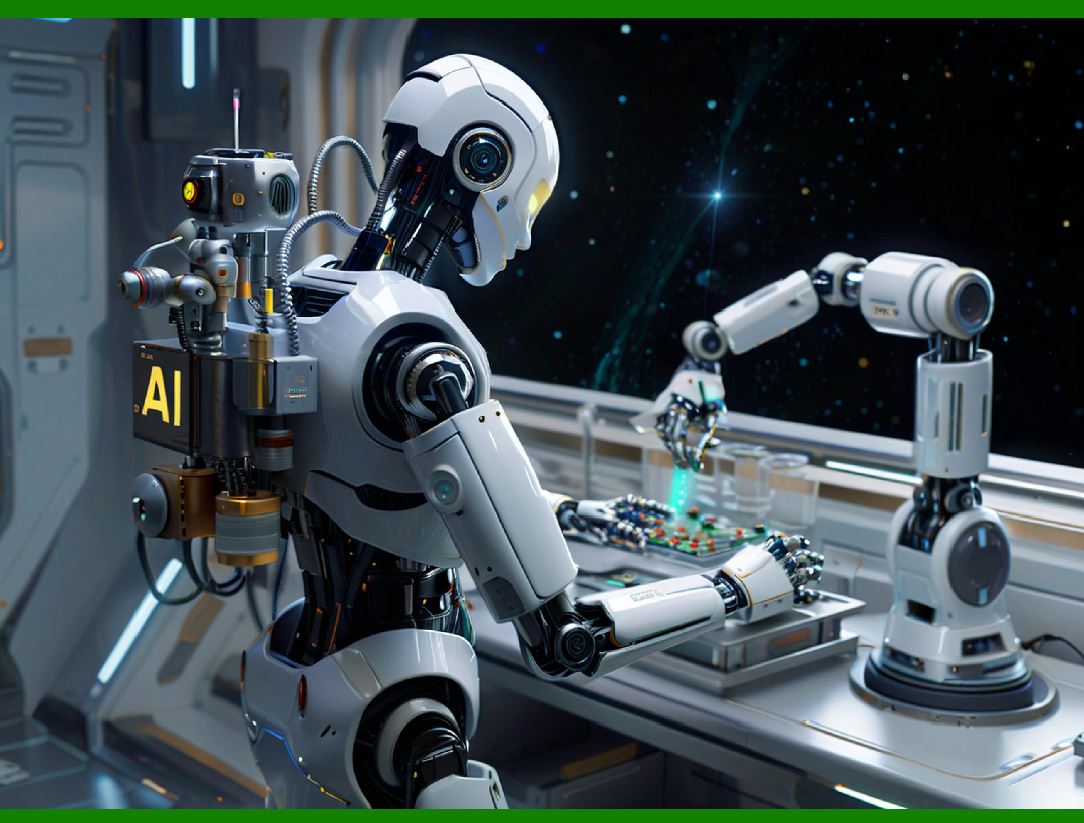
The key idea is this: deep learning enables robots to perceive and respond to environments for quality control, sorting, bin picking, and palletizing. That single sentence is the heart of this chapter. Everything that follows is an expansion of that idea, with concrete examples and explanations that any interested reader can follow. |
|
2. Why Traditional Machine Vision Was Not Enough |
Before we dive into AI-powered perception, it is worth understanding why older machine vision systems struggled. Traditional machine vision relied on hand-crafted rules. An engineer would write a program that looked for specific edges, colors, or shapes. For example, to check if a bottle cap was properly screwed on, the system might measure the distance between two bright lines. If the distance was within a certain range, the cap was good. If not, it was rejected. This worked well for simple, repetitive tasks with consistent lighting and positioning. |
However, traditional machine vision had major limitations. It could not handle variation. If the lighting changed slightly, the edges might disappear. If a part was rotated a few degrees, the shape might not match. If a defect looked different from the examples the engineer had programmed, the system would miss it. In bin picking, where parts are piled randomly, traditional vision could not reliably identify which part was which or where to grasp it. In quality control for complex products like printed circuit boards, traditional vision could not detect subtle anomalies like hairline cracks or misaligned components unless the engineer had anticipated every possible failure mode. |
Deep learning changed everything. Instead of programming rules, engineers now collect many images of good and bad examples. The deep neural network learns the features that distinguish them. It can generalize from those examples to new situations. It can handle variations in lighting, orientation, and appearance. It can even detect defects it has never seen before, as long as they deviate from the learned norm. This is the power of AI-powered perception. |

|
3. How Deep Learning Enables Robot Perception |
At a high level, a deep learning perception system for a robot has three main parts: sensing, processing, and action. Sensing usually involves cameras. These can be standard color cameras, depth cameras that measure distance, or specialized cameras like infrared or multispectral. The robot also may use other sensors such as lasers or force torque sensors, but for perception, vision is the primary modality. |
Processing is where deep learning happens. The raw images are fed into a deep neural network, which has been trained on a large dataset. The network outputs a prediction. For quality control, the prediction might be 'defective' or 'good.' For sorting, it might be 'plastic' or 'glass' or 'metal.' For bin picking, it might be the exact position and orientation of each part in the bin. For palletizing, it might be the best place to place a box to build a stable stack. |
Action is the robot's response. Based on the perception output, the robot arm moves, the gripper opens or closes, or the robot signals a conveyor to divert a product. The entire loop from sensing to action happens in milliseconds, allowing real-time performance. |
What makes deep learning special is that it learns hierarchical features. In early layers, the network detects simple things like edges and colors. In deeper layers, it combines these into more complex patterns like textures, shapes, and object parts. In the final layers, it makes a decision. This is similar to how the human visual system works. You do not consciously think about edges when you recognize a face, but your brain processes them automatically. Deep learning mimics this process. |

|
4. Quality Control: The First Big Application |
Quality control is perhaps the most mature application of AI-powered perception in industrial robotics. The goal is simple: inspect products for defects and ensure they meet specifications. Traditional quality control was often manual, with human inspectors looking at parts on a conveyor. Humans are flexible but get tired, distracted, and inconsistent. AI-powered perception never gets tired and can inspect thousands of parts per minute with consistent accuracy. |
In automotive manufacturing, AI-powered vision systems inspect painted car bodies for scratches, dents, and uneven paint. The system uses multiple cameras to capture the entire surface. A deep neural network, trained on images of both perfect and flawed paint jobs, can detect defects as small as a fraction of a millimeter. When a defect is found, the robot marks the location and alerts the line operator. This reduces waste and ensures that only high-quality cars leave the factory. |
In electronics, AI-powered perception inspects printed circuit boards for missing components, misaligned chips, solder bridges, and cold solder joints. The boards move on a conveyor under a camera. The deep learning model compares each board to a learned model of a perfect board. It can detect deviations that traditional vision would miss, such as a slightly tilted resistor or a tiny speck of solder where it should not be. This is critical because a single faulty board can cause a product to fail later. |
In food processing, AI-powered perception inspects fruits and vegetables for bruises, cuts, and discoloration. For example, apples moving on a conveyor are photographed from multiple angles. The deep learning model classifies each apple as premium, acceptable, or reject. A robot arm then picks the rejected apples off the line. This is much faster and more hygienic than manual sorting. Similarly, in meat processing, AI vision can detect bones, fat, and foreign objects in cuts of meat. |
In pharmaceuticals, AI-powered perception inspects pills for cracks, chips, and color variations. It also checks blister packs to ensure each cavity contains a pill and that the seal is intact. This is a highly regulated industry, and AI-powered vision provides an auditable, consistent record of every inspection. |
|
5. Sorting: Handling Complexity and Variation |
Sorting is another major application. In sorting, the robot must identify an object and place it into the correct category. This is common in logistics, recycling, and agriculture. The challenge is that objects can be in any orientation, can overlap, and can look different from one another. Deep learning excels at this because it can learn to recognize objects from many examples. |
In logistics and parcel handling, AI-powered perception sorts packages by size, shape, destination, or priority. A camera scans a package as it moves on a conveyor. The deep learning model reads the label, identifies the barcode, and determines the destination. A robot arm or a diverter then pushes the package into the correct chute. This is used by major shipping companies to handle millions of packages per day. The system can handle packages that are upside down, partially occluded, or wrapped in reflective material, which would confuse traditional vision. |
In recycling, AI-powered perception sorts waste into categories like plastic, paper, glass, and metal. This is a difficult task because waste items are dirty, crumpled, and mixed together. A deep learning model trained on thousands of images of trash can identify a plastic bottle even if it is crushed and partially covered by a label. The robot arm then picks the bottle and places it in the correct bin. This increases recycling rates and reduces the amount of waste sent to landfills. |
In agriculture, AI-powered perception sorts harvested crops. For example, in a tomato processing plant, tomatoes are sorted by ripeness, size, and color. The deep learning model looks at each tomato and decides whether it is good for fresh market, good for canning, or waste. A robot arm then diverts the tomato to the appropriate line. This is much faster and more accurate than human sorters, who may miss subtle color differences. |
In electronics recycling, AI-powered perception sorts circuit boards by type and value. It can identify the brand, model, and condition of a board. This helps recyclers recover valuable metals and components more efficiently. |
|
6. Bin Picking: The Holy Grail of Robot Perception |
Bin picking is often called the holy grail of robotic perception. The task is simple to describe but hard to do: a robot must reach into a bin full of randomly piled parts, pick up one part, and place it where it is needed. The parts may be shiny, may overlap, and may be in any orientation. Traditional vision could not handle this because it needed to see the entire part clearly. Deep learning can handle it because it can infer the shape and pose of a part even when it is partially hidden. |
The process works like this. A depth camera or a set of cameras looks into the bin. The deep learning model processes the image and creates a three-dimensional understanding of the scene. It identifies each part, estimates its position and orientation, and determines the best grasp point. The robot arm then moves to that point, closes the gripper, and lifts the part. If the grasp fails, the system tries again with a different part or a different grasp. |
In automotive manufacturing, bin picking is used to feed parts into assembly lines. For example, a bin full of metal brackets is presented to a robot. The robot picks one bracket at a time and places it into a fixture for welding. This eliminates the need for manual feeding, which is repetitive and can cause injuries. |
In electronics assembly, bin picking is used to pick small components like connectors, screws, and chips from bins. The deep learning model can handle parts that are only a few millimeters in size. This is important for high-mix, low-volume production, where changing over a line to a new product would otherwise require manual reconfiguration. |
In e-commerce fulfillment, bin picking is used to pick items from bins in a warehouse. The items may be of different shapes, sizes, and materials. The deep learning model can recognize a wide variety of products, from books to toys to clothing. The robot then places the item into a shipping box. This is a key technology for automated warehouses. |
In food handling, bin picking is used to pick irregular items like chicken breasts or fish fillets from a bin. The deep learning model can handle the natural variation in shape and size. The robot then places the item onto a conveyor for further processing. This reduces labor costs and improves food safety. |
|
7. Palletizing: Building Stable Stacks with AI |
Palletizing is the process of stacking boxes or bags onto a pallet for shipping. Traditional palletizing robots follow a fixed pattern. They place each box in a predetermined position. This works well if all boxes are the same size and shape. But in many real-world situations, boxes are mixed. They come in different sizes, weights, and shapes. A fixed pattern may not be stable, or may not fit all the boxes on the pallet. AI-powered perception solves this problem. |
With AI-powered perception, the robot can see the boxes as they arrive on the conveyor. A deep learning model identifies the size, shape, and orientation of each box. It also considers the weight and center of mass. Then it plans the best place to put the box on the pallet to create a stable, interlocked stack. It can also adapt if a box is slightly damaged or if the pallet is not exactly where it should be. |
In food and beverage, palletizing is used to stack cases of cans, bottles, and jars. The boxes may be different sizes for different products. The AI system builds a mixed pallet that is stable for shipping. This reduces the need for manual palletizing, which is physically demanding. |
In consumer goods, palletizing is used to stack boxes of detergent, paper products, and other household items. The AI system can handle boxes that are slippery or that have handles. It can also build pallets that are easy for forklifts to pick up. |
In logistics, palletizing is used to build pallets for shipment to retailers. The AI system can optimize the use of space, reducing the number of pallets needed. It can also ensure that heavier boxes are on the bottom and lighter boxes on top, which improves stability. |
In manufacturing, palletizing is used to stack finished goods for storage or shipping. The AI system can handle parts that are not in boxes, such as tires or metal sheets. It can also work with robots that have different types of grippers, such as vacuum grippers or mechanical grippers. |
|
8. Applications in Automotive Manufacturing |
The automotive industry is one of the largest adopters of AI-powered perception. Let us look at several specific examples. |
First, body-in-white inspection. After a car body is welded together, it must be inspected for dimensional accuracy. AI-powered vision systems use multiple cameras to scan the entire body. The deep learning model compares the scan to a reference model and identifies any deviations. This ensures that doors, hoods, and trunks will fit properly. |
Second, paint defect detection. As mentioned earlier, AI vision detects scratches, dents, and uneven paint. It can also detect orange peel, which is a common paint defect. The system uses high-resolution cameras and specialized lighting to capture the surface. The deep learning model is trained on thousands of examples of good and bad paint. It can detect defects that are invisible to the human eye. |
Third, engine assembly. AI-powered vision guides robots to pick and place engine components. For example, a robot picks a piston from a bin and places it into the engine block. The deep learning model ensures that the piston is oriented correctly and that it is not damaged. It also checks that the piston rings are properly installed. |
Fourth, final assembly. AI-powered vision checks that all parts are present and correctly installed. For example, it checks that the seats are properly bolted, that the dashboard is aligned, and that the wiring harness is connected. This reduces the risk of recalls and improves customer satisfaction. |
Fifth, autonomous mobile robots in automotive plants. These robots use AI-powered perception to navigate through the factory, avoiding obstacles and people. They transport parts and tools between stations. This reduces the need for conveyor belts and makes the factory more flexible. |
|
9. Applications in Electronics and Semiconductor Manufacturing |
Electronics manufacturing is another major area. The components are tiny, the tolerances are tight, and the volumes are huge. AI-powered perception is essential. |
First, printed circuit board assembly. As mentioned earlier, AI vision inspects solder joints, component placement, and polarity. It can also detect tombstoning, where a component stands up on one end instead of lying flat. This is a common defect that traditional vision often misses. |
Second, semiconductor wafer inspection. Wafers are inspected for particles, scratches, and pattern defects. AI-powered vision can detect defects that are smaller than a micron. It can also classify the defects by type, which helps engineers identify the root cause. |
Third, display panel inspection. OLED and LCD panels are inspected for dead pixels, mura (uneven brightness), and scratches. AI-powered vision can detect these defects at high speed. It can also inspect the edges of the panel for cracks. |
Fourth, final product assembly. AI-powered vision checks that all components are present and that the product is properly assembled. For example, it checks that the screws are tightened, that the connectors are plugged in, and that the labels are correct. |
Fifth, bin picking for electronics. Small components like resistors, capacitors, and connectors are picked from bins. The deep learning model can handle parts that are only a few millimeters in size. This is important for high-mix production. |
|
10. Applications in Food and Beverage Processing |
Food and beverage processing has unique challenges. Food items are irregular, they can be wet or sticky, and they must be handled hygienically. AI-powered perception is making a big difference. |
First, fruit and vegetable sorting. As mentioned earlier, AI vision sorts apples, oranges, tomatoes, and other produce by size, color, and ripeness. It can also detect bruises and cuts that are not visible on the surface. This ensures that only high-quality produce reaches the consumer. |
Second, meat and poultry processing. AI vision inspects cuts of meat for bones, fat, and foreign objects. It can also grade the meat by marbling and color. This is important for quality and consistency. Robots with AI vision can also trim fat and cut meat into uniform portions. |
Third, bakery products. AI vision inspects cookies, crackers, and bread for shape, color, and toppings. It can detect broken cookies or missing chocolate chips. Robots can then sort the products into different grades. |
Fourth, beverage bottling. AI vision inspects bottles and cans for fill level, cap placement, and label alignment. It can also detect foreign objects in the liquid. This is critical for food safety. |
Fifth, seafood processing. AI vision inspects fish fillets for bones, parasites, and defects. It can also grade the fillets by size and color. Robots can then pack the fillets into trays. |
|
11. Applications in Pharmaceuticals and Healthcare |
Pharmaceutical manufacturing is highly regulated. Every pill must be perfect. AI-powered perception helps ensure this. |
First, tablet inspection. AI vision inspects tablets for cracks, chips, and color variations. It can also check the imprint for correct dosage and branding. This is important because a wrong pill can be dangerous. |
Second, capsule inspection. AI vision inspects capsules for defects, such as dents or holes. It can also check that the capsule is properly sealed. |
Third, blister pack inspection. AI vision checks that each cavity contains a pill and that the seal is intact. It can also detect foreign objects, such as hair or dust. |
Fourth, vial and syringe inspection. AI vision inspects vials and syringes for cracks, particles, and fill level. It can also check that the stopper and cap are properly placed. |
Fifth, medical device assembly. AI vision guides robots to assemble medical devices, such as catheters and pacemakers. It ensures that all components are present and correctly oriented. |
|
12. Applications in Logistics and Warehousing |
Logistics and warehousing are being transformed by AI-powered perception. The goal is to move goods faster and more accurately. |
First, parcel sorting. As mentioned earlier, AI vision sorts packages by destination, size, and priority. It can read labels and barcodes even if they are damaged or partially obscured. |
Second, bin picking in warehouses. AI vision picks items from bins for order fulfillment. It can handle a wide variety of products, from books to toys to clothing. This is a key technology for e-commerce. |
Third, palletizing in warehouses. AI vision builds mixed pallets for shipment. It optimizes the use of space and ensures stability. |
Fourth, autonomous mobile robots. These robots use AI vision to navigate through warehouses, avoiding obstacles and people. They transport goods from one area to another. |
Fifth, truck loading and unloading. AI vision guides robots to load and unload trucks. It can handle boxes of different sizes and shapes. This reduces the need for manual labor. |

|
13. Applications in Agriculture and Forestry |
Agriculture is increasingly using AI-powered perception. The goal is to increase yield, reduce waste, and reduce labor. |
First, fruit harvesting. AI vision identifies ripe fruit on trees and guides a robot arm to pick it. This is used for apples, oranges, and strawberries. The deep learning model can distinguish ripe fruit from unripe fruit and from leaves. |
Second, weed removal. AI vision identifies weeds in a field and guides a robot to remove them. This reduces the need for herbicides. |
Third, crop monitoring. AI vision monitors crop health by analyzing leaf color and shape. It can detect diseases and pests early. |
Fourth, forestry. AI vision is used to sort logs by species, size, and quality. It can also detect defects in wood. |
Fifth, livestock monitoring. AI vision monitors the health and behavior of livestock. It can detect lameness, illness, and stress. |

|
14. Applications in Recycling and Waste Management |
Recycling is a growing area for AI-powered perception. The goal is to increase recycling rates and reduce contamination. |
First, plastic sorting. AI vision identifies different types of plastic, such as PET, HDPE, and PVC. It can also detect the color of the plastic. This is important because different plastics must be recycled separately. |
Second, paper sorting. AI vision identifies different types of paper, such as newspaper, cardboard, and office paper. It can also detect contaminants like plastic wrap. |
Third, glass sorting. AI vision identifies different colors of glass, such as clear, green, and brown. It can also detect ceramics, which must be separated. |
Fourth, metal sorting. AI vision identifies different types of metal, such as aluminum, copper, and steel. It can also detect alloys. |
Fifth, electronic waste sorting. AI vision identifies different types of electronic waste, such as circuit boards, batteries, and cables. It can also detect valuable components. |

|
15. Applications in Textiles and Apparel |
The textile and apparel industry is beginning to adopt AI-powered perception. The goal is to improve quality and reduce waste. |
First, fabric inspection. AI vision inspects fabric for defects, such as holes, stains, and weaving errors. It can detect defects that are smaller than a millimeter. |
Second, garment inspection. AI vision inspects finished garments for defects, such as missing buttons, uneven hems, and incorrect labels. It can also check the size and fit. |
Third, sorting of garments. AI vision sorts garments by size, color, and style. This is important for e-commerce fulfillment. |
Fourth, recycling of textiles. AI vision identifies different types of fabric, such as cotton, polyester, and wool. This helps recyclers separate the materials. |
Fifth, shoe manufacturing. AI vision inspects shoes for defects, such as glue marks, stitching errors, and color mismatches. It can also guide robots to pick and place shoe components. |
|
16. Applications in Construction and Heavy Industry |
Construction and heavy industry are also adopting AI-powered perception. The goal is to improve safety and efficiency. |
First, brick laying. AI vision guides robots to pick and place bricks. It can handle bricks of different sizes and shapes. It can also ensure that the bricks are level and aligned. |
Second, welding. AI vision guides welding robots to weld seams. It can detect the seam even if it is not straight or if there is a gap. It can also inspect the weld for defects. |
Third, painting. AI vision guides painting robots to paint surfaces. It can detect the edges of the surface and ensure that the paint is applied evenly. |
Fourth, inspection of structures. AI vision inspects bridges, buildings, and pipelines for cracks and corrosion. It can be mounted on drones or robots. |
Fifth, demolition. AI vision guides robots to demolish structures. It can identify load-bearing walls and avoid damaging nearby structures. |
|
17. Applications in Mining and Energy |
Mining and energy are using AI-powered perception for safety and efficiency. |
First, ore sorting. AI vision sorts ore by grade and type. It can detect valuable minerals and remove waste rock. This reduces the amount of material that needs to be processed. |
Second, equipment inspection. AI vision inspects mining equipment for wear and damage. It can detect cracks in buckets, teeth, and tracks. |
Third, pipeline inspection. AI vision inspects pipelines for corrosion, cracks, and leaks. It can be mounted on robots that travel inside the pipe. |
Fourth, solar panel inspection. AI vision inspects solar panels for cracks, hotspots, and dirt. It can be mounted on drones. |
Fifth, wind turbine inspection. AI vision inspects wind turbine blades for cracks and erosion. It can be mounted on drones or robots. |

|
18. Applications in Retail and E-commerce |
Retail and e-commerce are using AI-powered perception to improve customer experience and reduce costs. |
First, shelf monitoring. AI vision monitors store shelves to ensure that products are in stock and correctly placed. It can detect empty shelves and mispriced items. |
Second, checkout. AI vision identifies products at checkout. It can be used in self-checkout kiosks to reduce the need for barcodes. |
Third, warehouse picking. As mentioned earlier, AI vision picks items from bins for order fulfillment. |
Fourth, delivery. AI vision guides delivery robots and drones. It helps them navigate through streets and avoid obstacles. |
Fifth, customer analytics. AI vision analyzes customer behavior in stores. It can track foot traffic and identify popular areas. |
|
19. Applications in Aerospace and Defense |
Aerospace and defense have unique requirements. The components are critical, and the tolerances are tight. |
First, inspection of turbine blades. AI vision inspects turbine blades for cracks, coating defects, and cooling holes. It can detect defects that are smaller than a human hair. |
Second, assembly of aircraft. AI vision guides robots to assemble aircraft components. It ensures that all fasteners are installed and torqued correctly. |
Third, inspection of composites. AI vision inspects composite materials for delamination, voids, and fiber misalignment. |
Fourth, satellite inspection. AI vision inspects satellites for damage and alignment. It can be used in space or on the ground. |
Fifth, missile guidance. AI vision guides missiles to their targets. It can identify targets and avoid decoys. |
|
20. Applications in Marine and Shipbuilding |
Marine and shipbuilding are using AI-powered perception for inspection and assembly. |
First, hull inspection. AI vision inspects ship hulls for corrosion, cracks, and biofouling. It can be mounted on underwater robots. |
Second, weld inspection. AI vision inspects welds in shipbuilding for defects. It can detect cracks, porosity, and lack of fusion. |
Third, pipe inspection. AI vision inspects pipes on ships for corrosion and leaks. |
Fourth, assembly of ship modules. AI vision guides robots to assemble ship modules. It ensures that the modules are aligned and that all fasteners are installed. |
Fifth, cargo handling. AI vision guides robots to load and unload cargo. It can handle containers of different sizes and weights. |
|
21. Applications in Railway and Transportation |
Railway and transportation are using AI-powered perception for safety and maintenance. |
First, track inspection. AI vision inspects railway tracks for cracks, wear, and obstructions. It can be mounted on trains or on dedicated inspection vehicles. |
Second, wheel inspection. AI vision inspects train wheels for cracks, flat spots, and wear. |
Third, pantograph inspection. AI vision inspects the pantograph, which collects power from overhead wires. It can detect wear and damage. |
Fourth, assembly of rail cars. AI vision guides robots to assemble rail cars. It ensures that all components are present and correctly installed. |
Fifth, passenger monitoring. AI vision monitors passenger platforms for safety. It can detect people falling onto the tracks. |
|
22. The Role of Synthetic Data and Simulation |
One of the challenges of deep learning is that it requires a lot of data. Collecting and labeling thousands of images can be time-consuming and expensive. This is where synthetic data and simulation come in. Engineers can create a virtual environment that mimics the real factory. They can generate images of parts in different orientations, lighting conditions, and defects. These synthetic images are used to train the deep learning model. Then the model is fine-tuned with a smaller set of real images. This approach reduces the cost and time required to deploy AI-powered perception. |
Simulation also allows engineers to test the system before it is installed. They can see how the robot will perform and make adjustments. This reduces the risk of downtime and production delays. |

|
23. Edge Computing and Real-Time Performance |
AI-powered perception must run in real time. The robot cannot wait for a cloud server to process an image. This is why edge computing is important. Edge computing means that the deep learning model runs on a computer that is located near the robot, often on the factory floor. This reduces latency and ensures that the robot can respond immediately. Edge computers are becoming more powerful and more energy-efficient. They can run complex deep learning models at high speed. This is enabling more and more applications. |

|
24. Challenges and Limitations |
Despite its power, AI-powered perception has challenges. First, it requires a lot of data. Collecting and labeling data can be expensive. Second, it can be sensitive to changes in lighting or camera position. Third, it can be difficult to explain why a deep learning model made a particular decision. This is important for safety and regulation. Fourth, it can be vulnerable to adversarial attacks, where a small change in the image can fool the model. Fifth, it can be biased if the training data is not representative. These challenges are being addressed by researchers and engineers, but they are not yet fully solved. |

|
25. Future Trends |
The future of AI-powered perception is exciting. We can expect to see more powerful models that require less data. We can expect to see more integration with other sensors, such as touch and sound. We can expect to see more collaboration between robots and humans, where the robot understands human intent. We can expect to see more autonomy, where robots can adapt to new tasks without reprogramming. We can expect to see more applications in new industries, such as healthcare and construction. The key is that deep learning will continue to improve, and robots will become more capable of perceiving and responding to their environments. |

|
26. Detailed Summary |
In this chapter, we have explored AI-powered perception in industrial robotics. We began with a simple summary: deep learning enables robots to perceive and respond to environments for quality control, sorting, bin picking, and palletizing. We then explained why traditional machine vision was not enough and how deep learning works. We looked at the three main parts of a perception system: sensing, processing, and action. |
We then examined four core applications in detail. Quality control uses AI vision to inspect products for defects. Sorting uses AI vision to identify and categorize objects. Bin picking uses AI vision to pick parts from random piles. Palletizing uses AI vision to build stable stacks of mixed boxes. |
We then surveyed applications across many industries. In automotive, AI vision inspects car bodies, paint, engines, and final assembly. In electronics, it inspects circuit boards, wafers, and displays. In food and beverage, it sorts produce, inspects meat, and checks bottles. In pharmaceuticals, it inspects tablets, capsules, and vials. In logistics, it sorts parcels, picks items, and builds pallets. In agriculture, it harvests fruit, removes weeds, and monitors crops. In recycling, it sorts plastic, paper, glass, and metal. In textiles, it inspects fabric and garments. In construction, it lays bricks, welds, and paints. In mining and energy, it sorts ore and inspects equipment. In retail, it monitors shelves and checks out products. In aerospace, it inspects turbine blades and assembles aircraft. In marine, it inspects hulls and welds. In railway, it inspects tracks and wheels. |
We also discussed the role of synthetic data and simulation, edge computing, and the challenges and limitations of AI-powered perception. Finally, we looked at future trends. |
The key takeaway is that AI-powered perception is not a single technology but a broad approach that is transforming industrial robotics. It allows robots to see, understand, and act in ways that were impossible just a few years ago. As deep learning continues to advance, we can expect even more applications and even greater impact. This chapter has provided a comprehensive overview, and we hope it has given you a clear understanding of the state of the art and where it is going. |
 cs@easiersoft.com