Chapter 58: Precision Hierarchy |
A Plain-Language Summary |
Precision in industrial robotics is not a single number. It is a hierarchy of capabilities, each suited to different tasks, industries, and economic realities. At the top of the planar precision game, SCARA robots dominate high-speed, confined-space assembly and dispensing. Delta robots, working with modern vision systems, achieve pick accuracy above ninety-nine percent in high-throughput sorting and packaging. Articulated robots, the generalists of the factory floor, deliver repeatability between zero point zero two and zero point one millimeters, making them the backbone of welding, machine tending, and complex assembly. This chapter explains what each level of the precision hierarchy means in practice, why it matters, and how different industries choose among these robot types. We will walk through real applications in electronics, automotive, food processing, pharmaceuticals, logistics, and aerospace. By the end, you will understand not just the numbers, but the operational trade-offs behind them. |

|
1. What Precision Really Means in Robotics |
When engineers talk about robot precision, they usually mix three distinct ideas. The first is repeatability. This is the robot's ability to return to the same position over and over again. If you command a robot to move to a point one thousand times, repeatability tells you how tightly those one thousand arrivals cluster together. The second is accuracy. This is the robot's ability to reach a commanded position that matches the absolute coordinates in the real world. A robot can be very repeatable but not very accurate, like a person who always misses the bullseye but always misses it in the same spot. The third is resolution. This is the smallest incremental movement the robot can make, often limited by encoder feedback and mechanical gearing. |
For most industrial applications, repeatability matters more than absolute accuracy. A welding robot does not need to know where it is in the global factory coordinate system. It needs to return to the same weld seam, day after day, with minimal variation. A pick-and-place robot in a warehouse does not need to know the exact latitude and longitude of a package. It needs to grab the package reliably from a moving conveyor. This is why the numbers in this chapter focus on repeatability and pick accuracy rather than absolute positioning. |
The precision hierarchy also depends on the robot's mechanical structure. SCARA stands for Selective Compliance Assembly Robot Arm. It has two parallel rotary joints that move in a horizontal plane, plus a vertical linear joint. This design makes it stiff in the vertical direction but compliant in the horizontal plane, which is perfect for inserting pegs into holes or placing components on circuit boards. Delta robots use three or four lightweight arms connected to a common base, creating a parallel kinematic structure. This gives them extremely high speed and acceleration, but a relatively small working envelope. Articulated robots use a serial chain of rotary joints, similar to a human arm. This gives them a large working envelope and high flexibility, but the serial structure accumulates small errors along the chain, which is why their repeatability is typically measured in hundredths of a millimeter rather than thousandths. |
|
2. The SCARA Precision Story: Planar Excellence |
SCARA robots are the specialists of planar precision. Their repeatability often falls between zero point zero one and zero point zero five millimeters. Some high-end models claim repeatability of plus or minus zero point zero one millimeters. This level of precision is not accidental. It comes from the robot's rigid vertical column, the direct-drive or low-backlash harmonic drives in the horizontal joints, and the short kinematic chain. Because the arm moves primarily in a horizontal plane, gravity does not introduce large variable torques. The motors do not have to fight changing loads as the arm extends and retracts. This makes the control problem simpler and the resulting motion more predictable. |
In electronics manufacturing, SCARA robots are everywhere. They place tiny surface-mount components onto printed circuit boards. They dispense solder paste, underfill, and conformal coating. They screw small fasteners into mobile phone housings. A typical smartphone assembly line might use dozens of SCARA robots, each dedicated to one or two precise tasks. The robot does not need to see the whole board. It needs to move to a taught position, descend, perform the task, and retract. The repeatability of the SCARA ensures that the solder paste dot is the same size and in the same place for every board. |
In the pharmaceutical industry, SCARA robots handle vial filling and capping. A robot might pick up a glass vial, place it under a dispensing needle, and then move it to a capping station. The precision here is not just about position. It is about force control. The robot must push the cap on with the right amount of pressure, without cracking the glass or leaving the cap loose. SCARA robots with integrated force sensors can detect when the cap is seated and stop pushing. This is a form of precision that goes beyond position. It is precision in interaction. |
In consumer goods manufacturing, SCARA robots assemble small appliances, toys, and medical devices. They are also used in dispensing applications for glue, epoxy, and silicone. A furniture manufacturer might use a SCARA robot to apply a precise bead of adhesive along the edge of a drawer front. The robot moves at a constant speed while the dispenser deposits a constant volume of adhesive. The precision of the motion directly determines the quality of the bond. If the robot speeds up or slows down, the bead becomes thinner or thicker, and the bond may fail. |
The limitations of SCARA robots are also part of their precision story. They are not good at reaching around obstacles. They cannot easily work on a three-dimensional surface with complex curvature. They are less effective when the payload is heavy or when the center of mass is far from the mounting flange. For these tasks, the precision hierarchy moves up to articulated robots. But for flat, high-speed, repetitive tasks in a confined space, SCARA robots remain the gold standard. |

|
3. Delta Robots and Vision: Ninety-Nine Percent Plus Pick Accuracy |
Delta robots are the speed champions of the precision hierarchy. Their parallel structure allows them to accelerate at many times the force of gravity. A typical delta robot can achieve two hundred picks per minute. Some high-speed models reach three hundred picks per minute. This speed is useless without accuracy. That is where vision systems come in. A delta robot with a downward-facing camera can locate parts on a moving conveyor, calculate their position and orientation, and adjust its motion in real time to pick them up. The combination of high speed and high accuracy is what gives delta robots their ninety-nine percent plus pick accuracy. |
What does ninety-nine percent pick accuracy mean in practiceIt means that for every one hundred parts presented to the robot, at least ninety-nine are successfully picked and placed. In a factory running twenty-four hours a day, seven days a week, that one percent failure rate can still mean thousands of missed parts. But modern delta robots with advanced vision algorithms achieve ninety-nine point five percent or even ninety-nine point nine percent accuracy. The remaining failures are usually due to parts overlapping, parts being damaged, or lighting conditions changing. Engineers continuously improve the vision system to handle these edge cases. |
The food industry is a major user of delta robots. A bakery might use a delta robot to pick cookies from a conveyor and place them into a package. The cookies arrive in random orientations. The vision system identifies each cookie, and the robot picks it up and rotates it to fit into the package. The robot must handle crumbs, irregular shapes, and variations in color. A chocolate chip cookie might have a different appearance than a sugar cookie, but the vision system can be trained to recognize both. The ninety-nine percent pick accuracy ensures that the packaging line keeps moving without jams or manual intervention. |
In the pharmaceutical and medical device industries, delta robots handle small vials, syringes, and blister packs. The precision here is often about sterility as much as position. The robot must pick up a vial without touching the stopper, place it into a tray, and move on. A vision system can verify that the vial is upright and that the cap is properly seated. If the vision system detects a defect, the robot can place the vial into a reject bin. This is a form of quality control that goes beyond simple pick and place. It is precision in inspection. |
The electronics industry uses delta robots for sorting and testing small components. A delta robot might pick up a resistor, place it into a test socket, wait for the test to complete, and then place it into a good or bad bin. The robot must move quickly because the test time is short. The vision system must identify the component and its orientation. The precision of the delta robot ensures that the component is inserted into the test socket without bending the leads. This is a task that requires both speed and accuracy, and delta robots deliver both. |
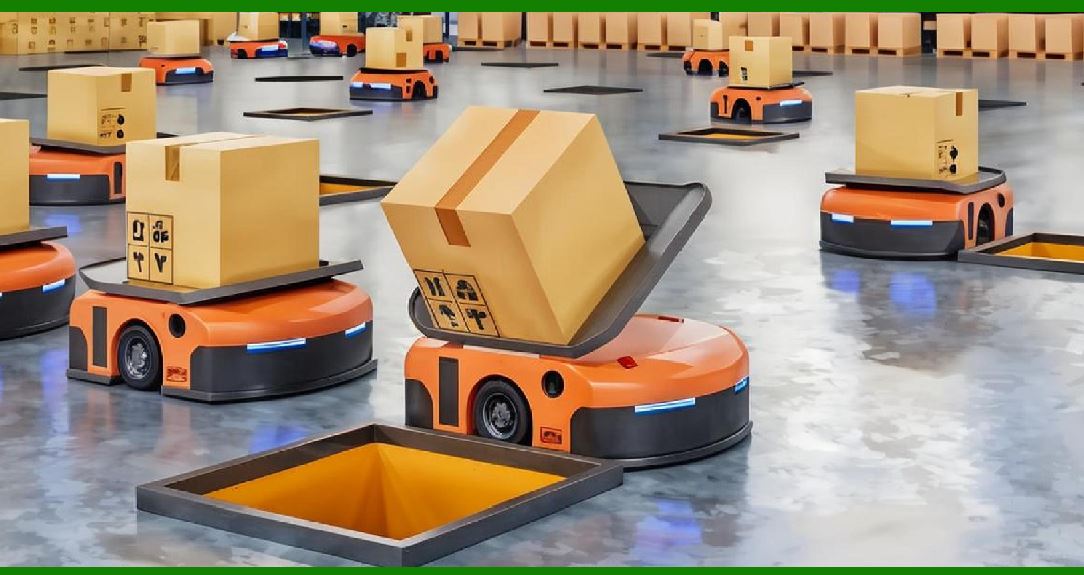
In logistics and warehousing, delta robots are used for high-speed sortation of small parcels and envelopes. A delta robot with a vacuum gripper can pick up a package from a conveyor, read its barcode with a vision system, and place it into the correct chute. The robot must handle packages of different sizes and weights. The vision system must read barcodes that are partially obscured or poorly printed. The ninety-nine percent pick accuracy is essential for keeping the sortation line running at full speed. If the robot misses too many packages, the line slows down, and labor costs increase. |
The limitations of delta robots are their small working envelope and their limited payload capacity. They are not suitable for heavy parts or for tasks that require reaching deep into a machine. They are also less effective when the parts are not presented in a predictable way. If the parts are jumbled in a bin, a delta robot with a simple vision system may struggle. Advanced three-dimensional vision systems can handle bin picking, but the cycle time increases, and the pick accuracy may drop. For these tasks, articulated robots with advanced vision and force control are often a better choice. |
|
4. Articulated Robots: The Generalists with Sub-Millimeter Repeatability |
Articulated robots are the most common type of industrial robot. They have six or more rotary joints, giving them a large working envelope and high flexibility. Their repeatability typically ranges from zero point zero two to zero point one millimeters. This is not as tight as a SCARA robot, but it is more than enough for most welding, machine tending, and assembly tasks. The reason for the slightly lower repeatability is the serial kinematic chain. Each joint has a small amount of backlash, and each link has a small amount of deflection. These errors accumulate as the arm extends. The robot controller uses complex algorithms to compensate for these errors, but some residual variation remains. |
In the automotive industry, articulated robots dominate. They weld car bodies, apply paint, seal seams, and handle heavy parts. A welding robot must follow a seam with a precision of a few tenths of a millimeter. If the robot deviates too much, the weld may be weak or may burn through the metal. Articulated robots achieve this precision through a combination of rigid mechanical design, high-resolution encoders, and advanced motion control. The robot does not need to be accurate in absolute terms. It needs to be repeatable. If the robot can return to the same seam position every time, the weld quality will be consistent. |
In machine tending, an articulated robot loads and unloads parts from a CNC machine, a stamping press, or an injection molding machine. The robot must pick up a raw part, place it into the machine, wait for the machine to finish, and then remove the finished part. The precision here is often about force control. The robot must push the part into the chuck with enough force to seat it, but not so much force that it damages the machine or the part. Articulated robots with force-torque sensors can detect when the part is seated and adjust their motion accordingly. This is a form of precision that goes beyond position. It is precision in force and compliance. |
In assembly, articulated robots perform tasks such as screwing, riveting, and inserting. A robot might pick up a screw, move it to a hole, and drive it in with a screwdriver. The robot must align the screw with the hole, apply the right amount of torque, and stop when the screw is tight. The repeatability of the articulated robot ensures that the screw goes into the same hole every time. The force control ensures that the screw is not cross-threaded or over-tightened. This combination of position and force precision is what makes articulated robots so versatile. |
In the aerospace industry, articulated robots are used for drilling, riveting, and inspection. An aircraft wing has thousands of rivets, each of which must be placed with high precision. A robot can drill a hole, inspect it with a vision system, and then place a rivet. The repeatability of the robot ensures that the holes are in the right place. The vision system ensures that the holes are the right size and shape. The force control ensures that the rivet is seated properly. This is a multi-step process that requires a high level of integration between the robot, the vision system, and the force sensor. |
In the pharmaceutical and laboratory industries, articulated robots handle sample tubes, pipettes, and microplates. A robot might pick up a pipette, move it to a sample tube, aspirate a liquid, move it to a microplate, and dispense the liquid. The precision here is often in the microliter range. The robot must move smoothly to avoid splashing or creating bubbles. The repeatability of the articulated robot ensures that the pipette goes to the same position every time. The force control ensures that the pipette tip does not damage the microplate. This is a form of precision that is essential for reproducible experiments. |
The limitations of articulated robots are their speed and their cost. They are generally slower than delta robots and more expensive than SCARA robots. They also require more complex programming and calibration. For simple pick-and-place tasks in a flat plane, a SCARA robot is often a better choice. For high-speed sorting with vision, a delta robot is often a better choice. But for tasks that require reaching around obstacles, working in three dimensions, or applying controlled forces, articulated robots are the only option. |

|
5. The Role of Vision in the Precision Hierarchy |
Vision systems have transformed the precision hierarchy. In the past, robots relied on precise fixtures and hard stops to position parts. A robot would move to a taught position, and the part would be there because the fixture held it there. This approach works well for high-volume production, but it is inflexible. If the part changes, the fixture must change. If the part is not perfectly positioned, the robot may miss it. Vision systems solve these problems by giving the robot the ability to see and adapt. |
A vision system typically consists of a camera, a light source, and a computer. The camera captures an image of the part. The computer analyzes the image to find the part's position and orientation. The robot controller then adjusts the robot's motion to pick up the part. This process happens in real time, often in less than a tenth of a second. The precision of the vision system depends on the resolution of the camera, the quality of the lighting, and the complexity of the part. For a simple part with high contrast, a low-resolution camera can achieve sub-millimeter accuracy. For a complex part with low contrast, a high-resolution camera and advanced algorithms may be needed. |
In the food industry, vision systems help delta robots pick cookies, fruits, and vegetables. The vision system must handle variations in color, shape, and size. A red apple and a green apple look different, but the vision system can be trained to recognize both. A bruised apple may have a dark spot, and the vision system can reject it. This is a form of quality control that goes beyond simple pick and place. It is precision in classification. |
In the electronics industry, vision systems help SCARA robots place tiny components. The vision system must align the component with the pad on the circuit board. The alignment must be accurate to a few thousandths of a millimeter. This requires a high-resolution camera and a stable lighting system. The vision system must also handle reflections from the solder pads and the component leads. Advanced algorithms can filter out these reflections and find the true edges of the component. This is a form of precision that is essential for modern electronics. |
In the automotive industry, vision systems help articulated robots weld and assemble. A vision system can find the seam to be welded, even if the parts are not perfectly aligned. The robot can then adjust its path to follow the seam. This is called seam tracking. It allows the robot to weld parts that would otherwise be rejected due to poor fit-up. The vision system can also inspect the weld after it is made, looking for defects such as porosity or cracks. This is a form of precision in inspection. |
In logistics, vision systems help delta robots sort packages. The vision system reads the barcode on the package and determines its destination. The robot then places the package into the correct chute. The vision system must handle packages of different sizes, shapes, and orientations. It must also handle barcodes that are partially obscured or poorly printed. Advanced algorithms can read barcodes even when they are damaged. This is a form of precision in identification. |
|
6. Industry Applications: Electronics and Semiconductors |
The electronics and semiconductor industries are the most demanding users of the precision hierarchy. A modern smartphone contains hundreds of tiny components, each of which must be placed with sub-millimeter accuracy. A semiconductor wafer contains thousands of dies, each of which must be probed and tested. The precision requirements here are at the extreme end of the hierarchy. |
In printed circuit board assembly, SCARA robots are the workhorses. They place surface-mount components onto the board. The components are tiny, often smaller than a grain of rice. The robot must pick up the component from a feeder, move it to the board, and place it on the correct pad. The repeatability of the SCARA robot ensures that the component is placed in the same position every time. The vision system ensures that the component is aligned with the pad. The speed of the SCARA robot ensures that the board is assembled quickly. A typical placement machine can place tens of thousands of components per hour. |
In semiconductor manufacturing, articulated robots handle wafers. A wafer is a thin slice of silicon that contains hundreds of microchips. The robot must pick up the wafer from a cassette, place it into a process chamber, and then remove it. The precision here is extreme. The robot must not touch the surface of the wafer, because even a tiny particle can ruin the chips. The robot must also move smoothly to avoid generating particles from its own joints. Articulated robots with special wafer-handling end effectors are used for this task. The repeatability of the robot ensures that the wafer is placed in the same position every time. The force control ensures that the wafer is not damaged. |
In electronics testing, delta robots sort and test components. A delta robot might pick up a chip, place it into a test socket, wait for the test to complete, and then place it into a good or bad bin. The robot must move quickly because the test time is short. The vision system must identify the chip and its orientation. The precision of the delta robot ensures that the chip is inserted into the test socket without bending the leads. This is a task that requires both speed and accuracy, and delta robots deliver both. |
In display manufacturing, articulated robots handle glass panels. A glass panel for a television or a smartphone is large, thin, and fragile. The robot must pick up the panel from a cassette, place it into a process chamber, and then remove it. The precision here is not just about position. It is about force. The robot must grip the panel with enough force to hold it, but not so much force that it cracks. Articulated robots with vacuum grippers and force sensors are used for this task. The repeatability of the robot ensures that the panel is placed in the same position every time. The force control ensures that the panel is not damaged. |
|
7. Industry Applications: Automotive and Heavy Manufacturing |
The automotive industry is the largest user of articulated robots. A modern car factory uses hundreds of robots for welding, painting, assembly, and inspection. The precision requirements here are less extreme than in electronics, but the scale is much larger. A welding robot must be repeatable to a few tenths of a millimeter. A painting robot must be repeatable to a few millimeters. An assembly robot must be repeatable to a few tenths of a millimeter. |
In body-in-white welding, articulated robots weld the car body together. A typical car body has thousands of spot welds. Each weld must be in the right place and have the right strength. The robot must move quickly to keep up with the production line. The repeatability of the robot ensures that the weld is in the same place every time. The force control ensures that the welding electrodes apply the right amount of pressure. The vision system ensures that the weld is made in the right place, even if the parts are not perfectly aligned. |
In painting, articulated robots apply paint to the car body. The robot must move smoothly to avoid streaks and runs. The precision here is not just about position. It is about speed and distance. The robot must maintain a constant distance from the surface and a constant speed. If the robot moves too fast, the paint will be too thin. If the robot moves too slow, the paint will be too thick. Articulated robots with advanced motion control are used for this task. The repeatability of the robot ensures that the paint is applied consistently. |
In assembly, articulated robots install seats, windshields, and batteries. A robot might pick up a seat, move it into the car, and bolt it to the floor. The robot must align the seat with the mounting holes. The repeatability of the robot ensures that the seat goes into the same position every time. The force control ensures that the bolts are tightened to the right torque. The vision system ensures that the seat is the right color and style. |
In heavy manufacturing, articulated robots handle large parts. A robot might pick up a casting, place it into a CNC machine, and then remove it. The precision here is often about force and compliance. The robot must push the casting into the chuck with enough force to seat it, but not so much force that it damages the machine. Articulated robots with force-torque sensors are used for this task. The repeatability of the robot ensures that the casting is placed in the same position every time. The force control ensures that the casting is not damaged. |

|
8. Industry Applications: Food, Beverage, and Consumer Goods |
The food and beverage industry has unique precision requirements. The products are often irregular in shape and size. They may be fragile or slippery. They may need to be handled in a hygienic environment. Delta robots with vision systems are the most common solution for high-speed pick and place in this industry. |
In bakery automation, delta robots pick cookies, crackers, and bread rolls from a conveyor and place them into packages. The vision system identifies each item and determines its orientation. The robot picks up the item and rotates it to fit into the package. The precision here is not just about position. It is about speed and gentleness. The robot must move quickly to keep up with the production line. It must also handle the product gently to avoid breaking it. Delta robots with soft grippers and force control are used for this task. The ninety-nine percent pick accuracy ensures that the packaging line keeps moving without jams. |
In meat and poultry processing, delta robots sort and package cuts of meat. The vision system identifies the cut and determines its weight. The robot picks up the cut and places it into the correct package. The precision here is about weight and classification. The robot must place the right cut into the right package. The vision system must handle variations in color, shape, and size. The ninety-nine percent pick accuracy ensures that the packages are correct. |
In beverage bottling, articulated robots handle bottles and cans. A robot might pick up a bottle, place it into a case, and then move the case to a pallet. The precision here is about speed and reliability. The robot must move quickly to keep up with the filling line. The repeatability of the robot ensures that the bottle goes into the same position every time. The force control ensures that the bottle is not damaged. |
In consumer goods manufacturing, SCARA robots assemble small appliances, toys, and medical devices. They are also used in dispensing applications for glue, epoxy, and silicone. A furniture manufacturer might use a SCARA robot to apply a precise bead of adhesive along the edge of a drawer front. The precision of the motion directly determines the quality of the bond. If the robot speeds up or slows down, the bead becomes thinner or thicker, and the bond may fail. |

|
9. Industry Applications: Pharmaceuticals and Life Sciences |
The pharmaceutical and life sciences industries have some of the most demanding precision requirements. The products are often expensive, fragile, and regulated. The robots must handle them with extreme care. Articulated robots and SCARA robots are the most common solutions in this industry. |
In vial filling, SCARA robots handle glass vials. A robot might pick up a vial, place it under a dispensing needle, and then move it to a capping station. The precision here is not just about position. It is about force control. The robot must push the cap on with the right amount of pressure, without cracking the glass or leaving the cap loose. SCARA robots with integrated force sensors can detect when the cap is seated and stop pushing. This is a form of precision that goes beyond position. |
In laboratory automation, articulated robots handle sample tubes, pipettes, and microplates. A robot might pick up a pipette, move it to a sample tube, aspirate a liquid, move it to a microplate, and dispense the liquid. The precision here is often in the microliter range. The robot must move smoothly to avoid splashing or creating bubbles. The repeatability of the articulated robot ensures that the pipette goes to the same position every time. The force control ensures that the pipette tip does not damage the microplate. |
In medical device manufacturing, SCARA robots assemble syringes, catheters, and implants. The precision here is often about cleanliness and sterility. The robot must handle the components without introducing particles or bacteria. The repeatability of the SCARA robot ensures that the components are assembled in the same way every time. The force control ensures that the components are not damaged. |
In pharmaceutical packaging, delta robots sort and package pills, capsules, and blister packs. The vision system identifies the product and determines its orientation. The robot picks up the product and places it into the correct package. The ninety-nine percent pick accuracy ensures that the packages are correct. The speed of the delta robot ensures that the packaging line keeps moving. |

|
10. Industry Applications: Logistics and Warehousing |
The logistics and warehousing industry has seen explosive growth in robot adoption. The rise of e-commerce has created a need for high-speed, high-accuracy sortation and picking. Delta robots and articulated robots are the most common solutions in this industry. |
In parcel sortation, delta robots pick packages from a conveyor and place them into chutes. The vision system reads the barcode on the package and determines its destination. The robot then places the package into the correct chute. The precision here is about speed and accuracy. The robot must move quickly to keep up with the conveyor. The ninety-nine percent pick accuracy ensures that the packages are sorted correctly. |
In bin picking, articulated robots pick individual items from a bin. The items are jumbled together, and the robot must find a graspable item, pick it up, and place it onto a conveyor. The vision system uses three-dimensional scanning to find the items. The robot uses force control to avoid damaging the items. The precision here is about adaptability. The robot must handle items of different shapes and sizes. Articulated robots with advanced vision and force control are used for this task. |
In palletizing, articulated robots pick boxes from a conveyor and stack them onto a pallet. The robot must place the boxes in a specific pattern to ensure that the pallet is stable. The precision here is about position and orientation. The repeatability of the articulated robot ensures that the boxes are placed in the same position every time. The force control ensures that the boxes are not crushed. |
In order picking, articulated robots pick items from shelves and place them into totes. The robot must navigate to the shelf, find the item, pick it up, and place it into the tote. The precision here is about navigation and manipulation. The robot must avoid obstacles and handle items of different shapes and sizes. Articulated robots with mobile bases and advanced vision systems are used for this task. |

|
11. Industry Applications: Aerospace and Defense |
The aerospace and defense industries have unique precision requirements. The products are often large, expensive, and safety-critical. The robots must handle them with extreme care. Articulated robots are the most common solution in this industry. |
In aircraft assembly, articulated robots drill holes, install rivets, and apply sealant. An aircraft wing has thousands of rivets, each of which must be placed with high precision. A robot can drill a hole, inspect it with a vision system, and then place a rivet. The repeatability of the robot ensures that the holes are in the right place. The vision system ensures that the holes are the right size and shape. The force control ensures that the rivet is seated properly. |
In aerospace inspection, articulated robots use vision systems and non-destructive testing sensors to inspect parts. A robot might move a camera or an ultrasonic sensor over the surface of a wing or a fuselage. The precision here is about coverage and consistency. The robot must move smoothly to avoid missing any areas. The repeatability of the robot ensures that the inspection is consistent. |
In defense manufacturing, articulated robots handle explosives and hazardous materials. The robot must move precisely to avoid damaging the material or causing an explosion. The precision here is about safety and reliability. The repeatability of the robot ensures that the material is handled in the same way every time. The force control ensures that the material is not damaged. |
In space exploration, articulated robots handle satellites and spacecraft components. The precision here is extreme. The robot must not touch the surface of the component, because even a tiny particle can ruin the mission. The robot must also move smoothly to avoid generating particles from its own joints. Articulated robots with special end effectors are used for this task. The repeatability of the robot ensures that the component is placed in the same position every time. The force control ensures that the component is not damaged. |

|
12. Comparing the Three Levels: Trade-Offs and Selection Criteria |
Choosing among SCARA, delta, and articulated robots is a matter of trade-offs. Each type has its strengths and weaknesses. The precision hierarchy is not a ranking of better or worse. It is a ranking of suitability for different tasks. |
SCARA robots offer the best planar precision and speed. They are ideal for tasks that involve moving in a flat plane, such as dispensing, assembly, and pick and place. They are relatively inexpensive and easy to program. However, they have a limited working envelope and cannot easily reach around obstacles. They are also less effective for tasks that require force control in three dimensions. |
Delta robots offer the best speed and pick accuracy with vision. They are ideal for high-throughput sorting and packaging. They are relatively expensive and require a vision system to be effective. They have a small working envelope and limited payload capacity. They are also less effective for tasks that require reaching deep into a machine or handling heavy parts. |
Articulated robots offer the best flexibility and reach. They are ideal for tasks that involve working in three dimensions, reaching around obstacles, or applying controlled forces. They are relatively expensive and require more complex programming and calibration. They are generally slower than delta robots and less precise than SCARA robots in a flat plane. However, their versatility makes them the most common type of industrial robot. |
When selecting a robot, engineers consider several factors. The first is the task. What does the robot need to doDoes it need to move in a flat plane or in three dimensionsDoes it need to apply forceDoes it need to see the partThe second is the required precision. What is the tolerance for errorIs it measured in millimeters or micrometersThe third is the required speed. How many parts per minute must the robot handleThe fourth is the payload. How heavy is the partThe fifth is the working envelope. How far must the robot reachThe sixth is the cost. What is the budget for the robot and the integrationThe seventh is the environment. Is the robot working in a cleanroom, a freezer, or a hazardous area |
By considering these factors, engineers can choose the right robot for the task. The precision hierarchy provides a framework for understanding the trade-offs. |

|
13. The Future of Precision: Trends and Innovations |
The precision hierarchy is not static. It is evolving as new technologies emerge. Several trends are shaping the future of precision in industrial robotics. |
The first trend is the integration of advanced sensors. Force-torque sensors, vision systems, and tactile sensors are becoming more affordable and more capable. This allows robots to perform tasks that were previously impossible, such as assembling flexible parts or handling delicate objects. The precision hierarchy is expanding to include force precision and tactile precision, not just position precision. |
The second trend is the use of artificial intelligence. Machine learning algorithms are improving the ability of robots to recognize parts, plan paths, and adapt to changes. A robot with AI can learn from its mistakes and improve its performance over time. This is making robots more versatile and more precise in unstructured environments. |
The third trend is the development of collaborative robots. Collaborative robots, or cobots, are designed to work alongside humans. They are equipped with force sensors and safety systems that allow them to stop if they touch a person. Cobots are generally less precise than traditional industrial robots, but they are more flexible and easier to program. They are expanding the precision hierarchy to include tasks that were previously done by hand. |
The fourth trend is the miniaturization of robots. Micro-robots and nano-robots are being developed for tasks such as micro-assembly and drug delivery. These robots operate at a scale where precision is measured in nanometers. The precision hierarchy is expanding downward to include these new scales. |
The fifth trend is the integration of robots with the Internet of Things. Robots are becoming connected to the cloud, allowing them to share data and learn from each other. This is improving the reliability and precision of robots by allowing them to predict failures and optimize their motion. |
|
14. A Detailed Summary of the Precision Hierarchy |
The precision hierarchy in industrial robotics is a framework for understanding the capabilities and limitations of different robot types. At the top of the hierarchy for planar precision are SCARA robots. They achieve repeatability of zero point zero one to zero point zero five millimeters. They excel in electronics assembly, pharmaceutical filling, and consumer goods manufacturing. They are fast, precise, and relatively inexpensive. They are limited to flat, confined workspaces. |
Delta robots achieve ninety-nine percent plus pick accuracy with vision. They excel in food processing, pharmaceutical packaging, and logistics sortation. They are extremely fast and accurate when paired with a vision system. They are limited by their small working envelope and limited payload capacity. |
Articulated robots achieve repeatability of zero point zero two to zero point one millimeters. They excel in automotive welding, machine tending, aerospace assembly, and laboratory automation. They are flexible, versatile, and capable of force control. They are limited by their speed and cost. |
The precision hierarchy is not a ranking of better or worse. It is a ranking of suitability. Each robot type has its place in the factory. SCARA robots are the specialists of the flat plane. Delta robots are the speed champions of sorting and packaging. Articulated robots are the generalists of the three-dimensional world. By understanding the precision hierarchy, engineers can choose the right robot for the right task, optimizing for precision, speed, cost, and flexibility. As technology advances, the precision hierarchy will continue to evolve, expanding to include new sensors, new algorithms, and new scales. The future of industrial robotics is a future of ever-increasing precision, applied in ever more diverse ways. |
 cs@easiersoft.com