Chapter 42: Screwdriving |
Chapter Summary |
Screwdriving is one of the most common and most important automated assembly tasks in electronics and semiconductor manufacturing. Articulated robots and SCARA robots are widely used to drive screws with high precision, repeatable force, and continuous torque monitoring. This chapter explains why screwdriving automation matters, how modern robot screwdriving systems work, what torque monitoring does, and how these systems are applied across many industries. The discussion is practical and non-mathematical. It focuses on real applications in consumer electronics, computers, telecommunications, automotive electronics, medical devices, aerospace electronics, semiconductor equipment, and many other fields. The goal is to help the reader understand both the technology and the business reasons behind automated screwdriving. |
|
42.1 Introduction |
Screwdriving is one of the oldest and most familiar forms of mechanical fastening. A screw holds parts together, allows them to be taken apart later, and provides a controlled clamping force. In modern electronics, screws are still used in enormous quantities. A single smartphone may contain dozens of tiny screws. A laptop computer may contain more than a hundred. A server, a telecom switch, or a semiconductor tool may contain thousands. Driving these screws by hand is slow, tiring, and inconsistent. It also creates quality problems. A screw that is too loose can fall out or cause vibration. A screw that is too tight can strip threads, crack plastic, or damage delicate components. Human operators cannot maintain perfect torque control over millions of repetitions. This is why robots are used. |
Articulated robots and SCARA robots are the two main robot types used for automated screwdriving. An articulated robot has multiple rotary joints, similar to a human arm. It can reach into complex spaces and orient a screwdriver at many angles. A SCARA robot has a horizontal arm that moves in a plane, with a vertical shaft for up and down motion. SCARA robots are very fast and very stiff in the vertical direction, which makes them excellent for pressing down while turning a screw. Both types can be equipped with automatic screw feeders, torque-controlled drivers, and vision systems. Together, these elements form a complete screwdriving cell. |
The most important quality feature in robot screwdriving is torque monitoring. Torque is the twisting force applied to the screw. By measuring torque continuously during the driving process, the robot system can verify that each screw is properly seated. It can detect cross-threading, stripped threads, missing holes, wrong screws, and damaged driver bits. Torque monitoring turns a simple mechanical action into a data-rich quality process. This is essential in electronics and semiconductor applications, where a single loose screw can cause a field failure worth many thousands of dollars. |
This chapter is organized into numbered sections. Section 42.2 explains the basics of screwdriving. Section 42.3 describes why robots are used. Section 42.4 covers articulated robots. Section 42.5 covers SCARA robots. Section 42.6 explains torque monitoring. Section 42.7 describes screw feeding systems. Section 42.8 covers vision and error proofing. Section 42.9 discusses programming and control. Section 42.10 lists many industry applications. Section 42.11 discusses limitations and challenges. Section 42.12 looks at future trends. Section 42.13 provides a detailed summary. The chapter is written for a general technical audience. It avoids formulas and tables and uses plain language. |
|
42.2 The Basics of Screwdriving |
A screw is a simple machine. It converts rotational motion into linear motion. When you turn a screw, the threads pull the screw into the material. The head of the screw presses down on the part. This creates clamping force. The amount of clamping force depends on the torque applied, the thread geometry, the friction between the threads, and the friction under the screw head. In electronics, screws are usually small. M1, M1.2, M1.4, M1.6, M2, M2.5, and M3 are common metric sizes. A number 0, number 1, and number 2 Phillips head are also common. Some screws use Torx, hex, or slotted heads. Some are self-tapping. Some are machine screws that go into threaded inserts or nuts. |
The screwdriving process has several stages. First, the screw must be presented to the driver bit. This can be done by hand, by a vacuum pickup, by a magnetic bit, or by an automatic feeder. Second, the screw must be aligned with the hole. Third, the driver turns the screw while applying downward force. Fourth, the screw seats against the part. Fifth, the driver stops at a target torque. Sixth, the driver retracts. Each stage can go wrong. The screw can fall off the bit. The screw can cross-thread. The hole can be blocked. The screw can strip. The driver bit can wear out. The part can move. Torque monitoring helps detect these problems. |
There are two main torque strategies. In torque control, the driver stops when torque reaches a set value. This is used for hard joints, where the screw seats quickly. In angle control, the driver turns a set number of degrees after the screw seats. This is used for soft joints, where torque rises slowly. Many modern drivers use a combination of torque and angle. They also record a torque curve, which is a plot of torque versus time or angle. The shape of this curve is a fingerprint of the joint. A good curve looks smooth and repeatable. A bad curve shows spikes, dips, or a sudden rise. The robot controller can compare each curve to a reference curve and reject bad parts. |
Screwdriving also requires the right downward force. Too little force and the bit may cam out of the screw head. Too much force and the part may be damaged. SCARA robots are very good at controlling downward force because their vertical axis is stiff and direct. Articulated robots need a force sensor or a compliant wrist to do the same. Some systems use a spring-loaded driver holder to absorb excess force. Others use a pneumatic or electric press. The choice depends on the application. |
|
42.3 Why Robots Are Used for Screwdriving |
There are many reasons to use robots for screwdriving. The first is consistency. A robot applies the same torque, the same angle, and the same downward force every time. A human operator cannot do this. Over a long shift, a human becomes tired and inconsistent. A robot does not. The second is speed. A robot can drive a screw in a fraction of a second. It can move to the next hole immediately. A human must pick up a screw, position it, drive it, and then pick up the next one. The third is quality data. A robot with torque monitoring can record every screw. It can create a traceability record. If a product fails in the field, engineers can look up the torque data for that serial number. The fourth is flexibility. A robot can be reprogrammed to drive different screw patterns. This is important in high-mix electronics production. The fifth is safety. Screwdriving can cause repetitive strain injuries. Robots remove this risk. The sixth is cost. Although a robot cell has a high initial cost, it can run for many years with low operating cost. In high-volume production, the payback period is often less than one year. |
There are also reasons not to use robots. Very low volume production may not justify the programming time. Very complex assemblies with limited access may be hard to automate. Very delicate parts may require a human touch. But in general, electronics and semiconductor manufacturing are ideal for robot screwdriving because the products are small, the volumes are high, and the quality requirements are strict. |

|
42.4 Articulated Robots for Screwdriving |
An articulated robot has a base, a rotating waist, a shoulder, an elbow, and a wrist. The wrist can have two or three axes. A six-axis articulated robot can position a screwdriver at any point in its workspace and at any orientation. This is useful for driving screws on angled surfaces, inside deep cavities, or on multiple sides of a part. Articulated robots are often used in automotive electronics, aerospace electronics, and heavy industrial electronics. They are also used in semiconductor equipment manufacturing, where large frames and enclosures need many screws. |
Articulated robots have some disadvantages for screwdriving. Their long arm can flex under load. This makes it harder to control downward force. They are also slower than SCARA robots for simple vertical tasks. To overcome these issues, articulated robots used for screwdriving often have a force sensor in the wrist or a compliant mechanism. Some use a remote center compliance device, which allows the screwdriver to self-align with the hole. Some use a torque sensor on the driver. The robot controller uses feedback to adjust position and force. This is called force control or impedance control. It allows the robot to press down gently and follow the screw as it threads into the hole. |
A typical articulated robot screwdriving cell has the robot, a screw feeder, a driver, a fixture for the part, and a controller. The part is loaded into the fixture. The robot picks up a screw from the feeder. It moves to the first hole. It drives the screw. It moves to the next hole. When all screws are driven, the part is unloaded. The controller records torque data for each screw. If a screw fails, the robot can retry, or it can signal an operator. Some cells have two robots working together. One robot holds the part while the other drives screws. Some cells have a robot on a linear track to reach multiple stations. |
Articulated robots are also used for screwdriving in difficult positions. For example, in a server rack, screws may be on the top, bottom, and sides. A six-axis robot can reach all of them without moving the part. In a semiconductor tool, screws may be inside a vacuum chamber. A robot can reach through a port and drive screws in a pattern. In an aircraft electronics bay, a robot can drive screws on a curved panel. These applications would be very difficult for a SCARA robot. |
|
42.5 SCARA Robots for Screwdriving |
A SCARA robot has two rotary joints for horizontal motion and one linear joint for vertical motion. The name stands for Selective Compliance Assembly Robot Arm. The arm is stiff in the vertical direction and compliant in the horizontal plane. This makes it perfect for tasks that require pushing down while moving sideways. Screwdriving is exactly such a task. The robot pushes down to keep the driver bit engaged with the screw head. It moves sideways to align with the hole. The SCARA design is fast, accurate, and compact. It is widely used in electronics assembly. |
SCARA robots are very common in consumer electronics manufacturing. They drive screws in smartphones, tablets, laptops, wearables, cameras, and game consoles. They are also used in printed circuit board assembly, where screws hold boards to chassis. They are used in disk drive manufacturing, where tiny screws hold the actuator and cover. They are used in semiconductor packaging, where screws hold lead frames and heat sinks. They are used in medical device assembly, where screws hold housings and connectors. The list is very long. |
A SCARA screwdriving cell is similar to an articulated cell, but the robot is different. The SCARA robot usually has a screwdriver mounted on its vertical axis. The driver may be electric or pneumatic. The robot moves to a hole, moves down, drives the screw, and moves up. The cycle time is very short. Some SCARA robots can drive a screw in less than one second. This is important for high-volume production. A smartphone assembly line may produce hundreds of units per hour. Each unit may have dozens of screws. The robot must keep up. |
SCARA robots are also used with automatic screw feeders. A feeder sorts screws and presents them one at a time. The robot picks up a screw with a vacuum nozzle or a magnetic bit. It then moves to the hole. Some feeders use a blow-feed system. A tube carries screws to a nozzle near the driver. The screw is blown into the bit. This is very fast. It also avoids the need for the robot to move to a feeder. The robot can stay near the part and drive screws in a continuous pattern. Blow feeding is common in electronics because screws are small and light. |
SCARA robots have some limitations. They cannot easily drive screws on vertical surfaces or on the underside of a part. They are best for horizontal surfaces. They also have a limited workspace. The arm reaches in a circle. If the part is large, the robot may not reach all holes. In that case, the part can be moved, or multiple robots can be used. Some SCARA robots are mounted on a linear track to extend their reach. Some are mounted on a rotary table. The table indexes the part to different stations. This is a common layout in electronics assembly. |
|
42.6 Torque Monitoring for Quality Assurance |
Torque monitoring is the heart of quality assurance in robot screwdriving. A torque sensor measures the twisting force applied by the driver. The sensor can be built into the driver, or it can be a separate unit between the driver and the bit. The sensor sends a signal to the controller. The controller samples this signal many times per second. It builds a torque curve. It compares the curve to a reference. It decides whether the screw is good or bad. |
There are several types of torque monitoring. The simplest is peak torque monitoring. The controller records the highest torque reached during the drive. If the peak is within a window, the screw is good. If it is too low, the screw may be loose or cross-threaded. If it is too high, the screw may be stripped or the hole may be too small. Peak torque monitoring is fast and easy. It is used in many applications. But it does not catch all problems. For example, a screw that is cross-threaded may reach a high peak and then strip. The peak looks good, but the joint is bad. A more advanced method is torque curve monitoring. The controller records the entire curve and compares it to a reference. It looks at the shape, the slope, the area under the curve, and other features. This catches more problems. |
Another method is torque rate monitoring. The controller measures how fast torque rises. A normal joint has a characteristic torque rate. A cross-threaded joint has a different rate. A stripped joint has a sudden drop. By monitoring the rate, the controller can detect problems early. Some systems use angle monitoring. The controller measures how many degrees the screw turns after it seats. If the angle is too large, the screw may be too long or the hole may be too deep. If the angle is too small, the screw may be too short or the hole may be blocked. Angle monitoring is often combined with torque monitoring. |
Torque monitoring also provides traceability. The controller can store the torque data for each screw. It can link the data to a serial number or a barcode. If a product fails later, engineers can look up the data. They can see which screws were driven, what torque was applied, and whether any anomalies occurred. This is important in medical devices, aerospace, and automotive electronics, where recalls are expensive and safety is critical. In some industries, traceability is required by law. Torque monitoring makes it possible. |
Torque monitoring also helps with process improvement. By analyzing torque data over time, engineers can see trends. They can detect driver bit wear. They can detect feeder problems. They can detect fixture wear. They can adjust the process before defects occur. This is called predictive maintenance. It reduces downtime and improves quality. In semiconductor manufacturing, where a single defect can cost thousands of dollars, predictive maintenance is very valuable. |
|
42.7 Screw Feeding Systems |
A robot needs a steady supply of screws. Manual feeding is possible, but it is slow and unreliable. Automatic feeding is much better. There are several types of automatic screw feeders. The most common is the vibratory bowl feeder. A bowl holds a large number of screws. Vibration makes the screws climb a spiral track. The track sorts the screws and orients them head up. At the end of the track, a escapement releases one screw at a time. The robot picks up the screw with a vacuum nozzle or a magnetic bit. Bowl feeders are reliable and can handle many screw types. They are also relatively inexpensive. But they can be noisy. They can damage screws if the vibration is too strong. They need to be refilled periodically. They can jam if screws are bent or dirty. |
Another type is the blow feeder. A blow feeder uses a hopper and a singulator to separate screws. Compressed air blows each screw through a tube to the driver. The screw arrives at the bit and is held by air pressure or a magnetic ring. Blow feeders are very fast. They can feed screws to a driver that is far from the hopper. They are common in electronics assembly. They can handle very small screws. But they need clean, dry air. They can jam if the tube is blocked. They can damage screws if the air pressure is too high. |
A third type is the tape and reel feeder. Screws are packaged in a tape with pockets. The tape is wound on a reel. A feeder advances the tape and exposes one screw at a time. The robot picks up the screw. Tape and reel feeders are clean and compact. They are common in semiconductor and electronics assembly. They are easy to change over. But the tape is an extra cost. The screws must be packaged in a special way. The reel must be changed when empty. |
A fourth type is the tray feeder. Screws are placed in a tray with pockets. The robot picks up screws from the tray. Tray feeders are simple and flexible. They are used for low-volume production and for odd screw types. But they require manual loading. They are not suitable for high-volume production. |
The choice of feeder depends on the application. For high-volume electronics, blow feeders and tape and reel feeders are common. For medium volume, bowl feeders are common. For low volume, tray feeders are common. Some systems use a combination. For example, a bowl feeder can feed screws to a blow tube. This combines the sorting ability of the bowl with the speed of the blow feed. |
|
42.8 Vision and Error Proofing |
Vision systems are often used with robot screwdriving. A camera can find the hole, check the screw, and verify the result. Vision-guided screwdriving is important when parts are not perfectly positioned. In electronics assembly, parts may have tolerance stack-up. A hole may be slightly off from its nominal position. A robot that only follows a pre-programmed path may miss the hole. A vision system can find the actual hole and adjust the robot path. This is called vision guidance or visual servoing. It improves yield and reduces the need for expensive fixtures. |
Vision can also check the screw before driving. A camera can verify that the screw is present on the bit. It can check the screw type. It can check the orientation. This prevents wrong screws from being driven. Vision can also check the hole before driving. It can verify that the hole is clear. It can check for foreign objects. It can check for damaged threads. This prevents cross-threading and stripping. |
After driving, vision can verify the result. A camera can check that the screw is seated. It can check the screw head height. It can check for missing screws. It can check for stripped heads. This is called post-process inspection. It catches defects that torque monitoring might miss. For example, a screw that is cross-threaded may reach the correct torque but sit at the wrong height. Vision can catch this. |
Error proofing, also called poka-yoke, is the use of design and process features to prevent mistakes. In robot screwdriving, error proofing can include different screw lengths for different holes. It can include color-coded screws. It can include fixtures that only allow the part to be loaded one way. It can include sensors that detect the presence of the part. It can include software that checks the screw sequence. The goal is to make it impossible to make a mistake. Torque monitoring and vision are part of error proofing. They provide a safety net. But the best error proofing is to design the product so that mistakes cannot happen. For example, use captive screws that cannot fall out. Use screws that are all the same length. Use self-aligning threads. Use snap fits instead of screws where possible. But screws are still needed for many reasons. So error proofing remains important. |

|
42.9 Programming and Control |
Programming a robot for screwdriving is not difficult, but it requires care. The programmer must teach the robot the position of each hole. This can be done by manual teaching, where a human moves the robot to each hole and records the position. It can be done by offline programming, where a CAD model is used to generate the path. It can be done by vision, where the robot finds the holes automatically. Manual teaching is slow and boring. Offline programming is faster but requires an accurate model. Vision is flexible but requires a good camera and lighting. |
The programmer must also set the torque parameters. Each screw size and each joint type has a recommended torque. The programmer sets the target torque, the torque window, the speed, the downward force, and the angle limits. These parameters are often stored in a recipe. A recipe is a set of parameters for a specific product. When the product changes, the operator selects a new recipe. This makes changeover fast and reliable. Recipes are important in high-mix production. They allow one robot cell to build many different products. |
The controller must also handle exceptions. If a screw fails, what should the robot doIt can retry the screw. It can skip the screw and continue. It can stop and call an operator. It can mark the part as defective. The best strategy depends on the application. In high-volume production, retrying is common. In safety-critical production, stopping is common. The controller can also log the exception. The log can be used for quality analysis. |
Modern robot controllers have built-in screwdriving functions. They can control the driver directly. They can read the torque sensor. They can store torque curves. They can communicate with the feeder and the vision system. They can connect to a factory network. This allows remote monitoring and data collection. Engineers can watch the process from a computer. They can see torque trends. They can see feeder status. They can see robot status. This is part of the Industrial Internet of Things. It makes the factory smarter and more efficient. |

|
42.10 Industry Applications |
Robot screwdriving is used in many industries. This section lists many examples. The examples are grouped by industry. Each example shows how robots and torque monitoring are used. |
42.10.1 Consumer Electronics |
Consumer electronics is the largest market for robot screwdriving. Smartphones, tablets, laptops, smartwatches, headphones, speakers, cameras, and game consoles all use screws. These products are made in very high volumes. The screws are very small. The quality requirements are strict. A single loose screw can cause a rattling noise. It can cause a short circuit. It can cause a product to fail. Robot screwdriving with torque monitoring is essential. |
In smartphone assembly, SCARA robots drive screws that hold the display, the battery, the camera module, and the main board. The screws are often M1.2 or M1.4. The torque is very low, often less than 0.5 newton-meters. A special driver is needed. The robot must be very accurate. Vision is used to find the holes. Torque monitoring is used to verify each screw. The cycle time is very short. A typical line produces one phone every few seconds. |
In laptop assembly, articulated robots and SCARA robots are used. Laptops have more screws than phones. They have screws on the bottom cover, the keyboard, the touchpad, the hinges, and the display. Some screws are hidden under rubber feet. The robot must remove the feet, drive the screws, and replace the feet. This is a complex task. Some robots use a tool changer to pick up different drivers. Torque monitoring is used for every screw. The data is stored for traceability. |
In camera assembly, robots drive screws that hold the lens mount, the sensor board, and the housing. Cameras are precision instruments. A loose screw can cause blurry images. A tight screw can crack the lens. Torque monitoring is critical. Some cameras are assembled in cleanrooms. The robots must be cleanroom-compatible. They must not generate particles. They must use special lubricants. |
In wearable assembly, robots drive screws in smartwatches and fitness trackers. These products are very small. The screws are tiny. The robot must be very precise. Some wearables use pentalobe screws, which require a special driver. The robot must have a tool changer. Torque monitoring is used to avoid damaging the delicate components. |
|
42.10.2 Computers and Data Storage |
Computers and data storage devices use many screws. Desktop computers, servers, and storage arrays all have screws. Hard disk drives and solid-state drives have screws. Robot screwdriving is common in these industries. |
In hard disk drive assembly, robots drive screws that hold the cover, the actuator, and the circuit board. Hard drives are extremely sensitive to particles. A single particle can cause a head crash. The robots must be in a cleanroom. They must not generate particles. They must use vacuum nozzles to pick up screws. Torque monitoring is used to ensure that the cover is sealed. A loose cover screw can cause a leak. A tight cover screw can distort the cover. The torque window is very narrow. |
In server assembly, robots drive screws that hold the motherboard, the power supply, the fans, and the chassis. Servers are large and heavy. Articulated robots are often used. They can reach into the chassis from different angles. Torque monitoring is used to ensure that all screws are tight. A loose screw in a server can cause a short circuit. It can cause a fan to fail. It can cause a board to crack. The data is stored for traceability. Some server manufacturers require torque data for every unit. |
In solid-state drive assembly, robots drive screws that hold the case and the connector. SSDs are smaller than hard drives. They use smaller screws. SCARA robots are often used. Torque monitoring is used to avoid cracking the case. The cycle time is very short. |
|
42.10.3 Telecommunications |
Telecommunications equipment uses many screws. Cell towers, base stations, routers, switches, and optical modules all use screws. Robot screwdriving is used in manufacturing these products. |
In base station assembly, robots drive screws that hold the radio unit, the filter, and the heat sink. Base stations are outdoor equipment. They must survive rain, wind, and temperature extremes. The screws must be very tight. Torque monitoring is used to ensure that the seals are compressed correctly. A loose screw can cause a water leak. A tight screw can strip the threads. The torque window is critical. |
In router and switch assembly, robots drive screws that hold the chassis, the line cards, and the power supplies. These products are often rack-mounted. They have many screws. Articulated robots are used to reach into the rack. Torque monitoring is used to ensure that the cards are seated. A loose card can cause a network outage. The data is stored for traceability. |
In optical module assembly, robots drive screws that hold the housing and the connector. Optical modules are very small. They use tiny screws. The robot must be very precise. Torque monitoring is used to avoid damaging the optical components. A tight screw can crack a lens. A loose screw can cause a misalignment. The torque window is very narrow. |
|
42.10.4 Automotive Electronics |
Automotive electronics is a fast-growing market for robot screwdriving. Modern cars have many electronic systems. Engine control units, transmission control units, infotainment systems, advanced driver assistance systems, and battery management systems all use screws. These products must be very reliable. A failure can cause an accident. Torque monitoring is essential. |
In engine control unit assembly, robots drive screws that hold the housing and the circuit board. The housing must be sealed to protect the electronics from heat, vibration, and moisture. Torque monitoring is used to ensure that the seal is compressed. A loose screw can cause a leak. A tight screw can crack the housing. The torque window is very narrow. |
In infotainment assembly, robots drive screws that hold the display, the touch panel, and the main board. Infotainment systems are complex. They have many screws. Articulated robots are used. Torque monitoring is used to avoid damaging the display. A tight screw can cause a bright spot. A loose screw can cause a rattle. The data is stored for traceability. |
In advanced driver assistance system assembly, robots drive screws that hold the radar, the camera, and the lidar. These sensors are safety-critical. They must be aligned precisely. Torque monitoring is used to ensure that the alignment is not disturbed. A loose screw can cause a misalignment. A tight screw can crack the sensor. The torque window is very narrow. |
In battery management system assembly, robots drive screws that hold the battery pack, the bus bars, and the control board. Electric vehicles use large battery packs. The screws must be very tight. Torque monitoring is used to ensure that the electrical connections are good. A loose screw can cause a high resistance. It can cause a fire. The torque window is critical. |
|
42.10.5 Medical Devices |
Medical devices use many screws. Pacemakers, defibrillators, insulin pumps, surgical robots, and imaging systems all use screws. These products must be very reliable. A failure can cause injury or death. Torque monitoring is essential. Traceability is often required by law. |
In pacemaker assembly, robots drive screws that hold the case and the connector. Pacemakers are implanted in the human body. They must last for many years. The screws must be very tight. Torque monitoring is used to ensure that the case is sealed. A loose screw can cause a leak. A tight screw can crack the case. The torque window is very narrow. The data is stored for traceability. Some manufacturers keep data for the life of the product. |
In surgical robot assembly, robots drive screws that hold the arms, the instruments, and the controller. Surgical robots are very complex. They have many screws. Articulated robots are used. Torque monitoring is used to ensure that the arms are rigid. A loose screw can cause a tremor. A tight screw can cause a bind. The torque window is critical. |
In imaging system assembly, robots drive screws that hold the detector, the gantry, and the console. Imaging systems are large and heavy. They have many screws. Articulated robots are used. Torque monitoring is used to ensure that the detector is aligned. A loose screw can cause a blurry image. A tight screw can crack the detector. The torque window is very narrow. |
|
42.10.6 Aerospace Electronics |
Aerospace electronics use many screws. Avionics, radar, communication systems, and navigation systems all use screws. These products must be very reliable. A failure can cause a crash. Torque monitoring is essential. Traceability is often required by law. |
In avionics assembly, robots drive screws that hold the chassis, the circuit boards, and the connectors. Avionics must survive vibration, temperature extremes, and altitude. The screws must be very tight. Torque monitoring is used to ensure that the connectors are seated. A loose screw can cause a signal loss. A tight screw can crack the board. The torque window is very narrow. |
In radar assembly, robots drive screws that hold the antenna, the transmitter, and the receiver. Radar systems are precision instruments. They must be aligned precisely. Torque monitoring is used to ensure that the antenna is not distorted. A loose screw can cause a misalignment. A tight screw can crack the antenna. The torque window is critical. |
In communication system assembly, robots drive screws that hold the transceiver, the amplifier, and the antenna. Communication systems must be very reliable. The screws must be very tight. Torque monitoring is used to ensure that the connections are good. A loose screw can cause a signal loss. A tight screw can crack the connector. The torque window is very narrow. |

|
42.10.7 Semiconductor Manufacturing Equipment |
Semiconductor manufacturing equipment uses many screws. Wafer handlers, lithography machines, etchers, deposition systems, and inspection systems all use screws. These machines are very complex. They have thousands of screws. They must be very reliable. A failure can cause a wafer scrap. It can cause a production stoppage. Torque monitoring is essential. |
In wafer handler assembly, robots drive screws that hold the arms, the end effectors, and the sensors. Wafer handlers must be very clean. They must not generate particles. The robots must be in a cleanroom. They must use vacuum nozzles. Torque monitoring is used to ensure that the arms are rigid. A loose screw can cause a vibration. A tight screw can cause a distortion. The torque window is very narrow. |
In lithography machine assembly, robots drive screws that hold the optics, the stages, and the sensors. Lithography machines are the most precise machines in the world. They must be aligned to nanometers. Torque monitoring is used to ensure that the optics are not distorted. A loose screw can cause a misalignment. A tight screw can cause a distortion. The torque window is critical. |
In etch and deposition system assembly, robots drive screws that hold the chamber, the gas lines, and the electrodes. These systems use corrosive gases and high temperatures. The screws must be very tight. Torque monitoring is used to ensure that the chamber is sealed. A loose screw can cause a leak. A tight screw can crack the chamber. The torque window is very narrow. |
In inspection system assembly, robots drive screws that hold the camera, the stage, and the light source. Inspection systems must be very accurate. Torque monitoring is used to ensure that the camera is aligned. A loose screw can cause a blurry image. A tight screw can crack the lens. The torque window is very narrow. |

|
42.10.8 Other Industries |
Robot screwdriving is also used in many other industries. In furniture manufacturing, robots drive screws in cabinets, desks, and chairs. In appliance manufacturing, robots drive screws in washing machines, refrigerators, and air conditioners. In toy manufacturing, robots drive screws in electronic toys. In battery manufacturing, robots drive screws in battery packs. In solar panel manufacturing, robots drive screws in mounting frames. In wind turbine manufacturing, robots drive screws in nacelles and blades. In railway manufacturing, robots drive screws in control panels and seats. In shipbuilding, robots drive screws in electrical panels and consoles. The list is very long. Any product that uses screws can potentially use robot screwdriving. |

|
42.11 Limitations and Challenges |
Robot screwdriving has limitations and challenges. One challenge is screw variation. Screws are made in large quantities. They can vary in length, diameter, thread pitch, and head shape. A screw that is slightly too long can bottom out. A screw that is slightly too short can strip. A screw with a bad thread can cross-thread. The robot system must be able to handle this variation. This may require tighter screw specifications. It may require better feeders. It may require more sophisticated torque monitoring. |
Another challenge is part variation. Parts can vary in thickness, hole size, and hole position. A hole that is slightly too small can cause stripping. A hole that is slightly too large can cause a loose joint. A hole that is slightly off position can cause cross-threading. The robot system must be able to handle this variation. This may require vision guidance. It may require compliant tooling. It may require force control. |
Another challenge is access. Some screws are in hard-to-reach places. They may be deep inside a cavity. They may be under a wire. They may be on a curved surface. The robot must be able to reach them. This may require a special tool. It may require a special robot. It may require a different assembly sequence. |
Another challenge is speed. In high-volume production, the robot must drive screws very fast. This can cause vibration. It can cause the screw to fall off. It can cause the driver to wear out. The robot system must be designed for speed. This may require a lightweight driver. It may require a fast feeder. It may require a stiff robot. |
Another challenge is cost. A robot screwdriving cell can cost from tens of thousands to hundreds of thousands of dollars. This includes the robot, the driver, the feeder, the vision system, the fixture, and the integration. For low-volume production, this may not be justified. The payback period may be too long. The manufacturer may choose manual screwdriving instead. |
Another challenge is maintenance. Robots need maintenance. Drivers need maintenance. Feeders need maintenance. Vision systems need maintenance. The maintenance must be done regularly. If it is not, the system will fail. This can cause downtime. It can cause defects. The manufacturer must have a maintenance plan. The plan must include spare parts. It must include trained technicians. |
Another challenge is programming. Programming a robot for screwdriving can be time-consuming. It requires skilled engineers. It requires accurate CAD data. It requires a good understanding of the process. For high-mix production, the programming time can be significant. The manufacturer may need offline programming software. It may need a library of recipes. It may need a simulation tool. |
Despite these challenges, robot screwdriving is growing. The benefits outweigh the challenges in most high-volume electronics and semiconductor applications. The technology is improving. Robots are becoming more accurate. Drivers are becoming more powerful. Feeders are becoming more reliable. Vision systems are becoming more affordable. Torque monitoring is becoming more sophisticated. The future is bright. |

|
42.12 Future Trends |
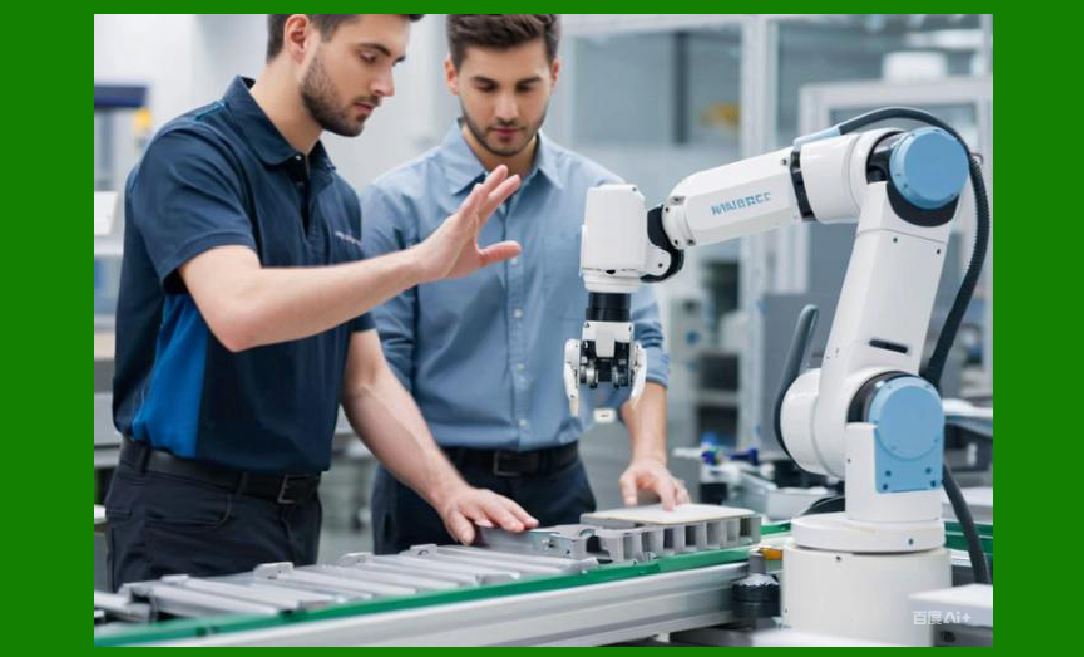
The future of robot screwdriving will be shaped by several trends. One trend is the use of collaborative robots. Collaborative robots, or cobots, are designed to work safely alongside humans. They have force sensors and lightweight arms. They can be used for screwdriving in small cells. They can be moved easily. They can be programmed easily. They are ideal for low-volume, high-mix production. They are also ideal for small and medium-sized enterprises. Cobots are already used for screwdriving in some electronics applications. Their use will grow. |
Another trend is the use of artificial intelligence. AI can be used to analyze torque curves. It can learn the difference between good and bad joints. It can detect subtle anomalies that traditional methods miss. It can predict driver bit wear. It can predict feeder jams. It can optimize the screwdriving process. AI can also be used for vision. It can find holes in complex backgrounds. It can check screws in difficult lighting. It can verify results with high accuracy. AI will make robot screwdriving smarter and more reliable. |
Another trend is the use of new screw designs. Some manufacturers are using screws with special coatings. Some are using screws with locking features. Some are using screws that can be driven with less torque. Some are using screws that can be removed with a standard tool. These new designs can make robot screwdriving easier and more reliable. They can also reduce the risk of loosening. They can improve quality. |
Another trend is the use of new driver technologies. Some drivers use piezoelectric motors. They are very fast and very precise. Some drivers use torque sensors with high bandwidth. They can detect problems in real time. Some drivers use wireless communication. They can send data to the controller without cables. These new drivers will improve speed, accuracy, and quality. |
Another trend is the use of digital twins. A digital twin is a computer model of the robot cell. It can be used to simulate the screwdriving process. It can be used to optimize the layout. It can be used to train operators. It can be used to predict maintenance. Digital twins are becoming more common in manufacturing. They will be used for robot screwdriving. |
Another trend is the use of cloud data. Torque data can be stored in the cloud. It can be accessed from anywhere. It can be analyzed by AI. It can be shared with suppliers. It can be used for warranty claims. Cloud data will make traceability easier and more powerful. It will also raise concerns about data security and privacy. Manufacturers will need to address these concerns. |

|
42.13 Detailed Summary |
This chapter has explained robot screwdriving in electronics and semiconductor applications. It has covered the basics of screwdriving, the reasons for using robots, the two main robot types, torque monitoring, screw feeding, vision, programming, industry applications, limitations, and future trends. The following is a detailed summary. |
Screwdriving is a common assembly task. It requires precise torque and downward force. Manual screwdriving is slow and inconsistent. Robot screwdriving is fast, consistent, and data-rich. Articulated robots and SCARA robots are the main types. Articulated robots are flexible and can reach complex spaces. SCARA robots are fast and stiff in the vertical direction. Both can be equipped with automatic feeders, torque-controlled drivers, and vision systems. |
Torque monitoring is the key to quality assurance. It measures the twisting force applied to the screw. It can detect cross-threading, stripping, missing screws, and other defects. It can provide traceability. It can enable predictive maintenance. There are several types of torque monitoring. Peak torque monitoring is simple. Torque curve monitoring is more advanced. Torque rate monitoring and angle monitoring are also used. Modern drivers combine these methods. |
Screw feeding is important for productivity. Vibratory bowl feeders are reliable. Blow feeders are fast. Tape and reel feeders are clean. Tray feeders are flexible. The choice depends on the application. Vision systems can find holes, check screws, and verify results. Error proofing can prevent mistakes. Programming requires teaching positions, setting torque parameters, and handling exceptions. Recipes make changeover fast. |
Robot screwdriving is used in many industries. In consumer electronics, it is used for smartphones, tablets, laptops, wearables, cameras, and game consoles. In computers and data storage, it is used for hard drives, servers, and solid-state drives. In telecommunications, it is used for base stations, routers, switches, and optical modules. In automotive electronics, it is used for engine control units, infotainment systems, advanced driver assistance systems, and battery management systems. In medical devices, it is used for pacemakers, surgical robots, and imaging systems. In aerospace electronics, it is used for avionics, radar, and communication systems. In semiconductor manufacturing equipment, it is used for wafer handlers, lithography machines, etch and deposition systems, and inspection systems. It is also used in furniture, appliances, toys, batteries, solar panels, wind turbines, railway, and shipbuilding. |
There are limitations and challenges. Screw variation, part variation, access, speed, cost, maintenance, and programming are all challenges. But the technology is improving. Collaborative robots, artificial intelligence, new screw designs, new driver technologies, digital twins, and cloud data are future trends. These trends will make robot screwdriving smarter, faster, and more reliable. |
|
In conclusion, robot screwdriving with torque monitoring is a mature and essential technology for electronics and semiconductor manufacturing. It improves quality, increases productivity, and provides traceability. It is used in a wide range of industries. It will continue to grow and improve. For anyone involved in electronics assembly, understanding robot screwdriving is important. This chapter has provided a comprehensive overview. It is hoped that it will be useful to engineers, managers, and students who are interested in this field. |
 cs@easiersoft.com