Chapter 40: Engine Assembly | 1. Summary | This chapter examines the integration of collaborative robots, often called cobots, into engine assembly operations. Engine assembly is one of the most demanding areas in industrial manufacturing because it combines heavy parts, precise tolerances, complex fastening sequences, and strict quality requirements. Traditionally, these tasks have been performed by human workers or by large, fenced-off industrial robots. In recent years, cobots have emerged as a practical middle path. They can work alongside people, they can be moved between stations, and they can be programmed for new tasks in hours rather than weeks. The result is a measurable improvement in cost, quality, and flexibility. In one representative case, cobot integration in engine assembly reduced annual operating costs by 41,602 dollars with a return on investment in one year and nine months, while ensuring correct torque sequences. This chapter explains how such results are achieved, what technical and organizational factors matter, and how the same principles apply across many industries. The discussion is written for a general technical audience, so it avoids formulas and tables and focuses on practical examples. | 
| 2. Why Engine Assembly Is a Special Case | Engine assembly sits at the heart of automotive and heavy equipment manufacturing. An engine contains hundreds of components, including the block, cylinder head, crankshaft, pistons, connecting rods, camshafts, valves, oil pump, water pump, intake manifold, exhaust manifold, fuel system, ignition system, and many sensors and actuators. Each component must be placed correctly, oriented correctly, and fastened to a specified torque. Some fasteners must be tightened in a precise sequence to avoid warping or leaking. Some joints require angle control after the initial torque. Some bolts are accessible only from one direction, and some are hidden behind other parts. | Human workers are flexible and can judge whether a part feels right, but they tire, they can lose concentration, and they can make mistakes when a task is repeated thousands of times. Large traditional robots are fast and strong, but they are dangerous to people nearby, so they must be fenced off. They also require significant programming effort and are not easy to move. Cobots are designed to be safe around people, easy to move, and easy to reprogram. That combination makes them attractive for engine assembly, where product variants change frequently and where floor space is often limited. | 
| 3. What a Cobot Is and What It Is Not | A cobot is a robot designed for direct interaction with humans in a shared workspace. It usually has a lightweight arm, integrated force sensing, and safety features such as speed and force limiting. It is not simply a small robot. The key difference is that a cobot can be certified to work without a fence under certain conditions, provided a risk assessment shows that contact forces and speeds are within safe limits. A cobot may still need a fence for some tasks, such as handling very hot or sharp parts, but in many engine assembly tasks it can share the same bench as a human. | A cobot is also not a universal solution. It is slower than a traditional robot, it has a smaller payload, and it cannot reach as far. It is best at tasks that require precision, repeatability, and moderate force, especially when the task changes often or when the robot must be moved. Engine assembly includes many such tasks, which is why cobots have found a home there. | 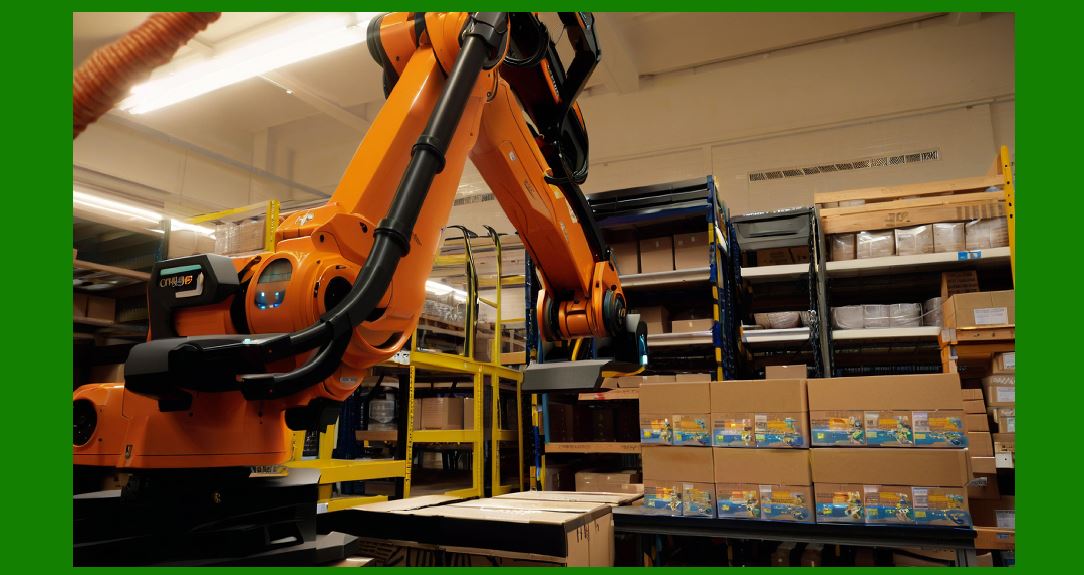
| 4. The Economics of Cobot Integration in Engine Assembly | The headline result in this chapter is a reduction in annual operating costs of 41,602 dollars with a return on investment in one year and nine months. To understand how such a number is reached, it helps to break down the cost elements. The initial investment includes the cobot arm, the end effector or gripper, the torque tool, the fixture, the safety sensors, the controller, the software, installation, and training. There may also be costs for integration with the existing manufacturing execution system and for validation. | The ongoing savings come from several sources. Labor cost is reduced because the cobot can perform part of the cycle while the human worker performs another part, or because one worker can oversee multiple cobot stations. Scrap and rework are reduced because the cobot applies the correct torque every time and verifies the result. Downtime is reduced because the cobot can work through breaks and shift changes. Quality audit costs are reduced because the cobot records every fastening operation. Energy and tool wear may also be reduced because the cobot applies force smoothly rather than in sudden bursts. | The payback period of one year and nine months is typical for a well-chosen cobot project in engine assembly. Projects with longer payback often fail because the task was not suitable, the integration was too complex, or the production volume was too low. Projects with shorter payback are possible when the cobot replaces a very expensive manual operation or when it solves a chronic quality problem. | 
| 5. The Importance of Correct Torque Sequences | Torque is a measure of how tightly a fastener is tightened. In engine assembly, torque is critical because too little torque can cause a joint to loosen, while too much torque can strip threads, stretch bolts, or crack the component. Many joints use a sequence of tightening steps. For example, a cylinder head may require tightening in a spiral pattern from the center outward, in several stages, with a final angle turn. If the sequence is wrong, the head may not seal properly, leading to compression leaks, coolant leaks, or oil leaks. | A cobot can be programmed to follow the exact sequence, and it can use a smart torque tool that reports the torque and angle for every fastener. If a fastener does not reach the specified torque, the cobot can stop the cycle and alert the operator. This capability is a major reason why cobots improve quality in engine assembly. The cobot does not get tired and does not skip a step. It also does not forget to record the result. | 
| 6. Task Selection for Cobots in Engine Assembly | Not every task in engine assembly is suitable for a cobot. Good candidates share several characteristics. The task should be repetitive, so the programming effort is justified. The task should require precision, so the cobot's repeatability adds value. The task should involve a payload within the cobot's capacity, typically a few kilograms to a few tens of kilograms depending on the model. The task should be in a workspace that can be shared safely with a human. The task should change often enough that a traditional robot would be too rigid, or the task should be moved often enough that a traditional robot would be too difficult to relocate. | Examples of good cobot tasks in engine assembly include applying sealant to a gasket surface, placing and starting bolts, tightening bolts in a sequence, installing small covers, inserting sensors, and performing visual checks with a camera. Examples of poor cobot tasks include lifting the entire engine block, which is too heavy, and reaching deep inside the engine where access is limited and the risk of collision is high. | 
| 7. A Representative Engine Assembly Cell | To make the discussion concrete, consider a representative engine assembly cell. The cell has a bench with a fixture that holds the engine block. A human worker stands on one side and a cobot stands on the other. The human worker installs the crankshaft and pistons, which require judgment and dexterity. The cobot then applies sealant to the oil pan mating surface, places the oil pan, and tightens the bolts in a sequence. The human worker then installs the timing cover and the water pump. The cobot tightens the cylinder head bolts in a spiral pattern with a torque tool. The human worker installs the intake manifold and the exhaust manifold. The cobot installs the spark plugs or glow plugs and tightens them to the correct torque. The human worker makes the final connections and performs a visual inspection. The cobot records every torque value and sends the data to the manufacturing execution system. | This division of labor plays to the strengths of both the human and the cobot. The human handles the tasks that require feel, judgment, and complex manipulation. The cobot handles the tasks that require repetition, precision, and documentation. The result is a faster cycle, better quality, and lower cost. | 
| 8. Safety Considerations | Safety is the first concern in any cobot installation. The relevant standard for collaborative robots is ISO 10218, which has parts for the robot itself and for the integration. There is also ISO TS 15066, which provides guidance on power and force limiting. The key idea is that the cobot must not apply a force or pressure that would injure a person. This is verified through a risk assessment that considers the body part that might be contacted, the speed of the robot, the shape of the end effector, and the stiffness of the contact. | In engine assembly, common safety measures include rounded end effectors, soft coverings on sharp edges, reduced speed when a person is near, and safety-rated monitored stop. A safety-rated monitored stop means that the cobot stops when a person enters the shared workspace and resumes when the person leaves. Another measure is hand guiding, where the operator can move the cobot by hand during teaching. Hand guiding is useful for programming but must be limited in speed and force during production. | It is important to remember that a cobot is not automatically safe. The end effector, the workpiece, and the fixture can all create hazards. A sharp edge on a bracket can cut a hand. A hot exhaust manifold can burn. A heavy tool can crush. The risk assessment must consider the whole application, not just the robot arm. | 
| 9. Programming and Teaching | One of the advantages of cobots is that they are easy to program. Many cobots use a handheld pendant with a graphical interface. The programmer can move the cobot to a position by hand, press a button to record the point, and then repeat for the next point. For tasks like torque sequencing, the programmer can select a pattern from a library and assign the torque values. For tasks like sealant dispensing, the programmer can set the speed and the bead width. | Advanced programming may use a camera to locate the part, so the cobot can adapt to slight variations in position. This is called vision guidance. It is useful when the fixture is not perfectly repeatable or when the part is presented in a tray. Force sensing can also be used to search for a hole or to verify that a part is seated. This is called force control. It allows the cobot to insert a pin or a bolt without jamming. | Teaching a cobot for engine assembly typically takes a few hours to a few days, depending on the complexity. This is much faster than teaching a traditional robot, which may take weeks. The fast teaching time is a major reason why cobots are economical for small and medium production volumes. | 
| 10. Integration with Tools and Fixtures | A cobot is only as good as its end effector and its tools. In engine assembly, common end effectors include grippers for parts, vacuum cups for flat surfaces, magnetic grippers for ferrous parts, and torque tools for fasteners. The torque tool may be mounted directly on the cobot arm or may be held in a fixture and presented to the cobot. The choice depends on the torque required, the access, and the cycle time. | Fixtures are also important. A good fixture holds the engine block securely, presents the fasteners at a consistent height, and allows the cobot to reach all the required points. The fixture may include sensors to confirm that the part is present and correctly oriented. It may also include a safety-rated door or light curtain to protect the operator during automatic operation. | Integration with the manufacturing execution system is essential for traceability. The cobot should receive the work order, including the engine variant and the torque specifications. It should send back the results, including the torque and angle for every fastener, the time, and the operator identification. This data is used for quality control, for warranty analysis, and for continuous improvement. | 
| 11. Quality and Traceability | Quality in engine assembly is not just about meeting specifications. It is about proving that specifications were met. A cobot with a smart torque tool can record every fastening operation. If a fastener is missed or if the torque is out of range, the system can flag the engine for rework. This prevents a defective engine from reaching the customer. | Traceability also helps when a problem is found later. If a batch of engines has a leak, the manufacturer can look at the torque records to see whether the bolts were tightened correctly. If the records show that the torque was correct, the problem may be in the gasket or the surface finish. If the records show that the torque was low, the problem may be in the tool or the programming. This kind of analysis is much easier with cobot-generated data than with manual records. | 
| 12. Flexibility and Changeover | Engine assembly plants often produce several variants of an engine on the same line. The variants may differ in displacement, in fuel type, in turbocharging, or in emissions equipment. Each variant may have different torque specifications, different fasteners, and different sequences. A cobot can handle these variations if it is programmed to recognize the variant and to select the correct program. | Changeover from one variant to another can be as simple as selecting a new program from the pendant or receiving a new work order from the manufacturing execution system. The fixture may need to be adjusted, and the tool may need to be changed, but the cobot itself does not need to be rebuilt. This flexibility is a major advantage over traditional hard automation, which may require mechanical changes and long downtime. | 
| 13. Comparison with Traditional Automation | Traditional automation in engine assembly often uses a dedicated machine for each task. For example, a cylinder head tightening station may have multiple spindles mounted on a frame, each spindle dedicated to one bolt. This approach is very fast and very repeatable, but it is also very rigid. If the engine design changes, the machine may need to be rebuilt. If the production volume drops, the machine may sit idle. If a spindle fails, the whole station may stop. | A cobot-based station is slower but more flexible. It can be reprogrammed for a new engine design. It can be moved to another line. It can continue working even if one tool fails, because the tool can be replaced. It can also be used for multiple tasks, such as tightening and sealant dispensing, by changing the end effector. For many manufacturers, the flexibility is worth the lower speed. | 
| 14. Comparison with Manual Assembly | Manual assembly is the most flexible of all. A human worker can adapt to a new engine design with minimal training. A human worker can feel whether a part is seated correctly. A human worker can reach into tight spaces. However, manual assembly is also variable. Two workers may apply different torque. A worker may forget a step. A worker may be injured by a heavy part or a sharp edge. A worker may be absent due to illness or vacation. | A cobot reduces variability and reduces the risk of injury. It does not replace the human worker entirely. In most engine assembly cells, the cobot and the human work together. The human does the tasks that require judgment, and the cobot does the tasks that require repetition. The result is a better balance of flexibility and consistency. | 
| 15. Applications in Other Industries | The principles described for engine assembly apply to many other industries. The following sections describe examples from different sectors. These examples are intended to show the breadth of cobot applications and to help readers see how the same technical and economic factors appear in different contexts. | 15.1 Automotive Transmission Assembly | Transmission assembly is similar to engine assembly in many ways. It involves heavy housings, precise shafts, many bearings, and many fasteners. Cobots are used to apply sealant to the transmission case, to place and tighten bolts, to install sensors, and to perform leak tests. The torque sequences are critical because the transmission case must seal against oil leaks. A cobot with a smart torque tool can ensure that every bolt is tightened correctly. In one plant, a cobot cell reduced the cycle time for the valve body assembly by 22 percent and reduced the leak test failure rate by 18 percent. | 15.2 Automotive Battery Pack Assembly | Battery pack assembly for electric vehicles is a fast-growing area for cobots. A battery pack contains many cells, modules, busbars, cooling plates, and a housing. The cells are sensitive to heat and to mechanical stress, so the assembly must be gentle and precise. Cobots are used to place cells, to connect busbars, to apply thermal paste, and to tighten the housing bolts. The torque requirements are often lower than in engine assembly, but the cleanliness requirements are higher. A cobot can work in a cleanroom environment and can record every connection for traceability. In one plant, a cobot cell reduced the scrap rate for busbar welding by 30 percent. | 15.3 Aerospace Engine Assembly | Aerospace engine assembly is even more demanding than automotive engine assembly. The tolerances are tighter, the materials are more expensive, and the safety requirements are stricter. Cobots are used for tasks such as applying sealant, installing blades, tightening bolts, and performing inspections. The cobot must be certified for aerospace use, and the documentation must be complete. In one aerospace plant, a cobot cell reduced the time for blade installation by 40 percent and reduced the risk of damage to the blades. | 15.4 Electronics Assembly | Electronics assembly involves small parts, fine pitch connectors, and delicate components. Cobots are used to place components, to apply solder paste, to tighten screws, and to perform tests. The payload is small, often less than one kilogram, but the precision is high. A cobot with a vision system can locate a connector and insert it without bending the pins. In one electronics plant, a cobot cell reduced the defect rate for connector insertion from 500 parts per million to 50 parts per million. | 15.5 Medical Device Assembly | Medical device assembly requires cleanliness, precision, and traceability. Cobots are used to assemble syringes, catheters, insulin pumps, and diagnostic devices. The cobot may work in a cleanroom or in a sterile environment. The materials may be delicate, and the consequences of a defect may be severe. A cobot can record every step and can verify that the correct components are used. In one medical device plant, a cobot cell reduced the labor cost per unit by 35 percent and improved the first-pass yield by 12 percent. | 15.6 Food and Beverage Packaging | Food and beverage packaging is a high-speed, high-variety environment. Cobots are used to pick and place products, to load trays, to seal packages, and to palletize. The cobot must be washdown-capable and must use food-grade lubricants. The safety requirements include protection against contamination and against sharp edges. In one food plant, a cobot cell reduced the labor cost for tray loading by 50 percent and reduced the risk of repetitive strain injury. | 15.7 Pharmaceutical Packaging | Pharmaceutical packaging is similar to food packaging but with stricter cleanliness and traceability. Cobots are used to fill vials, to cap bottles, to label packages, and to inspect products. The cobot must be validated for good manufacturing practice. The documentation must be complete. In one pharmaceutical plant, a cobot cell reduced the deviation rate for vial filling by 60 percent. | 
| 15.8 Metal Fabrication | Metal fabrication involves cutting, bending, welding, and finishing. Cobots are used for welding, for grinding, for polishing, and for machine tending. The environment is often harsh, with sparks, dust, and heat. The cobot must be protected with covers and must be rated for the environment. In one metal fabrication shop, a cobot cell reduced the welding time by 30 percent and improved the weld quality. | 15.9 Plastics Injection Molding | Plastics injection molding involves high temperatures, high pressures, and fast cycles. Cobots are used to remove parts from the mold, to trim flash, to inspect parts, and to pack them. The cobot must be able to withstand the heat and must be fast enough to match the molding cycle. In one molding plant, a cobot cell reduced the cycle time by 15 percent and reduced the scrap rate by 20 percent. | 15.10 Woodworking and Furniture | Woodworking and furniture assembly involves large, heavy panels, delicate finishes, and variable designs. Cobots are used to pick and place panels, to apply glue, to drill holes, and to assemble furniture. The cobot must be able to handle the weight and the size of the panels. In one furniture plant, a cobot cell reduced the labor cost for panel assembly by 25 percent and reduced the risk of back injury. | 15.11 Appliance Assembly | Appliance assembly involves large parts, such as refrigerator cabinets and washing machine drums, and small parts, such as wiring harnesses and sensors. Cobots are used to place parts, to tighten screws, to apply sealant, and to perform tests. The cobot must be able to reach into the appliance and must be safe around the operator. In one appliance plant, a cobot cell reduced the defect rate for door alignment by 40 percent. | 15.12 Shipbuilding | Shipbuilding involves large, heavy structures and a dynamic environment. Cobots are used for welding, for grinding, for painting, and for inspection. The cobot may be mounted on a mobile platform so it can move along the hull. The safety requirements include protection against falls and against collisions with other workers. In one shipyard, a cobot cell reduced the welding time by 35 percent and improved the weld quality. | 15.13 Construction | Construction involves uneven surfaces, variable materials, and a changing environment. Cobots are used for bricklaying, for drilling, for cutting, and for inspection. The cobot must be able to adapt to the surface and must be safe around workers. In one construction project, a cobot cell reduced the time for bricklaying by 50 percent and reduced the risk of injury. | 
| 15.14 Agriculture | Agriculture involves outdoor environments, variable weather, and delicate crops. Cobots are used for harvesting, for planting, for spraying, and for sorting. The cobot must be able to recognize the crop and must be gentle enough not to damage it. In one agricultural operation, a cobot cell reduced the labor cost for harvesting by 40 percent and reduced the crop damage. | 15.15 Warehousing and Logistics | Warehousing and logistics involve high volumes, many stock keeping units, and fast cycle times. Cobots are used for picking, for packing, for sorting, and for palletizing. The cobot must be able to recognize the item and must be fast enough to meet the throughput. In one warehouse, a cobot cell reduced the picking time by 60 percent and reduced the error rate. | 15.16 Laboratory Automation | Laboratory automation involves small volumes, precise measurements, and strict protocols. Cobots are used for sample handling, for pipetting, for analysis, and for storage. The cobot must be able to work in a sterile environment and must be accurate. In one laboratory, a cobot cell reduced the time for sample preparation by 70 percent and reduced the risk of contamination. | 15.17 Textile and Apparel | Textile and apparel manufacturing involves soft materials, variable shapes, and fast fashion. Cobots are used for cutting, for sewing, for folding, and for packing. The cobot must be able to handle the soft material without damaging it. In one apparel plant, a cobot cell reduced the labor cost for folding by 30 percent. | 15.18 Recycling and Waste Management | Recycling and waste management involve mixed materials, contamination, and a harsh environment. Cobots are used for sorting, for disassembly, and for inspection. The cobot must be able to recognize the material and must be robust. In one recycling plant, a cobot cell reduced the sorting error rate by 50 percent. | 15.19 Mining and Heavy Equipment | Mining and heavy equipment involve large parts, extreme conditions, and high safety risks. Cobots are used for inspection, for maintenance, and for assembly. The cobot must be able to withstand the conditions and must be safe. In one mining operation, a cobot cell reduced the maintenance time by 25 percent. | 15.20 Energy and Utilities | Energy and utilities involve dangerous environments, such as nuclear plants and offshore platforms. Cobots are used for inspection, for maintenance, and for repair. The cobot must be able to work in the environment and must be safe. In one nuclear plant, a cobot cell reduced the radiation exposure for workers by 80 percent. | 
| 16. Common Success Factors Across Industries | The examples above show that cobots can be used in many industries, but they also show that success depends on several common factors. The first factor is task selection. The task should be repetitive, precise, and within the cobot's payload and reach. The second factor is safety. The risk assessment must be thorough, and the safety measures must be appropriate. The third factor is integration. The cobot must work with the tools, the fixtures, and the information systems. The fourth factor is training. The operators and the maintenance staff must understand how to use and maintain the cobot. The fifth factor is management support. The project must have clear goals, a realistic budget, and a plan for measuring results. | 
| 17. Common Pitfalls | There are also common pitfalls. One pitfall is expecting too much too soon. A cobot is not a universal solution, and it will not solve every problem. Another pitfall is underestimating the integration effort. The cobot itself may be easy to program, but the fixtures, the tools, and the information systems may take much longer. Another pitfall is neglecting safety. A cobot is not automatically safe, and a poor risk assessment can lead to injuries. Another pitfall is failing to train the operators. If the operators do not understand the cobot, they may not use it effectively. Another pitfall is failing to measure results. Without measurement, it is impossible to know whether the project is successful. | 
| 18. The Future of Cobots in Engine Assembly | The future of cobots in engine assembly is likely to include more sensing, more intelligence, and more collaboration. Advanced vision systems will allow the cobot to recognize parts and to adapt to variations. Force sensing will allow the cobot to insert parts with less risk of damage. Machine learning will allow the cobot to optimize its own motions and to predict maintenance needs. Mobile cobots will allow the cobot to move between stations and to work on multiple tasks. Cloud connectivity will allow the cobot to share data with other machines and with the supply chain. | At the same time, the human role will change. Human workers will focus on tasks that require judgment, creativity, and complex manipulation. They will supervise the cobots, troubleshoot problems, and improve the process. They will need new skills, including programming, data analysis, and collaboration. Companies that invest in training will be best positioned to take advantage of the new technology. | 
| 19. Detailed Summary | This chapter has examined the integration of collaborative robots into engine assembly, using a representative case in which annual operating costs were reduced by 41,602 dollars with a return on investment in one year and nine months, while ensuring correct torque sequences. The chapter began by explaining why engine assembly is a special case, noting the combination of heavy parts, precise tolerances, complex fastening sequences, and strict quality requirements. It then defined what a cobot is and what it is not, emphasizing that a cobot is designed for direct interaction with humans in a shared workspace but is not automatically safe or universally applicable. | The chapter analyzed the economics of cobot integration, breaking down the initial investment and the ongoing savings. It explained the importance of correct torque sequences and described how a cobot with a smart torque tool can follow the exact sequence and record every result. It discussed task selection, noting that good candidates are repetitive, precise, within the cobot's capacity, and in a workspace that can be shared safely with a human. It described a representative engine assembly cell in which the human and the cobot divide the work according to their strengths. | The chapter covered safety considerations, including the relevant standards, the risk assessment process, and common safety measures such as rounded end effectors, soft coverings, reduced speed, and safety-rated monitored stop. It discussed programming and teaching, noting that cobots are easy to program and that vision guidance and force control can be used for advanced tasks. It covered integration with tools and fixtures, including the importance of the end effector, the fixture, and the manufacturing execution system. It discussed quality and traceability, noting that cobot-generated data is more complete and more reliable than manual records. It discussed flexibility and changeover, noting that cobots can handle multiple variants with minimal downtime. | The chapter compared cobots with traditional automation and with manual assembly, noting that cobots offer a balance of flexibility and consistency. It then surveyed applications in many other industries, including automotive transmission assembly, automotive battery pack assembly, aerospace engine assembly, electronics assembly, medical device assembly, food and beverage packaging, pharmaceutical packaging, metal fabrication, plastics injection molding, woodworking and furniture, appliance assembly, shipbuilding, construction, agriculture, warehousing and logistics, laboratory automation, textile and apparel, recycling and waste management, mining and heavy equipment, and energy and utilities. Each example showed how the same technical and economic factors appear in different contexts. | The chapter identified common success factors, including task selection, safety, integration, training, and management support. It identified common pitfalls, including expecting too much too soon, underestimating the integration effort, neglecting safety, failing to train operators, and failing to measure results. It looked to the future, noting that cobots will become more sensing, more intelligent, and more collaborative, and that human workers will need new skills. | 
| In conclusion, cobot integration in engine assembly is a proven approach that can reduce costs, improve quality, and increase flexibility. The key is to select the right tasks, to design the cell carefully, to address safety thoroughly, to integrate with tools and information systems, and to train the people who will work with the cobot. When these factors are in place, the results can be substantial, as the representative case in this chapter demonstrates. The same principles apply across many industries, making cobots a versatile and valuable tool for modern manufacturing. |
|
 cs@easiersoft.com