Chapter 34: Body-in-White Welding | Spot welding remains the dominant articulated robot application in automotive body assembly, with hundreds of robots per line. This chapter explores why resistance spot welding has held that position for decades, how a modern body-in-white welding shop is actually organized, what the robots and their tooling do hour after hour, and how the technology is spreading into other industries that need to join sheet metal at high volume. The emphasis throughout is on practical examples rather than theory, because the body shop is where robotics stops being an abstraction and becomes a physical, noisy, repetitious, remarkably reliable manufacturing system. | 
| 34.1 A Short Summary of What This Chapter Covers | Body-in-white, usually abbreviated BIW, is the stage of automotive manufacturing where bare stamped steel or aluminum panels are joined into the structural shell of the vehicle before paint and before any trim, glass, or powertrain is installed. The finished body-in-white is sometimes called the white body because it emerges from welding in raw metal, though in practice it may already carry a protective coating. Resistance spot welding is the single most common joining method at this stage, and articulated robots are the single most common way of applying it. A typical high-volume assembly line uses several hundred spot welding robots, arranged in cells and sub-lines, each performing a small number of welds at high speed and high repetition. This chapter explains the anatomy of those cells, the sequence of a body shop from underbody to framing to closure panels, the role of robot arms, welding guns, transformers, and positioners, and the quality and maintenance practices that keep the line running. It then surveys how the same approach appears in other industries, including appliance manufacturing, furniture and shelving, agricultural equipment, construction machinery, railcar fabrication, heating and ventilation products, electrical enclosures, and metal furniture. The chapter closes with a detailed consolidated summary. | 
| 34.2 Why Spot Welding Dominates the Body Shop | Spot welding dominates because it matches the physics and economics of automotive body assembly almost perfectly. Automotive bodies are made from thin sheets of steel, typically between about half a millimeter and three millimeters thick, often with several layers stacked where panels overlap. A spot weld joins those layers by passing a large electrical current through them while squeezing them together with copper alloy electrodes. The resistance at the interface between sheets generates heat, and a small lens-shaped nugget of molten metal forms and then solidifies, fusing the layers. The whole process takes a fraction of a second. There is no filler wire, no shielding gas, no consumable except the gradual wear of the electrode tips, and no need to rotate the workpiece or approach from a single ideal angle. A robot can carry a welding gun to hundreds of points on a body, press the tips against the metal, weld, and move on. | The advantages for mass production are substantial. Spot welding is fast, with weld times often measured in tenths of a second and complete robot cycles in a few seconds. It is forgiving of minor fit-up variation because the electrodes squeeze the panels together before current flows. It produces a joint that is strong in shear, which is how body panels load the welds in service. It is easily monitored because voltage and current during the weld reveal a great deal about nugget formation. It requires access from only one side of the joint, unlike many other welding processes, which means a robot can reach inside a door opening or under a floor pan and weld a flange that is hidden from the outside. And it is a mature, well-understood process with decades of metallurgical data behind it. | The alternative joining methods each have their place, and a modern body shop uses many of them, but none has displaced spot welding as the backbone. Laser welding produces elegant continuous seams and is used on visible surfaces and structural rails, but it demands tight fit-up and is less forgiving. MIG brazing and adhesive bonding appear where dissimilar materials or sealing requirements call for them. Self-piercing rivets and flow drill screws are common in aluminum-intensive bodies and in mixed-material joints where spot welding struggles. Clinching and hemming handle closures and flanges. Yet when engineers tally the total number of joints in a typical steel body, spot welds still number in the thousands per vehicle, and the robots that make them still number in the hundreds per line. | 
| 34.3 The Structure of a Body-in-White Shop | A body shop is not a single line but a collection of lines and cells that feed one another. The main flow usually begins with the underbody, where the floor pan, front and rear longitudinal members, and suspension mounting points are assembled. This underbody then travels to the main framing station, sometimes called the framing buck or geometry station, where the body sides, roof rail, and front and rear ends are brought together and welded into a rigid three-dimensional shell. From framing, the body moves through respot lines, where additional welds are added to complete the structure, and then to closure lines or to a separate closure shop where doors, hood, and liftgate are assembled and fitted. The painted body later receives those closures, but the closures themselves are welded subassemblies, so the closure shop mirrors the main shop on a smaller scale. | Each of these areas is divided into cells. A cell is a group of robots, fixtures, and conveyors that performs a defined set of operations on a defined family of parts. A framing cell might contain half a dozen large robots mounted on pedestals or overhead gantries, each carrying a heavy welding gun, all converging on a body that is held in a precise fixture. A respot cell might contain four to eight smaller robots on the floor, each welding a specific cluster of points. A closure cell might contain two or three robots welding a door inner to a door outer, with a hemming press nearby to fold the outer panel over the inner. | The number of robots per line varies with production volume, body complexity, and the degree of automation. A high-volume plant building several hundred thousand vehicles a year may have a body shop with six hundred to a thousand robots in total, spread across dozens of cells. A lower-volume plant or a plant building a body with more adhesive and rivet content may have fewer. The figure of hundreds of robots per line is not an exaggeration; it is the normal scale of the industry. | 
| 34.4 What a Spot Welding Robot Actually Does | A spot welding robot is an articulated arm, usually with six axes, though some heavy-duty welding robots use four or five axes when the gun orientation is fixed by a fixture. The arm carries a welding gun at its wrist. The gun may be a C-type gun, which has a C-shaped frame and approaches the joint from one side, or an X-type gun, which has a scissor-like action and is used where space is tight. The gun holds two electrodes, usually copper alloy with a domed or truncated tip. One electrode is fixed to the gun frame, and the other is driven by a pneumatic or servo actuator. When the robot reaches a weld point, the actuator closes the gun, squeezing the panels between the electrodes. A transformer, often mounted on the robot arm or on the gun itself, delivers a low-voltage, high-current pulse. The current flows through the electrodes and the panels, and the resistance at the sheet interfaces generates the heat that forms the nugget. | The robot then opens the gun, moves to the next point, and repeats. A single robot may make twenty to sixty welds per minute during a production cycle, depending on the distance between points, the thickness of the material, and the capabilities of the gun and transformer. In a line running at sixty jobs per hour, which is one body per minute, a robot with a thirty-second cycle time might perform ten to twenty welds per cycle. Multiply that by hundreds of robots, and the arithmetic explains why the body shop is often the most robot-dense part of an automotive plant. | The robot's motion is not arbitrary. Its path is taught or programmed offline so that the gun approaches each weld point along a safe trajectory, avoiding fixtures, other robots, and the body itself. The robot must also manage cable dress packs, the bundles of power, cooling water, and control cables that run along the arm. These dress packs are a common source of downtime because they flex with every motion, and their routing is a serious design concern. Modern robots use internal cable routing where possible, and simulation software is used to verify that the dress pack will not snag or stretch. | 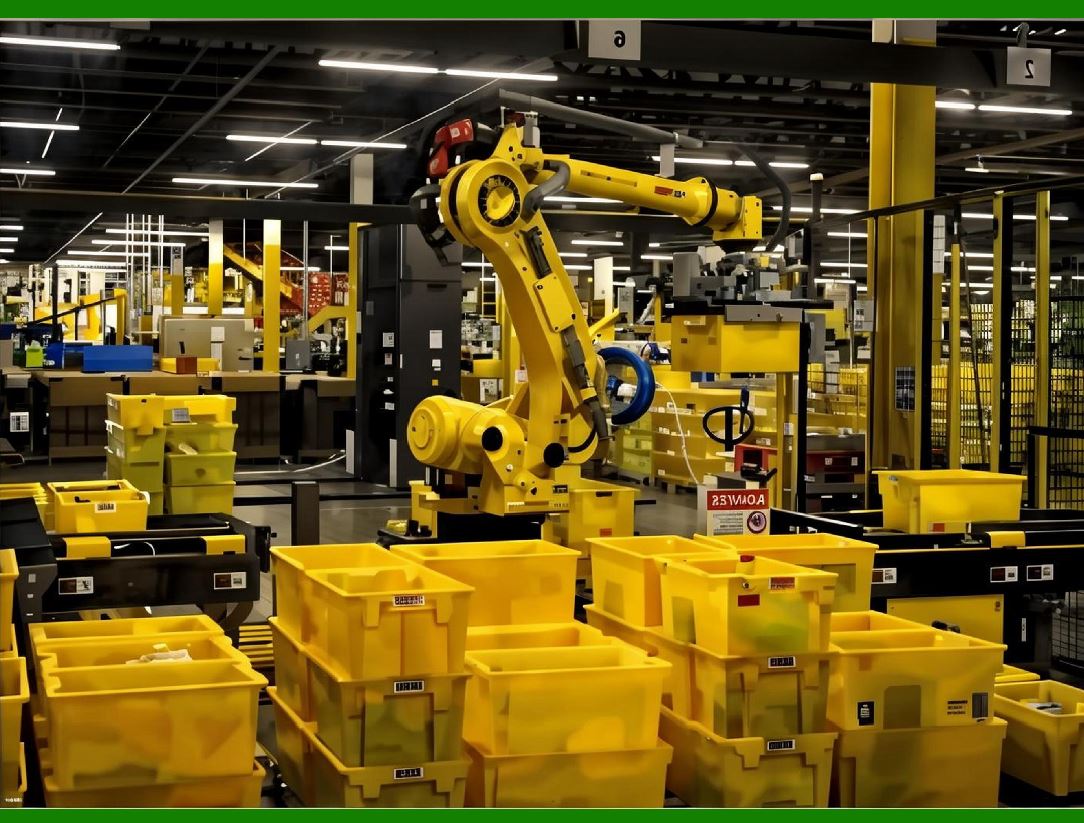
| 34.5 The Welding Gun and Its Supporting Systems | The gun is the business end of the robot, and its design has a large effect on productivity. A typical servo gun uses an electric motor to close the electrodes, which allows precise force control and faster response than a pneumatic gun. The force matters because the electrodes must press the panels together tightly enough to ensure good electrical contact and to contain the molten nugget. Too little force and the weld may expel molten metal or form a weak nugget. Too much force and the electrodes may indent the surface or deform the panels. | Cooling is essential. The electrodes and the gun arms carry water channels because the welding current heats them as well as the workpiece. A typical gun uses several liters of cooling water per minute, and the water is chilled and recirculated. If cooling fails, the electrodes overheat, wear rapidly, and may weld themselves to the sheet. | The transformer converts the plant's line voltage to the low voltage and high current needed for welding. Modern transformers use inverter technology, which is smaller and more efficient than the older AC transformers. The inverter also allows the weld current to be shaped, which improves nugget quality and extends electrode life. The weld controller, often integrated with the robot controller or mounted in a cabinet nearby, stores the weld schedules and monitors the process. It can adjust current and time based on feedback, and it can flag a suspect weld for inspection. | Electrode wear is a fact of life. Each weld consumes a tiny amount of copper and gradually changes the tip shape. As the tip flattens, the contact area grows, current density drops, and the nugget shrinks. To compensate, the controller may increase current or weld time, a practice called stepper or taper. Eventually the electrode must be dressed, which means machining the tip back to its original shape, or replaced. Automatic tip dressing is common: a robot or a dedicated dresser brings a cutter to the gun, and the gun closes on it to shave the tips. This happens every few hundred to a few thousand welds, depending on the material and coating. | 
| 34.6 From Underbody to Framing: A Walk Through the Process | The underbody line is where the body begins to take shape. Stamped floor panels, often several pieces, are loaded into a fixture and welded together. Robots weld the seams and the structural members that will carry the seats, the suspension, and the fuel or battery system. The underbody is large and relatively flat, so the robots can be arranged on both sides and overhead, with the body indexed on a conveyor or a shuttle. The welds here are often critical for crash performance, so they are monitored closely. | The underbody then moves to the framing station, which is the heart of the body shop. Here the body sides, which have been assembled separately, are brought into position, along with the roof rail, the front end, and the rear end. A large fixture, sometimes called a framing gate or a geometry fixture, closes around the body to hold all the parts in precise alignment. Then a group of robots, often six to ten, performs a set of welds that lock the geometry. These welds are sometimes called the critical welds because if the body is distorted at this stage, every subsequent panel will be misaligned. The framing station is therefore heavily instrumented, and the robots are often mounted on rigid pedestals or overhead rails to minimize deflection. | After framing, the body travels through the respot lines. These are long lines of robots, often arranged in cells on either side of the conveyor, that add the remaining welds. A respot line may have fifty to two hundred robots, each performing a few welds as the body passes. The work is divided so that no single robot is overloaded and so that the line can be balanced. If one robot is slow, it becomes a bottleneck, so engineers spend considerable effort balancing the weld distribution. | 
| 34.7 Closure Panels and Subassemblies | Doors, hoods, liftgates, and fenders are assembled in the closure shop. A door is typically made of an inner panel and an outer panel. The inner panel carries the hinges, the latch, the window regulator, and the impact beam. The outer panel is the visible surface. The two are joined by a combination of spot welds and hemming. Hemming is a process where the edge of the outer panel is folded over the edge of the inner panel, creating a smooth, finished edge. Robots often handle the hemming, either by carrying a hemming tool or by loading the panels into a hemming press. | Spot welding is used where the hem is not practical, such as around the window frame or along internal reinforcements. The closure shop uses smaller robots than the main body shop because the parts are smaller and the guns are lighter. The robots may be mounted on the floor or on a pedestal, and they often work in pairs, one on each side of a fixture, so that both sides of a door can be welded at once. | Hoods and liftgates are similar, though they may use different materials. Aluminum hoods are increasingly common, and they require different welding parameters or different joining methods entirely, such as self-piercing rivets or adhesive. A mixed-material body shop may have separate cells for steel and aluminum, with strict separation to avoid galvanic corrosion. | 
| 34.8 The Role of Fixtures, Conveyors, and Positioners | Robots do not work alone. They depend on fixtures that hold the parts in the correct position, and on conveyors that move the parts from station to station. A fixture is a dedicated tool, usually built for a specific body style, that clamps the panels in place. It must be rigid, because any movement during welding will distort the body. It must also allow the robots to reach the weld points, which means the fixture arms and clamps are designed around the robot paths. This is a complex engineering task, and it is one reason why a new body style takes years to plan. | Conveyors in the body shop are often indexing conveyors, which move the body a fixed distance and then stop. The stop must be precise, because the robots are programmed to weld at specific coordinates. Some lines use pallets or skids that carry the body, while others use overhead conveyors or floor-mounted friction drives. In flexible lines, the conveyor may handle several body styles, and the fixtures are designed to accommodate the differences. This flexibility is expensive, but it allows a plant to build multiple models on the same line, which is increasingly common. | Positioners, also called trunnions or rotisseries, hold the body and rotate it so that robots can reach the underside or the roof. A positioner is essentially a large two-axis manipulator, and it must be coordinated with the robots so that the body is in the correct orientation when the robots arrive. In some cells, the positioner moves the body while the robots weld, which requires careful synchronization. | 
| 34.9 Programming, Simulation, and Offline Tools | Programming a body shop is a major undertaking. Teaching hundreds of robots by hand would take months, so most programs are created offline using simulation software. Engineers build a three-dimensional model of the cell, including the robots, guns, fixtures, and body, and then define the weld points. The software calculates the robot paths, checks for collisions, and estimates cycle times. The resulting programs are downloaded to the robots and then refined on the shop floor, a process called online teaching or touch-up. | Simulation is valuable because it catches problems before the line is built. A robot that cannot reach a weld point, or a gun that collides with a fixture, is much cheaper to fix in software than in steel. Simulation also helps with line balancing, because it shows how long each robot takes and where the bottlenecks will be. Modern simulation tools can model the welding process itself, including electrode wear and cooling, and can predict quality issues. | Despite the power of simulation, the real world always differs from the model. Fixtures are not perfectly rigid, panels vary, and robots have tolerances. So a new line always requires a period of debugging, during which the programs are adjusted and the line is brought up to speed. This period can last weeks or months, and it is one of the most expensive parts of a new model launch. | 
| 34.10 Quality Control and Weld Monitoring | Quality in spot welding is largely about the nugget. A good weld has a nugget of a certain minimum diameter, typically around four to five times the square root of the sheet thickness, and it is free of porosity, cracks, and expulsion. If the nugget is too small, the joint may fail in a crash. If there is expulsion, molten metal has been ejected, which can leave a surface defect and reduce nugget size. If there are cracks, the weld may fail under fatigue. | Because the nugget is hidden between the sheets, it cannot be inspected visually. Instead, quality control relies on process monitoring and destructive testing. The weld controller monitors current, voltage, resistance, and energy, and it can compare these to a reference curve. If the measurements deviate, the controller flags the weld. Some systems use adaptive control, which adjusts the current in real time to compensate for varying conditions, such as a shunt path through an adjacent weld or a change in sheet thickness. | Destructive testing is done on samples. A sample body or a coupon is welded with the same parameters, and then the welds are peeled apart or sectioned to measure the nugget. This is called a tear-down or a peel test. It is slow and expensive, but it is the only way to be certain that the process is producing good welds. In high-volume production, tear-downs are done periodically, and the results are used to adjust the process. | Non-destructive testing is also used. Ultrasonic inspection can detect the nugget size and detect voids, and it is increasingly common in body shops. The robot can carry an ultrasonic probe and inspect welds automatically, which allows a much higher sampling rate than destructive testing. This is especially valuable for critical welds, such as those in the safety cage. | 
| 34.11 Maintenance and Uptime | A body shop runs on uptime. If a robot goes down, the line stops, and the cost of a stopped line is enormous. Maintenance is therefore a major focus. Robots are designed for high duty cycles, and they are maintained on a schedule that includes lubrication, belt inspection, and cable replacement. The welding guns require more attention: electrodes are dressed or replaced, cooling water is checked, and transformers are inspected. The dress packs, which carry cables and hoses to the gun, are a common failure point, and they are often replaced on a preventive schedule rather than waiting for a failure. | Downtime is also caused by fixture problems, conveyor faults, and software issues. A modern body shop uses condition monitoring to predict failures. Vibration sensors on robots, temperature sensors on transformers, and current sensors on guns can detect early signs of wear. The data is fed to a maintenance system, which schedules repairs before a failure occurs. This is part of the broader trend toward predictive maintenance, and it is especially valuable in a body shop because the cost of unplanned downtime is so high. | 
| 34.12 Beyond Automotive: Spot Welding Robots in Other Industries | The automotive body shop is the largest user of spot welding robots, but it is not the only one. The same technology appears wherever thin sheet metal must be joined at high volume, and the examples below show how the automotive approach is adapted to different products. | 34.12.1 Appliance Manufacturing | Appliance manufacturing is the closest cousin to automotive body assembly. A refrigerator cabinet, a washing machine tub, an oven frame, and a dishwasher housing are all made from stamped steel sheets that are spot welded together. The volumes are high, though not as high as automotive, and the parts are smaller and lighter. Robots in an appliance plant often carry smaller C-type guns and work on fixtures that hold the cabinet or tub. A refrigerator line may use dozens of robots to weld the cabinet, the door, and the internal shelves. The welding is often visible after painting, so surface quality matters, and the robots may use softer weld schedules to avoid indentation. The appliance industry also uses a lot of projection welding, where the weld is made at a dimple or projection stamped into the sheet, and robots can carry projection welding guns as well. | 34.12.2 Furniture and Shelving | Metal furniture, such as filing cabinets, desks, shelving units, and storage racks, is another user of spot welding robots. The parts are often thin-gauge steel, and the welds are typically small and numerous. A shelving unit might have dozens of welds along its edges and supports. Robots are used because the volumes are high enough to justify automation and because the welds must be consistent for strength and appearance. The furniture industry often uses smaller robots, sometimes mounted on a common base, and the fixtures are designed for quick changeover between product variants. Powder coating is common after welding, so the welds must be clean and free of spatter. | 34.12.3 Agricultural Equipment | Agricultural equipment, such as tractors, combines, and implements, uses spot welding for cabs, panels, and some structural components. The volumes are lower than automotive, but the parts are larger and heavier, so the robots are often heavy-duty models with long reach. A tractor cab might be welded in a cell with two or three large robots, each carrying a heavy gun. The welding is often combined with arc welding for the thicker sections, so the robot may carry a dual-purpose tool or the cell may have separate robots for each process. The environment is dirtier than an automotive plant, so the robots are often sealed and the maintenance schedule is more frequent. | 34.12.4 Construction Machinery | Construction machinery, such as excavators, loaders, and cranes, uses spot welding for operator cabs, engine enclosures, and some body panels. The parts are large and the volumes are moderate, so the robots are typically heavy-duty and the fixtures are robust. The welding may be done on a positioner that rotates the cab so that the robot can reach all sides. Because the products are often built to order, the line must be flexible, and the robots may be programmed to handle several variants. The welds are often critical for safety, so the quality control is strict. | 34.12.5 Railcar Fabrication | Railcar fabrication, including light rail vehicles, subway cars, and some freight cars, uses spot welding for stainless steel and aluminum bodies. Stainless steel railcars are often spot welded because the material is difficult to weld with other processes. The bodies are large, so the robots are mounted on gantries or on traveling columns that move along the car. The welding is often done from one side, with the gun reaching through an opening. The volumes are lower than automotive, but the cars are long and the number of welds is high, so robots are used for consistency and speed. Aluminum railcars may use friction stir welding for the long seams and spot welding for the attachments. | 
| 34.12.6 Heating, Ventilation, and Air Conditioning Products | HVAC products, such as furnaces, air handlers, and ductwork, use spot welding for cabinets and panels. The parts are often galvanized or prepainted, which can affect welding because the coating interferes with electrical contact. The robots may use special electrodes or weld schedules to penetrate the coating. The volumes are moderate, and the parts are often large and awkward, so the robots are chosen for reach and payload. The welding is often followed by a leak test, because the cabinets must be airtight. | 34.12.7 Electrical Enclosures and Control Cabinets | Electrical enclosures, such as switchgear cabinets, control panels, and server racks, are made from sheet steel or aluminum and are often spot welded. The welds must be strong and clean, and the cabinets must be dimensionally accurate so that the doors and panels fit. Robots are used because the volumes are high and the welds are repetitive. The welding is often done on a fixture that holds the cabinet square, and the robots may weld both the frame and the internal mounting plates. Galvanized and painted steels are common, so the welding parameters must be adjusted. | 34.12.8 Metal Office Furniture and Partitions | Metal office furniture, including desks, cabinets, and partitions, uses spot welding for the frames and panels. The parts are often visible, so the welds must be cosmetically acceptable. The robots may use small guns and low forces to avoid marking the surface. The volumes are moderate, and the products are often customized, so the line must be flexible. Robots with quick-change tooling and programmable fixtures are common. | 34.12.9 Automotive Supplier Subassemblies | Beyond the vehicle assembly plant, automotive suppliers use spot welding robots to build subassemblies such as seat frames, exhaust components, and suspension parts. A seat frame may be welded in a cell with two or three robots, and the welds must meet safety standards. An exhaust system may use spot welding for the heat shields and brackets. These suppliers often run smaller lines than the OEMs, but the technology is the same. | 34.12.10 Battery Enclosures and New Energy Products | The growth of electric vehicles has created a new application for spot welding robots: battery enclosures and module housings. These are often made from aluminum or steel, and they must be sealed and strong. Spot welding is used for some joints, while other joints use laser welding or rivets. The robots are often the same models used in body shops, but the fixtures and quality control are adapted to the new requirements. This is a rapidly evolving area, and it shows that spot welding is not a static technology. | 
| 34.13 How Other Industries Adapt the Automotive Model | The industries above do not simply copy the automotive body shop. They adapt it. The main differences are scale, part size, material, and flexibility. Automotive body shops are built for very high volume and long product life, so they use dedicated fixtures and highly optimized robot paths. Appliance and furniture plants often have shorter product lives and more variants, so they use flexible fixtures and quick-change tooling. Agricultural and construction equipment plants have larger parts and lower volumes, so they use heavy-duty robots and positioners. Railcar plants have very large parts and low volumes, so they use gantries and traveling robots. | Material also drives adaptation. Galvanized steel, which is common in appliances and HVAC, has a zinc coating that increases contact resistance and can alloy with the copper electrodes, so the electrodes wear faster and the weld schedules must be adjusted. Aluminum, which is common in automotive closures and railcars, has high thermal and electrical conductivity, so it requires higher current and shorter weld times, and it can form brittle intermetallic compounds if the weld is not controlled. Coated steels, such as those with zinc or organic coatings, require special electrode materials and dressing schedules. | Flexibility is another driver. Automotive lines are often dedicated to one or two body styles, but supplier lines and furniture lines may run many variants. This means the robots must be reprogrammed frequently, and the fixtures must be reconfigurable. Quick-change grippers and tool changers are common, and the robot controller stores many programs. Simulation and offline programming are even more important in these environments because the changeover time is short. | 
| 34.14 The Human Role in a Robot Body Shop | Despite the high level of automation, humans remain essential in a body shop. They load and unload parts, inspect welds, maintain robots, and troubleshoot problems. They also design the line, program the robots, and improve the process. The skills required are a mix of mechanical, electrical, and software knowledge, and they are in high demand. In many plants, the robot technicians are among the most skilled workers on the floor, and their ability to keep the line running is a major competitive advantage. | Safety is a constant concern. Robots move fast and carry heavy guns, so the work area is fenced or guarded with light curtains and safety scanners. When a human enters the cell, the robots must stop or slow down. Modern safety systems allow the robots to operate at reduced speed when a person is nearby, which improves productivity while maintaining safety. Collaborative robots, which are designed to work alongside humans, are beginning to appear in body shops for tasks such as inspection and small-part welding, but the high forces and speeds of spot welding mean that most welding robots remain in guarded cells. | 
| 34.15 Trends and the Future | Spot welding robots are a mature technology, but they are still evolving. One trend is the increasing use of aluminum and mixed materials, which requires new joining methods and new robot capabilities. Another is the use of more sensors and data, which allows better quality control and predictive maintenance. A third is the integration of robots with other processes, such as adhesive dispensing and riveting, so that a single cell can perform multiple joining operations. A fourth is the use of lighter, faster robots with better energy efficiency, which reduces operating costs. A fifth is the growth of electric vehicles, which is creating new body structures and new welding challenges. | The basic principle of spot welding, however, is unlikely to change. It is too fast, too cheap, and too reliable to be displaced easily. For the foreseeable future, the body shop will remain a place where hundreds of articulated robots, each carrying a welding gun, quietly and repetitively build the shells of the vehicles we drive. | 
| 34.16 Detailed Summary | This chapter has examined body-in-white welding as the dominant application of articulated robots in automotive assembly and as a model that other industries adapt. The key points are as follows. Spot welding dominates because it is fast, forgiving, strong in shear, requires access from one side, and is easily monitored and controlled. A body shop is organized into underbody, framing, respot, and closure areas, with cells of robots performing a few welds each at high speed. A typical high-volume line uses hundreds of robots, and the total number of welds per vehicle is in the thousands. A spot welding robot carries a gun with two electrodes, a transformer, and a cooling system, and it presses the electrodes against the panels while current flows to form a nugget. The gun may be C-type or X-type, pneumatic or servo, and the electrodes are dressed or replaced as they wear. The robot's path is programmed offline and refined on the floor, and simulation is used to avoid collisions and balance the line. Fixtures, conveyors, and positioners hold and move the body, and they must be designed around the robots. Quality control relies on process monitoring, destructive tear-downs, and increasingly on non-destructive ultrasonic inspection. Maintenance is a major focus because downtime is expensive, and predictive maintenance is becoming common. Beyond automotive, spot welding robots are used in appliance manufacturing, furniture and shelving, agricultural equipment, construction machinery, railcar fabrication, HVAC products, electrical enclosures, metal office furniture, automotive supplier subassemblies, and battery enclosures. These industries adapt the automotive model by changing the scale, part size, material, and flexibility of their lines. Galvanized and aluminum materials require different electrodes and weld schedules. Humans remain essential for loading, inspection, maintenance, programming, and troubleshooting, and safety systems protect them from the robots. The future of spot welding robots lies in new materials, more sensors, integrated joining processes, lighter and more efficient robots, and the growth of electric vehicles. The fundamental appeal of the process, however, remains unchanged: it is a fast, reliable, and economical way to join sheet metal at high volume, and it will continue to be the backbone of body-in-white assembly for many years to come. |
|
 cs@easiersoft.com