Chapter 6. The 2.6 kHz Corner: Why a Single Number Decides Whether a Scanner Sees Edges or Sees Noise |
Summary of This Chapter |
This chapter examines a seemingly modest design choice that sits at the heart of every analog laser scanner: the high-pass corner frequency. At approximately 2.6 kHz, a scanner's signal chain discards the slow, unwanted undulations of ambient lighting while preserving the fast transitions that encode barcode data. We will explore why this corner sits where it does, what happens when it is set too high or too low, and how this single filter decision ripples outward into industries as varied as grocery retail, parcel logistics, automotive manufacturing, pharmaceutical serialization, and clinical laboratory sample tracking. The goal is not to turn the reader into a filter designer, but to show that the 'boring' analog front end is where the physical world of photons first becomes the digital world of bits, and that getting this transition right is a prerequisite for every reliable scan a business depends on. |
|
1. The Problem the Corner Solves: Fluorescent Light and the Barcode Edge |
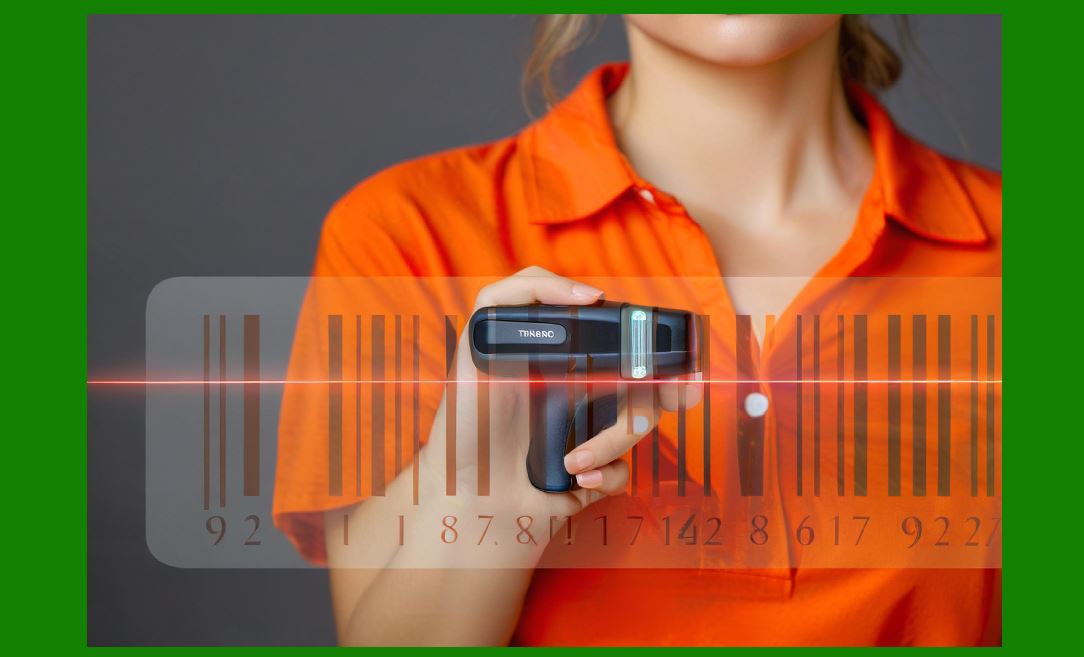
Imagine holding a laser scanner in a grocery store aisle. The red laser spot dances across a cereal box. The photodetector inside the scanner does not see a clean pattern of black and white bars. It sees the laser light reflected from the label, yes, but it also sees the flicker of the overhead fluorescent tubes. A fluorescent lamp does not emit a steady glow; it pulses at twice the mains frequency. In a 50 Hz country, that means a 100 Hz modulation. In a 60 Hz country, it is 120 Hz. This flicker is invisible to the human eye, but it lands squarely on the photodetector along with the barcode signal. If the scanner amplified everything the photodetector produced, the resulting waveform would be a barcode signal riding on a large, slow wave of lamp modulation. The digitizer that follows would have no reliable way to tell where a bar begins and a space ends, because the threshold it uses to make that decision would be dragged up and down by the lighting. |
The high-pass filter exists to remove that slow wave. A corner frequency of 2.6 kHz means that signals oscillating slower than roughly 2,600 times per second are attenuated, while faster variations pass through. The 100 Hz or 120 Hz fluorescent modulation is far below this corner and is therefore pushed down to a negligible level. The barcode signal, however, is built from transitions between black and white bars. At a typical scan speed and a reasonable print density, those transitions produce frequency content that extends well above 2.6 kHz. The filter, in other words, is a bouncer at the door: it turns away the slow, uninvited guests and lets the fast, information-bearing guests through. |
This is not a theoretical nicety. It is the difference between a scanner that works under the harsh lighting of a warehouse dock and one that stutters every time a fluorescent fixture hums nearby. The 2.6 kHz figure is a compromise, and like all engineering compromises, it carries consequences that reach far beyond the circuit board. |
|
2. Why Not HigherThe Cost of Rejecting Too Much |
If 2.6 kHz is good, why not set the corner at 10 kHz and reject even more of the low-frequency garbageThe answer lies in what a high-pass filter does to the edges themselves. A barcode edge, in the time domain, is a rapid change from one reflectance level to another. The sharper that change, the more high-frequency content it contains. But no edge is infinitely sharp. The laser spot has a finite size, the printing has finite resolution, and the label may be slightly curved or scuffed. These physical realities blur the edge, spreading its energy over a finite time window. If the high-pass corner is pushed too high, the filter begins to attenuate not just the lamp flicker but also the legitimate low-frequency components of the edge transition itself. |
The practical consequence is a phenomenon that scanner designers call 'edge droop.' The differentiated signal that the filter produces begins to lose amplitude for wider bars and spaces, and the timing of the zero crossings that mark each transition shifts slightly. A small shift is tolerable; the digitizer can still make a decision. But as the corner moves higher, the signal-to-noise ratio for wider elements degrades, and the scanner's ability to decode labels at the extremes of its depth of field or at oblique angles collapses. The scanner may still read pristine labels on a flat surface at the sweet spot of its focus, but the moment a cashier tilts a can of soup or a warehouse worker scans a label wrapped around a cylindrical package, the decode fails. |
There is also a systems-level cost. The high-pass filter does not operate in isolation. It feeds a differentiator, then a compression stage, then a comparator. Each stage has its own bandwidth and its own noise contribution. Pushing the high-pass corner upward forces the subsequent stages to work harder, consuming more power and generating more noise. In a handheld scanner running on a battery, that matters. In a fixed-mount scanner operating in a freezer aisle, where cold temperatures already degrade the performance of some components, it matters even more. The 2.6 kHz corner is, in part, a recognition that the filter must reject the lamp without rejecting the label, and that the margin for error is not large. |

|
3. Why Not LowerThe Transient Problem and the Baseline Wander |
The opposite temptation is equally instructive. If 2.6 kHz is safe, why not set the corner at 500 Hz and be even gentler on the barcode edgesThe fluorescent flicker at 100 or 120 Hz would still be attenuated, though less aggressively. The edge information would be preserved with even greater fidelity. The problem here is not steady-state frequency response but transient behavior. A high-pass filter with a very low corner has a long time constant. When the scanner starts up, or when it moves from a dark region to a bright one, or when the label reflectance changes abruptly because the operator has moved from a white shelf edge to a black product, the filter's output takes time to settle. During that settling time, the baseline against which the digitizer makes its decisions is drifting. |
This drift is called baseline wander, and it is insidious. A digitizer that uses a fixed threshold will misread edges when the baseline moves. A digitizer that uses an adaptive threshold can track the wander, but only up to a point; if the wander is fast enough, the adaptive loop itself becomes a source of error. The 2.6 kHz corner is high enough that the filter recovers quickly from transients, keeping the baseline stable on the timescale of a single scan line. A lower corner would make the scanner more sensitive to the label's large-scale reflectance variations and to the operator's hand movements, both of which produce exactly the kind of slow baseline shifts that the high-pass stage is supposed to eliminate. |
There is a second, subtler reason. The photodetector and the first amplifier stage inevitably produce low-frequency noise, including 1/f noise and thermal drift. A very low corner would allow more of this noise to reach the digitizer, where it would compete with the genuine edge information. The 2.6 kHz corner represents a deliberate choice to let the analog front end clean up the signal before it reaches the decision-making circuitry, rather than relying on later digital processing to sort out a mess that could have been avoided. |

|
4. The Corner in Context: What Else Lives in the Signal Chain |
To understand why 2.6 kHz is the right number, it helps to see where the filter sits relative to its neighbors. The signal chain of a laser scanner begins with a photodiode that converts reflected light into a current. That current is converted to a voltage by a transimpedance amplifier. The transimpedance stage has its own bandwidth, and its noise performance sets the floor for everything that follows. The high-pass filter comes next, often implemented as a passive RC network or as part of an active differentiator. The filtered signal is then amplified and compressed. Compression is important because the range of reflected light levels in the real world is enormous: a white label under direct laser illumination returns far more light than a gray label at the edge of the scan pattern. Without compression, the amplifier would either saturate on bright labels or fail to amplify faint ones sufficiently. The compressed signal finally reaches a comparator, which makes the binary decision: bar or space. |
The 2.6 kHz corner interacts with every one of these stages. If the transimpedance amplifier has a limited bandwidth, the high-frequency content that the filter is supposed to pass may already be attenuated before it reaches the filter. If the compression stage introduces phase shift, the timing of the zero crossings that the comparator detects may be distorted. The corner frequency is not a standalone specification; it is a statement about the intended operating envelope of the entire analog chain. When a scanner datasheet boasts a certain depth of field or a certain minimum element width, the 2.6 kHz corner is one of the quiet assumptions behind that boast. |
|
5. Retail Checkout: Where the Corner Meets the Customer |
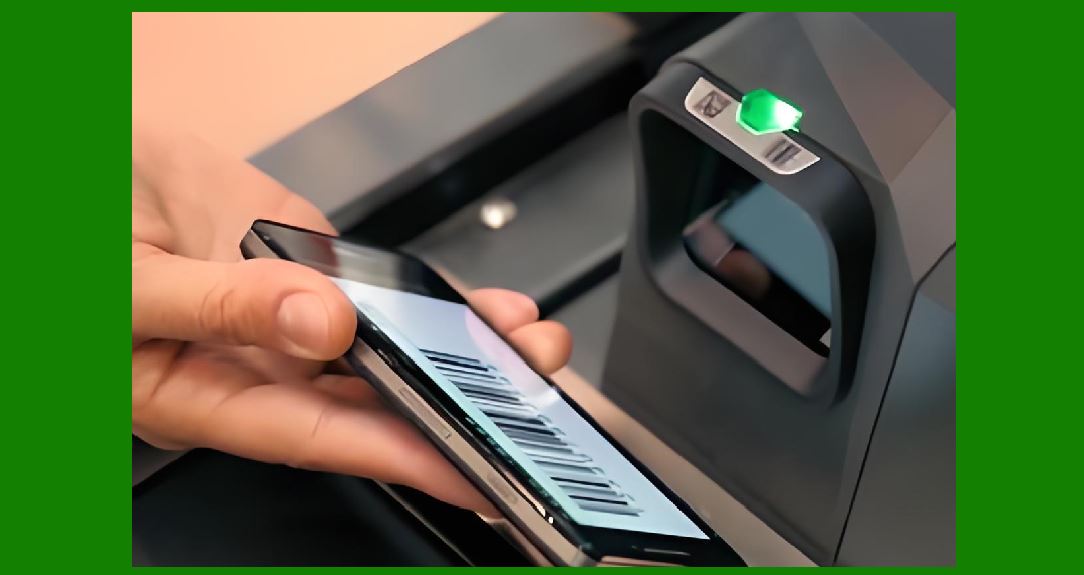
The most familiar application of the laser scanner is the retail checkout lane. Here the 2.6 kHz corner does its work under some of the most demanding lighting conditions imaginable. Supermarket ceilings are often crowded with fluorescent fixtures, and the checkout lane may be directly beneath one. The scanner must read a barcode on a product that is being moved by a cashier at a varying speed, sometimes tilted, sometimes partially obscured by a hand. The label itself may be wrinkled, scuffed, or printed with less than perfect registration. |
At the checkout, the consequences of a bad high-pass corner are immediately visible as a slowdown. A scanner with a corner set too low may struggle under the flickering lights, producing intermittent no-reads that force the cashier to re-scan. A scanner with a corner set too high may read the flat labels on boxed goods but fail on the curved surface of a bottle or the soft, reflective plastic of a bag of chips. The 2.6 kHz compromise is what allows a single scanner design to handle the enormous variety of products that pass through a modern grocery lane, from a flat cereal box to a cylindrical can to a shrink-wrapped cucumber. |
The retail environment also illustrates why the corner must be stable across temperature and age. A checkout scanner runs for hours at a time, often in a location where the ambient temperature swings from a cold morning to a warm afternoon. If the corner frequency drifts with temperature, the scanner's performance will drift with it. The 2.6 kHz figure is chosen with enough margin that ordinary component tolerances and temperature variations do not push the filter into the danger zones described earlier. This is not glamorous engineering, but it is the kind of engineering that makes a difference between a scanner that works every time and one that works most of the time. |
|
6. Parcel Logistics: Speed, Volume, and the Harsh Light of the Sorting Hub |
Logistics and parcel sorting operations present a different set of challenges. A high-speed conveyor moves parcels past a fixed scanner at rates that can exceed several meters per second. The scanner must capture the barcode on a label that may be facing at an awkward angle, partially covered by tape, or printed on a thermal printer that is running low on ribbon. The lighting in a sorting hub is often a mix of fluorescent, LED, and high-bay fixtures, and the scanner may be mounted near a loading dock door that opens to daylight, creating rapid transitions in ambient illumination. |
At high conveyor speeds, the barcode signal's frequency content shifts upward. A label moving faster produces faster transitions, which means the high-pass corner can be higher without losing edge information. But the corner cannot be raised arbitrarily because the same scanner must also read labels on parcels that are nearly stationary, such as those being manually inducted onto the conveyor. The 2.6 kHz corner serves as a middle ground that accommodates both the slow, hand-scanned parcel and the fast, conveyor-borne one. In automated sorting systems, barcode reading accuracy directly determines whether a parcel reaches its correct destination. Studies of automated parcel sorting systems have shown that barcode identification accuracy in the high ninety percent range is achievable with well-tuned scanning hardware, and the analog front end is a critical but often overlooked contributor to that figure . A scanner that misreads one parcel in twenty because its filter is poorly tuned will clog the sorter and require manual intervention, eroding the labor savings that justified the automation in the first place. |
The logistics environment also highlights the importance of the filter's transient response. A parcel that enters the scan zone after a gap in the conveyor presents a sudden step in reflectance. The high-pass filter must recover quickly enough that the first few scan lines over the label are usable. A corner that is too low would leave the baseline drifting during those critical early lines, potentially causing the scanner to miss the label entirely and require a second pass. At the throughput rates of a modern hub, a second pass is not a minor inconvenience; it is a bottleneck. |
|
7. Manufacturing Traceability: The Corner in the Harshest Optical Environment |
Industrial manufacturing traceability systems operate in conditions that make a grocery store aisle look benign. Consider the production of LEDs, where each individual component carries a laser-marked two-dimensional code measuring less than two millimeters on a side. These codes are imprinted by different suppliers using different laser markers, resulting in variable print quality and contrast. The components then pass through an oven at approximately 300 degrees Celsius, which can distort the codes further. The scanner must read these tiny, variable, heat-affected codes at production line speed, and any 'no read' forces an operator to manually enter information, disrupting the entire line . |
In this environment, the analog front end faces a different kind of noise. The laser-marked codes on ceramic substrates have low contrast, meaning the difference in reflected light between the code elements and the background is small. The high-pass filter must preserve the faint edge information from these low-contrast marks while rejecting the ambient light from the factory floor, which may include flicker from industrial lighting as well as the steady glow of inspection lamps. The 2.6 kHz corner, tuned for retail and logistics, must also perform here, or the scanner must be adapted with a corner suited to the task. The general principle remains: the corner must be high enough to reject the environmental modulation but low enough to preserve the edge transitions of the smallest, faintest marks. |
Manufacturing traceability also introduces the challenge of speed variation. A production line may run at different speeds for different product variants, and the scanner must maintain read rates across that range. If the high-pass corner is optimized for the fastest line speed, it may degrade performance at the slowest speed, and vice versa. The 2.6 kHz corner, chosen with typical production line speeds in mind, provides a margin that accommodates moderate speed variations without requiring the operator to reconfigure the scanner for each product changeover. This robustness is what makes the scanner a practical tool for the factory floor rather than a laboratory curiosity. |
|
8. Pharmaceutical Serialization: Where a Misread Is a Regulatory Event |
Pharmaceutical serialization adds a layer of consequence that the other applications lack. In markets around the world, individual drug packages must carry a unique serial number encoded in a two-dimensional barcode. Every scan of that barcode is a regulatory event: it must correctly capture the product identifier, lot number, expiration date, and serial number, and it must transmit that data to a track-and-trace system without error . A misread is not merely an inconvenience; it can trigger a compliance exception, a product hold, or a recall investigation. |
The optical conditions in a pharmacy or a pharmaceutical warehouse are generally cleaner than those in a parcel hub, but the regulatory stakes raise the bar for reliability. The scanner must work every time, on the first attempt, with no tolerance for intermittent failures caused by lighting flicker or label variation. The high-pass corner contributes to this reliability by ensuring that the analog signal presented to the digitizer is free of the slow baseline shifts that could cause a misdecode. In a serialization workflow, where hundreds or thousands of packages may be scanned in a shift, even a small error rate compounds into a significant compliance burden. |
Pharmaceutical labels also present a specific optical challenge: the barcode is often printed on a white label with a glossy finish, and the label may be curved around a vial or a blister pack. Glossy surfaces produce specular reflections that can momentarily overwhelm the photodetector, creating a transient that the high-pass filter must absorb without ringing or prolonged recovery. The 2.6 kHz corner, with its relatively fast settling time, helps the scanner recover quickly from these specular events and continue reading the rest of the code. A lower corner would leave the baseline disturbed for longer, increasing the chance that the decode fails and the package must be rescanned or, worse, manually overridden. |
|
9. Clinical Laboratories: Sample Tracking Under Fluorescent Light |
Clinical laboratories and in vitro diagnostics facilities rely on barcode scanning to track biological samples from the moment of collection through analysis. A misidentified sample can lead to a misdiagnosis, and the laboratory environment is full of potential sources of optical interference. Fluorescent lighting is common in laboratory ceilings, and the samples themselves are often contained in tubes or vials with curved, reflective surfaces. The barcode label may be applied by hand, introducing variability in placement and orientation. |
In this setting, the scanner's ability to reject fluorescent flicker is not a luxury; it is a prerequisite for accurate sample identification. A scanner that is susceptible to 100 Hz or 120 Hz modulation may produce intermittent read failures that the laboratory staff attribute to a 'bad label' or a 'dirty scanner,' when the real cause is the analog front end. The 2.6 kHz corner provides the margin needed to operate under standard laboratory lighting without requiring the facility to replace its fixtures or shade its scanning stations. This is an example of how a circuit-level decision made by an engineer who will never meet the laboratory technician nonetheless shapes the technician's daily experience. |
Laboratory workflows also involve scanning at close range, often with the scanner almost touching the sample tube. At close range, the reflected signal is strong, and the barcode elements project onto the photodetector as relatively wide features. The high-pass corner must be low enough to preserve these wider elements without excessive droop, but high enough to reject the lighting flicker that is present at the same time. The 2.6 kHz compromise is, again, a balance that works across the range of distances and label types encountered in a typical laboratory. |

|
10. The Library and the Archive: Slow Scans, Long Life |
Not every barcode application is high-speed. Libraries and archives use barcode scanning for circulation, inventory, and preservation tracking, often in environments where the scan speed is slow and the primary concerns are accuracy and the longevity of the collection . A librarian scanning a book at the circulation desk may move the scanner at a leisurely pace, and the barcode label may be years old, faded, or partially worn. The scanner's high-pass corner must be low enough to preserve the edge information from these degraded labels, which have lost some of their high-frequency content due to wear and fading. |
At the same time, the library is a public building with fluorescent lighting, and the circulation desk may be directly under a fixture. The 2.6 kHz corner, designed to reject that lighting, allows the scanner to work reliably without requiring the library to install special lighting or shielding. The slow scan speed means that the transient response requirements are less demanding than in a parcel hub, but the faded label means that the filter must not be too aggressive in attenuating the signal. The same corner that serves the high-speed sorter also serves the quiet library, which is a testament to how well-chosen the 2.6 kHz compromise is for the broad middle ground of barcode scanning. |
Archival applications add the dimension of preservation. A scanner that requires the operator to press the label flat or to scan multiple times increases the handling of fragile materials. A reliable first-time read, supported by a well-tuned analog front end, minimizes that handling and helps protect items that may be irreplaceable. The high-pass corner is not the only factor in first-time read reliability, but it is one of the foundational ones. |

|
11. Automotive and Electronics Assembly: The Corner on the Line |
In automotive and electronics manufacturing, barcodes and two-dimensional codes are used to track components, subassemblies, and finished products through assembly processes. The codes may be etched, laser-marked, or printed on labels that are subjected to heat, solvents, and mechanical wear. The scanner must read these codes at the pace of the assembly line, and a misread can halt production or, worse, allow a defective component to pass into a finished vehicle or device. |
The optical environment in an assembly plant is variable. Some stations are brightly lit with LED or fluorescent fixtures; others are enclosed work cells with minimal ambient light. The scanner must perform across this range without adjustment. The high-pass filter's job is to normalize the signal against the lighting variations so that the digitizer sees a consistent representation of the code. A corner that is too low would allow ambient light fluctuations to reach the digitizer; a corner that is too high would attenuate the signal from low-contrast codes on dark or textured surfaces. The 2.6 kHz corner, or a value in that neighborhood, is chosen to handle the typical range of codes and surfaces encountered on an assembly line. |
The automotive industry's emphasis on traceability also means that scan data must be time-stamped and linked to specific process steps. A scanner that produces intermittent no-reads creates gaps in the traceability record, which can trigger audits and recalls. The analog front end's stability over temperature and time directly supports the integrity of that record. A filter corner that drifts with temperature would introduce a hidden variable into a system that is supposed to be deterministic. |

|
12. What Happens When the Corner Is Wrong: Lessons from the Field |
The consequences of a mis-set high-pass corner are best understood through the failure modes they produce. When the corner is too low, the scanner appears to work in the lab but fails in the field under fluorescent lighting. The failure is often intermittent, which makes it difficult to diagnose. A technician may replace the scanner, only to have the replacement exhibit the same behavior. The root cause, a filter component with a value that has drifted or a design that was optimized for the wrong lighting environment, remains hidden. |
When the corner is too high, the scanner reads well on flat, high-contrast labels at the center of its depth of field but fails on curved surfaces, low-contrast labels, or labels at the extremes of its working range. This failure mode is more insidious because it can pass a casual bench test. A scanner that reads a printed test label on a table may fail on a shrink-wrapped product in a real checkout lane. The gap between the bench and the field is where the 2.6 kHz corner proves its worth. |
There is also the question of unit-to-unit variation. A design that specifies 2.6 kHz with tight component tolerances will produce scanners that behave consistently. A design that allows the corner to vary by twenty or thirty percent from unit to unit will produce scanners that work in some hands and fail in others, even under identical conditions. The consistency of the corner frequency across manufacturing lots is a quiet contributor to the overall reliability that users take for granted. |
|
13. The Corner as a Design Philosophy: Analog Matters |
The 2.6 kHz high-pass corner is a small detail in the grand scheme of a barcode scanner. It does not appear in marketing materials. It is not a feature that users ask about. Yet it embodies a design philosophy that is increasingly important in an age of digital signal processing: the analog front end matters. It is tempting to think that any analog imperfection can be corrected later, in software, after the signal has been digitized. But the analog filter determines what information reaches the digitizer in the first place. If the high-pass corner removes the edge transitions, no amount of digital processing can restore them. If it allows the fluorescent flicker through, the digitizer's decisions are compromised before the first bit is stored. |
The 2.6 kHz corner is a statement that the physical world and the digital world must meet somewhere, and that meeting point must be designed with care. The photodetector produces a current that is a continuous, noisy, imperfect representation of reflected light. The digitizer produces a stream of ones and zeros that a computer can use. Between them sits the analog signal chain, and the high-pass filter is one of its most consequential stages. Choosing 2.6 kHz is an acknowledgment that the barcode edge and the fluorescent lamp occupy different frequency territories, and that a well-placed boundary between them makes the entire system work. |
|
14. Detailed Summary: The 2.6 kHz Corner Across Industries |
The high-pass corner frequency of approximately 2.6 kHz in a laser scanner's signal chain is a deceptively simple design choice with far-reaching consequences. Its primary purpose is to reject the 100 Hz and 120 Hz modulation produced by fluorescent lighting while preserving the higher-frequency content that encodes barcode edge transitions. The value is a compromise: high enough to provide rapid transient recovery and stable baseline behavior, low enough to avoid excessive attenuation of the edge information from wide bars, low-contrast labels, and degraded or curved surfaces. |
In retail checkout, this corner enables a single scanner design to handle the enormous variety of products and lighting conditions encountered in a grocery lane, from flat cereal boxes under fluorescent fixtures to curved bottles and soft plastic bags. In parcel logistics, it supports high-speed conveyor scanning while still accommodating manually inducted parcels, contributing to the barcode identification accuracy that automated sorters depend on. In manufacturing traceability, it helps read tiny, low-contrast laser-marked codes on components that have been through harsh processes, where a no-read disrupts the production line. In pharmaceutical serialization, it supports the first-time read reliability that regulatory compliance demands, recovering quickly from specular reflections off glossy labels. In clinical laboratories, it rejects the fluorescent flicker that would otherwise cause intermittent sample tracking failures, while preserving the edge information from labels on curved tubes. In libraries and archives, it accommodates slow scans of faded labels while still rejecting the lighting modulation present in public buildings. In automotive and electronics assembly, it normalizes the signal against variable lighting so that traceability records remain complete. |
Across all these applications, the common thread is that the high-pass corner determines what the digitizer sees. When it is set correctly, the scanner appears to work effortlessly, reading labels on the first attempt under conditions that the user never thinks about. When it is set incorrectly, the failures are intermittent, difficult to diagnose, and often attributed to the label, the operator, or the environment rather than to the circuit. The 2.6 kHz corner is a reminder that the transition from photons to bits is not automatic. It is engineered, deliberately and carefully, by people who understand that the analog world does not surrender its information easily, and that a well-placed filter is one of the tools that makes the surrender possible. |
 cs@easiersoft.com