Article Summary: This article explains why voting logic in barcode decoding must account for the reality that different scan lines illuminate different physical portions of a symbol. On curved surfaces or at oblique scan angles, no single sweep captures the entire barcode with equal clarity. The voting mechanism therefore cannot simply compare whole-symbol decodes; it must integrate partial evidence across sweeps, weight segments by signal quality, and resolve conflicts when different portions of the code yield inconsistent readings. Through examples from retail, healthcare, manufacturing, logistics, and emerging applications, the article shows how this principle plays out in real decoding circuits and firmware. |

|
57. The Voting Logic Must Account for Partial Illumination Across Sweeps |
1. The Problem in Plain Terms |
A barcode is rarely scanned all at once in perfect condition. When a laser or camera captures a barcode, each sweep of the scanning beam or each frame of the image sensor sees only a slice of the symbol under a particular angle, lighting condition, and focus state. On a flat label held perfectly still, consecutive sweeps may look nearly identical. But in the real world, labels curve around cans, sit on wrinkled plastic bags, or pass a scanner at an angle. Under these conditions, one sweep might clearly illuminate the left half of the barcode while the right half is blurred, shadowed, or entirely outside the beam. The next sweep might illuminate the right half cleanly and the left half poorly. |
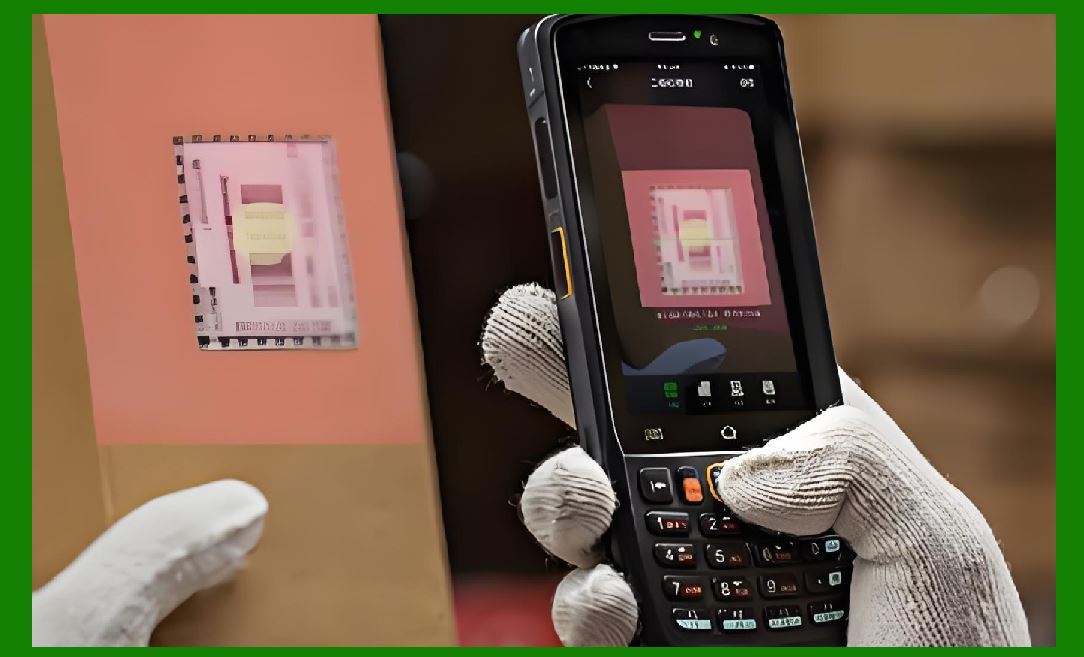
The voting logic is the circuit or firmware routine that decides when enough consistent evidence has accumulated to trust a decode. In early single-line scanners, voting was simple: decode the same symbol on several successive sweeps, and if the results agree, accept the read. This works when every sweep sees essentially the same symbol. It fails when different sweeps see different portions of the symbol. A strict whole-symbol vote would reject a perfectly good decode simply because no two sweeps captured the identical full pattern. The voting logic must therefore evolve from a naive 'compare complete decodes' model to an evidence-integration model that understands partial illumination. |
|
2. Why Curvature Breaks the Whole-Symbol Assumption |
Curved surfaces are the most common cause of partial illumination in everyday scanning. A barcode printed on a cylindrical can, a bottle neck, or a shrink-wrapped pallet does not present a flat plane to the scanner. The portion of the label facing the scanner directly receives the strongest illumination and returns the cleanest signal. Portions curving away receive oblique light, cast shadows in the bars, and may fall outside the scanner's depth of field. The GS1 General Specifications explicitly warn against truncating symbol height because reduced height destroys omnidirectional scanning, but curvature creates a related problem even when full height is printed: the effective reading surface changes with angle . |
A supermarket checkout scanner illustrates this daily. When a cashier slides a canned good across the horizontal glass window of a bi-optic scanner, the scanner's laser pattern sweeps across the curved label in multiple directions . No single scan line necessarily crosses every bar and space with equal contrast. One line might cleanly capture the left guard pattern and the first few characters. Another line, arriving at a different instant and angle, might capture the right portion. The decoder must recognize that these partial reads belong to the same symbol and combine them. If it insisted on a full-symbol match between sweeps, the can would fail to scan until the cashier rotated it to a nearly perfect orientation, defeating the purpose of an omnidirectional scanner. |
The same physics applies to camera-based imagers. A two-dimensional imager captures a full frame rather than a single line, but curvature still matters. Research on barcodes applied to bottle necks shows that wrapping a two-dimensional code around a cylindrical surface produces elliptical deformations of the printed straight lines, and these non-projective transformations are a main cause of detection failure . The voting logic in an imaging scanner must decide which parts of the frame contain reliable evidence and which parts are distorted beyond use. |
|
3. Scan Angle Variation and the Evidence Quality Gradient |
Scan angle variation creates a quality gradient across the symbol, not a binary pass/fail. When a laser beam strikes a barcode at an oblique angle, the apparent width of bars and spaces changes. The signal amplitude from dark bars and bright spaces may remain adequate in one region and degrade in another. A scanner with an oscillating mirror or a rotating polygon produces multiple scan lines at different orientations and timings . The decoder receives a series of waveforms, each with its own profile of signal-to-noise ratio across the symbol's width. |
Voting logic that treats each sweep as an all-or-nothing vote discards valuable information. Consider a sweep that cleanly reads the first six characters of a twelve-character symbol but produces garbage for the remaining six due to a specular reflection off a glossy package. A naive voter might record this as a failed decode and ignore it. An evidence-aware voter records the six confident characters as positive evidence, marks the remaining six as unknown, and waits for a later sweep that covers the poorly illuminated region. The patent literature on barcode decoding describes exactly this approach: storing 'integrated sub-character barcode feature evidence' across scans and determining whether newly acquired evidence corresponds to previously stored evidence before integrating it . The voting is no longer a vote on the whole symbol but an accumulation of localized confidence. |
The angle also affects which portions of the symbol are even within the scan field. A tilted barcode on a package moving down a conveyor may have its top portion outside the scanner's vertical aperture on one sweep and its bottom portion outside on the next. GS1 testing of bi-optic scanners found that tilt angle significantly affected scan rates, with a thirty-degree tilt causing the largest reduction for most scanners tested . The voting logic must tolerate the fact that the geometric coverage of the symbol changes from sweep to sweep. |

|
4. How Voting Logic Actually Handles Partial Illumination |
The first job of the voting logic is to segment the symbol into regions and track evidence region by region. In a laser scanner, the digitizer converts the analog waveform into a sequence of element widths. Rather than immediately attempting a full decode, the firmware can extract features from recognizable portions---guard patterns, character boundaries, edge-to-edge measurements---and store them with an indication of which spatial region of the symbol they came from . When a subsequent sweep produces features from a different region, the logic checks whether those features are compatible with the stored partial evidence. If the left-half evidence from sweep one and the right-half evidence from sweep two overlap at a boundary character, the logic can stitch them into a complete character string. |
The second job is to weight evidence by quality. Not all sweeps are equal. A sweep that captures a region under direct illumination with high modulation depth deserves more weight than a sweep that barely resolves the same region through glare. The analog front end of a scanner produces a signal whose amplitude and edge sharpness vary with contrast. ISO/IEC verification standards define parameters such as symbol contrast, modulation, and minimum edge contrast that grade print quality . While a scanner's real-time voting logic is not running a formal verification, the same physical distinctions inform how much trust to place in a given sweep's reading of a given region. Firmware may assign confidence scores based on signal amplitude, edge transition sharpness, and the number of consistent readings for that region. |
The third job is conflict resolution. Different sweeps may yield contradictory readings for the same region. One sweep might read a character as a '5' and another as a '6' because a smudge or a specular highlight corrupted one of the reads. The voting logic must decide which reading to trust. In some implementations, the system 'locks on' to a digitizer or decoding path that produced a valid partial result and uses it exclusively for the next several scans to gather more evidence for that interpretation . If subsequent scans confirm the reading, the symbol is voted successfully. If they contradict it, the logic resets and tries alternative interpretations. This is a form of hypothesis testing rather than simple majority voting. |
The fourth job is knowing when to stop. A scanner cannot wait indefinitely for perfect evidence. The voting logic needs a termination criterion. In a retail setting, the cashier expects a beep within a fraction of a second. The firmware may accept a decode when the accumulated evidence reaches a threshold of confidence even if some regions were never seen with ideal quality. The threshold is typically conservative enough to prevent misreads but lenient enough to handle the partial illumination reality of curved and angled labels. |
|
5. Retail and Point-of-Sale: The High-Throughput Testing Ground |
Retail checkout is where partial-illumination voting gets its hardest workout. A supermarket scanner must read hundreds of items per hour, each with different packaging geometry, print quality, and orientation. The bi-optic scanner's multiple windows and complex scan pattern are designed to maximize the chance that at least one sweep crosses each portion of the symbol at a usable angle . The voting logic underneath must make sense of the resulting barrage of partial signals. |
Consider a shrink-wrapped multi-pack of bottles. The barcode may be printed on the plastic film, which stretches and curves around the bottles beneath. The film itself may be glossy, creating specular reflections that saturate the photodetector in some regions while leaving other regions readable. A single scan line crossing the pack might see three distinct zones: a readable left section, a glare-blasted center, and a readable right section with different contrast. The voting logic must extract what it can from the readable zones, ignore the glare zone, and combine evidence across multiple sweeps until the center characters are captured from a different angle. Zebra's retail scanner documentation emphasizes capture of 'damaged or hard-to-read barcodes' as a key capability, which depends directly on this kind of evidence integration . |
Self-checkout introduces additional variability. The customer, not a trained cashier, controls the orientation and speed of the item. A barcode may be presented at an awkward angle or held too close to the window. GS1's Tier 1 testing of 2D codes at point of sale found that barcode position close to the upper edge of the scanner's vertical camera caused decode failures, and that card velocity, offset distance, and tilt angle all affected scan rates . The voting logic must compensate for the fact that the customer's presentation may never produce a single clean full-symbol sweep. It must assemble a read from fragments. |
Returns processing and inventory tracking in retail add another dimension: multiple barcodes on the same item. A product may carry both a traditional one-dimensional barcode and a newer two-dimensional code, or multiple GS1-compliant symbols with the same identifier . The voting logic must not only integrate partial evidence across sweeps but also avoid confusing evidence from different symbols on the same package. If one sweep captures part of the one-dimensional code and another sweep captures part of the two-dimensional code, the logic must recognize that these fragments do not belong to the same symbol and must not be stitched together. This requires spatial tracking of which region of the physical item each piece of evidence came from. |

|
6. Healthcare: When a Partial Read Is a Patient Safety Issue |
In healthcare, the cost of a misread or a failed read is measured in patient harm, not just inconvenience. Barcode scanning at the point of care is used for positive patient identification, medication administration, specimen tracking, and equipment management . A nurse scans a patient's wristband and then a medication package. The system must be certain that the right patient is receiving the right drug at the right dose. The voting logic here cannot afford to guess. |
Wristbands are a textbook case of curved-surface scanning. A wristband wraps around the patient's arm. The barcode is printed on a flexible material that conforms to the wrist's curvature. The portion of the band facing the scanner may be readable, while the portions curving away are compressed or stretched depending on how tightly the band is fastened. A handheld scanner's sweep across the band captures a curved projection of the symbol. The voting logic must recognize that the apparent widths of bars and spaces vary systematically across the curved surface and must either correct for that variation or rely on multiple sweeps from different angles to build a consistent read. |
Medication packaging presents different challenges. A small vial or ampoule may have a barcode printed directly on a curved glass or plastic surface. The curvature is severe relative to the symbol size, and the material may be transparent or highly reflective. A single sweep might capture only the central portion of the code before the surface curves away from the beam. The voting logic must accept partial evidence and wait for the nurse to present the vial at a slightly different angle, or for the scanner's own motion to produce a sweep that captures a different portion. In a busy clinical workflow, the scanner must succeed quickly despite these conditions; a failed scan that requires repeated attempts interrupts care and encourages workarounds that undermine the safety system. |
Specimen tracking adds the constraint of low-contrast labels. Laboratory labels are often printed on small, curved tubes with thermal printers that produce lower contrast than retail packaging. The voting logic must extract reliable evidence from signals that may never reach the modulation depth of a crisp retail barcode. ISO verification standards grade symbol contrast and modulation on a scale from zero to four, with lower grades still potentially decodable under favorable conditions . A healthcare scanner's voting logic is tuned to accept and integrate evidence from signals that a retail scanner might reject as too marginal, because the alternative---failing to identify a specimen---carries unacceptable risk. |

|
7. Manufacturing and Warehousing: Partial Reads on Moving Targets |
Industrial scanning environments often involve motion, distance, and harsh conditions that make full-symbol illumination rare. A fixed-mount scanner above a conveyor belt must read barcodes on parts or packages moving at speed. The scanner may be mounted at an angle to avoid interfering with the material flow, which means it never sees the barcode face-on. The symbol passes through the scan zone in a fraction of a second, and the number of sweeps that cross it is limited. |
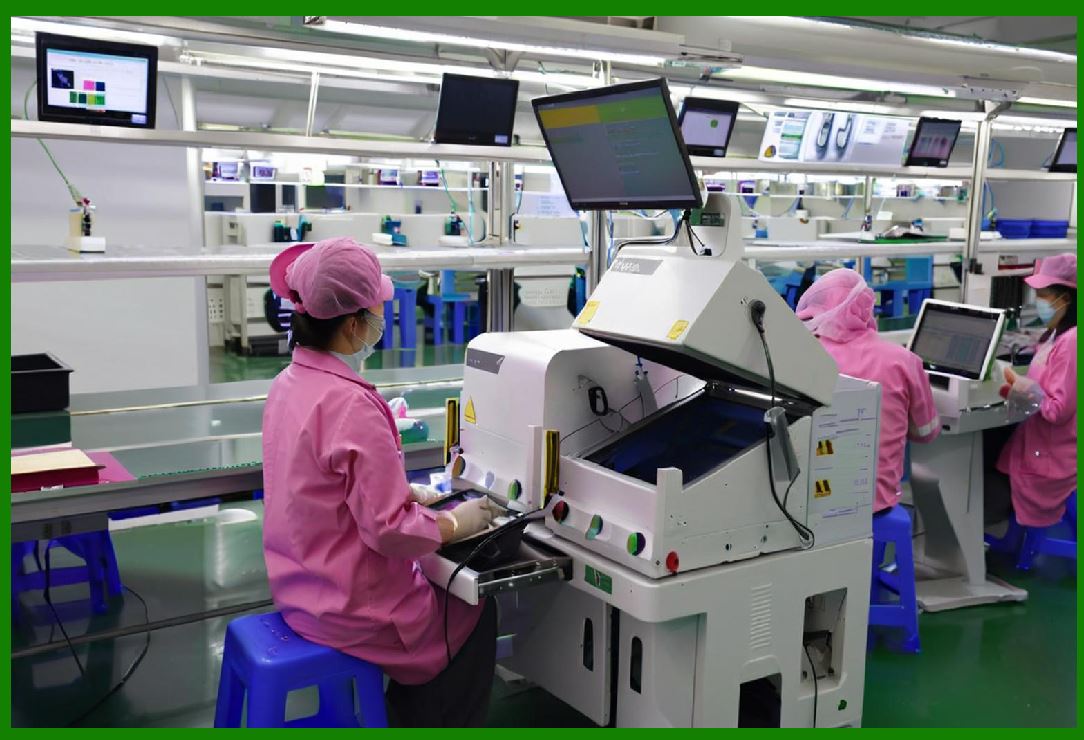
Direct part marking is an extreme case. In automotive, aerospace, and electronics manufacturing, barcodes are often marked directly on metal or plastic surfaces using dot peening, laser etching, or electrochemical etching . These marks have low contrast because the 'bars' and 'spaces' differ in surface texture rather than color. The illumination must be carefully angled to create shadows that the scanner can detect. A single sweep may capture some dots or etched regions clearly while others fall into shadow or reflect light directly back into the sensor. The voting logic must integrate evidence across sweeps taken from slightly different positions or angles as the part moves or the scanner's beam pattern shifts. |
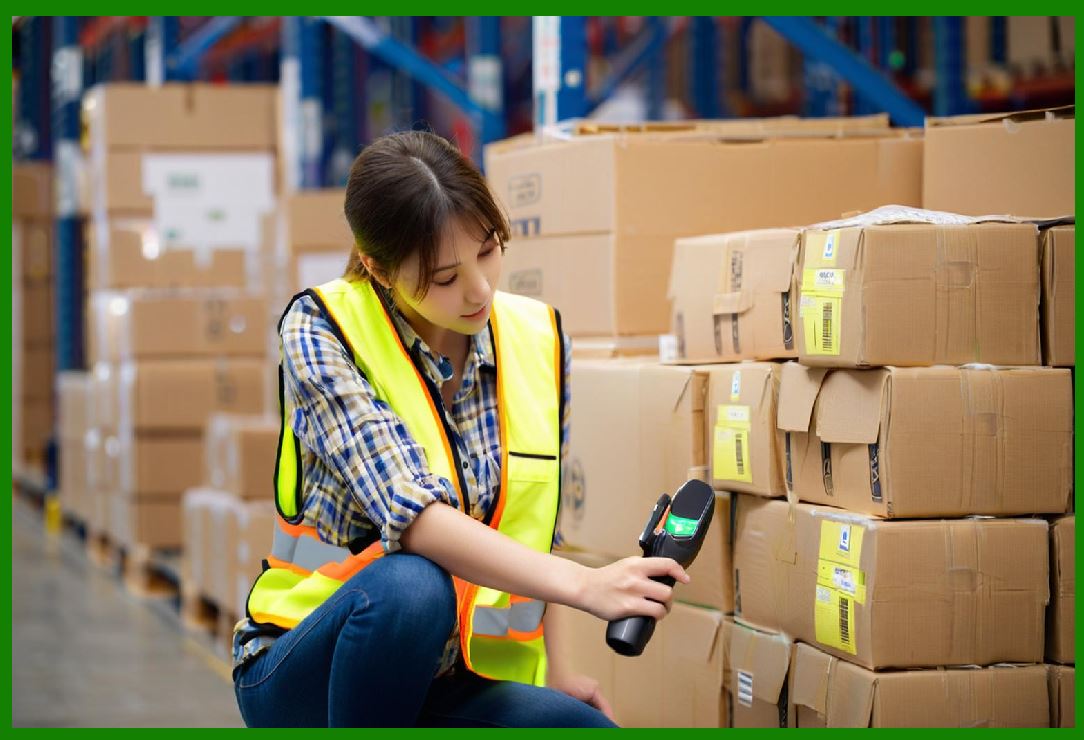
Warehouse receiving and put-away involve labels on cartons that are rarely presented perfectly. A carton may be dented, its label may be wrinkled, or the carton may be sitting on a pallet at an awkward angle. A handheld scanner's operator sweeps the beam across the label by hand, producing an irregular series of scan lines with varying coverage. The voting logic must cope with the fact that the operator's hand motion is not uniform. Some sweeps will be fast and capture only a narrow strip of the symbol. Others will be slow and capture a wider but perhaps more blurred region. The logic must recognize which sweeps contain usable evidence and combine them without requiring the operator to achieve a perfect scan. |
Conveyor scanning at distribution centers combines motion blur with distance variation. A package's distance from the scanner may change as it moves along the belt, and its orientation may shift. The scanner's depth of field covers a range, but focus quality varies within that range. A sweep that captures the barcode at the near edge of the depth of field may resolve fine elements well while a sweep at the far edge may blur them. The voting logic must weight the near-field evidence more heavily or wait for the package to move into a better focus zone, all while the package is moving at conveyor speed. |
|
8. Logistics and Transportation: Voting Across Time and Distance |
Logistics scanning often involves reading barcodes at a distance, from moving vehicles, or through protective packaging. A parcel sorting facility may use overhead scanners to read labels on packages moving rapidly along a conveyor. The scanner is meters away from the label, and the symbol occupies a small portion of the field of view. A single frame or sweep may capture the entire label, but at low resolution. Alternatively, a handheld scanner at a loading dock may read a label through shrink wrap that creates reflections and distortions. |
The voting logic in long-range scanning must account for the fact that different portions of the symbol may be illuminated in different frames due to the scanner's beam pattern. A long-range laser scanner may use a beam that is wider or has a different intensity profile than a near-field scanner. The edges of the scan line may have lower intensity than the center. If the barcode is positioned such that its left portion falls in the center of the scan line and its right portion falls at the edge, the left portion will have stronger signal. The voting logic must recognize this intensity gradient and not treat the weaker right-side evidence as equivalent to the stronger left-side evidence. |
Transportation and logistics also involve barcodes on vehicles, containers, and pallets that are exposed to weather and wear. A label on the side of a truck may be partially obscured by dirt or scratched. The voting logic must extract evidence from the undamaged portions across multiple scan attempts. GS1 specifications note that omnidirectional scanners are better at reading poorly printed, wrinkled, or torn barcodes than simpler single-line scanners , precisely because the multiple scan lines increase the chance that some sweeps will illuminate the undamaged regions cleanly while others are blocked. |

|
9. The Digital Boundary: Where Analog Evidence Becomes a Decision |
The voting logic sits exactly at the digital boundary of the scanner. On one side is the analog world of reflected light, photodiode currents, and waveforms whose amplitudes and edge timings encode the symbol. On the other side is the digital world of character strings and decoded data. The voting logic is the arbiter that decides when the accumulated analog evidence is sufficient to cross that boundary and declare a read. |
This boundary is not a single instant but a process. In a modern scanner, the digitizer produces candidate element sequences from each sweep. The decoder attempts to match these sequences against valid symbol patterns. The voting logic tracks which portions of the symbol have been confidently decoded, which portions are uncertain, and which portions have not been seen at all. Only when the confident portions cover the entire required character set does the logic declare success. The scanner may have performed dozens of sweeps and accumulated evidence from all of them before reaching that threshold. |
The design reality is that the voting logic must be tuned differently for different applications. A retail scanner optimized for speed may accept a decode after fewer confirming sweeps, relying on the redundancy of the symbol's check character to catch errors. An industrial scanner reading direct part marks may require more evidence because the signal quality is inherently lower and the cost of a misread is higher. A healthcare scanner may have intermediate tuning, balancing speed against the need for certainty. These differences are embodied in firmware parameters: how many consistent readings constitute a vote, how much weight to give to edge contrast versus amplitude, how long to wait for a missing region before timing out. |
The partial-illumination problem is ultimately a problem of information fusion under uncertainty. The scanner never knows with perfect certainty what the barcode says until it has decoded it. Each sweep provides noisy, incomplete evidence. The voting logic is the algorithm that combines that evidence optimally. The fact that different sweeps illuminate different portions of the symbol is not an anomaly to be eliminated; it is the normal condition of real-world scanning. The voting logic that succeeds is the one that embraces partial evidence rather than demanding completeness from any single sweep. |

|
Detailed Summary: The voting logic in barcode decoding circuits cannot assume that successive sweeps see the same symbol under the same conditions. Curved labels, oblique scan angles, glossy surfaces, and motion all cause different sweeps to illuminate different portions of the barcode with varying quality. This article has traced the implications across five domains. In retail point-of-sale, omnidirectional scanners rely on evidence integration to read curved cans and shrink-wrapped multi-packs, while self-checkout demands tolerance for customer-induced variability in angle and distance. In healthcare, wristbands and medication vials present severe curvature and low contrast, and the voting logic must prioritize certainty over speed because patient safety depends on it. In manufacturing and warehousing, direct part marks and moving cartons produce signals where portions of the symbol are consistently marginal, requiring the logic to weight evidence by quality and wait for complementary sweeps. In logistics, long-range and high-speed scanning create intensity gradients across the scan line and focus variation that the voting logic must compensate for. Across all these applications, the voting logic functions as the arbiter at the digital boundary, deciding when accumulated partial evidence is sufficient to declare a read. The design reality is that no single tuning works everywhere; the voting parameters must be matched to the signal quality and risk profile of each application. The principle that emerges is simple but profound: successful barcode decoding is not about finding one perfect scan. It is about making reliable decisions from a stream of imperfect ones. |
 cs@easiersoft.com