Article Summary: This article is the opening piece of Part V of *From Photons to Bits*. It explains the first digital operation in a barcode scanner: edge detection. The analog signal leaving the comparator is sampled at a rate far exceeding the maximum possible edge frequency, and a finite state machine examines consecutive samples to determine when a genuine transition has occurred. The article first establishes why over-sampling is necessary, then walks through the state machine's decision logic, and finally surveys how this seemingly simple digital task plays out across retail, logistics, manufacturing, healthcare, and mobile scanning. |
|
52. The First Digital Task Is Edge Detection: Sampling, State Machines, and the Digital Boundary |
52.1 The Analog Signal Has Done Its Job; Now the Digital World Must Take Over |
The comparator has already made a decision about each moment in time, but a decision about a single moment is not yet an edge. In the preceding chapters we followed the optical signal as it was converted into an electrical current, filtered, differentiated, and finally presented to a comparator. That comparator outputs a binary value: high when the signal sits above a threshold, low when it sits below. If you were to look at this single bit at one instant, you would know only whether the scanner is currently looking at a dark bar or a light space. You would not know where one bar ends and the next begins. The decoder cannot work with a stream of isolated bar-or-space judgments. It needs the boundaries, the moments in time when the comparator's opinion changed. Those boundaries are the edges, and finding them is the first genuinely digital task in the entire signal chain. |
The physical world does not hand us clean transitions, so the digital system must be suspicious of every change it sees. A printed barcode is never perfect. Ink spreads slightly. Paper fibers create microscopic shadows. The laser spot or LED illumination is never perfectly uniform. The photodetector generates thermal noise. The analog filter stages, no matter how carefully designed, leave some residual high-frequency content. The result is that the comparator output does not simply step cleanly from low to high at a bar edge. It may chatter. It may produce brief spurious pulses when the beam crosses a speck of dust or a void in the ink. It may linger near the threshold and toggle several times before committing to a stable level. The first digital task, therefore, is not merely to observe changes but to judge which changes are real and which are artifacts. |
This judgment is made possible by a simple but powerful asymmetry: the scanner samples much faster than the edges can possibly arrive. A typical barcode scanner operating on a moving beam or a moving package might encounter edge rates in the range of tens of kilohertz at the very fastest. The narrowest element in a high-density symbology, scanned at high speed, might produce edges separated by only a few microseconds. Yet the digital clock governing the sampling of the comparator output typically runs at several megahertz or more, sometimes an order of magnitude faster than the Nyquist criterion would suggest. This deliberate over-sampling is not wasteful. It creates the time-resolution needed to distinguish a genuine edge from a noise glitch. If the comparator chatters for a hundred nanoseconds at a real transition, the sampler captures that chatter as a sequence of several consecutive samples. The state machine can then apply rules about how long a level must persist before it is believed, and how brief a deviation must be before it is discarded. |

|
52.2 Why Over-Sampling Is Not Optional |
A state machine that samples too slowly cannot tell the difference between a real narrow bar and a momentary noise spike. Imagine a scanner with a sampling clock barely faster than the edge rate. A genuine narrow bar produces a high pulse of, say, two sample periods. A dust speck producing a spurious comparator flip might produce a high pulse of one sample period. The distinction is perilously thin, and any jitter in the sampling clock or the edge position can cause a real bar to be missed or a noise pulse to be accepted. When the sampling rate is raised substantially, the genuine bar occupies many sample periods while the noise pulse occupies only one or two. The state machine can now impose a minimum persistence requirement: a change in comparator output is not accepted as an edge until the new level has been observed for a specified number of consecutive samples. A one-sample glitch is rejected without further thought. |
Over-sampling also protects against the subtle distortions introduced by the analog chain itself. The filters and differentiators that precede the comparator have finite bandwidth. They smooth sharp transitions into gradual slopes. Near the threshold, the comparator may sit in an ambiguous region for some time, especially if the signal has been attenuated by a low-contrast barcode or a long working distance. The comparator output during such a transition may exhibit multiple rapid transitions as the analog signal wobbles across the threshold. A slow sampler would see one transition and have no way to know it was messy. A fast sampler sees the mess and can apply hysteresis in the time domain: the state machine waits for the comparator output to stabilize, ignoring the brief flips that occur while the analog signal is still settling. |
The choice of sampling rate is therefore a design decision that trades power and complexity against robustness. A pen-type scanner with a slow manual scan might get away with a lower sampling rate because the edge rate is inherently low and the user can be instructed to scan more slowly. A fixed-position retail scanner reading packages moving at speed on a conveyor needs a much higher sampling rate because the edge rate is high and there is no opportunity to ask the package to slow down. A handheld scanner with a motion sensor can adapt its sampling rate based on how fast the user is moving the device, saving power when the scan is slow and increasing resolution when the motion is rapid . In every case, the principle remains: the sampler must run fast enough that the shortest legitimate feature produces many samples, not merely one or two. |
|
52.3 The State Machine: A Referee with Memory |
The state machine's job is to convert a noisy, chattering bitstream into a clean sequence of edge events, each marked by a timestamp or a count. It does this by maintaining a small amount of memory about what it has recently seen. At its simplest, the state machine might have just two states: 'currently in a bar' and 'currently in a space.' It also maintains a counter. When the comparator output disagrees with the current state, the counter begins incrementing. If the disagreement persists for a predetermined number of samples, the state machine accepts the transition, flips its state, records an edge event, and resets the counter. If the comparator output returns to agreement with the current state before the counter reaches its limit, the counter is reset and the disagreement is forgotten. This is debouncing in the time domain, and it is the most fundamental form of edge validation. |
More sophisticated state machines add a second layer of judgment based on the expected structure of a barcode. A real barcode is not a random sequence of bars and spaces. It has a minimum element width. No legitimate bar or space in a given symbology is narrower than a known fraction of the narrowest element. The state machine can therefore maintain a running estimate of the narrowest element width seen so far in the current scan, and reject any transition that would create an element narrower than a reasonable fraction of that estimate. This is particularly valuable in the presence of noise that occurs at a rate just slow enough to pass the simple persistence test. A noise pulse that persists for several samples but produces an implausibly narrow bar can be rejected on structural grounds even though it passed the temporal debouncing test . |
A third refinement involves tracking the direction of the comparator output and using a form of temporal hysteresis. When the analog signal approaches a threshold from below, the comparator may flip high. If the signal then dips slightly back below the threshold, the comparator flips low again. A simple debouncer might eventually accept the high transition if the signal hovers near the threshold and the noise happens to favor the high side for enough consecutive samples. A state machine with hysteresis requires that after a transition is accepted, the comparator output must move a certain distance or remain stable for an extended period before the opposite transition can even begin to be considered. This prevents the state machine from accepting a rapid pair of edges that would imply an impossibly narrow element, and it also prevents the state machine from getting stuck in a toggling loop when the signal is marginal. |
The output of the state machine is not yet a decoded barcode; it is a sequence of edge times. Each accepted transition is recorded with a timestamp derived from the sample counter. The intervals between consecutive timestamps represent the widths of the bars and spaces, measured in units of sample clock periods. These intervals are the raw material for the decoder. The decoder's first job, which belongs to the next chapter, will be to normalize these intervals against each other, identify the narrowest element, and begin matching patterns against the chosen symbology. But the decoder can only do that if the edge sequence it receives is clean and complete. A missed edge destroys the width relationships. A spurious edge inserts a phantom element that no symbology can explain. The state machine's accuracy in accepting the right edges and rejecting the wrong ones determines whether the decoder has any chance of success. |

|
52.4 Edge Detection in Retail: Speed, Volume, and the Hostile Checkout Lane |
The retail point-of-sale scanner is the most demanding environment for edge detection because it must work on the first attempt, every time, with no user patience for retries. A supermarket checkout scanner is typically a fixed-position device with a complex optical path that sweeps a laser beam or projects a patterned illumination across the barcode. The package is moved by a human cashier at a speed that varies from a slow drag to a rapid swipe. The barcode may be printed on a curved surface, covered by a plastic wrapper, smudged with grease, or partially obscured by a price sticker. The edge detection circuitry must cope with all of this in the few hundred milliseconds during which the barcode is in the scan volume. |
In this environment, over-sampling and debouncing work together with the scanner's multi-line scan pattern to recover from marginal reads. A retail scanner does not scan a single line across the barcode. It generates a pattern of many scan lines, often crossing each other at different angles. Each scan line produces its own comparator output and its own edge sequence. The state machine processes each line independently. If one line crosses a smudge and produces a corrupted edge sequence, another line a few milliseconds later may cross the same barcode at a different point and produce a clean sequence. The decoder attempts to decode each line's edge sequence as it arrives. The edge detection state machine does not need to be perfect on every line; it needs to be good enough that at least one of the many lines yields a decodable sequence within the scan time. |
The sampling rate in retail scanners is chosen to accommodate the fastest expected cashier swipe. A typical swipe might move a package at one meter per second. A high-density barcode might have elements as narrow as 0.15 millimeters. The edge rate at the scanner's photodetector depends on the scan velocity, which is the sum of the beam sweep velocity and the package velocity. For a beam sweeping at several meters per second across a stationary barcode, the effective edge rate can be in the hundreds of kilohertz. The sampler must run at several megahertz to provide adequate over-sampling. This is well within the capability of modern integrated circuits, but it represents a significant design constraint: the power consumption of the sampling and state machine circuitry must be kept low enough that the scanner can be powered over a standard interface without overheating. |
A less obvious but equally important retail application is the self-checkout lane. Here the human operator is an untrained customer who may hold the barcode at an awkward angle, move it too slowly, or cover part of it with a finger. The edge detection state machine must be more forgiving than in a staffed lane. Some self-checkout scanners increase the debouncing window slightly, accepting a higher probability of missing a very narrow element in exchange for a lower probability of accepting a spurious edge from a fingerprint or a reflection. The trade-off is deliberate: a missed edge on one scan line can be recovered on the next, but a spurious edge that passes the state machine may confuse the decoder and cause it to lock onto a false pattern, wasting precious milliseconds before the next line is processed. |

|
52.5 Logistics and Warehousing: Edges at a Distance and on the Move |
Logistics applications place the edge detection state machine at the far end of a long optical path, where the signal is weak and the spot size is large relative to the barcode elements. A conveyor sortation system may have a fixed scanner mounted above the belt, reading labels on packages that pass beneath at speeds of one to three meters per second. The working distance from scanner to label may be a meter or more. At that distance, the laser spot or the camera's point spread function spreads the transition between a bar and a space over a distance that may be comparable to the width of a narrow element. The analog signal no longer has sharp steps; it has smoothed ramps. The comparator's output transitions become less crisp, and the state machine must work harder to determine where the true edge lies. |
In this context, the state machine often incorporates edge-strength information derived from the analog signal before the comparator. The analog differentiator produces a peak at each transition, and the height of that peak indicates how sharp the transition was. A weak, broad peak suggests a transition that has been blurred by distance or by a large spot size. A strong, narrow peak suggests a crisp transition. The state machine can use this information to adjust its persistence threshold dynamically: for weak edges, it waits longer before accepting a transition, reducing the chance of accepting noise. For strong edges, it accepts more quickly, preserving the width relationships between narrow elements . This adaptive behavior is particularly important in logistics because the same scanner must read labels at the near end of its working range and at the far end, and the edge quality varies enormously across that range. |
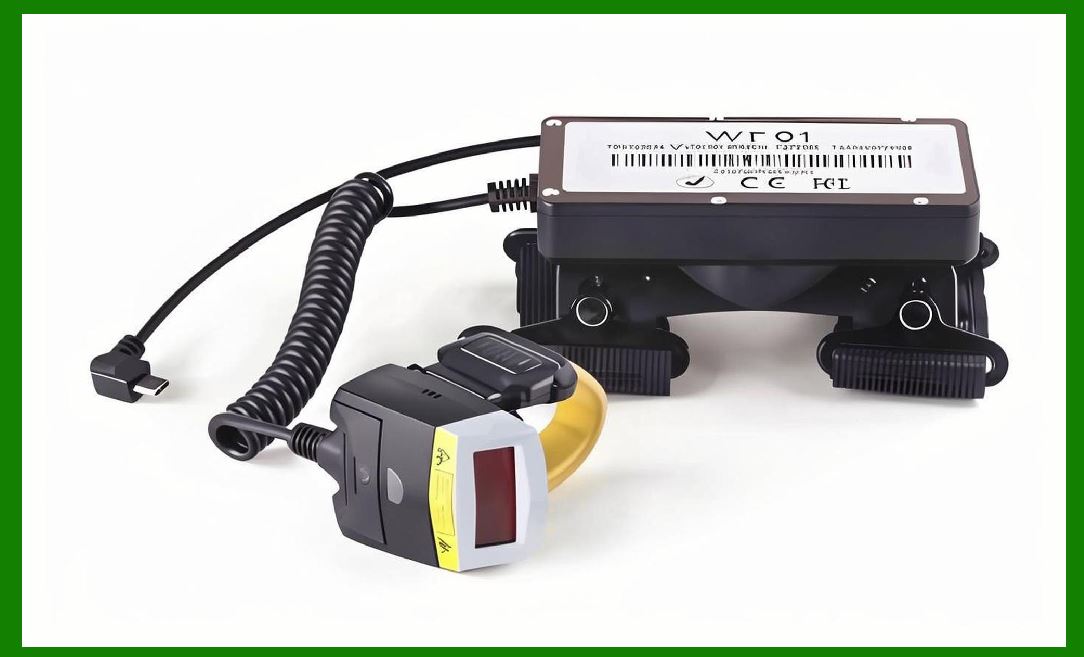
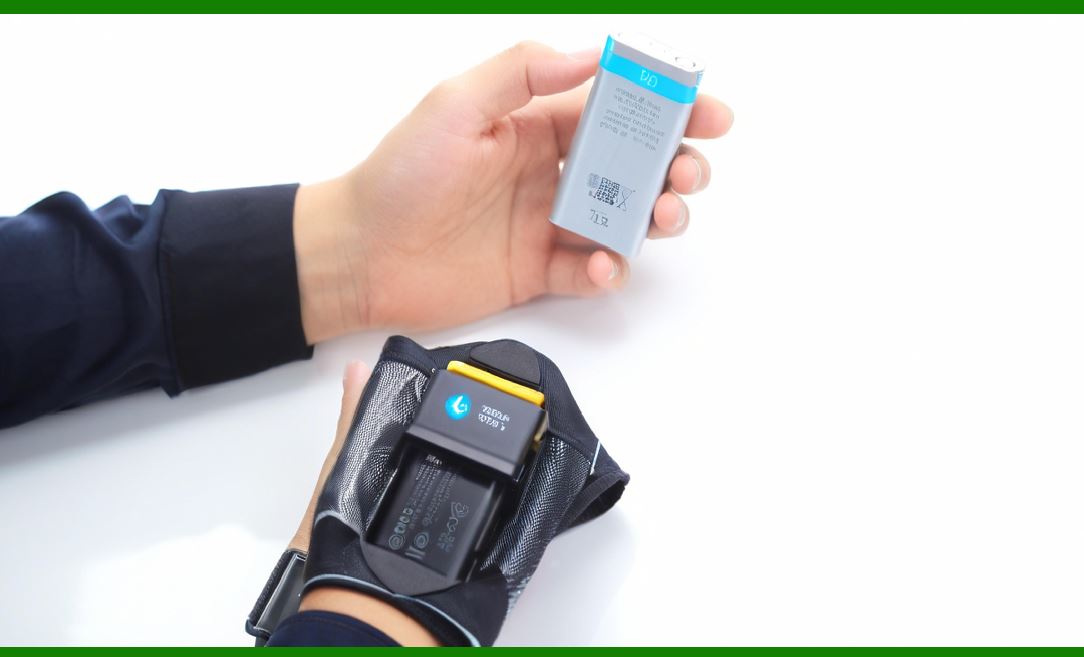
Warehouse handheld scanners face a different challenge: motion blur from the user's hand. A worker scanning a shelf label or a pallet placard may move the scanner rapidly between items, and the scanner's motion sensor can detect this movement. The edge detection algorithm can then adjust its detection thresholds based on the estimated velocity . When the scanner is moving quickly, the edges in the captured image or the analog signal are blurred, and a lower detection threshold might be appropriate to avoid missing them. When the scanner is stationary, a higher threshold reduces false edges from noise. This kind of dynamic adaptation is only possible because the edge detection state machine is digital and can be reconfigured on the fly. |
The consequence of poor edge detection in logistics is not merely a failed scan; it is a mis-sorted package. A package that fails to scan at a sortation point must be diverted to a manual handling station, where a human reads the label and keys in the tracking number. This is expensive and slow. Worse, a package that scans incorrectly, producing a valid but wrong decode, can be routed to the wrong destination entirely. The edge detection state machine's conservatism, its willingness to reject ambiguous edges and wait for a cleaner scan, is therefore a safety feature. It is better to miss a package and send it to manual handling than to accept a spurious edge sequence that happens to form a valid but incorrect barcode. |

|
52.6 Manufacturing and Automotive: Edges on Metal, Glass, and Curved Surfaces |
Industrial barcode scanning often involves direct-part marking, where the barcode is etched, dot-peened, or laser-ablated directly onto a metal or composite surface. These marks have inherently low contrast compared to printed labels. The 'bars' are often pits or darkened regions with irregular boundaries. The analog signal from such a mark is weaker and noisier than from a printed label, and the comparator may struggle to find a stable threshold. The edge detection state machine must operate with a lower signal-to-noise ratio and must be correspondingly more conservative about accepting transitions. |
In automotive assembly lines, barcodes on engine blocks or transmission housings may be scanned by a fixed scanner as the part moves along a conveyor. The part may be vibrating slightly, and the surface may be oily or dusty. The edges in the analog signal are not clean steps but irregular fluctuations. A simple persistence-based state machine might accept a noise spike as an edge during a momentary dip in signal strength. More advanced systems use a hidden Markov model or similar probabilistic framework to label each candidate peak as either a true edge or noise, based on the observed peak amplitudes and the time gaps between them . The state machine in such a system is not a simple counter but a small inference engine that evaluates the likelihood of each transition given the recent history of the signal. |
The electronics manufacturing industry uses barcodes on printed circuit boards and component reels. These barcodes are often small and densely packed, and they may be scanned by a camera-based reader rather than a laser scanner. In a camera-based system, the edge detection task is performed on the digital image after capture, but the same principles apply. The image is sampled spatially rather than temporally, and the 'state machine' becomes a two-dimensional edge detection algorithm that examines local contrast and applies thresholds. The challenge is that the barcode may be only a small part of a cluttered image, and the edge detector must not be confused by the edges of components, traces, or connectors. The first digital task in this context is often to identify regions of the image that contain a high concentration of edges with consistent spacing, and then to apply a more focused edge detection within those regions . |
Pharmaceutical manufacturing adds a regulatory dimension. Barcodes on medication packaging must be read with essentially perfect accuracy, because a misread can have patient safety implications. The edge detection state machine in pharmaceutical scanners is often configured with stricter persistence requirements and more aggressive noise rejection than in general-purpose scanners. Some systems perform a dual-pass approach: a first pass with conservative thresholds to establish a candidate edge sequence, and a second pass with adjusted thresholds to confirm or reject marginal edges. This reduces the chance of a spurious edge being accepted, at the cost of occasionally requiring a rescan. |

|
52.7 Healthcare: Edges on Wristbands, Specimens, and Medication |
Patient wristbands present a unique set of edge detection challenges because they are printed on flexible, curved, and often wrinkled materials. A wristband barcode may be partially wrapped around a wrist, causing the apparent element widths to vary across the scan. The printing may be faint or partially worn. The surface may be covered by a clear plastic sheath that creates specular reflections. The edge detection state machine must contend with these distortions while maintaining enough accuracy to decode the barcode correctly. A misread wristband barcode can lead to a patient receiving the wrong medication or the wrong procedure, so the tolerance for error is essentially zero. |
The sampling rate in healthcare scanners is often set higher than strictly necessary for the expected edge rate, specifically to provide redundancy. If a wristband barcode is distorted by a wrinkle, the resulting analog signal may have a localized region where the edges are compressed or stretched. A high sampling rate provides more samples across the distorted region, giving the decoder more information to work with when it attempts to normalize the element widths. The state machine can also flag scans that exhibit an unusual density of rejected edges, indicating that the barcode is too damaged to read reliably, and prompt the user to smooth the wristband or use an alternative identification method. |
Laboratory specimen tracking uses barcodes on test tubes and vials, which are cylindrical and often wet with condensation. The curvature of the tube means that the apparent width of a bar varies as the scan crosses from the center of the tube toward the edge. The edge detection state machine may see a sequence of edges that does not correspond to a flat barcode. Some systems compensate by scanning the tube from multiple angles and selecting the scan with the most consistent edge spacing. The state machine in each scan is performing the same fundamental task, but the system-level decision about which edge sequence to trust is made at a higher level. |
Medication administration scanning combines patient wristband scanning with medication package scanning in a single workflow. A nurse scans the patient's wristband, then scans the medication's barcode, and the system checks that they match. The edge detection state machine must operate reliably in a busy hospital environment with variable lighting, both handheld and fixed scanners, and users who may be in a hurry. The consequences of a failed scan are less severe than a misread, because the nurse can rescan or enter the identifier manually, but frequent scan failures erode confidence in the system and encourage workarounds that bypass the safety checks entirely. |

|
52.8 Mobile Scanning: The Smartphone as a Barcode Reader |
The smartphone camera has become the most widely deployed barcode scanner in the world, and its edge detection pipeline is almost entirely digital and image-based. There is no analog comparator in the traditional sense. The camera sensor samples the image spatially, producing a two-dimensional array of pixel intensities. The edge detection task is performed by software that examines gradients in the image. The same principles apply: the image is over-sampled relative to the barcode element size (a barcode must occupy enough pixels for its edges to be resolved), and a state machine (or an equivalent algorithm) judges which gradient peaks correspond to true bar-space boundaries. |
The challenge for mobile scanning is that the image is rarely clean. The phone may be held at an angle, the lighting may be uneven, and the barcode may be small within a large scene. Early mobile barcode apps required the user to align the barcode within a frame and hold still. Modern apps use more sophisticated edge detection that can locate the barcode automatically and compensate for perspective distortion. The edge detection algorithm typically begins by converting the image to grayscale, computing gradients, and identifying regions with a high density of parallel edges. These regions are candidates for barcode locations. A second stage examines the edge spacing within each candidate region to confirm that it matches a known symbology . |
Motion blur is the dominant error source in mobile scanning. When the user is moving the phone while the image is captured, the edges in the image become smeared. The edge detection algorithm can use the phone's motion sensors to estimate the blur direction and magnitude, and adjust its detection thresholds accordingly . If the blur is too severe, the algorithm may reject the frame and prompt the user to hold steadier. This is a digital version of the same trade-off that analog scanners make: accept a marginal edge and risk a misdecode, or reject it and ask for a better sample. |
The rise of mobile scanning has also changed the economics of edge detection. In a dedicated barcode scanner, the edge detection circuitry is fixed at design time and cannot be changed after manufacture. In a smartphone, the edge detection algorithm is software and can be updated. A new version of a scanning app can improve edge detection for difficult barcodes without requiring users to buy new hardware. This has accelerated the development of more sophisticated algorithms, including those based on machine learning, which can learn to distinguish true edges from noise and distortion across a wide variety of real-world conditions. |

|
52.9 The Boundary Between Analog and Digital Is Not a Line but a Zone |
The first digital task, edge detection, sits precisely at the boundary between the analog and digital worlds, and it inherits problems from both sides. From the analog side, it inherits noise, distortion, and the fundamental ambiguity of a signal that has been filtered and shaped by physical processes. From the digital side, it inherits the need for deterministic, repeatable decisions that the decoder can rely on. The state machine is the mechanism that translates the messy analog reality into the clean digital abstraction that the decoder requires. Its design reflects a series of compromises: how long to wait before accepting a transition, how many samples to require, how to handle the case where the comparator output hovers near the threshold for an extended period. |
These compromises are not made once and forgotten; they are often adjusted dynamically based on the scanner's operating conditions. A scanner that detects it is close to a high-contrast barcode can afford to be strict, because the edges will be strong and clean. The same scanner, when it detects that it is far from a low-contrast barcode, may relax its criteria to avoid missing every edge. This dynamic adjustment is itself a digital function, performed by logic that monitors the edge acceptance rate and the signal quality indicators from the analog front end. The boundary between analog and digital is therefore not a fixed line at the comparator output but a zone of interaction in which digital logic observes analog conditions and adjusts its behavior accordingly. |
The edge detection state machine is also the first place where the scanner's real-time constraints become visible. The decoder needs edge sequences at a rate it can consume. If the edge detection state machine is too conservative and rejects too many edges, the decoder receives incomplete sequences and cannot decode. If it is too permissive and accepts noise, the decoder receives corrupted sequences and wastes time attempting to decode them. The state machine must be tuned not for maximum edge detection accuracy in isolation, but for maximum end-to-end decode rate. This system-level perspective is essential: an edge that is rejected correctly but causes the decoder to miss a valid barcode is just as costly as an edge that is accepted incorrectly and causes a misdecode. |

|
52.10 Detailed Summary |
The first digital task in a barcode scanner is edge detection, performed by sampling the comparator output at a rate far above the maximum expected edge frequency and applying a state machine to validate transitions. The comparator has already converted the analog signal into a binary bar-or-space judgment at each instant, but isolated judgments are not edges. The state machine examines sequences of samples to determine when a persistent change has occurred, distinguishing genuine bar-space boundaries from noise, chatter, and artifacts. |
Over-sampling is essential because it provides the time resolution needed to distinguish real features from glitches. A legitimate narrow bar produces many samples at a high sampling rate, while a noise spike produces only one or two. The state machine can therefore impose a minimum persistence requirement, rejecting changes that do not last long enough to be plausible barcode elements. The sampling rate is chosen based on the fastest expected edge rate, which in turn depends on the scan velocity, the working distance, and the minimum element width of the symbology. |
The state machine's decision logic ranges from simple persistence counting to sophisticated probabilistic inference. At its simplest, it waits for the comparator output to remain stable for a fixed number of samples before accepting a transition. More advanced versions use adaptive thresholds based on edge strength, structural constraints based on the minimum element width of the expected symbology, and temporal hysteresis to prevent toggling near marginal thresholds. Some systems employ hidden Markov models that label each candidate peak as a true edge or noise based on observed amplitudes and timing. |
Retail scanning demands first-pass reliability in a hostile optical environment. Fixed-position checkout scanners use multi-line scan patterns so that a clean edge sequence from one line can compensate for a corrupted sequence from another. The sampling rate must accommodate rapid cashier swipes, and the state machine must be tuned to balance the risk of missing narrow elements against the risk of accepting spurious edges from smudges, reflections, or fingerprints. |
Logistics and warehousing scanning operates over long working distances and with moving packages. At a distance, the analog signal's edges are blurred and weak, and the state machine must use edge-strength information to adjust its acceptance criteria dynamically. Handheld scanners in warehouses use motion sensors to adapt detection thresholds based on the user's movement, accepting more marginal edges when motion blur is likely and being stricter when the scanner is stationary. |
Industrial and manufacturing scanning often involves direct-part marking on metal, glass, or composite surfaces with low contrast and irregular boundaries. The edge detection state machine must operate with a lower signal-to-noise ratio and is often more conservative, accepting a higher rate of missed edges in exchange for a lower rate of false edges. Pharmaceutical and medical device manufacturing impose stricter accuracy requirements, sometimes using dual-pass confirmation to validate marginal edges. |
Healthcare scanning on wristbands, specimen tubes, and medication packages combines curvature, condensation, and safety-critical accuracy requirements. The sampling rate may be set higher than strictly necessary to provide redundancy across distorted regions, and the state machine may flag scans with excessive rejected edges as unreliable, prompting the user to rescan or use an alternative identification method. |
Mobile scanning on smartphones performs edge detection algorithmically on captured images, but the same principles apply. The image must be over-sampled relative to the barcode element size, and the algorithm must distinguish true edges from noise, blur, and perspective distortion. Motion sensors can inform the edge detection algorithm about blur conditions, and software updates can improve edge detection without hardware changes. |

|
The edge detection state machine is the translator between the analog and digital worlds, and its design reflects system-level trade-offs rather than isolated optimization. It must be fast enough to keep up with the edge rate, conservative enough to reject noise, permissive enough to accept marginal but genuine edges, and adaptable enough to handle the wide range of conditions encountered across different applications. Its output, a sequence of edge timestamps, is the foundation on which the decoder builds its pattern-matching and error-correction work. Without reliable edge detection, no amount of decoder sophistication can recover the data encoded in the bars and spaces. With it, the scanner has crossed the digital boundary and can begin the work of turning edges into characters. |
 cs@easiersoft.com