Chapter 5. High-Pass Filtering After the Transimpedance Amplifier: Removing the DC Pedestal Without Losing the Signal |
Summary |
This chapter explains why a high-pass filter follows the transimpedance amplifier in a barcode scanner's signal chain. The filter removes the large DC pedestal created by ambient light so that later gain stages are not driven into saturation. We look at how ambient light from sunlight, fluorescent lamps, and LED lighting produces this pedestal, why AC coupling is the standard remedy, and how the choice of corner frequency trades off baseline recovery against signal distortion. We then survey practical examples across retail point of sale, warehouse logistics, healthcare, manufacturing, access control, postal sorting, mobile phone scanning, and automotive and industrial settings. The chapter closes with a detailed summary tying the circuit principle back to real design decisions. |
|
1. Where We Are in the Signal Chain |
Chapter 4 followed the photocurrent from the photodiode through the transimpedance amplifier, or TIA. The TIA converts a tiny current into a usable voltage. Its output is a waveform that rides on a DC level. That DC level is not part of the barcode information. It is a bias, an offset, a pedestal. The barcode information lives in the small fluctuations around that pedestal, the transitions between light and dark bars as the scan line sweeps across the label. |
Chapter 5 picks up exactly at the TIA output. The very next block is a high-pass filter. Its job sounds trivial: remove the DC component. But in a real scanner, this block decides whether the rest of the chain works at all. If the pedestal is allowed through, the next amplifier stage clips, the comparator loses its threshold, and the decoder sees garbage. The high-pass filter is the gatekeeper that keeps the signal chain honest. |
It helps to picture the signal chain as a relay race. The photodiode hands off current. The TIA hands off voltage with a large DC offset. The high-pass filter hands off voltage centered near zero, with the AC barcode signal preserved. Each stage must hand off something the next stage can actually use. The high-pass filter is where the handoff from 'raw photodiode world' to 'clean analog world' happens. |

|
2. Why the DC Pedestal Exists |
A photodiode produces current proportional to the light falling on it. In a barcode scanner, that light includes two things. First, there is the light returned from the barcode label itself, which carries the bar-and-space pattern. Second, there is ambient light from the environment. Ambient light is not modulated by the barcode. It is a steady or slowly varying flood of photons. The photodiode cannot tell the difference. It integrates all the light it receives. |
The result is a photocurrent with two parts: a large steady component from ambient light and the illumination source's own baseline, plus a small fluctuating component from the barcode pattern. The TIA faithfully converts both. Its output is therefore a small AC signal sitting on top of a large DC level. |
How large is largeIt depends on the environment. In a dim stockroom, the pedestal may be modest. In direct sunlight, it can be enormous relative to the barcode signal. Sunlight is broadband and intense. Even a small aperture and a narrow optical filter admit enough light to push the photocurrent far above the barcode's own contribution. Fluorescent lighting adds another wrinkle: it flickers at twice the mains frequency, typically 100 or 120 hertz, and that flicker appears as a low-frequency ripple on the pedestal. LED lighting, now ubiquitous, may flicker at higher frequencies depending on the driver, and can also produce a steady pedestal. |
The key insight is that the pedestal is not cosmetic. It is an active threat. Every subsequent gain stage has a finite output swing. If the pedestal is, say, several volts and the barcode signal is a few millivolts, a gain stage that multiplies the whole thing by a hundred will slam into its supply rail. The barcode information is still there in principle, but it is buried under a clipped, saturated waveform. No amount of later processing can recover it cleanly. |
|
3. What the High-Pass Filter Actually Does |
A high-pass filter passes high frequencies and blocks low frequencies, including zero frequency, which is DC. Placed after the TIA, it strips away the steady pedestal and the slow drift, while letting the faster transitions of the barcode signal through. |
The barcode signal's speed depends on the scan rate and the module width. A laser scanner sweeping a beam across a label produces transitions at rates related to the beam velocity and the bar widths. A camera-based imager captures frames at a fixed rate and the signal changes at the row rate and the pixel rate. In both cases, the barcode information occupies a band of frequencies well above the slow drift of ambient light. The high-pass filter is designed to sit between the two: low enough to keep the barcode signal intact, high enough to reject the pedestal and its slow variations. |
There is a subtlety. A high-pass filter is a differentiator in disguise. It responds to changes. A perfectly steady DC input produces zero output after the filter settles. A step change produces a spike that decays. This behavior is exactly what we want for removing a pedestal, but it has consequences for the barcode waveform itself. The filter can distort the shape of the bars and spaces, especially the wide ones, because a wide bar looks like a slow change. If the filter's corner is too high, wide bars sag and the waveform droops. If the corner is too low, the pedestal is not fully removed and the gain stages still struggle. |
This trade-off is the heart of high-pass filter design in a scanner. The corner frequency must be chosen with care, and it must be stable across temperature and component tolerance. In practice, designers pick a corner well below the lowest barcode frequency of interest but well above the ambient drift and flicker frequencies. The exact numbers depend on the scanner type, the expected scan speed, and the lighting environment. |

|
4. The Baseline Recovery Problem |
There is a second, related problem that the high-pass filter alone does not solve. When the scanner moves from a dark region to a bright region, or when a label with a large white margin passes under the beam, the average light level changes abruptly. The high-pass filter responds to this step by producing a transient. The baseline, meaning the average level of the filtered signal, wanders as the filter recovers. During that recovery, the comparator threshold may be wrong, and the decoder may misread bars. |
This is why many scanner designs pair the high-pass filter with a baseline restoration or DC restoration circuit. The idea is to continuously or periodically re-center the signal so that the comparator sees a stable zero crossing. Some designs use a clamp that resets the baseline during known dark intervals. Others use a slow feedback loop that tracks the average and subtracts it. The high-pass filter does the coarse removal of the pedestal; the baseline restorer handles the fine, dynamic re-centering. |
The combination matters in the real world. A scanner that works on a bench under steady lab lighting may fail in a supermarket where fluorescent tubes flicker and the label is moved quickly. The pedestal changes, the filter transient appears, and without baseline recovery the decode fails. This is the kind of design reality that separates a laboratory prototype from a shipping product. |
|
5. Why Not Just Use a Differentiator or a Clamp Alone |
Designers sometimes ask why a simple differentiator or a diode clamp is not enough. The answer is that each has limits. A pure differentiator has a response that rises with frequency, which amplifies high-frequency noise and can make the signal chain fragile. A diode clamp can remove a positive pedestal but struggles when the pedestal varies or when the signal swings both ways. The high-pass filter, typically built as an RC network or an active filter around an operational amplifier, offers a controlled, predictable response. It can be designed with a defined corner, a defined roll-off, and acceptable phase behavior. It is a compromise, but a well-understood one. |
Active high-pass filters using an op-amp are common in scanner front ends because they can also provide gain and buffering. A passive RC high-pass is simpler and cheaper, but it loads the TIA output and may not provide the impedance transformation needed for the next stage. The choice depends on cost, board space, and performance targets. In high-volume consumer scanners, a passive network followed by a gain stage is often enough. In industrial scanners that must work in harsh lighting, an active filter with careful biasing is more common. |

|
6. Practical Example: Retail Point of Sale |
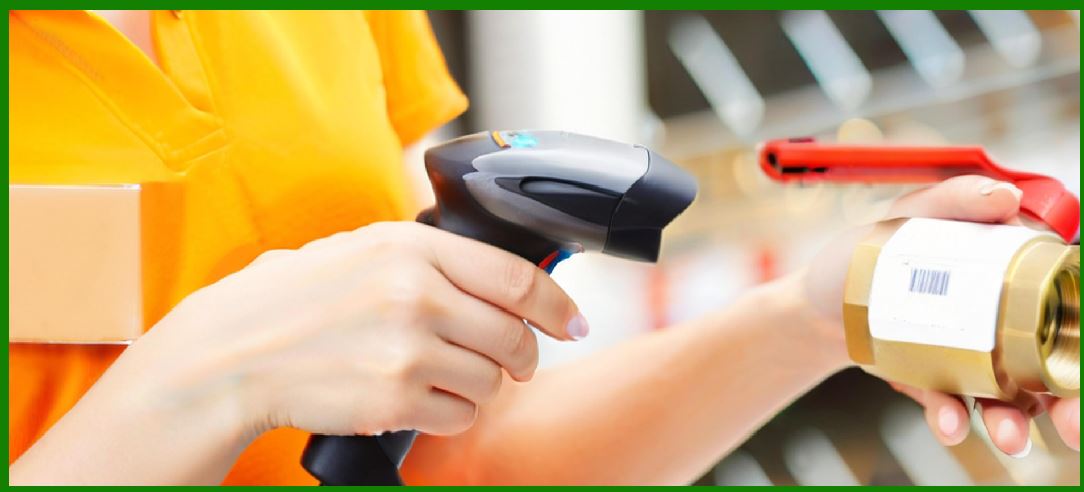
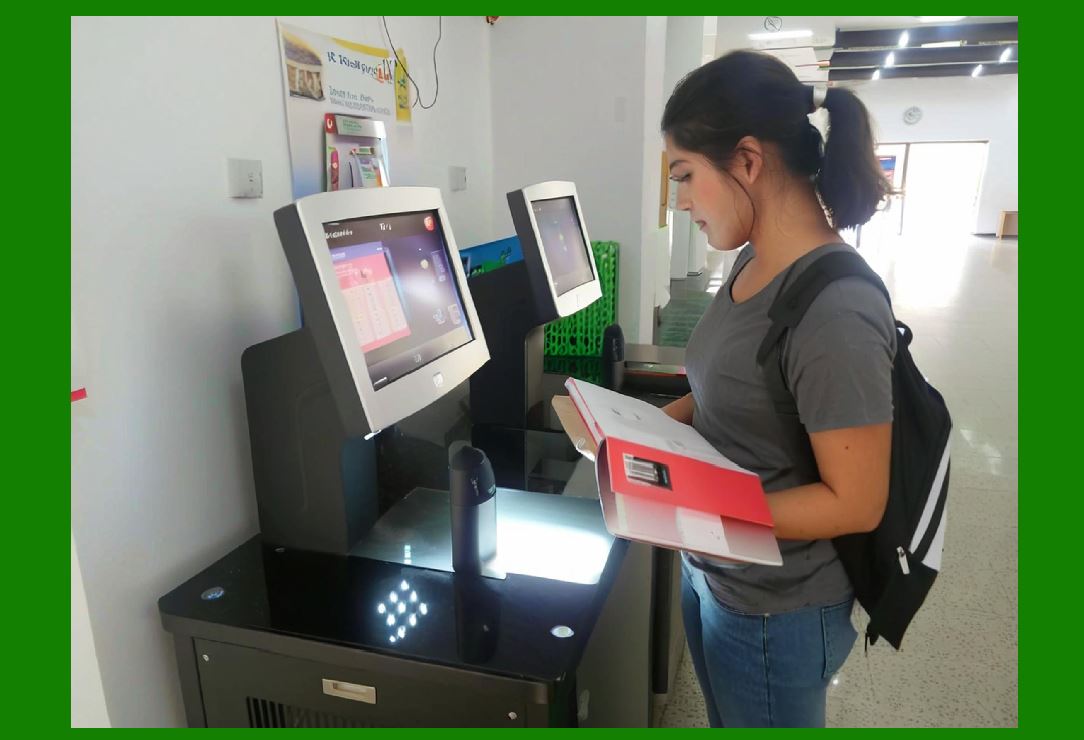
Consider a supermarket checkout scanner. The scanner sits under bright, flickering fluorescent light. Cashiers slide products across the window at varying speeds. The labels are often crumpled or partially obscured. The ambient light level changes as products and hands pass over the window. |
Here the DC pedestal is large and constantly changing. The high-pass filter must reject the steady pedestal from the overhead lights and the slow changes as objects move. The barcode signal itself, from a laser scan or an imager, is fast. A corner frequency in the low kilohertz range is typical for laser scanners, balancing the need to keep the bar transitions sharp against the need to reject the 100 or 120 hertz flicker and the slower drift from moving objects. Without this filter, the first gain stage would saturate every time a bright product passed under the light, and the scanner would miss labels. With it, the scanner can decode reliably even under poor lighting. |
|
7. Practical Example: Warehouse and Logistics |
Warehouse scanners face a different environment. Lighting may be high-bay LED or sodium vapor, with deep shadows and bright reflections off shrink wrap. Workers scan labels at odd angles and distances. The scanner may be a handheld gun or a fixed mount on a conveyor. |
In a fixed-mount conveyor scanner, the label passes at a known speed, so the barcode frequency band is predictable. The high-pass filter can be tuned to that band. The pedestal comes from the conveyor lighting and from the reflective shrink wrap, which can produce sudden bright glints. The filter plus baseline recovery must survive these glints without losing lock. In handheld scanners, the speed varies with the worker's hand, so the filter corner must be more forgiving. The design reality is that the same filter block must serve both use cases, or the product line must offer different front-end configurations. |

|
8. Practical Example: Healthcare and Laboratory |
In hospitals and labs, scanners read patient wristbands, specimen labels, and medication packaging. Lighting is usually stable indoor LED or fluorescent, but the labels are often small and printed with low contrast. The scanner may be a bedside imager or a handheld. |
Here the pedestal is moderate, but the signal is weak because of low contrast and small bar widths. The high-pass filter must not remove too much of the signal. The corner frequency is chosen lower than in a retail laser scanner, and the filter is paired with a low-noise gain stage. Baseline recovery is critical because the scanner may move from a dark pocket to a bright label quickly. A poorly designed filter here shows up as intermittent read failures on the smallest labels, a common complaint in clinical settings. |

|
9. Practical Example: Manufacturing and Automation |
On a production line, scanners verify parts, track work-in-progress, and read direct part marks. Lighting may include bright machine-vision strobes, welding flashes, or infrared illuminators. The pedestal can be extreme, and the interference can be impulsive. |
The high-pass filter in this setting must reject not only steady ambient light but also low-frequency flicker from industrial lighting and the slow drift from temperature changes. The filter is often part of a larger analog front end with automatic gain control. The design reality is that the filter corner may need to be adjustable, either at manufacture or dynamically, to cope with different line speeds and lighting. A filter that is perfect for a slow conveyor may be too aggressive for a high-speed sorting line. |

|
10. Practical Example: Access Control and Ticketing |
Access control readers, ticket scanners, and turnstile scanners operate indoors and outdoors. Outdoor units face sunlight, which is the worst-case pedestal source. Sunlight can be thousands of times brighter than the scanner's own illumination. The high-pass filter is essential here; without it, the TIA output would be dominated by the sun and the gain stages would saturate immediately. |
The design must also handle the transition from shade to sun, which produces a large step. Baseline recovery and a well-chosen filter corner keep the reader working as a person walks from a shadowed doorway into sunlight. This is a classic example of why the filter is not cosmetic: it is the difference between a reader that works outdoors and one that only works in a lobby. |

|
11. Practical Example: Postal and Parcel Sorting |
Postal sorting machines scan labels on parcels moving at high speed. The labels may be curved, dirty, or covered in tape. Lighting is typically controlled, but the parcels themselves create shadows and reflections. The pedestal varies as parcels of different colors and finishes pass the scan head. |
The high-pass filter must pass the fast barcode signal while rejecting the slow variations from parcel color and lighting. Because the parcels move fast, the barcode frequency band is high, so the filter corner can be set relatively high, which helps reject the pedestal. But the filter must also survive the sudden transitions when a parcel edge passes, which produce step-like changes. Baseline recovery and a filter with well-behaved transient response are both necessary. Sorting centers run around the clock, so temperature stability of the filter components matters as well. |

|
12. Practical Example: Mobile Phone Scanning |
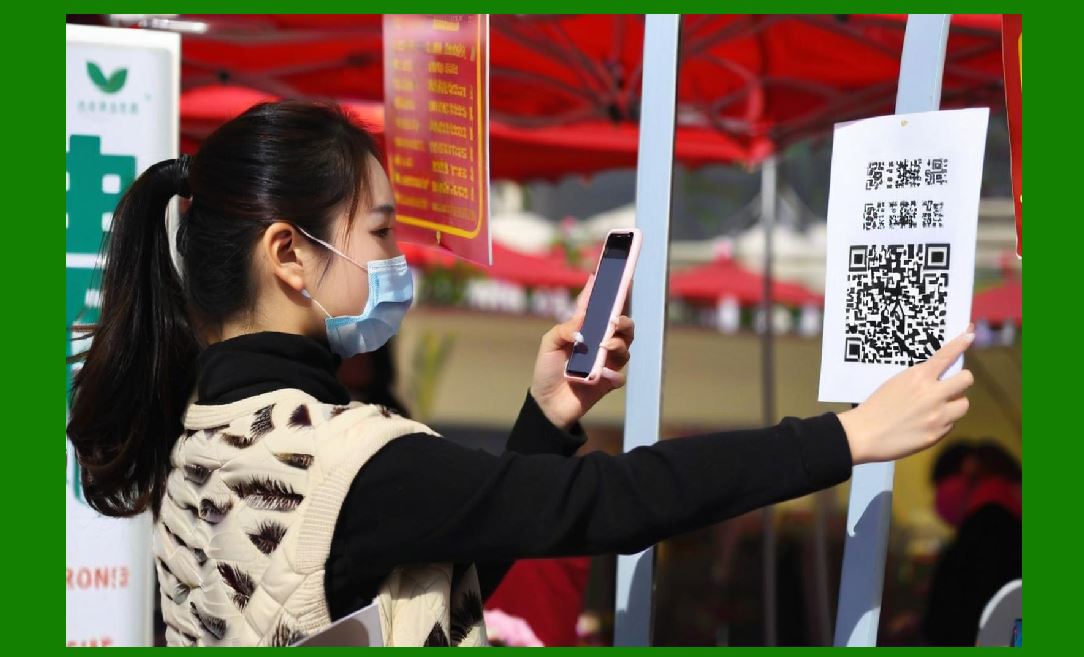
A smartphone scanning a barcode uses a camera, not a laser, but the same principle applies. The image sensor's pixels accumulate light, and ambient light creates a large background level. Image processing removes much of this digitally, but the analog front end still benefits from high-pass filtering to avoid saturating the sensor's analog gain stages. |
In mobile scanning, the 'filter' is partly in the analog domain and partly in software. The design reality is that the phone must work in everything from a dark warehouse to bright sunlight, so the analog filter must be conservative and the digital baseline correction must be robust. This is a good example of how the high-pass filter concept extends beyond the classic analog scanner into modern imaging systems. |

|
13. Practical Example: Automotive and Industrial Sensors |
Barcode-like and optical sensing appears in automotive production lines and industrial equipment. Here the environment includes welding flashes, strong ambient light, and electrical noise. The high-pass filter is one part of a front end designed for electromagnetic compatibility and wide temperature range. The corner frequency may be chosen to reject mains flicker and mechanical vibration-induced drift, while preserving the signal band. The design reality is that the filter must be characterized over temperature, because component values drift and the corner moves. A filter that is correct at room temperature may be too aggressive or too lax at the temperature extremes of a factory floor. |

|
14. Design Pitfalls and How to Avoid Them |
Several pitfalls recur in high-pass filter design for scanners. First, choosing the corner too high distorts wide bars and causes droop, leading to decode errors on labels with wide elements. Second, choosing the corner too low lets too much pedestal through, saturating later stages in bright light. Third, ignoring the filter's transient response causes baseline wander after bright-to-dark transitions. Fourth, using components with poor temperature stability shifts the corner across the operating range. Fifth, forgetting that the filter interacts with the TIA's output impedance and the next stage's input impedance, which can change the effective corner. |
Avoiding these pitfalls requires simulation, bench testing under representative lighting, and field testing in the target environment. It also requires a clear specification of the barcode frequency band and the expected ambient light conditions. The filter is a small block, but it sits at a critical junction, and its design deserves the same care as the TIA itself. |

|
15. How the Filter Interacts with Automatic Gain Control |
Many scanners include automatic gain control, or AGC, after the high-pass filter. AGC adjusts the gain so that the signal uses the full dynamic range of the comparator and decoder. If the filter leaves residual pedestal, the AGC may misinterpret it as signal and set the wrong gain. If the filter removes too much, the AGC may over-amplify noise. The filter and AGC must be designed together. In practice, the filter sets the baseline near zero, and the AGC adjusts the AC amplitude. Baseline recovery then fine-tunes the zero crossing. This three-part arrangement, filter, AGC, and baseline restorer, is the standard architecture in a robust scanner front end. |

|
16. The Role of the Filter in Noise Performance |
The high-pass filter also affects noise. By rejecting low frequencies, it removes low-frequency noise from the photodiode and the TIA, including flicker noise and drift. This can improve the signal-to-noise ratio in the barcode band. But the filter can also amplify noise if it is configured as an active differentiator with high gain at high frequencies. The designer must balance the noise benefit against the risk of amplifying high-frequency interference. In a well-designed scanner, the filter's noise contribution is small compared with the shot noise of the photodiode and the input noise of the TIA. |

|
17. Testing and Validation |
Validating the high-pass filter requires more than a sine-wave sweep. The designer should test with representative barcode labels at representative speeds, under representative lighting, including sunlight, fluorescent, and LED. The test should include bright-to-dark and dark-to-bright transitions to check baseline recovery. It should include labels with wide bars to check droop, and labels with narrow bars to check high-frequency response. It should include temperature sweeps to check corner stability. Field testing in the target environment, whether a supermarket, a warehouse, or an outdoor gate, is essential. The filter's performance in the lab is necessary but not sufficient. |
|
18. A Note on Component Selection |
The components around the high-pass filter matter. Resistors with low temperature coefficient and capacitors with stable dielectric help keep the corner frequency constant. For passive RC filters, the capacitor type matters: some dielectrics change value with voltage and temperature, shifting the corner. For active filters, the op-amp's bandwidth and input bias current matter. The designer should choose components rated for the operating temperature range and should derate margins. In high-volume products, cost pressures push toward cheaper components, so the design must be robust to the resulting variation. |
|
19. How This Block Fits the Book's Theme |
This book is about the journey from photons to bits. The high-pass filter is a key step in that journey. Photons become photocurrent, photocurrent becomes voltage with a pedestal, and the filter removes the pedestal so the voltage can be amplified and digitized. Without this step, the journey stalls at the first gain stage. The filter is a simple circuit, but it embodies a central lesson of the book: every block in the signal chain must hand off a signal the next block can use. The high-pass filter is where the scanner stops being a light detector and starts being a barcode reader. |

|
20. Detailed Summary |
To summarize in detail: The transimpedance amplifier converts the photodiode's current into a voltage, but that voltage carries a large DC pedestal from ambient light, including sunlight, fluorescent flicker, and LED illumination. This pedestal is not cosmetic. If passed to subsequent gain stages, it causes saturation and destroys the barcode signal. The high-pass filter after the TIA removes the pedestal and slow drift while preserving the faster barcode transitions. |
The filter's corner frequency is a critical design choice. Too high, and wide bars droop and distort. Too low, and the pedestal survives to saturate later stages. The corner must sit below the barcode signal band and above the ambient drift and flicker frequencies, and it must be stable over temperature and component tolerance. The filter is typically an RC network or an active filter around an op-amp, chosen for cost, board space, and performance. |
The high-pass filter alone is not enough. Baseline recovery is needed to handle abrupt changes in ambient light, such as moving from shade to sunlight or a bright product passing under the scan window. The filter, automatic gain control, and baseline restorer form a three-part front end that keeps the signal centered and scaled for the comparator and decoder. |
Real-world applications illustrate the principle. Retail point-of-sale scanners must reject flickering fluorescent light and changing pedestals as products move. Warehouse and logistics scanners must handle LED and sodium lighting, reflections off shrink wrap, and varying scan speeds. Healthcare scanners must preserve weak signals from low-contrast labels while rejecting moderate pedestals. Manufacturing scanners must survive strobes, welding flashes, and impulsive interference. Access control and ticketing readers must handle direct sunlight and shade-to-sun transitions. Postal sorting machines must cope with fast-moving parcels, varied colors, and round-the-clock operation. Mobile phones blend analog filtering with digital correction to work from dark rooms to bright outdoors. Automotive and industrial sensors must meet electromagnetic compatibility and wide temperature requirements. |
Design pitfalls include corner frequency errors, ignored transient response, poor temperature stability, and impedance interactions with neighboring stages. Avoiding them requires simulation, bench testing under representative lighting, and field testing in the target environment. The filter also interacts with automatic gain control and affects noise performance, so it must be designed as part of the whole front end. Component selection matters for stability and cost. Testing must go beyond sine sweeps to include real labels, real lighting, and real transitions. |
In the book's larger narrative, the high-pass filter is the block that turns a raw photodiode signal into something the rest of the scanner can use. It is a small circuit with a large responsibility. It embodies the book's central theme: the journey from photons to bits depends on each stage handing off a clean, usable signal to the next. The high-pass filter is where the DC pedestal is removed and the barcode signal is given a fair chance to be amplified, digitized, and decoded. Designers who treat it as an afterthought pay for it in field failures. Designers who treat it as a first-class part of the signal chain build scanners that work in the real world, under real light, with real labels, day after day. |
 cs@easiersoft.com