Section Summary |
The first circuit a photon meets after becoming an electron is almost always a transimpedance amplifier. Its job sounds simple: take the tiny current the photodetector produces and turn it into a voltage the rest of the system can use. But the way it does that job, by holding the detector at a near-zero impedance while measuring the current through a feedback path, is what preserves the bandwidth that makes high-speed scanning possible. This chapter expands on that single sentence by looking at how the transimpedance amplifier behaves in real products across retail, logistics, healthcare, manufacturing, and beyond. The goal is not to turn readers into circuit designers but to show why this first stage matters so much that a scanner's entire usefulness can hinge on choices made within a few square millimeters of silicon. |

|
1. The Problem the Transimpedance Amplifier Solves |
A photodetector in a barcode scanner does not output a voltage. It outputs a current. When light strikes the photodiode junction, electron-hole pairs are created and a small current flows. The magnitude of that current is proportional to the optical power landing on the detector. In a typical scanner, that current might range from a few nanoamperes in dim ambient conditions to tens of microamperes when a bright laser spot reflects off a clean label. |
The rest of the signal chain, the analog-to-digital converter, the decoder, the digital signal processor, all expect a voltage. Something has to convert current to voltage. The naive approach is to pass the current through a resistor. Ohm's law gives a voltage. But this naive approach fails for a reason that becomes obvious the moment you think about speed. |
A photodiode is not an ideal current source. It has capacitance. The junction capacitance of a small photodiode might be a few picofarads. When that capacitance is connected to a resistor, it forms a low-pass filter. The resistance and capacitance together set a time constant. A large resistor gives a large voltage for a given current, which is desirable for sensitivity, but it also gives a long time constant, which destroys bandwidth. A small resistor preserves bandwidth but produces a voltage so tiny that noise swallows it. |
The transimpedance amplifier breaks this trade-off. It does so by using an amplifier with feedback. The photodiode connects to the amplifier's inverting input, which is a virtual ground. The amplifier actively holds that node at a fixed voltage, typically zero volts relative to the non-inverting input. Because the voltage across the photodiode barely moves, its capacitance is not charged and discharged by the signal. The bandwidth limitation imposed by the detector capacitance largely disappears. The current flows instead through a feedback resistor, and the amplifier's output voltage is the product of that current and the feedback resistance. |
The phrase 'presenting a low impedance to the detector' in the chapter's opening sentence captures this precisely. The transimpedance amplifier is not a passive resistor. It is an active circuit that behaves, from the detector's point of view, like a near-short. The detector sees almost no voltage swing, so its capacitance is neutralized. The signal current is steered into the feedback path, where it can be measured with a large effective gain without paying the bandwidth penalty that a passive resistor of the same value would impose. |

|
2. Why Bandwidth Preservation Is Not a Luxury but a Requirement |
It is tempting to think of bandwidth as a specification that matters only to engineers designing high-end equipment. In barcode scanning, bandwidth is the difference between a scanner that works and one that does not. |
Consider a supermarket checkout. A cashier slides a box of cereal across a glass window. The scanner's laser beam sweeps across the barcode at a rate of hundreds of scans per second. Each sweep produces a burst of reflected light as the beam crosses a black bar, then a gap as it crosses a white space. The photodiode current rises and falls in a pattern that mirrors the bar-space sequence. To decode that pattern, the electronics must distinguish individual transitions. If the transimpedance amplifier is too slow, the transitions blur together. A narrow bar and the space next to it become indistinguishable. The decoder fails. |
The same principle applies in every scanning context, but the stakes vary. In retail, a failed scan means a customer waits a few extra seconds while the cashier tries again. In logistics, a failed scan on a conveyor belt moving at two meters per second means a package arrives at the wrong sorting destination. In healthcare, a failed scan on a medication vial means a nurse has to manually key in a drug identifier, introducing a small but real opportunity for error. |
Bandwidth also matters because barcodes themselves have become denser. A one-dimensional barcode like Code 128 packs more information into the same linear space than the older UPC standard. A two-dimensional symbol like a Data Matrix code packs hundreds of characters into a square a few millimeters on a side. Denser symbols mean narrower elements, which mean faster transitions in the photocurrent, which mean the transimpedance amplifier must preserve higher frequencies. The trend in barcode symbology has been relentlessly toward higher spatial frequencies, and the transimpedance amplifier has had to follow. |
|
3. The Retail Checkout: Where the Transimpedance Amplifier Meets the Real World |
The supermarket scanner is the most familiar example, and it is also one of the most demanding in terms of cost constraints. A presentation scanner at a checkout lane must be inexpensive enough that a store can deploy thousands of them, yet reliable enough to survive years of continuous operation. The transimpedance amplifier inside such a scanner is a study in compromise. |
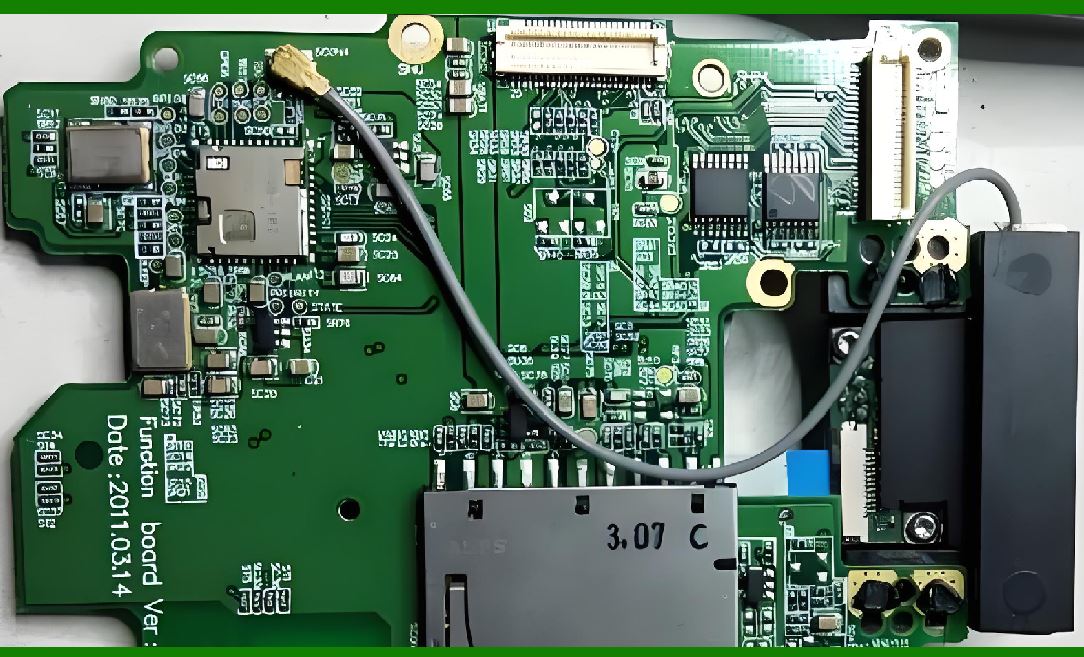
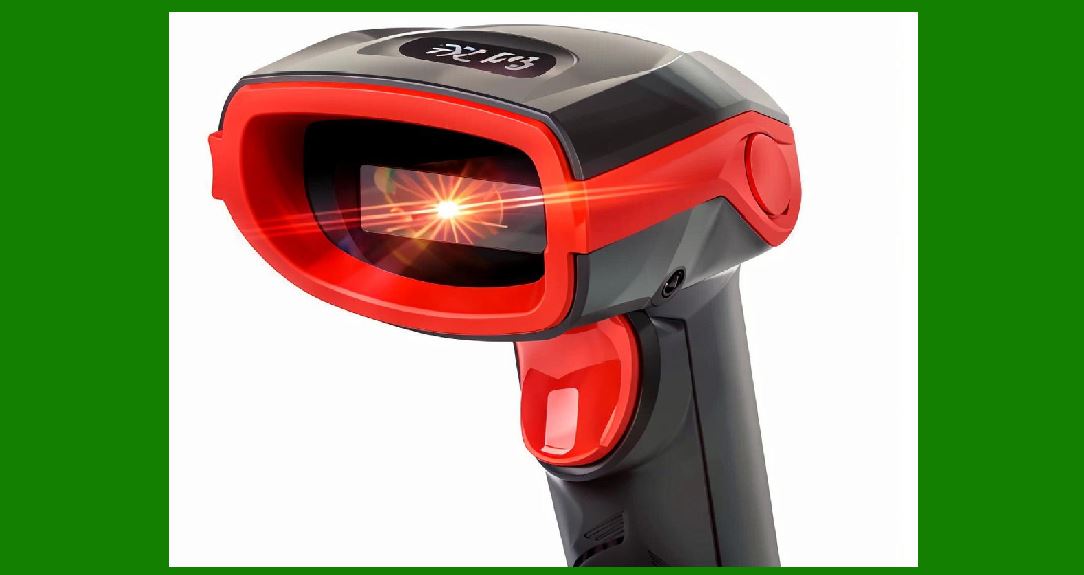
The optical layout of a typical retail scanner involves a laser diode, a spinning or oscillating mirror, and a photodiode. The mirror sweeps the beam across the barcode at a rate determined by the motor or the resonant frequency of the scanning element. Light returning from the barcode follows a reciprocal path back to a collection lens and onto the photodiode. The photodiode might be a small silicon device with a junction capacitance of a few picofarads. |
The transimpedance amplifier must handle a wide dynamic range. When the beam hits a white space, the reflected signal is strong. When it hits a black bar, almost no light returns. The ratio between the two states can be a hundred to one or more, depending on the print quality and the angle of incidence. The amplifier must not saturate on the strong signal, and it must not be so noisy that the weak signal is lost. This is a classic headroom-versus-sensitivity problem, and the transimpedance amplifier sits right in the middle of it. |
Retail scanners also operate in ambient light. Fluorescent overheads, sunlight through a window, and the scanner's own aiming pattern all contribute to the photodiode current as a slowly varying background. The transimpedance amplifier must reject this background while amplifying the fast transitions that carry the barcode information. The feedback network and the amplifier's own characteristics determine how well this rejection works. A poorly designed first stage will pass along ambient flicker and confuse the decoder. |
The physical environment adds another layer. Checkout scanners are cleaned with harsh chemicals. They are bumped and dropped. They operate in temperatures that range from the cold of an unheated warehouse in winter to the heat of a summer loading dock. The transimpedance amplifier's performance must be stable across these conditions. A design that works beautifully at room temperature but drifts with temperature will cause intermittent failures that are maddening to diagnose. |

|
4. Logistics and Warehousing: Speed Under Pressure |
A distribution center is a different kind of environment. The barcodes are often printed on corrugated cardboard, which is rough and absorbent. The labels may be smudged, wrinkled, or partially covered by tape. The scanner might be mounted on a forklift, on a conveyor line, or held by a worker wearing gloves. The demand for speed is relentless: packages per hour is the metric that matters, and every failed scan costs time. |
In this environment, the transimpedance amplifier's noise performance becomes critical. Corrugated cardboard diffuses light. The reflected signal that reaches the photodiode is weaker than the signal from a glossy retail label. The amplifier must extract a usable signal from a photocurrent that might be only a fraction of what a checkout scanner sees. Noise that would be negligible in a retail setting becomes the limiting factor in a warehouse. |
The amplifiers used in handheld industrial scanners often employ a technique called T-network feedback or a similar topology to achieve high transimpedance without an impractically large single resistor. A very large feedback resistor, on the order of megohms, gives high sensitivity but interacts with the photodiode capacitance and the amplifier's input capacitance to create stability problems. The T-network uses a smaller resistor and a voltage divider to synthesize a larger effective transimpedance, trading some noise performance for stability and bandwidth. The designer's job is to find the operating point that satisfies the system's requirements for scan rate, working distance, and label quality. |
Conveyor-mounted scanners present a different challenge. The package is moving. The scanner has a limited window of time to capture the barcode. In a high-speed sortation system, a package might pass the scanner in a fraction of a second, and the barcode might be oriented in any direction. Omnidirectional scanning solves the orientation problem by projecting a pattern of laser lines or by using an area sensor, but it places even more demand on the first stage. Multiple scan lines mean multiple opportunities to catch the barcode, but only if each individual scan is fast enough and clean enough to be decoded. |
The transimpedance amplifier in a fixed-mount logistics scanner also faces electrical interference. Conveyor motors, variable-frequency drives, and industrial lighting all generate electromagnetic noise. The photodiode and its amplifier form a high-impedance node that is susceptible to picking up this noise. Shielding and careful layout matter, but the amplifier's own common-mode rejection and power-supply rejection play a role as well. A first stage that is sensitive to power-supply ripple will convert that ripple into apparent signal, creating phantom transitions that the decoder must somehow reject. |

|
5. Healthcare: When a Scan Is a Safety Check |
In a hospital, barcode scanning is not about throughput. It is about preventing errors that can harm patients. A nurse scanning a medication vial before administration is performing a check that the right drug is going to the right patient at the right dose. A scan that fails does not just cost time. It creates pressure to bypass the check, to key in the identifier manually, to trust memory instead of the system. |
The transimpedance amplifier in a healthcare scanner must therefore be reliable in a different sense. It must work every time, under conditions that are less than ideal. Medication vials are curved and reflective. They may be covered in condensation from a refrigerator. They may be small, with barcodes printed at low contrast on a curved surface. The photodiode current in such a scan is weak and variable, and the amplifier must extract a clean signal without introducing artifacts that could cause a misread. |
Healthcare scanners are also subject to cleaning regimens that would destroy consumer electronics. They are wiped down with disinfectants that contain alcohol, bleach, or quaternary ammonium compounds. The transimpedance amplifier itself is sealed inside the housing, but the optical window and the internal environment are affected. Temperature swings from repeated cleaning and from storage in different areas of the hospital can shift the amplifier's offset and gain. A well-designed first stage includes compensation for these effects, or at least enough margin that they do not degrade performance below the decoding threshold. |
The stakes are highest in medication administration and specimen tracking. A specimen tube with a barcode that misreads could be routed to the wrong lab test. A patient wristband that fails to scan could lead to a identification error. These are not hypothetical concerns. They are the reason healthcare scanners are subjected to validation protocols that consumer scanners never see. The transimpedance amplifier is a small part of that validation, but it is a part that must not fail. |

|
6. Manufacturing and Work-in-Process: The Scanner as a Data Source |
On a factory floor, barcodes track parts as they move through production. A workpiece might be scanned dozens of times as it passes from station to station. Each scan updates a database that tells the next station what to do, or tells the quality system what was done. A missed scan breaks the chain. The part's history becomes incomplete. The system may halt the line or flag the part for rework. |
The transimpedance amplifier in a manufacturing scanner operates in an environment that is electrically noisy and optically challenging. Machining coolant mist, dust, and metal shavings can cloud the optical path. The barcode might be printed on a rough metal surface, dot-peened directly into the material, or etched by a laser. These direct-part-marking codes are often low contrast and have irregular edges. The photocurrent signal is weak and noisy, and the amplifier must preserve enough fidelity that the decoder can still find the pattern. |
Fixed-mount scanners on production lines often use CCD or CMOS sensors rather than laser scanning. In these systems, the transimpedance amplifier is part of the analog front end for each pixel column or for the entire array, depending on the sensor architecture. The bandwidth requirements are set by the pixel rate rather than by a scanning mirror, but the fundamental challenge is the same: convert a small photocurrent into a voltage without losing the information that the light carries. |
Manufacturing environments also demand long cable runs between the scanner and the controller. The transimpedance amplifier's output must drive a cable that may be tens of meters long, with all the capacitance and noise pickup that entails. A poorly designed output stage can oscillate or ring, corrupting the signal before it ever reaches the decoder. The first stage's stability, in the control-theory sense, has consequences that extend far beyond the circuit board. |
|
7. The Transimpedance Amplifier in Unusual Places |
Barcode scanning has spread into applications that its inventors never imagined. Each of these applications places its own constraints on the first circuit. |
Library and archival scanning. Books and documents present barcodes that are often old, faded, and printed on paper that has yellowed with age. The contrast between bar and space may be barely perceptible. The scanner must integrate a longer exposure or use a stronger illumination, but neither option is free. The transimpedance amplifier must handle a photocurrent that is both weak and slow, with noise that is dominated by the amplifier itself rather than by the signal. Archival scanners often use cooled detectors or long integration times, and the amplifier's low-frequency noise, the flicker noise that rises at low frequencies, becomes the limiting factor. Chopping or auto-zeroing techniques may be employed, each with its own trade-offs in complexity and residual artifacts. |
Event and access control. A barcode on a concert ticket or a boarding pass is scanned at a gate where the person holding it is moving, often in dim light, with a scanner that may be handheld or fixed. The barcode is printed on paper or displayed on a phone screen. The phone screen presents a particular challenge: the barcode is emissive rather than reflective, and the screen's refresh rate can interact with the scanner's sampling to create flicker artifacts. The transimpedance amplifier must have enough bandwidth to capture the fastest transitions in the displayed pattern, and enough dynamic range to handle the brightness of a phone screen at close range without saturating. |
Agriculture and food traceability. Barcodes on produce, on meat packaging, and on shipping containers track food from farm to table. In a packing house, the scanner may be exposed to water, dirt, and temperature extremes. The labels may be wet or covered in condensation. The transimpedance amplifier's performance must be stable across a wide temperature range, and its packaging must survive the washdown procedures that food safety regulations require. |
Pharmaceutical serialization. Every prescription drug package in many countries now carries a unique serial number in a two-dimensional barcode. These codes are printed at high speed on packaging lines, and they must be verified at multiple points in the supply chain. The scanner must read codes that are sometimes poorly printed, sometimes damaged, and sometimes obscured by labels or overwrap. The transimpedance amplifier in a serialization scanner must deliver consistent performance over millions of scans, because the consequence of a read failure is a quarantine or a recall. |
Automotive and aerospace assembly. Parts in these industries carry barcodes that trace them to a specific lot, a specific supplier, and a specific test record. A failed scan on a safety-critical component means the part cannot be released. The scanner must read codes on curved surfaces, on reflective metals, and in lighting conditions that range from the dim interior of an aircraft fuselage to the bright fluorescent glare of an assembly hall. The first stage's ability to reject ambient light while preserving the signal is what makes these scans possible. |

|
8. What the Transimpedance Amplifier Does Not Do |
It is worth being clear about the limits of this first circuit. The transimpedance amplifier does not decode the barcode. It does not decide whether a transition represents a bar or a space. It does not correct for printing defects or for motion blur. All of those functions happen later, in the analog conditioning stages that follow and in the digital domain. |
What the transimpedance amplifier does is preserve the information. Every transition in the photocurrent, every nuance of amplitude that the optical system delivers, passes through this first stage. If the amplifier is too slow, fast transitions are smoothed away. If it is too noisy, small transitions disappear into the noise floor. If it saturates, large transitions are clipped and their timing is distorted. Once the information is lost at this stage, no amount of downstream processing can recover it. The decoder can only work with what the first stage delivers. |
This is why the opening sentence of this chapter says the transimpedance amplifier is 'almost always' the first circuit. There are alternatives. A simple resistor can work for very low bandwidth applications where the detector capacitance is negligible. A charge amplifier can be used in integrating systems where the signal is accumulated over time rather than sampled continuously. A logarithmic amplifier can compress a wide dynamic range into a manageable output. But for the vast majority of barcode scanners, from the checkout lane to the hospital ward to the factory floor, the transimpedance amplifier is the circuit that turns photons into a voltage that the rest of the system can understand. |
|
9. The Design Reality Behind the Ideal |
Textbook descriptions of the transimpedance amplifier present it as a clean abstraction: an operational amplifier, a feedback resistor, and a photodiode. The real circuit is messier. |
The photodiode's capacitance, which the amplifier is supposed to neutralize, is never completely neutralized. The amplifier's finite gain and finite bandwidth mean that the input node is not a perfect virtual ground. Some voltage movement remains, and that movement interacts with the detector capacitance to create a pole in the loop response. If the pole is too close to the amplifier's other poles, the circuit oscillates. Oscillation in a scanner's first stage produces a continuous tone or a noisy output that the decoder cannot interpret. The scanner appears dead, even though the photodiode is working perfectly. |
The feedback resistor, which sets the gain, is not an ideal resistor. It has parasitic capacitance across its body and to the surrounding conductors. At high frequencies, that capacitance provides a path for signal to bypass the resistor, reducing the effective transimpedance and altering the phase of the feedback. The designer must account for this capacitance, sometimes by adding a small capacitor in parallel with the feedback resistor to compensate, sometimes by choosing a layout that minimizes the parasitics in the first place. |
The amplifier itself contributes noise, offset, and distortion. Its input voltage noise appears at the output multiplied by the noise gain of the configuration. Its input current noise flows through the feedback network and produces an output voltage. Its offset voltage shifts the operating point, reducing headroom. Its finite open-loop gain causes gain error. None of these imperfections can be eliminated entirely. The designer's task is to choose an amplifier and a topology where the imperfections are small enough that the decoder can still function across the range of conditions the product will encounter. |
The printed circuit board on which the circuit is built is part of the circuit. A trace that carries the photodiode current is a high-impedance node. It couples to nearby traces and to the ground plane. Stray capacitance from that trace to ground adds to the photodiode capacitance and degrades the phase margin. Stray coupling from a digital trace nearby injects noise into the first stage. The layout of a transimpedance amplifier is not an afterthought. It is a design activity that determines whether the circuit works or fails. |

|
10. Why This First Stage Matters More Than Its Cost |
The transimpedance amplifier is often one of the least expensive parts of a scanner. The operational amplifier might cost less than a dollar in volume. The feedback resistor costs pennies. The photodiode is more expensive but still a small fraction of the total bill of materials. Yet this inexpensive circuit determines whether the scanner works at all. |
A scanner with a brilliant decoder, a fast processor, and a rugged housing will still fail if the first stage cannot deliver a clean signal. The decoder cannot decode transitions that were never captured. The processor cannot process information that was lost to noise. The housing cannot protect a circuit that oscillates in the presence of the detector capacitance it was supposed to neutralize. |
This is the lesson that the opening sentence of this chapter contains. The transimpedance amplifier is first not because it is the most important in some abstract hierarchy, but because it is the gatekeeper. Everything that follows depends on the fidelity of what passes through that gate. A designer who understands this circuit, who respects its limitations and its sensitivities, is a designer who can build a scanner that works in the real world, not just on a bench. |

|
11. Detailed Summary |
The transimpedance amplifier is the first active circuit in almost every barcode scanner because it solves a fundamental problem: converting the small, fast current from a photodetector into a voltage without sacrificing the bandwidth that the scanning application requires. The circuit achieves this by holding the detector at a near-zero impedance, neutralizing the detector's capacitance, and steering the signal current into a feedback path where it can be measured with high effective gain. |
Bandwidth preservation is not an abstract specification. It is the difference between a scanner that can resolve the narrow elements of a dense barcode and one that cannot. In retail, bandwidth determines whether a checkout lane keeps moving. In logistics, it determines whether a package is sorted correctly on a high-speed conveyor. In healthcare, it determines whether a medication scan succeeds before the nurse administers the drug. In manufacturing, it determines whether the production database has a complete record of every part that passed through the line. |
The design of the transimpedance amplifier is shaped by the application. A retail scanner must be inexpensive and stable across temperature and cleaning. A logistics scanner must extract weak signals from rough cardboard and reject electrical noise from conveyor motors. A healthcare scanner must be reliable enough to trust with patient safety. A manufacturing scanner must survive dust, coolant, and long cable runs. Each application imposes its own constraints, and the first stage must satisfy them all while remaining stable and quiet. |
The circuit's imperfections are as important as its ideal behavior. Detector capacitance, amplifier finite gain and bandwidth, feedback parasitics, board layout, and power-supply noise all interact to determine whether the circuit oscillates, how much noise it contributes, and how much signal it preserves. The designer's job is not to eliminate these imperfections but to manage them within the margins that the decoder can tolerate. |
The transimpedance amplifier is not glamorous. It does not decode. It does not decide. It does not correct. It simply converts and preserves. But because it is first, its failures are unrecoverable. Every photon that becomes a bit in a barcode scanner passes through this circuit, and every bit that emerges correctly is a small testament to the designer who understood that the first circuit matters most. |
 cs@easiersoft.com