Summary |
Chapter 20 marks a turning point in our examination of the wand scanner. Having established in earlier chapters that the wand represents the absolute minimum of circuitry required to convert light into bits, we now confront the consequence of that minimalism. The fatal limitation of the wand is not its speed, nor its durability, nor its cost, but its depth of field. Because the wand relies on a broad LED illumination and a single photodiode that integrates every photon returned from the target, it possesses no spatial resolution mechanism beyond the fixed aperture. This chapter explores what that means in practice, why it matters, and where the wand nevertheless survives and even thrives in the modern barcode landscape. We will examine real deployments across retail, logistics, healthcare, manufacturing, and field service, drawing out the specific conditions under which a scanner with an essentially nonexistent depth of field remains the correct engineering choice. |
|
1. The Physical Origin of the Wand's Depth Problem |
1.1 Illumination Without Discrimination |
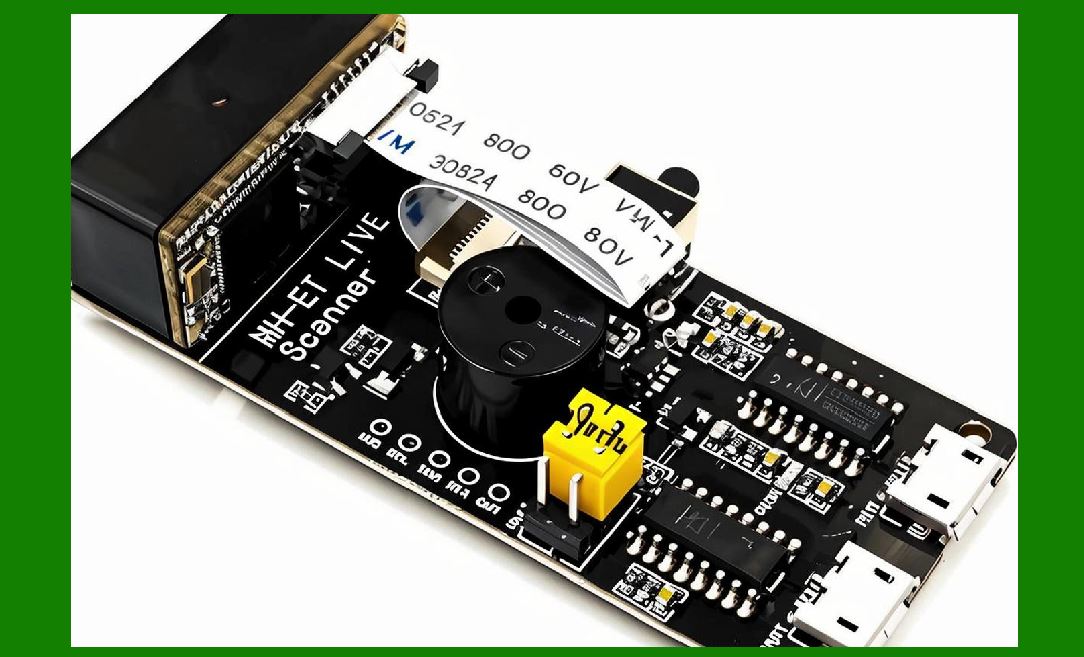
A wand scanner illuminates its target with an LED that floods a relatively wide area with light. This is not a focused beam in the sense of a laser scanner. The LED emits photons in many directions, and the wand's simple lens collects whatever light happens to return from the barcode surface and directs it onto a photodiode. The photodiode does not form an image. It produces a single current proportional to the total flux falling upon its active area. There is no pixel array, no scanning mirror, no line of charge-coupled devices reading out spatial information row by row. The wand's entire optical system consists of a light source, a lens, and a detector that averages everything it sees. |
This architecture is the source of the wand's remarkable simplicity and its equally remarkable limitation. Because the photodiode integrates all returned light, the electrical signal it produces depends on the spatial pattern of dark and light bars only insofar as that pattern modulates the total reflectance as the wand moves across the label. The wand must be in physical contact or near-contact with the barcode for this modulation to be sharp enough to decode. Move the wand even a modest distance away from the label, and the returned light from adjacent bars and spaces begins to overlap. The photodiode sees a blurred average rather than a sequence of distinct transitions. |

|
1.2 The Aperture as the Only Spatial Filter |
The one element that provides any spatial discrimination at all is the aperture. A small aperture restricts the cone of light that reaches the photodiode, which in turn limits the area of the barcode that contributes to the signal at any instant. But the aperture is fixed. It cannot be adjusted dynamically to accommodate different working distances. It cannot be replaced by a variable focus mechanism without adding cost, complexity, and moving parts, all of which defeat the purpose of the wand as a disposable or near-disposable device. The fixed aperture defines a single working distance at which the wand performs optimally. Outside that narrow zone, the signal degrades rapidly. |
This is fundamentally different from laser scanners, which use a focused beam that sweeps across the barcode and can maintain a small spot size over a considerable range of distances through careful optical design. It is also different from camera-based imagers, which capture a two-dimensional image and use software to locate and decode the barcode anywhere within the frame, regardless of whether the entire label is at the same distance from the lens. The wand has neither a scanning beam nor an imaging array. It has a light, a lens, and a detector. The depth of field is whatever the aperture happens to allow, and that is not much. |
|
1.3 Why the Problem Is Not Fixable Within the Wand Paradigm |
One might ask why the wand's designers did not simply add a focusing mechanism. The answer lies in the wand's value proposition. A wand scanner is cheap. It has no moving parts. It draws very little power. It can be dropped, stepped on, and replaced without a second thought. Adding a focusing mechanism, whether manual or automatic, would introduce moving parts, increase cost, and undermine the ruggedness that makes the wand attractive in the first place. Adding a second detector with a different aperture, as some patents have proposed, would increase complexity and cost without fundamentally solving the problem, because the two detectors would still each have a narrow depth of field, just at two different distances rather than one . |
The wand's depth of field limitation is therefore not a bug to be fixed. It is a direct consequence of the design choices that make the wand what it is. Understanding this is essential to understanding where the wand belongs and where it does not. |
|
2. Retail and Point-of-Sale: Where Contact Is Expected |
2.1 Small Retail and Convenience Stores |
In a small convenience store or a boutique, the checkout counter is not a high-throughput environment. The clerk knows the products, the barcodes are typically on flat or gently curved surfaces, and the volume of transactions per hour is modest. A wand scanner attached to the point-of-sale terminal, or a pen-style wand resting in a holder, is often entirely adequate. The clerk picks up the wand, touches its tip to the barcode, and sweeps across it. The contact eliminates the depth of field problem entirely because the wand is at zero distance from the label. The fixed aperture is designed for exactly this condition. |
Wand scanners are particularly well suited to reading barcodes from sheets of paper, such as price lists, menus, or inventory sheets, where multiple barcodes may be printed close together . A gun-style scanner requires the user to aim a beam at the correct barcode among many, which is error-prone when the barcodes are small and densely packed. A wand, by contrast, is physically touched to the desired barcode and swept across it. The contact provides a kind of tactile confirmation that the correct code has been selected. This is a subtle but real advantage in workflows where selecting the wrong barcode has consequences. |
|
2.2 Libraries and Archival Applications |
Public libraries and archives were among the earliest adopters of barcode technology, and wands remain in use in many smaller institutions. Library barcodes are typically printed on labels affixed to book covers or inside front pages. The labels are flat, the lighting is controlled, and the transaction volume is low to moderate. A wand scanner connected to a circulation desk terminal allows staff to check books in and out by dragging the wand across the barcode. The contact requirement is not a burden in this context because the books are already being handled. |
The wand's lack of moving parts is also an advantage in a library environment. There is nothing to break when a volunteer or a student worker drops the scanner on the desk. There is no laser to fail, no motor to wear out, and no imaging sensor to become misaligned. The wand either works or it does not, and when it does not, it is inexpensive to replace. |
|
2.3 The Persistence of Contact Scanning in Niche Retail |
Certain retail categories have stubbornly retained wand scanners long after the rest of the industry moved to laser and imaging technology. Auto parts stores, hardware stores, and some specialty electronics retailers often deal with products whose barcodes are on curved, irregular, or recessed surfaces. A wand can be touched directly to the label even when the label is on a cylindrical can, a textured box, or a surface that would be difficult to target with a beam from a distance. The contact scanning mode sidesteps the depth of field issue by eliminating distance altogether. |
These are not high-volume environments in the sense of a supermarket checkout lane, where thousands of items per hour must be scanned rapidly. They are environments where accuracy and the ability to read a barcode on an awkward surface matter more than raw speed. The wand's limitations are acceptable because the alternative, a more expensive scanner with a larger depth of field, does not actually solve the problem of reading a barcode that is wrapped around a curved surface at an awkward angle. |
|
3. Logistics and Warehousing: The Edge Cases |
3.1 Low-Volume Receiving and Shipping Desks |
In small warehouses and distribution centers, the receiving desk is often equipped with a wand scanner for occasional use. When a shipment arrives, a worker opens the carton, finds the packing slip or the product label, and scans the barcode. The volume of scanning is low, perhaps a few dozen scans per hour at most. The wand's inability to scan at a distance is irrelevant because the worker is already handling the item and can touch the wand to the label. |
These environments typically do not justify the cost of a ruggedized laser scanner or a camera-based imager with a large depth of field. The wand provides the necessary function at a fraction of the cost, and its lack of moving parts means it survives the occasional drop onto a concrete floor. |
3.2 Reading Barcodes Too Wide for Other Scanners |
There is a counterintuitive but well-documented use case for wand scanners in logistics: reading barcodes that are too wide for conventional scanners to capture in a single pass . Some shipping labels, particularly those printed on wide-format printers for large cartons or pallets, contain barcodes that exceed the scan width of a typical gun-style scanner. A wand, however, can be dragged across the barcode from one end to the other, effectively reading a barcode of arbitrary width because the scanning motion is provided by the human hand rather than by a limited-width beam or imaging array. |
This is a direct consequence of the wand's architecture. The wand does not need to capture the entire barcode in a single instant. It reads the barcode sequentially as the user sweeps across it. The depth of field constraint is satisfied because the wand is in contact with the label throughout the sweep. The width of the barcode is irrelevant to the wand's optics, as long as the user has a steady hand and enough patience to sweep the full length. |
3.3 Field Service and Mobile Inventory |
Field service technicians and mobile inventory workers sometimes carry wand scanners because they are small, lightweight, and can be powered by a handheld terminal or a laptop. In environments where the worker must travel to the asset rather than bringing the asset to a fixed scanner, the ability to carry a scanner in a pocket or tool bag matters. A wand is about as portable as a barcode scanner can be. |
The depth of field limitation is accepted as part of the tradeoff. The technician touches the wand to the asset tag, sweeps across it, and moves on. The scanning is not fast, but it does not need to be. The alternative, carrying a larger scanner with a battery, a laser, and a moving mirror assembly, introduces weight, cost, and failure modes that the wand avoids. |

|
4. Healthcare and Laboratory Settings |
4.1 Patient Wristband Scanning at the Bedside |
Hospitals and clinics have adopted barcode scanning for patient identification and medication administration, but the scanners used in these environments are typically camera-based imagers or laser scanners with generous depth of field, not wands. The wand's requirement for contact is problematic in a clinical setting for reasons of infection control and workflow efficiency. A nurse administering medication does not want to touch a scanner to a patient's wristband and then to the next patient's wristband without a cleaning step between each use. |
However, in smaller clinics, rural health centers, and resource-constrained settings, wand scanners occasionally appear as a low-cost alternative for patient check-in or specimen labeling. The wand can be wiped down with an alcohol swab between uses, and the contact requirement is manageable when the volume of patients is modest. The depth of field limitation is not a barrier because the wristband or specimen label is presented directly to the scanner tip. |
4.2 Laboratory Sample Tracking |
In small laboratories, particularly those that handle a limited number of samples per day, wand scanners are sometimes used to read barcodes on test tubes, slides, and specimen bags. The barcodes are small, often printed on curved surfaces, and may be at awkward angles. A wand can be touched directly to the label, which is often easier than trying to aim a beam at a small barcode on a cylindrical tube. |
The depth of field problem is eliminated by contact. The wand's fixed aperture is designed for close-range reading, and the close-range condition is exactly what the laboratory workflow provides. The wand's low cost and lack of moving parts are also advantages in a laboratory environment where equipment budgets are tight and where a dropped scanner should not require a repair technician. |
4.3 Pharmacy Dispensing in Low-Volume Settings |
Independent pharmacies and compounding labs sometimes use wand scanners for verifying medication stock bottles and prescription labels. The scanning volume is low, the barcodes are on flat or gently curved surfaces, and the pharmacist or technician is already handling the items. A wand attached to the pharmacy computer provides a simple, reliable way to capture the barcode without the expense of a more capable scanner. |
The depth of field limitation is not felt because the items are brought to the wand rather than the wand being aimed at the items from a distance. The contact requirement is a feature, not a bug, in a workflow where the item must be picked up and examined anyway. |
|
5. Manufacturing and Industrial Applications |
5.1 Work-in-Process Tracking on Assembly Benches |
On a manual assembly bench, a worker may need to scan a barcode on a component or a traveler document before installing it or recording its use. The volume of scans is low, the components are small, and the worker's hands are already at the bench. A wand scanner mounted in a holder or lying on the bench is a natural fit. The worker picks up the wand, touches it to the barcode, and returns it to the holder. The depth of field limitation is irrelevant because the barcode is always at the tip of the wand. |
In these environments, the wand's ruggedness and lack of moving parts are significant advantages. Assembly benches are not clean rooms. They accumulate dust, metal shavings, and spilled fluids. A wand can be wiped clean. It has no openings for debris to enter, no mirrors to become clouded, and no lenses that require careful alignment. It either works or it does not, and when it does not, it is inexpensive to replace. |
5.2 Tool Crib and Asset Tracking |
Tool cribs and asset tracking stations in factories often use wand scanners for checking tools in and out. The barcodes are on tool tags, bins, or identification cards. The scanning volume is moderate, and the items are presented directly to the scanner. A wand attached to a terminal or a handheld computer provides a simple, durable solution. |
The depth of field limitation is not a problem because the tool tag is always brought to the wand. In fact, the contact requirement can be an advantage in a tool crib environment because it forces the worker to physically handle the tool and the tag, reducing the likelihood of scanning the wrong item or skipping the scan entirely. |
5.3 Cleanroom and Sensitive Environments |
In some manufacturing environments, particularly those involving electronics assembly or sensitive materials, the absence of a laser in the scanner can be an advantage. A wand uses an LED, which is a relatively low-intensity, diffuse light source. There is no concentrated beam that could potentially damage photosensitive components or create a safety hazard in an environment where laser use is restricted. The wand's contact scanning mode also keeps the light confined to the immediate vicinity of the barcode, reducing stray illumination. |
The depth of field limitation is accepted because the items being scanned are small and can be brought to the scanner. The wand's simplicity and low cost are also attractive in cleanroom environments where equipment must be regularly cleaned or replaced. |
|
6. Education and Public Sector |
6.1 School Libraries and Administrative Offices |
School libraries and administrative offices often operate on tight budgets and have low scanning volumes. A wand scanner connected to a circulation desk computer or an office workstation provides a cost-effective way to check out books, track inventory, or process student identification cards. The contact requirement is not a burden because the items are already being handled by staff. |
The depth of field limitation is irrelevant in these settings because the scanning is always done at contact or near-contact distance. The wand's durability is an advantage in a school environment where equipment may be handled roughly by students or staff who are not trained scanner operators. |
6.2 Small Government Offices and Municipal Services |
Small municipal offices, utility billing departments, and records offices sometimes use wand scanners for reading barcodes on paper forms, file folders, and identification documents. The scanning volume is low, the documents are flat, and the staff are already handling the paperwork. A wand provides a simple way to capture barcodes without the expense of a more sophisticated scanner. |
The depth of field limitation is not felt because the documents are always brought to the scanner. The wand's low cost is particularly important in public sector environments where equipment budgets are constrained and where the procurement process for more expensive equipment may be burdensome. |
|
7. The Wand's Niche in the Modern Era |
7.1 Why the Wand Has Not Disappeared |
The wand scanner should have been rendered obsolete by laser scanners in the 1980s and by camera-based imagers in the 2000s. Yet it persists. The reason is not nostalgia or institutional inertia, though both play a role. The reason is that the wand occupies a specific niche defined by low volume, low cost, and contact scanning. In that niche, its depth of field limitation is not a limitation at all because the scanning distance is zero. |
The wand is also remarkably durable. It has no moving parts, no fragile mirrors, no laser diode that can fail, and no imaging sensor that can become misaligned. A wand scanner can be dropped, stepped on, or left in a drawer for months and still work when it is picked up again. This durability, combined with its low cost, makes it the scanner of choice in environments where equipment is treated as a consumable rather than an investment. |
7.2 The Depth of Field Tradeoff Reconsidered |
From an engineering perspective, the wand's depth of field limitation is a direct consequence of its design philosophy. The wand is the minimal circuit that can convert a barcode into bits. It has a light, a lens, and a detector. Nothing more. The fixed aperture is the only spatial filter, and it is optimized for a single working distance. This is not a failure of imagination on the part of the wand's designers. It is a deliberate choice to prioritize simplicity, cost, and durability over flexibility and range. |
For applications where the barcode can be brought to the scanner, this tradeoff is entirely acceptable. The wand does exactly what it needs to do, at a price that no other scanner technology can match. The depth of field limitation is the price paid for the wand's virtues, and in the right application, that price is worth paying. |
7.3 When the Wand Is the Wrong Choice |
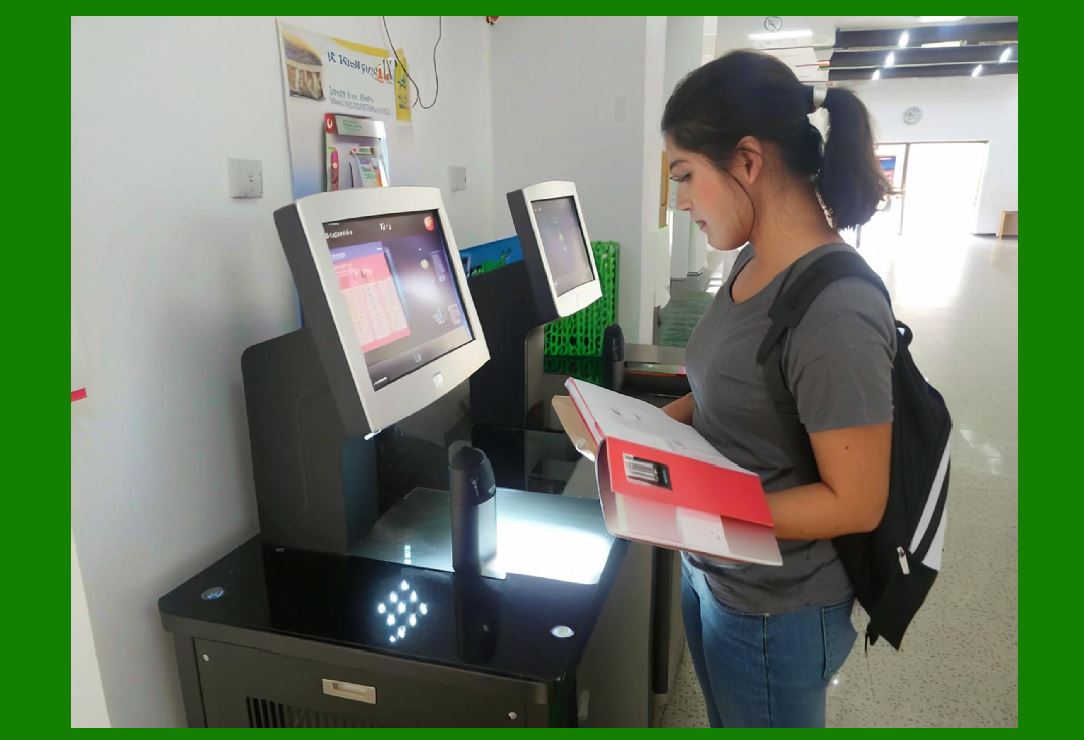
It is equally important to recognize when the wand is the wrong tool. Any application that requires scanning at a distance, whether for safety reasons, workflow efficiency, or sheer volume, is a poor fit for a wand. Supermarket checkout lanes, hospital bedside medication administration, warehouse picking at height, and any environment where the operator cannot or should not touch the barcode are all domains where the wand's depth of field limitation becomes a disqualifying flaw. |
The wand cannot scan a barcode on a pallet that is ten feet away. It cannot scan a patient wristband without contact. It cannot scan a moving package on a conveyor belt. It cannot scan a barcode on a shelf that is above head height without a ladder. These are not marginal limitations. They are fundamental. The wand is a contact scanner, and contact is its defining constraint. |
|
8. Detailed Summary |
The wand scanner's fatal limitation is depth of field, and that limitation is not incidental. It is the direct and inevitable consequence of the wand's minimal circuit architecture. The LED illuminates a broad area, the photodiode integrates all returned light, and the fixed aperture provides the only spatial discrimination. There is no scanning beam to focus, no imaging array to capture a two-dimensional scene, and no autofocus mechanism to adapt to different working distances. The wand is designed for contact or near-contact scanning, and it performs admirably within that narrow regime. |
Across the industries examined in this chapter, a consistent pattern emerges. The wand survives and even thrives in applications characterized by low to moderate scanning volume, flat or gently curved barcode surfaces, and workflows in which the item is already being handled by the operator. Small retail establishments, libraries, low-volume receiving desks, tool cribs, school offices, and certain laboratory settings all share these characteristics. In these environments, the depth of field limitation is not experienced as a limitation because the barcode is always brought to the wand. The wand's low cost, lack of moving parts, and remarkable durability make it the rational choice. |
Conversely, the wand is conspicuously absent from high-volume, high-throughput, or distance-scanning applications. Supermarket checkout lanes, hospital bedside scanning, warehouse picking operations, and any workflow that requires scanning without contact have all migrated to laser scanners and camera-based imagers. These technologies offer the depth of field that the wand lacks, at a cost and complexity that the wand was designed to avoid. The wand's absence from these domains is not a failure. It is a recognition that different applications demand different tradeoffs. |
The wand scanner is a study in engineering minimalism. It answers a specific question: what is the least circuitry required to convert a barcode into bitsThe answer is a light, a lens, and a detector, with a fixed aperture and no spatial resolution mechanism beyond that. This architecture imposes a narrow depth of field, but it also delivers low cost, high durability, and extreme simplicity. For the applications that can accommodate contact scanning, the wand remains an elegant and economical solution. For those that cannot, the wand's limitation is decisive, and other technologies have long since taken its place. The wand endures not because it is versatile, but because it is perfectly suited to a narrow set of conditions that have persisted alongside the more capable technologies that surround it. |
 cs@easiersoft.com