Chapter 2. The Universal Chain Begins with the Photodetector |
Summary |
Every barcode scanner, regardless of whether it costs thirty dollars at a retail counter or thirty thousand dollars on a factory floor, begins its work in the same humble way: a photodetector converts incoming light into electrical current. This chapter explains that first link in the universal signal chain. We examine three families of photodetectors commonly used in scanning equipment, the photodiode, the linear charge-coupled device array, and the complementary metal-oxide-semiconductor imager, and we describe what each one does well. But the heart of the chapter is practical rather than theoretical. We tour a dozen industries, from grocery retail to pharmaceutical packaging to automotive assembly to agriculture, and show how the choice and behavior of the photodetector shapes what a scanner can and cannot do in each setting. The chapter closes with a consolidated summary that ties these examples back to the central argument of Part I: understand the front end of the chain, and everything downstream becomes easier to reason about. |
|
1. Why the First Link Deserves So Much Attention |
When people talk about barcode scanners, they usually talk about the laser, the camera, the decoding software, or the wireless link to the point-of-sale system. The photodetector rarely gets a mention. This is a mistake. The photodetector is the component that translates the physical world of light into the electrical world of information, and every later stage in the scanner inherits the strengths and weaknesses of that translation. A blurry, noisy, or slow photodetector cannot be rescued by clever firmware. A well-matched photodetector can make the rest of the design almost trivial. |
The universal signal chain in scanning equipment runs, in simplified form, from light source to scene to returned light to photodetector to analog conditioning to digitization to decoding to output. The photodetector sits at the boundary between the analog optical world and the electronic world. Its job sounds simple: produce a current proportional to incident light intensity. In practice, doing that job well across the wildly varied conditions of real installations is anything but simple. Illumination may be dim or blinding. Surfaces may be glossy, matte, curved, transparent, or dirty. Labels may be printed with high contrast or with almost none. The scanner may be held in a shaking hand or mounted on a robot arm moving at speed. The photodetector must cope with all of it. |
This chapter therefore treats the photodetector not as a footnote but as the protagonist. We will look at the three main technologies, then spend most of our time in the field, examining how the first link of the chain behaves in real industries. |
|
2. The Photodiode: The Simplest and Most Ubiquitous Front End |
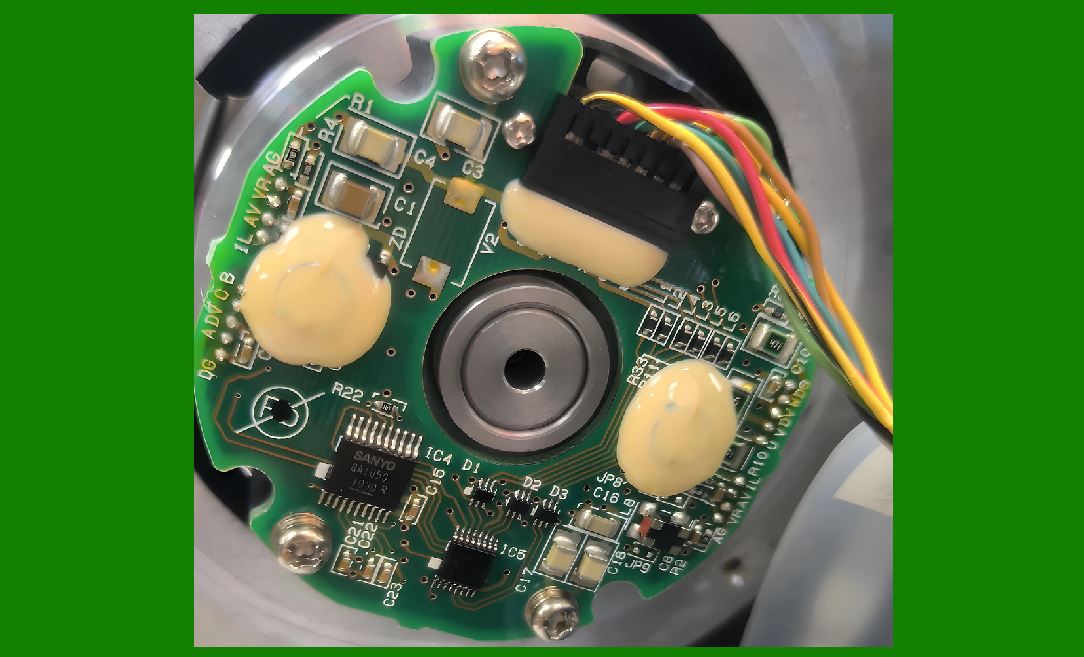
A photodiode is a semiconductor junction that produces a small current when light falls on it. It is tiny, cheap, fast, and remarkably linear over a wide range of light levels. In scanning equipment, photodiodes appear in several roles. |
In a classic laser scanner, a photodiode collects the light scattered back from the barcode as the laser spot sweeps across it. The returning light is modulated by the alternating dark and light bars, so the photodiode current rises and falls in sympathy. This current is then amplified and shaped into a waveform whose transitions correspond to bar edges. The photodiode here is a single-element device, but its speed and sensitivity are what allow a laser scanner to read a barcode at a distance or at an angle. |
In some imaging scanners, an array of photodiodes, each with its own amplifier, forms the light-sensing layer beneath a lens. This arrangement is common in contact image sensors used in flatbed scanners and in some compact barcode readers. The photodiodes are arranged in a line, and each one reports the light level at its position. |
The photodiode's virtues are simplicity and speed. Its limitations are equally clear. A single photodiode gives no spatial information; it only reports total incident light. To form an image, you need many of them, or you need to scan a spot across the scene. Photodiodes also have limited dynamic range in the sense that very bright light can saturate the amplifier, and very dim light produces a current that is hard to distinguish from noise without careful design. |
These trade-offs explain why photodiodes dominate in laser scanners and in low-cost fixed-mount readers, while other technologies take over where spatial information or color is needed. |

|
3. The Linear CCD Array: Scanning a Line of Light |
A charge-coupled device, or CCD, is an array of light-sensitive elements that accumulate charge in proportion to incident light. In a linear CCD, the elements are arranged in a single row. The device is read out by shifting the accumulated charge along the row, element by element, to an output amplifier. This is the technology behind many fax machines, flatbed scanners, and older barcode readers. |
The linear CCD's great strength is that it captures a whole line of the scene at once. If you illuminate a barcode with a sheet of light and image that line onto the CCD, you get a slice of the barcode in a single exposure. Move the barcode relative to the scanner, or sweep the scanner across the barcode, and you build up a two-dimensional picture line by line. For barcode reading, this is often exactly what you want: a barcode is essentially a one-dimensional pattern, so a linear sensor aligned with the bars can capture the pattern in one shot, provided the illumination is uniform. |
Linear CCDs have characteristics that matter in practice. They tend to have good sensitivity and low noise, which helps in dim light. They can be made with many elements, giving fine spatial resolution. But they require careful optical alignment, and their readout is sequential, which limits how fast a full line can be captured. They also consume more power than a simple photodiode and are more expensive. |
In the field, linear CCD arrays show up in document scanners that also read barcodes, in some handheld readers that sweep a line of light, and in fixed-mount scanners on conveyor belts where the barcode passes through a line of illumination. |

|
4. The CMOS Imager: A Camera on a Chip |
A complementary metal-oxide-semiconductor imager, or CMOS imager, is a two-dimensional array of photodetectors, each with its own readout circuitry, fabricated on a single chip. It is, in essence, a camera on a chip. Each pixel accumulates charge in proportion to light, and the array is read out row by row, producing a full image frame. |
CMOS imagers have become the dominant technology in barcode scanning over the past two decades, for good reasons. They are cheap to manufacture in high volume, they integrate well with digital processing, they can capture a full frame quickly, and they support advanced features such as region-of-interest readout, which lets the scanner read only the part of the image that matters. They also allow the same sensor to be used for barcode reading and for other tasks, such as capturing an image of a damaged label or reading text alongside a barcode. |
The trade-offs are real. CMOS imagers have historically had lower sensitivity and higher noise than CCDs, though the gap has narrowed. They require more sophisticated optics and illumination, because the whole scene must be imaged, not just a line. And their image quality depends heavily on the quality of the lens and the illumination system. |
In practice, CMOS imagers are everywhere: in handheld scanners at retail checkout, in smartphone-based scanning apps, in fixed-mount readers at warehouse docks, in medical device tracking systems, and in industrial vision systems that read barcodes as part of a larger inspection task. |

|
5. How the Choice of Photodetector Shapes the Product |
The three technologies are not interchangeable. The choice of photodetector determines what kind of light source is needed, what kind of optics are required, how fast the scanner can read, how much power it consumes, how large it can be, and how much it costs. |
A laser scanner with a single photodiode can read a barcode at a distance, because the laser spot is bright and the photodiode is fast. It struggles with damaged or low-contrast barcodes, because it only sees the light returned along one line at a time. |
A linear CCD scanner can read a barcode with a sheet of light and good sensitivity, but it needs the barcode to be aligned with the sensor line, and it is less tolerant of motion. |
A CMOS imager can capture a full frame and apply sophisticated image processing, which makes it tolerant of poor lighting, odd angles, and damaged labels, but it needs more illumination and more computation. |
These differences play out differently in different industries. The rest of this chapter tours those industries. |
|
6. Retail Point of Sale: Speed, Ergonomics, and the Harsh Reality of the Checkout Lane |
In a supermarket or convenience store, the scanner at the checkout lane is the most visible barcode reader in the world. Most modern checkout scanners use CMOS imagers, often with a large depth of field and a wide field of view, so that the cashier can present a product without precise alignment. The imager captures a frame, the decoder finds the barcode, and the sale proceeds. |
The photodetector's job here is to cope with a chaotic optical environment. Products come in glossy plastic, matte cardboard, curved bottles, and shrink-wrapped multipacks. The scanner's illumination must be bright enough to overcome ambient light but not so bright that it glares off shiny surfaces. A CMOS imager with good dynamic range and a well-designed illumination pattern handles this well. A single photodiode with a laser would struggle with the variety of surfaces and the need for fast, hands-free reading. |
The checkout lane also illustrates a key point about the universal chain: the photodetector's noise and sensitivity set the floor on how quickly and reliably the decoder can work. A noisy image means more processing, more errors, and slower throughput. A clean image means the decoder can find the barcode in a single frame. |

|
7. Warehousing and Logistics: Reading at a Distance and in Motion |
In a warehouse, barcodes are read on pallets, on shelves, on conveyor belts, and on packages moving at speed. Fixed-mount scanners with CMOS imagers are common, often with high-resolution sensors and powerful illumination, because the scanner may be several feet from the barcode. Linear CCD arrays also appear in some conveyor-belt installations, where the barcode passes through a line of light. |
The photodetector here must handle motion blur. A package moving quickly past a scanner gives the sensor only a short exposure time, which means less light collected and more noise. CMOS imagers with good sensitivity and fast readout help, as do bright illumination and short exposure times. The decoder then has to cope with a possibly blurry, low-contrast image. |
Logistics also illustrates the value of the universal chain perspective. When a scanner fails to read a barcode on a moving package, the cause is often not the decoder but the photodetector: too little light, too much motion, or too much glare from the packaging. Understanding the first link helps the engineer diagnose the problem. |
|
8. Manufacturing and Automotive Assembly: Traceability Under Harsh Conditions |
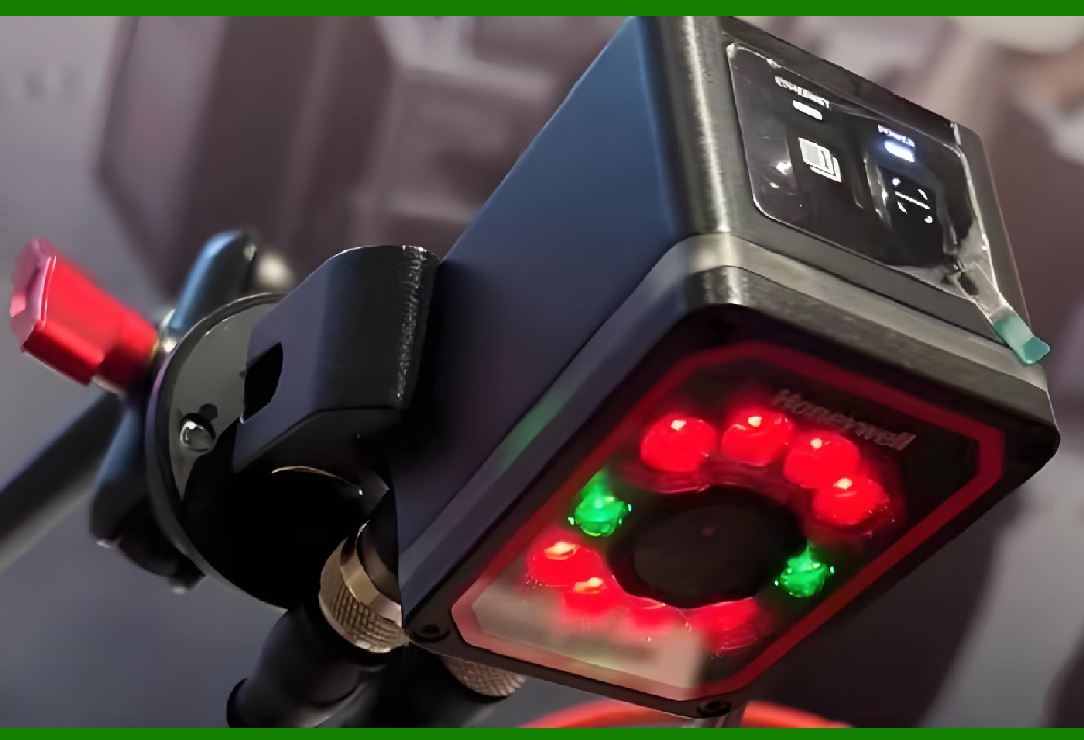
On a factory floor, barcodes track parts, assemblies, and tools. The environment is often dusty, oily, and brightly lit with industrial lighting that can interfere with the scanner. Scanners here are frequently fixed-mount units with CMOS imagers, sometimes with linear CCDs for specific tasks. The photodetector must be robust and must handle direct marking on metal, which can be low contrast and highly reflective. |
In automotive assembly, a barcode may be laser-etched onto a metal part, producing a mark that is readable only under specific lighting angles. The scanner's illumination and the photodetector's sensitivity must be matched to the mark. A CMOS imager with adjustable illumination and good dynamic range is often the best choice, because it can capture the mark and the surrounding surface and let the decoder find the pattern. |
This is a case where the photodetector is not just a light sensor but part of a measurement system. The quality of the first link determines whether traceability succeeds or fails. |

|
9. Pharmaceutical and Medical Device Tracking: Accuracy and Regulatory Scrutiny |
In pharmaceutical manufacturing and medical device tracking, barcodes are used for serialization, anti-counterfeiting, and regulatory compliance. The barcodes are often small, densely packed, and printed on labels that may be curved or on vials that are transparent or reflective. Scanners here are often high-resolution CMOS imagers with sophisticated illumination, because the barcode may be only a few millimeters across. |
The photodetector's role is critical because the consequences of a misread are severe. A noisy image or a poorly illuminated barcode can lead to a decode failure or, worse, a misread. The universal chain perspective matters here: the photodetector's noise floor and dynamic range set the limit on how small and how low-contrast a barcode can be while still being read reliably. |
Medical device tracking also uses linear CCD arrays in some benchtop readers, where the device is placed on a scanner and the barcode is imaged with a line of light. The CCD's low noise and good sensitivity help with the small, high-density codes used in this industry. |

|
10. Agriculture and Food Processing: Barcodes in the Field and on the Line |
Agriculture and food processing use barcodes for traceability from farm to fork. In the field, barcodes on seed bags, chemical containers, and equipment are read with handheld scanners, often CMOS imagers, in bright sunlight. In processing plants, barcodes on carcasses, packages, and pallets are read on conveyor lines, sometimes with linear CCD arrays and sometimes with CMOS imagers. |
The photodetector here must handle sunlight, which is far brighter than typical indoor lighting and can saturate a sensor. CMOS imagers with good dynamic range and short exposure times, combined with optical filters, can cope. Linear CCDs with good sensitivity also work in some installations. |
Food processing adds another challenge: condensation, frost, and water droplets on labels and on scanner windows. The photodetector must produce a usable signal despite these optical disturbances. This is a reminder that the first link of the chain is not just about the sensor but about the entire optical path from the barcode to the sensor. |

|
11. Healthcare: Bedside Scanning and Sterile Environments |
In hospitals and clinics, barcodes are used for patient identification, medication administration, and sample tracking. Scanners here are often handheld CMOS imagers, sometimes with linear CCDs in benchtop units. The environment is indoors, but the demands are high: the scanner must be reliable, easy to clean, and able to read barcodes on wristbands, medication bags, and test tubes. |
The photodetector's job is complicated by the variety of surfaces. A wristband may be curved and made of plastic. A medication bag may be transparent and reflective. A test tube may be cylindrical and covered in condensation. CMOS imagers with good illumination and image processing handle these cases well. The universal chain perspective helps here too: a failed read is often an illumination or sensor problem, not a decoding problem. |

|
12. Transportation and Ticketing: Reading on the Move |
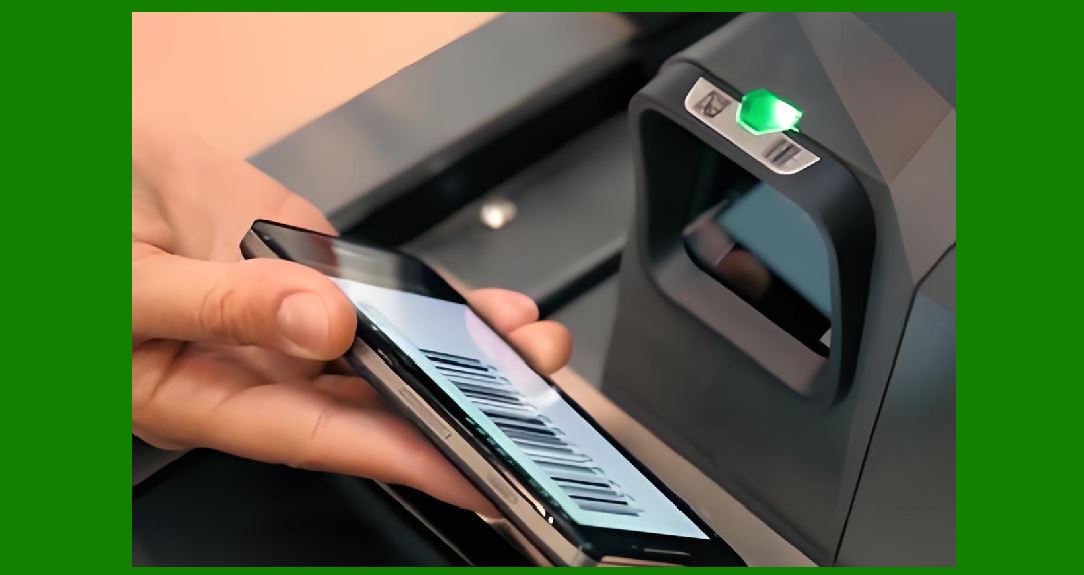
In transportation, barcodes and two-dimensional codes are used for tickets, boarding passes, luggage tags, and fare collection. Scanners here are often CMOS imagers, sometimes in handheld units and sometimes embedded in kiosks or turnstiles. The codes are often displayed on smartphone screens, which adds a new challenge: the screen emits its own light, and the scanner must cope with a self-luminous, possibly dim or flickering source. |
The photodetector must handle both printed codes and screen-displayed codes, often in the same device. CMOS imagers with good dynamic range and fast readout are well suited. The universal chain perspective is useful here because the screen's refresh rate and brightness interact with the sensor's exposure time in ways that can cause flicker or banding in the captured image. |

|
13. Entertainment and Events: Fast, Crowd-Scale Scanning |
At concerts, sporting events, and festivals, barcodes and two-dimensional codes on tickets are scanned at high speed as crowds pass through gates. Scanners here are often CMOS imagers with fast readout and powerful illumination, because the codes may be on paper, on phones, or on wristbands, and the lighting may be poor. |
The photodetector's speed and sensitivity matter here. A slow sensor means long queues. A noisy sensor means more failed reads and more manual intervention. The universal chain perspective helps the designer choose a sensor that can keep up with the crowd. |
|
14. Automotive Retail and Rental: Reading in Outdoor and Mixed Lighting |
Car rental agencies and dealerships use barcodes on vehicles, keys, and documents. Scanners here may be handheld CMOS imagers used outdoors, where sunlight is bright and variable. The photodetector must handle glare from car surfaces and documents, and must cope with the transition from outdoor to indoor lighting. |
This is a good example of how the first link of the chain must be robust to a wide range of illumination conditions. A sensor with good dynamic range and a well-designed illumination system can handle the transition; a sensor with poor dynamic range will struggle. |

|
15. Construction and Heavy Industry: Durability and Read Range |
On construction sites and in heavy industry, barcodes are used on materials, tools, and equipment. Scanners here must be durable and must read at a range, because the barcode may be on a beam or a container that is not easily accessible. CMOS imagers with high resolution and powerful illumination are common, as are laser scanners with photodiodes for long-range reading. |
The photodetector's sensitivity and the illumination system's power determine the read range. The universal chain perspective helps here: a long-range scanner is not just a matter of a bigger lens; it is a matter of a sensor that can detect weak returned light and an illumination system that can deliver enough light to the target. |

|
16. Museums, Libraries, and Archives: Gentle Reading of Delicate Items |
In libraries and archives, barcodes are used on books, manuscripts, and artifacts. Scanners here are often linear CCD arrays or CMOS imagers with gentle illumination, because the items may be delicate and sensitive to light. The photodetector must be sensitive enough to read the barcode with low illumination, and the illumination must be chosen to minimize damage. |
This is a case where the first link of the chain is constrained by conservation concerns. A linear CCD with good sensitivity and low noise is often a good choice, because it can capture a line of the barcode with modest illumination. |

|
17. The Common Thread: Why the First Link Matters Across Industries |
Across all these industries, a pattern emerges. The photodetector determines what kind of light the scanner can use, how much light it needs, how fast it can read, how much power it consumes, and how tolerant it is of difficult surfaces and lighting. The decoder can only work with the signal the photodetector provides. If the first link is weak, the whole chain is weak. |
This is the central argument of Part I. The universal signal chain is universal because every scanner, in every industry, follows the same basic sequence: light, scene, returned light, photodetector, analog conditioning, digitization, decoding, output. The photodetector is the first link, and its characteristics propagate through the entire chain. |

|
18. Detailed Summary |
This chapter has examined the first link of the universal signal chain in barcode scanning: the photodetector. We began with the photodiode, the simplest and fastest front end, which produces a current proportional to incident light and is widely used in laser scanners and in some contact image sensors. We then examined the linear CCD array, which captures a line of the scene at once and is used in document scanners, some handheld readers, and conveyor-belt installations. We then examined the CMOS imager, a camera on a chip that has become the dominant technology in barcode scanning because of its low cost, high integration, and ability to capture full frames for sophisticated image processing. |
We then toured a wide range of industries to see how the choice and behavior of the photodetector shapes real products. In retail point of sale, CMOS imagers handle the chaotic optical environment of the checkout lane. In warehousing and logistics, CMOS imagers and linear CCDs handle motion and distance. In manufacturing and automotive assembly, robust sensors handle harsh conditions and low-contrast marks. In pharmaceutical and medical device tracking, high-resolution sensors handle small, dense codes under regulatory scrutiny. In agriculture and food processing, sensors handle sunlight, condensation, and motion. In healthcare, sensors handle curved, transparent, and reflective surfaces. In transportation and ticketing, sensors handle screen-displayed codes and fast crowds. In entertainment and events, sensors handle crowd-scale scanning. In automotive retail and rental, sensors handle outdoor and mixed lighting. In construction and heavy industry, sensors handle durability and read range. In museums, libraries, and archives, sensors handle delicate items with gentle illumination. |
The common thread across all these examples is that the photodetector is not a passive component but an active determinant of what the scanner can do. Its sensitivity, noise, dynamic range, speed, and spatial resolution set the limits on the entire signal chain. The decoder can only work with the signal the photodetector provides. Understanding the first link is therefore essential to understanding the whole chain, and that is why Part I begins here. In the chapters that follow, we will build on this foundation, examining analog conditioning, digitization, decoding, and the system-level design decisions that turn a photodetector's current into a reliable read. |
 cs@easiersoft.com