Chapter 15. The Signal That Refuses to Behave: Why a Wand Scanner Must Listen to a Human Hand | Summary | A wand scanner does not generate its own timing. The operator does. When a person drags a pen-shaped reader across a barcode, the speed of that motion is never constant. The hand accelerates, hesitates, corrects, and occasionally jerks. The result is an analog signal whose frequency content shifts continuously during a single scan, from a crawl that produces edges separated by many milliseconds to a flick that compresses those same edges into a few hundred microseconds. The minimalist circuit inside the wand must therefore be designed not around a fixed clock, but around the unpredictable physiology of the human arm. This chapter explores what that variability means for the circuit, why it mattered so much in the era of wand scanners, and how the lessons learned from accommodating the human hand shaped the scanning systems that followed. | 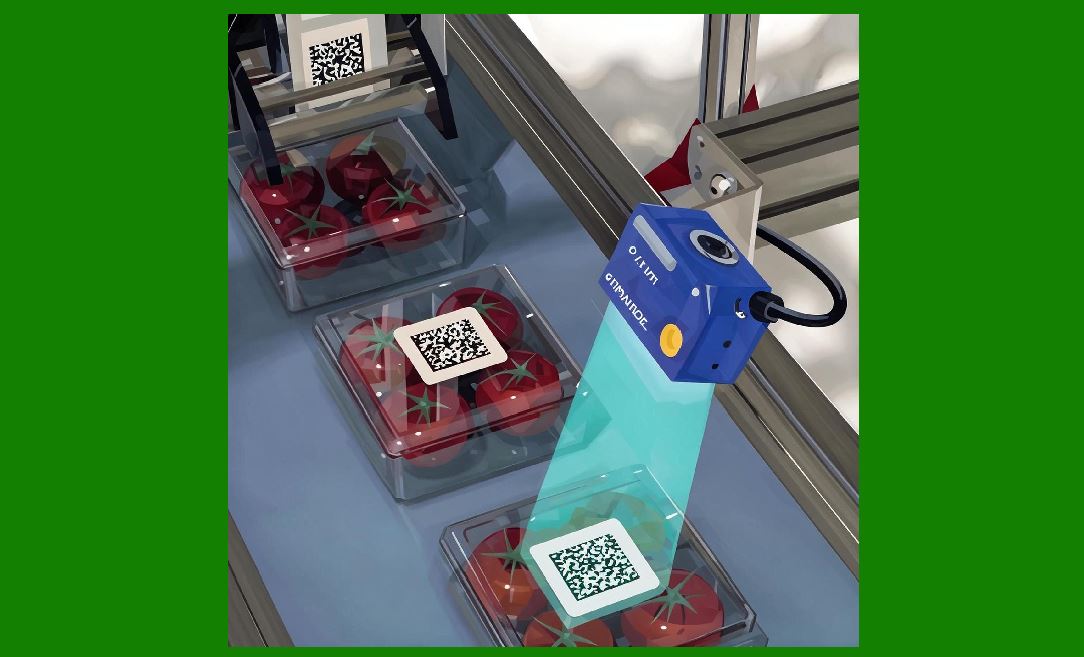
| 1. The Signal Is a Recording of a Hand, Not a Clock | In every barcode scanner, the fundamental task is to convert a spatial pattern of dark and light bars into a temporal electrical signal, and then to convert that temporal signal back into a spatial interpretation. The barcode itself is fixed. A given symbol has bars of specific widths, printed at a specific density, measured in thousandths of an inch. What varies is the rate at which those bars pass the scanner's aperture. | In a modern laser scanner or camera-based imager, the scanning mechanism provides the timing reference. A rotating polygon mirror sweeps the laser beam across the symbol at a known angular velocity, or an image sensor captures the entire field of view in a single exposure. The electronics know, within tight tolerances, how long each bar should last in time. The wand scanner has no such luxury. The scanning mechanism is a human being holding a plastic pen and moving it across a label on a box of detergent. The only thing the circuit knows for certain is that the bars will pass by at some rate, and that rate will change. | This is the defining constraint of wand scanner design. The circuit cannot assume a carrier frequency. It cannot lock onto a clock. It must be prepared for edge intervals that range from nearly DC, when the operator pauses or moves very slowly, to several kilohertz, when the wand is flicked quickly across a dense symbol. The same circuit that reads a lazy, deliberate pass over a large shipping label must also read a hurried swipe over a small retail package, and it must do so without any user adjustment. | The physiology behind this variability is worth understanding because it explains why the problem was never fully solved, only accommodated. When a person begins a scanning motion, the arm and hand must overcome their own inertia. The wand accelerates from rest. As the scan proceeds, the operator often inadvertently increases velocity, especially near the end of the label, where the anticipation of completion encourages a faster finish. The result is that the signal at the beginning of a scan is typically lower in frequency than the signal at the end. A barcode that begins with wide bars and ends with narrow bars might, under a constant-speed scan, produce a relatively uniform range of edge rates. Under a human scan, the frequency content can shift by a factor of two or more across the width of a single symbol. | The circuit designer's response to this reality was not to attempt to normalize the signal to a fixed frequency, but to build an analog front end with sufficient dynamic range and adaptive behavior to extract edge timing regardless of the absolute rate. The digitizer, the portion of the circuit that decides where one bar ends and the next begins, had to make its decisions based on the local behavior of the signal rather than any global timing assumption. This is a fundamentally different design philosophy from the fixed-clock world of later scanners, and it produced circuits that were, in their own way, more elegant in their simplicity. | 
| 2. Retail: The First Home of the Unruly Signal | The wand scanner found its first widespread commercial adoption in retail environments in the 1970s and 1980s. The applications were modest by modern standards: grocery stores, department stores, and specialty shops that wanted to automate price lookup and inventory deduction at the point of sale. The wand was attractive because it was inexpensive, compact, and required no moving parts beyond the operator's arm. | Consider the checkout lane of a mid-sized grocery store in 1982. The cashier holds a wand connected by a coiled cable to the point-of-sale terminal. A customer's basket contains a mix of items: canned goods with curved surfaces, boxes with flat labels, produce bags with small adhesive tags, and perhaps a few items whose labels are slightly wrinkled or partially obscured by shrink wrap. The cashier must scan each item, a task performed hundreds of times per shift. | The circuit inside that wand faced a remarkable diversity of signal conditions. A large box of cereal might present a symbol with wide bars and generous spacing, scanned at a comfortable speed, producing edge intervals in the range of several milliseconds. A small candy bar, by contrast, might carry a dense symbol with narrow elements, and the cashier, eager to move the line along, would swipe quickly, compressing those elements into intervals a fraction of a millisecond in duration. The same circuit, with the same fixed component values, had to correctly identify bar edges in both cases. | The retail environment also introduced a challenge that had nothing to do with scan speed but compounded the frequency variability problem: label quality. A wand scanner requires physical contact with the symbol. That contact wears on the label. Repeated scans over the same spot can abrade the ink, blur the edges between dark and light, and introduce smudges that create false transitions. The circuit, already struggling with variable edge rates, also had to discriminate between genuine bar-to-space transitions and the noisy artifacts of a label that had been scanned ten thousand times. | The solution that emerged in wand scanner design was a digitizer that operated on the derivative of the signal, the rate of change of reflectance, rather than on absolute reflectance levels. By responding to transitions rather than thresholds, the circuit became naturally adaptive to the local contrast and to the local rate of change. A slowly scanned edge produced a gentle slope; a quickly scanned edge produced a steep one. But the peak of that derivative, the moment of maximum change, occurred at the same spatial location regardless of speed. The circuit could therefore mark edges by detecting peaks in the derivative signal, a technique that remains fundamental to barcode digitization today. | This approach was not perfect. At very low scan speeds, the derivative signal becomes small and susceptible to noise from paper texture and ambient light. At very high speeds, the derivative peaks become narrow and may be missed if the circuit's bandwidth is insufficient. The wand scanner's analog front end was therefore a carefully tuned compromise, a filter and differentiator network designed to pass the frequencies corresponding to plausible human scan speeds while rejecting both the very slow drift of paper noise and the very fast transients of electrical interference. The filters were not sharp; they could not be, because a sharp filter would introduce phase distortion that would shift edge positions in a speed-dependent manner. Instead, the design favored gentle roll-off characteristics that preserved edge timing across the widest possible range of operating conditions. | 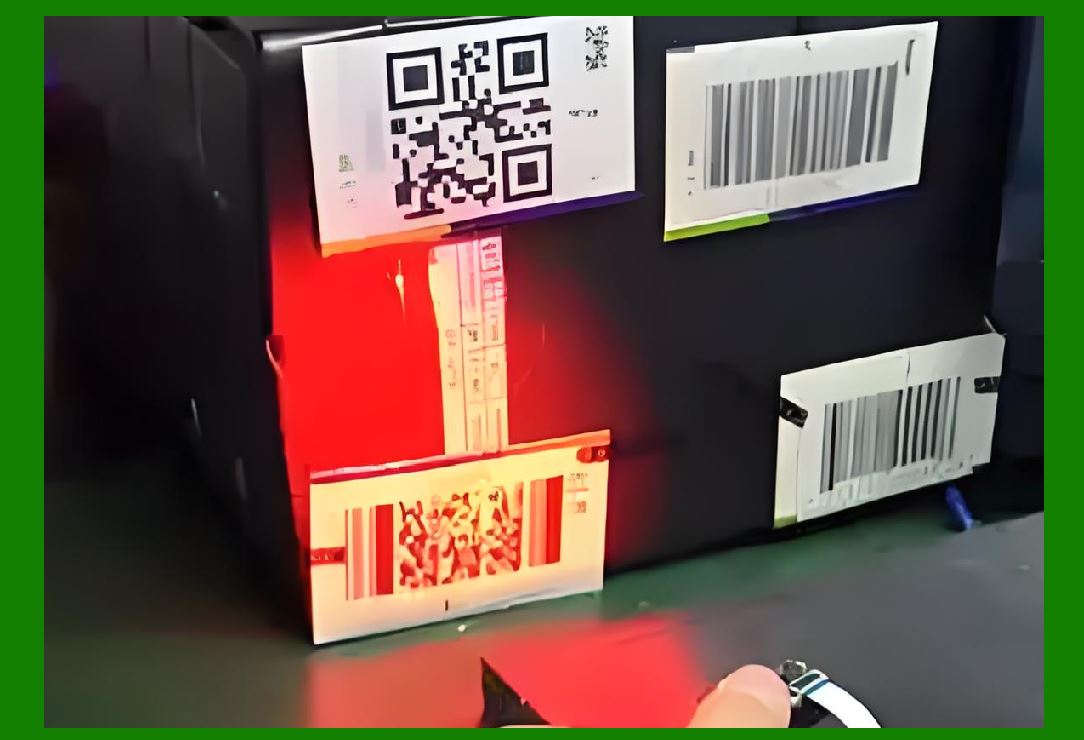
| 3. The Warehouse and the Factory Floor: When the Hand Trembles | Retail was the visible application of wand scanners, but the technology also found a home in environments where the scanning task was less routine and the operator's motion even less predictable. Warehouse receiving docks, factory production lines, and inventory audit teams adopted wand scanners for the same reasons retailers did: low cost and portability. But the operating conditions in these environments introduced new dimensions of signal variability. | A warehouse worker scanning a pallet label is often reaching, bending, or stretching. The wand is moved at an awkward angle. The operator's hand may be unsteady from the effort of holding a heavy carton or from the vibration of a forklift. The scan speed in such conditions is not merely variable; it is erratic. The wand may accelerate suddenly as the operator's arm jerks, then decelerate as they attempt to maintain contact with a label that is not directly in front of them. The resulting signal contains abrupt changes in frequency content that no simple filter can fully anticipate. | In these settings, the wand scanner's tolerance for speed variation became a liability as often as an asset. A scan that was too slow produced a signal so gradual that the digitizer's differentiator output never reached the threshold for edge detection, and the symbol went unread. A scan that was too fast produced edge intervals so brief that the circuit's bandwidth limitations smeared them together, and the decoder received a corrupted pattern. The operator learned, through experience, to modulate their motion to the sweet spot of the device, a form of tacit skill that was rarely documented but universally acquired by anyone who used a wand for more than a few days. | The factory floor added another layer of complexity: the labels themselves were often printed by industrial dot-matrix or thermal transfer printers on materials ranging from paper to metal to plastic. The contrast between bars and spaces might be lower than in retail, and the edges might be less sharp. A wand scanned across a low-contrast symbol produces a derivative signal with smaller peaks, making edge detection more difficult at any speed. The circuit's gain and threshold had to be set to accommodate these weaker signals without becoming so sensitive that noise triggered false edges on high-contrast symbols. This was a balancing act performed with discrete components, resistors and capacitors and operational amplifiers, each value chosen to optimize the compromise across the widest possible range of labels and operators. | Some wand designs attempted to address this by incorporating multiple signal processing channels, each optimized for a different resolution range. A high-resolution channel with greater bandwidth and faster response could capture the fine details of a dense symbol scanned slowly, while a low-resolution channel with more aggressive filtering could extract the basic pattern from a coarse symbol scanned quickly. The decoder would analyze the outputs of both channels and select whichever produced a valid read. This dual-channel approach was an early recognition that the variable-frequency problem could not be solved by a single fixed filter, but only by providing multiple perspectives on the same unruly signal. | 
| 4. The Problem of the Missing Clock: Timing Without a Timekeeper | The deepest challenge of the wand scanner circuit was not filtering or edge detection in isolation, but the fact that the decoder had no independent measure of time. In a laser scanner, the polygon mirror rotates at a known rate, so the time between successive scans is known, and the time elapsed during a single scan can be related to spatial position along the scan line. In a wand scanner, the only time reference is the signal itself. | This means that the decoder cannot know, from the signal alone, whether a long interval between edges represents a wide bar scanned quickly or a narrow bar scanned slowly. The information is ambiguous. The resolution of this ambiguity depends on the barcode symbology itself, which includes structural rules about the relative widths of bars and spaces. A valid barcode has a specific pattern of wide and narrow elements. The decoder uses these patterns, and the constraints they impose, to infer the most likely interpretation of the observed intervals. | The circuit's role in this process is to provide the most accurate possible measurement of the time between edges, and to do so consistently across the full range of scan speeds. Any speed-dependent distortion in the edge timing directly translates into a measurement error that the decoder must somehow accommodate. If the digitizer's response to a rising edge differs from its response to a falling edge, or if the delay through the filter varies with frequency, the apparent widths of bars and spaces will be systematically wrong in a way that depends on how fast the operator happened to scan. | This is why the analog filter design for wand scanners placed such emphasis on group delay, the measure of how long different frequency components take to pass through the circuit. A filter with constant group delay across its passband preserves the relative timing of the different frequency components that make up an edge, so the edge remains sharp and its position remains accurate. A filter with varying group delay smears edges and shifts their apparent positions in a frequency-dependent manner. The Gaussian filter response, which provides a gradual roll-off and relatively constant group delay in the passband, was favored for this reason. It was not the sharpest filter available, but it was the one that best preserved the timing information that the decoder depended on. | The wand scanner's dependence on human motion also meant that the signal was subject to low-frequency drift. As the operator's hand moved across the label, the angle of the wand relative to the surface changed slightly, altering the amount of light reflected into the detector. Slow variations in ambient illumination, the shadow of the operator's hand, and the texture of the paper substrate all contributed low-frequency components that had nothing to do with the barcode. These had to be removed by high-pass filtering, but the high-pass filter could not be set too aggressively or it would attenuate the legitimate low-frequency content produced by slow scans over wide bars. The usable frequency band of the wand scanner circuit was therefore bounded on both ends: below by the need to reject drift and paper noise, above by the bandwidth limits of the photodetector and the onset of high-frequency interference. Within that band, the circuit had to maintain linear phase and consistent amplitude response. | 
| 5. Healthcare and Logistics: The Legacy of Variable-Speed Reading | The wand scanner is largely a historical artifact today. It has been supplanted by laser scanners, CCD readers, and camera-based imagers that provide their own timing references and do not depend on the operator to sweep the beam. Yet the design principles developed for wand scanners, and the lessons learned from accommodating the human hand, persist in the systems that replaced them. | Consider the healthcare setting, where barcode scanning is now ubiquitous for patient identification, medication administration, and specimen tracking. A nurse at a bedside scans a patient's wristband and then a medication package. The scanner is typically a handheld imager or a laser scanner, not a wand. But the nurse's motion is still variable. The wristband may be curved around the patient's arm. The medication label may be small and positioned awkwardly. The nurse may be in a hurry, or may be trying to scan without waking a sleeping patient. The scanner's internal timing is fixed, but the presentation of the barcode to the scanner is not. The circuit must still accommodate a range of effective scan rates and spatial distortions. | The difference is that modern scanners have more tools at their disposal. A camera-based imager captures the entire symbol in a single frame, so there is no scanning rate in the traditional sense. But the image may be blurred by motion, or the symbol may be imaged at an angle that compresses one dimension of the bars. The decoding algorithms must compensate for these distortions, much as the wand scanner's digitizer had to compensate for speed variation. The underlying challenge, extracting reliable spatial information from a signal whose timing and geometry are not under the circuit's control, remains the same. | In logistics and warehouse management, the wand scanner's descendants are everywhere. Handheld scanners are used to receive shipments, pick orders, and conduct cycle counts. The operator's motion is still variable, though the scanner's own scanning mechanism provides a stable reference. The difference is one of degree rather than kind. A modern laser scanner sweeps its beam at a fixed rate, but the operator must still aim it at the barcode and hold it steady long enough for a successful read. If the operator's hand shakes, or if the barcode is at an extreme angle, the scan may fail. The circuit and the decoding logic must be robust to imperfect presentation, a requirement inherited directly from the wand scanner era. | The most direct descendant of the wand scanner's variable-speed problem is the class of scanner known as the presentation scanner, used at retail checkout counters where the cashier or customer moves the product across a fixed scanning window rather than moving the scanner itself. Here, the scanning mechanism is internal and fixed, but the object being scanned moves at a variable rate. The scanner must detect the barcode, track its motion across the scan lines, and decode it despite the variable speed of the product. This is, in essence, the wand scanner problem inverted: instead of a moving scanner and a stationary barcode, it is a stationary scanner and a moving barcode. The circuit challenges are analogous, and the solutions draw on the same principles of adaptive edge detection and timing-tolerant decoding. | 
| 6. The Analog Art: What Was Lost and What Remains | The wand scanner's circuit was an analog circuit, built from discrete components: phototransistors, operational amplifiers, resistors, capacitors, and comparators. Its behavior was determined by the physical characteristics of those components, their tolerances, their temperature coefficients, and their interactions. Designing such a circuit required a kind of intuition about analog behavior that is increasingly rare in an era of digital signal processing and software-defined functionality. | A wand scanner designer in the 1970s or 1980s could not simply write a line of code to adjust a filter coefficient. They had to choose a resistor value that would set a time constant, and then consider how that time constant would drift with temperature, how it would vary from unit to unit due to component tolerances, and how it would interact with the input impedance of the next stage. They had to worry about the stray capacitance of the circuit board, the noise pickup of the cable connecting the wand to the terminal, and the grounding scheme that would prevent the digital circuitry in the terminal from corrupting the delicate analog signal in the wand. | The variable-speed requirement made this analog design task particularly demanding. A fixed-speed scanner could be optimized for a narrow range of frequencies, allowing the use of sharper filters and higher gain. A wand scanner had to be a generalist. Its filters had to be gentle, its gain had to be moderate, and its thresholds had to be adaptive. Every choice involved a trade-off between sensitivity at low speeds and stability at high speeds, between noise rejection and signal preservation. | Some of the most sophisticated wand designs incorporated automatic gain control, a feedback loop that adjusted the amplifier gain based on the amplitude of the incoming signal. A slowly scanned symbol produced a weak derivative signal, so the gain would increase. A quickly scanned symbol produced a strong signal, so the gain would decrease. This kept the signal within the optimal range for the digitizer regardless of scan speed, extending the usable range of the device. The automatic gain control loop had to be designed carefully, with a time constant slow enough to avoid responding to individual bars but fast enough to track changes in scan speed across the symbol. | Another technique was the use of a sample-and-hold circuit to remember the peak of the derivative signal and compare subsequent peaks against it, providing a form of adaptive thresholding that tracked the local signal strength. This allowed the digitizer to distinguish genuine edges from noise even when the absolute signal level varied widely due to scan speed or label contrast. The sample-and-hold approach was a precursor to the more sophisticated signal processing that would become possible with digital electronics, but it was implemented entirely in analog hardware. | What was lost in the transition to digital scanning was not merely the analog components themselves, but the design philosophy they embodied. The wand scanner circuit was a study in accommodation. It did not attempt to force the signal into a predetermined shape or timing. It accepted the signal as it came, with all its variability and imperfection, and extracted what information it could. The digital scanners that followed had the luxury of controlling their own scanning parameters, and their circuits were designed accordingly. The wand scanner's lesson, that a circuit can be designed to listen to an unpredictable input without demanding that the input conform to the circuit's expectations, is a lesson that remains relevant wherever human motion and machine sensing intersect. | 
| 7. A Detailed Summary | The wand scanner's central circuit challenge arose from a single, irreducible fact: the operator, not the electronics, determined the rate at which the barcode passed the sensor. This fact had consequences that rippled through every aspect of the circuit design, from the photodetector to the digitizer to the decoder interface. | The signal produced by a wand scanner has no fixed frequency content. It is a recording of human motion, and human motion is variable. The same symbol, scanned by the same operator on two successive passes, will produce signals with different edge timings, different peak amplitudes, and different noise characteristics. The circuit must extract the same spatial information from both. | The analog front end of a wand scanner was therefore designed for tolerance rather than precision. Filters were chosen for their group delay characteristics rather than their sharpness. Differentiators were used to convert reflectance transitions into peaks whose timing was independent of scan speed. Adaptive gain and thresholding techniques compensated for the wide range of signal amplitudes produced by different scan rates and label contrasts. The digitizer marked edges based on local signal behavior, not global timing assumptions. | The applications of this technology spanned retail, warehousing, manufacturing, and logistics. In each setting, the specific challenges varied, but the fundamental problem was the same: a human hand moving a sensor across a static pattern, with all the variability that implies. The circuit's ability to accommodate that variability determined the scanner's usefulness. A scanner that demanded a constant scan speed was a scanner that would frustrate its users. A scanner that could read at any reasonable speed, from a slow deliberate pass to a quick flick, was a scanner that would be adopted. | The wand scanner is now largely obsolete, replaced by technologies that provide their own scanning references and do not depend on the operator to sweep the beam. But the design principles developed for wand scanners did not disappear. They migrated into the presentation scanners that read moving objects at checkout, the handheld imagers that must decode symbols presented at awkward angles and variable distances, and the industrial scanners that must function reliably in the hands of workers who are focused on their task rather than on the optimal scanning technique. | The minimalist circuit of the wand scanner, with its few components and its modest capabilities, embodied a sophisticated understanding of the relationship between machine and human. It did not ask the human to behave like a machine. It asked the circuit to behave like a listener, patient and adaptable, ready to receive whatever signal the human provided and to find the information within it. That is a design philosophy worth remembering, even in an age when the circuits are digital and the scanning mechanism is internal, because the human at the other end of the transaction is still human, still variable, and still unwilling to move at a constant rate. |
|
 cs@easiersoft.com